Is it already clinging closely to SK Hynix? With its main photovoltaic business bearing a 93% debt ratio, is it a reliable choice for Huamin Co., Ltd. to burn large amounts of capital and bet on the semiconductor industry as its second growth curve?
Huamin Co., Ltd. suffers huge losses and high debt in its photovoltaic main business, and its semiconductor transformation still needs time to verify.
Against the backdrop of deep losses across the entire industrial chain of the photovoltaic industry, a number of photovoltaic enterprises are turning their attention to the semiconductor sector.
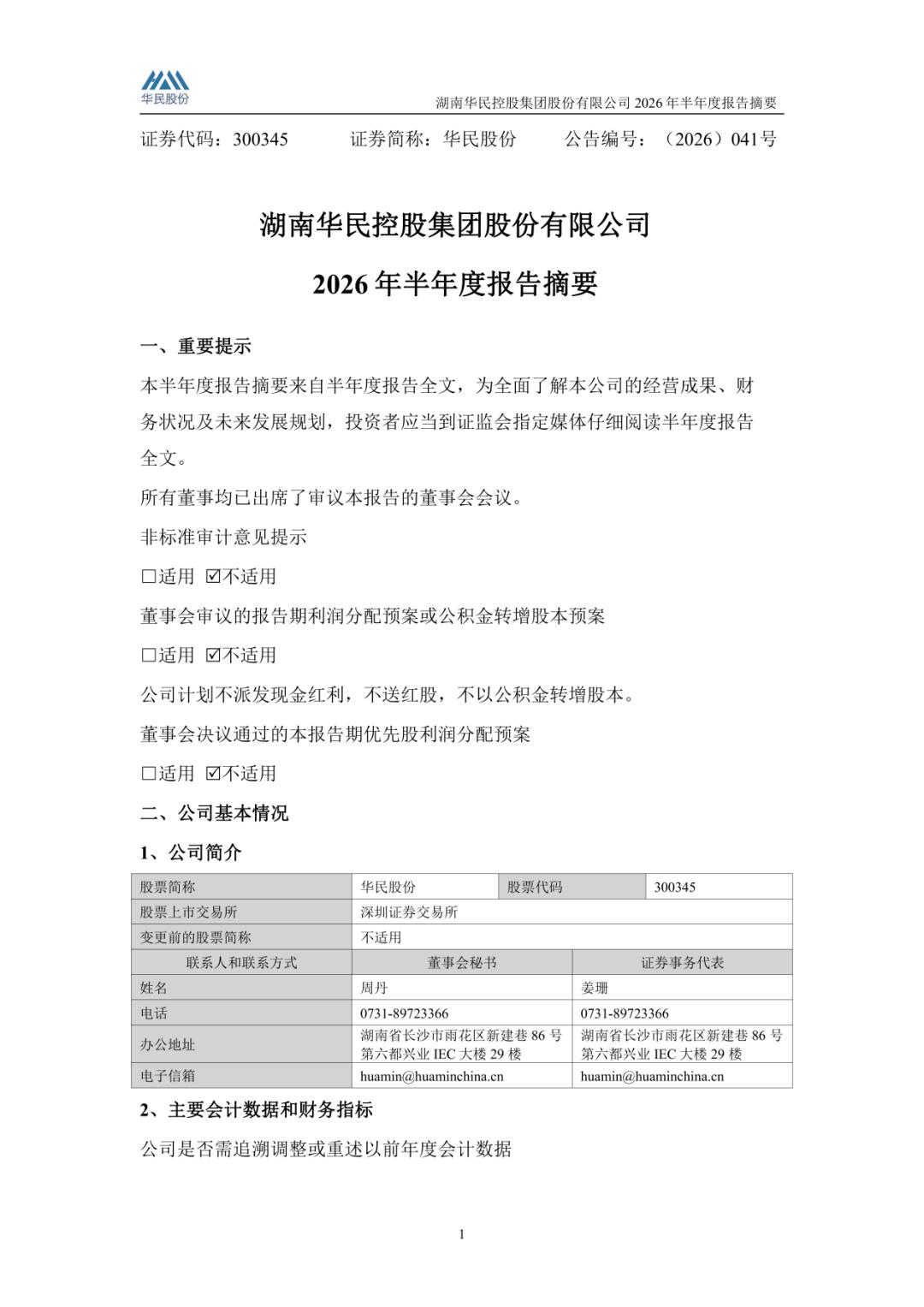
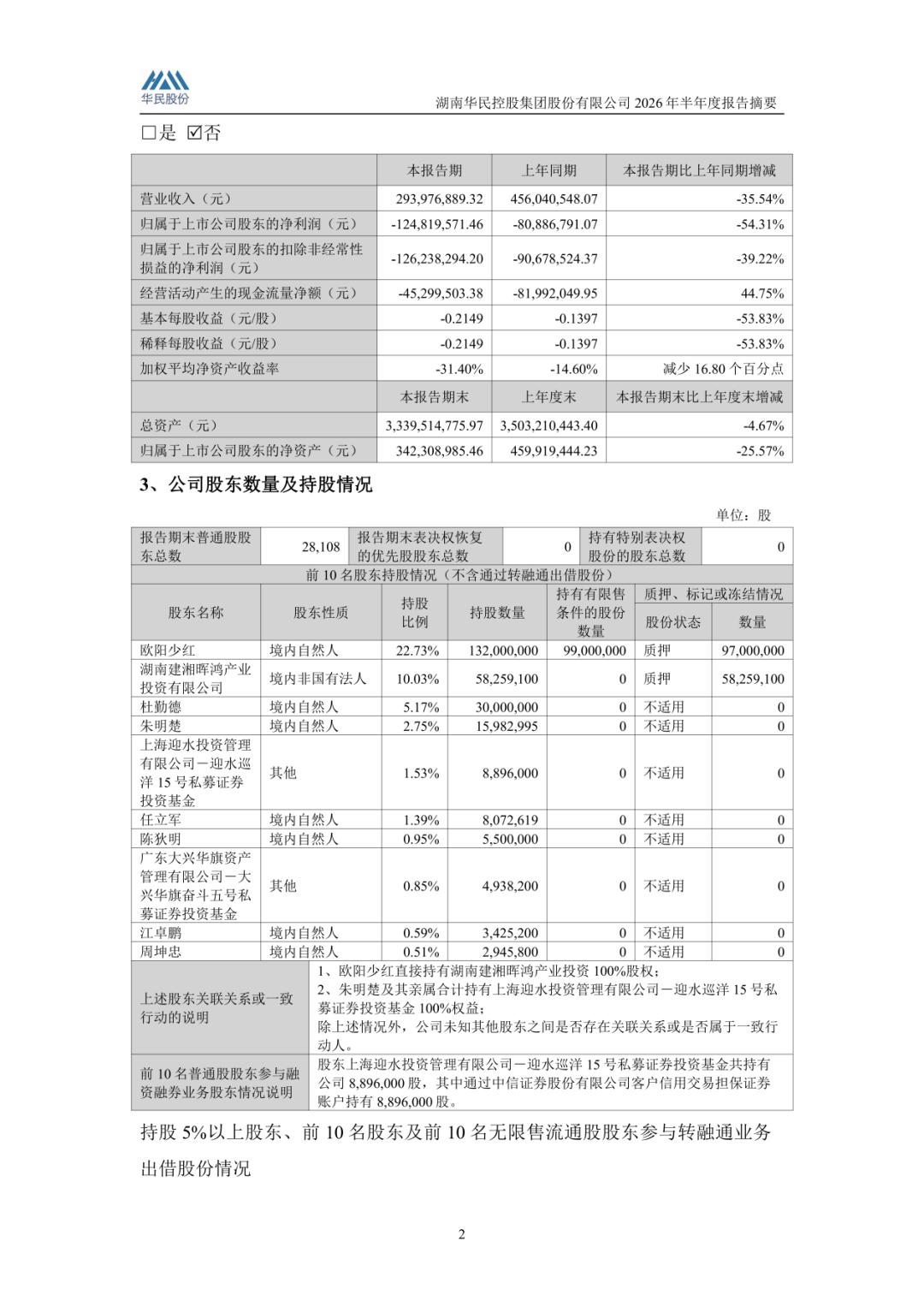
Foresee Energy finds that the semi-annual report data of Huamin Co., Ltd. is unsatisfactory, in which the operating revenue is 294 million yuan, down 35.54% year on year, the net profit attributable to shareholders is -125 million yuan, and the asset-liability ratio has risen to 93.11%. Among the total debt of 885 million yuan, short-term debt accounts for as high as 95.03%. It is worth noting that the revenue of the semiconductor business is 2.91 million yuan with a gross profit margin of 62.14%, which forms a sharp contrast with the 250 million yuan revenue of the photovoltaic main business and a gross profit margin of -25.78%.
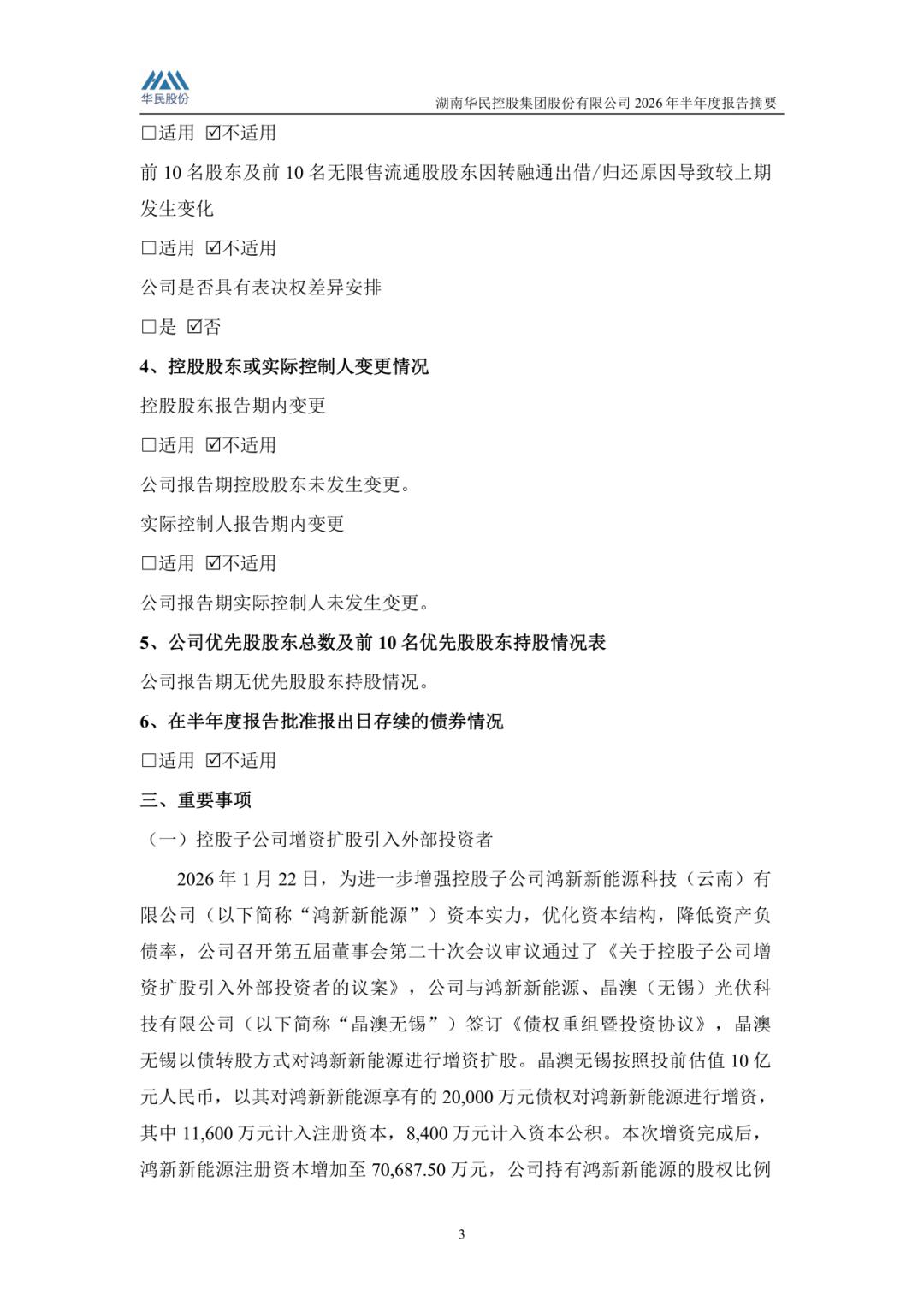
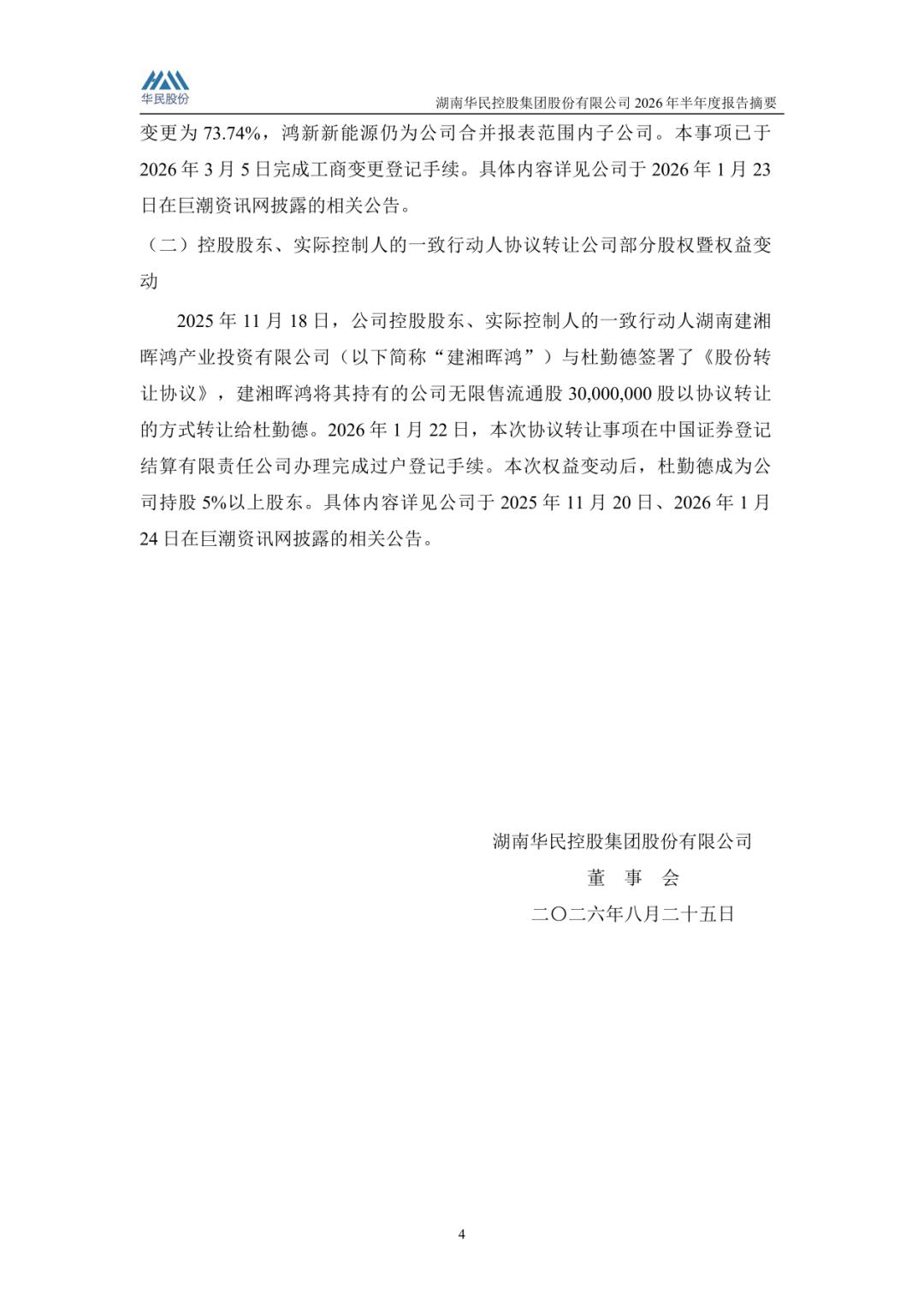
As early as August 6, Huamin Co., Ltd. announced that it had signed a strategic cooperation agreement with Huachuan Semiconductor, a Sino-South Korean joint venture, to enter the track of core silicon components for semiconductor etching equipment. Perhaps because Huachuan Semiconductor has long supplied products to SK Hynix, after the cooperation news was released, the cumulative deviation of stock price increase for three consecutive trading days exceeded 30%.
Foresee Energy believes that this enterprise, which has been cross-border in the photovoltaic industry for only four years, is experiencing a typical "second curve time mismatch". The direction of the new track is correct, but the blood loss rate of the old business is much faster than the blood production rate of the new business.
The losses of the photovoltaic main business are still accelerating
In fact, the financial data of Huamin Co., Ltd. can no longer be simply explained by the four words "industry cycle".
In the first half of the year, the company's gross profit margin was -18.84%, net profit margin was -54.49%, and return on equity was -31.4%. Photovoltaic products contributed 85.11% of the revenue, but the gross profit margin has fallen to -25.78%. Judging from the non-recurring profit and loss net profit, the company has suffered consecutive losses for eight years since 2017.
The deeper problem lies in the debt structure. Of the total debt of 885 million yuan, short-term debt accounts for 95.03%, and short-term borrowings are as high as 384 million yuan. By the end of the reporting period, the net assets of the company belonging to the shareholders of the listed company were only 342 million yuan, down 25.57% from the end of the previous year.
This means that Huamin Co., Ltd. has to repay almost all its debts in a very short time, while the cash generation capacity of its photovoltaic main business is continuously deteriorating. The net cash inflow from operating activities is -45.2995 million yuan, and monetary funds have decreased by 40.80% compared with the beginning of the year. The company explained it as "the increase in demand for debt repayment and operating funds".
The silicon wafer link is one of the sectors with the most serious losses in the whole industry. In the first half of 2026, the price of mainstream monocrystalline N-type silicon wafers dropped from 1.40 yuan per piece to 0.88 yuan per piece, a decrease of 37.14%.
Calculations from the China Photovoltaic Industry Association show that the full production cost of N-type G12R silicon wafers including tax is 1.945 yuan per piece, while the actual transaction price is only 1.2 to 1.3 yuan per piece.
However, the dilemma of Huamin Co., Ltd. is not an isolated case. Hongyuan Green Energy expects a loss of 590 million to 690 million yuan in the first half of the year, and Tongwei, LONGi have suffered consecutive losses for 10 quarters. But what makes Huamin Co., Ltd. special is that its balance sheet is more fragile than most of its peers. The debt ratio is 93.11%, far exceeding the industry average.
The current consensus in the industry is that the capacity clearance of the photovoltaic industry is far from over. This is roughly equivalent to Huamin Co., Ltd.'s core source of revenue, and there is no possibility of stopping the bleeding in the short term.
The technologies are homologous, but the entry thresholds are not at the same level
Of course, the logic mentioned earlier that Huamin Co., Ltd. enters the semiconductor silicon component sector is not imaginary.
Photovoltaic monocrystalline silicon and semiconductor monocrystalline silicon share the same core processes such as crystal pulling, doping, and slicing, and the difference lies in the precision requirements. The purity of photovoltaic-grade monocrystalline silicon generally requires 6 nines, while semiconductor-grade monocrystalline silicon generally requires 10 to 11 nines.
Huamin Co., Ltd. has the R&D and pulling capacity of large-size semiconductor-specific silicon rods with a maximum diameter of 450mm, and has mastered the mass production technology route of low oxygen and low defect single crystals under no magnetic field.
Other enterprises, such as TCL Zhonghuan, Longyuan CNC, Jingsheng Electromechanical, etc., are also deploying along this path. It is reported that TCL Zhonghuan plans to invest 11.96 billion yuan to build a semiconductor large silicon wafer project in Shenzhen, raising the total planned capacity of 12-inch silicon wafers to 2.1 million wafers per month. Longyuan CNC has a market share of about 18% in the field of photovoltaic single crystal furnaces, and is horizontally migrating single crystal furnace technology to semiconductor-grade equipment.
The common judgment of these leading enterprises is that the equipment and process accumulation of photovoltaic and semiconductor in the silicon material end can be reused, and the gross profit margin and customer stickiness of the semiconductor business are far better than those of the photovoltaic industry.
Among them, the difference in entry thresholds between the two cannot be ignored. Silicon components for etching chambers have long been dominated by overseas original manufacturers, and the localization rate in Chinese mainland is less than 10%. In the global silicon component market, the market share of American Silfex (a subsidiary of LAM) is about 55.3%, South Korea's Hana about 13.3%, and Japan's Mitsubishi Materials about 8.4%. This means that what Huamin Co., Ltd. is facing is not a blue ocean, but a highly concentrated market that has been dominated by overseas giants for decades.
Therefore, there is indeed room for domestic substitution. Some industry forecasts show that in the next 3 to 5 years, the localization rate of the domestic silicon component market will increase from the current 5% to more than 50%, and the global market size of silicon components for etching will reach 20.7 billion yuan in 2027.
However, from "existing room" to "being able to obtain the share", the hardest barrier in between is customer certification.
The race between certification cycle and cash flow
Semiconductor silicon components are key process consumables for equipment, and the customer certification process involves multiple links such as sample verification, small-batch on-machine test, long-term wafer running, stability verification, and mass production introduction. The overall certification cycle is generally several months to more than one year. For enterprises to go global, connecting with leading overseas memory manufacturers, the cycle from factory audit to product certification and then to mass production may be as long as 18 to 36 months.
Shengong Co., Ltd. also clearly stated in the investor communication that its downstream customers have very strict certification procedures for qualified suppliers, with long certification cycles and complex procedures.
Facing this situation, Huamin Co., Ltd.'s countermeasure is to leverage the channels of Huachuan Semiconductor.
It is understood that Huachuan Semiconductor is a Sino-South Korean joint venture. Its South Korean shareholder SeongHyun Technology has been deeply engaged in the field of silicon components for semiconductor etching processes for many years, and has long provided core supporting services for Samsung, SK Hynix. Its flagship product CSR high-end silicon ring is the core component of 3D-NAND flash memory etching equipment.
Previously, Huamin Co., Ltd.'s semiconductor silicon rod products have penetrated into the South Korean industrial chain, and there are currently about 4 customers.
The problem is the lack of time.
Huamin Co., Ltd.'s equity incentive plan requires that from 2026 to 2028, the revenue of semiconductor-specific silicon rods and silicon component products shall not be less than 6 million yuan, 30 million yuan, and 80 million yuan respectively.
From 2.91 million yuan in the first half of this year to 6 million yuan for the whole year, an increment of about 3.09 million yuan needs to be achieved in the second half of the year. This goal is not aggressive. However, the 30 million yuan target in 2027 means several times of growth, which depends on whether the customer certification can be completed and introduced in the first half of next year.
At the same time, the repayment pressure of short-term debt will not wait for the certification cycle.
Huamin Co., Ltd.'s book monetary funds are continuously decreasing, and the company is reducing its debt scale by replacing capital expenditures with operating leases, debt-to-equity swaps and revitalizing existing assets. However, debt-to-equity swaps involve negotiations with creditors, and the pace of revitalizing existing assets is not entirely controlled by the company.
In addition, even if the semiconductor business advances according to the company's plan, Huamin Co., Ltd. still faces a structural risk.
In the first half of the year, the revenue of the semiconductor business was only 2.91 million yuan. Even if the gross profit margin is as high as 62.14%, the absolute profit contribution is only about 1.8 million yuan. What about the gross loss of the photovoltaic main business? 250 million yuan of revenue multiplied by the gross profit margin of -25.78% means that the gross profit loss of photovoltaic products alone exceeds 64 million yuan.
Foresee Energy judges that even if Huamin Co., Ltd.'s semiconductor business achieves 30 million yuan in revenue and maintains a 60% gross profit margin in 2027, the gross profit contributed is about 18 million yuan, which is still difficult to cover the continuous losses of the photovoltaic main business.
Therefore, the financial significance of semiconductors as the second curve is more reflected in the valuation logic rather than the income statement for a very long time.
On the industry side, the transformation of photovoltaic equipment manufacturers to the semiconductor sector is not a new thing. It is understood that Maiwei Co., Ltd. achieved 662 million yuan of revenue in the semiconductor and display industries in 2025, Laplace raised 2.2 billion yuan through private placement to increase investment in semiconductors, and Jinchen Co., Ltd. plans to invest 1 billion yuan to build a semiconductor equipment project.
The common feature of these enterprises is that their semiconductor business has a certain revenue scale, and although the photovoltaic main business is under pressure, it has not fallen to the edge of insolvency.
In contrast, the situation of Huamin Co., Ltd. is more extreme. It has suffered non-recurring losses for eight consecutive years, with a debt ratio of 93%, and its semiconductor business has just started. Huamin Co., Ltd.'s semiconductor transformation is logically tenable in terms of technology. The 450mm silicon rod capacity, the cooperation with Huachuan Semiconductor, and the binding of equity incentives all point to a strategic direction that is being promoted earnestly. But the analysis should not only look at the direction, but also the rhythm.
The valuation flexibility of the semiconductor business exists in the long term, while the repayment pressure of short-term debt exists in the present. The company needs to find a balance between these two time dimensions, and the current information is not sufficient to judge where this balance point is.
The indicators really worth tracking are not the revenue growth rate of the semiconductor business, but two more pre-signals. First, whether short-term loans can get breathing space through extension or replacement. Second, whether substantial progress can be made in semiconductor customer certification before the fourth quarter of 2026.
These two variables will determine whether Huamin Co., Ltd.'s story is "transformation pain" or "liquidity crisis".