Several of China's richest major companies are suddenly desperate to borrow money.
Several of China's wealthiest internet companies have recently started raising funds from external sources.
Alibaba launched a share placement, Tencent issued bonds, and ByteDance secured a $29.6 billion syndicated loan from nearly 30 banks.
But the question is, are they really short of cash? At least on paper, the answer is a definite no.
As of the end of June this year, Alibaba still had 474.5 billion yuan in cash and other liquid investments on hand, while Tencent's officially stated "total cash" stood at 511.2 billion yuan. ByteDance, which does not publish public financial reports, is also one of the most profitable internet companies in China.
Why are they still raising funds extensively when they are already so cash-rich?
The answer is simple, because of AI.
Major Tech Giants Are Raising Funds En Masse
The latest to join this financing boom is ByteDance.
On September 3, according to media reports, ByteDance originally planned to borrow only $20 billion. After the news was released, nearly 30 banks from China, the United States, Europe and Singapore all participated, with the subscribed amount exceeding $30 billion. ByteDance later expanded the loan scale to $29.6 billion, equivalent to about 200 billion yuan, making it the second largest US dollar loan transaction in Asia this year.
More notably, such a huge sum of money is unsecured.
A person directly involved in the transaction said that such a large-scale unsecured loan is very rare. Simply put, the banks dare to lend the money entirely based on ByteDance's own credit.
In 2024, ByteDance also borrowed $10.8 billion from about 20 domestic and foreign banks and other lending institutions. Now, the loan scale is nearly 3 times that of two years ago, while the financing terms are even better.
What is the money used for? ByteDance explained it as "general corporate purposes", but according to media reports, the funds will be mainly used to support the company's AI expansion.
Alibaba took a different path.
In late August this year, Alibaba placed new shares in Hong Kong, raising 80 billion Hong Kong dollars in one go, and made the purpose very clear: all the funds will be invested in AI, mainly for expanding computing power, building large AI data centers and upgrading cloud infrastructure.
Tencent turned to the bond market. In June this year, Tencent issued $24.5 billion and 15 billion yuan in bonds, part of the RMB bonds will not mature until 2056, with a term of up to 30 years. Tencent did not specify that the funds are earmarked for AI investment, but at the same time, its investment in AI infrastructure is also significantly accelerating.
The trend of major tech giants raising funds extensively is not limited to China.
As of July 7 this year, Amazon, Alphabet, Meta and Oracle have issued a total of about $194 billion in bonds within the year, nearly 80% more than the $108 billion for the whole year of 2025.
Among them, Meta issued $25 billion in bonds in a single offering at the end of April alone. Oracle plans to raise $45 billion to $50 billion through bonds and equity this year to supplement funds for its expanding cloud and AI infrastructure investments.
From China to the United States, more and more tech giants are actively seeking external financing. Not because they have no money, but because AI is extremely capital-intensive.
What AI Is Really Competing For Is Time
If you go to Guangling County, Shanxi Province to see ByteDance's computing power infrastructure, you may have a more intuitive understanding of the saying that "AI burns money".
There, ByteDance's Volcano Cloud has deployed the large-scale Taihang Computing Center. The total investment of the second phase project alone has reached 4.5 billion yuan, with a planned layout of more than 15,000 server cabinets, and the second phase is also equipped with a 220kV power transmission and transformation project.
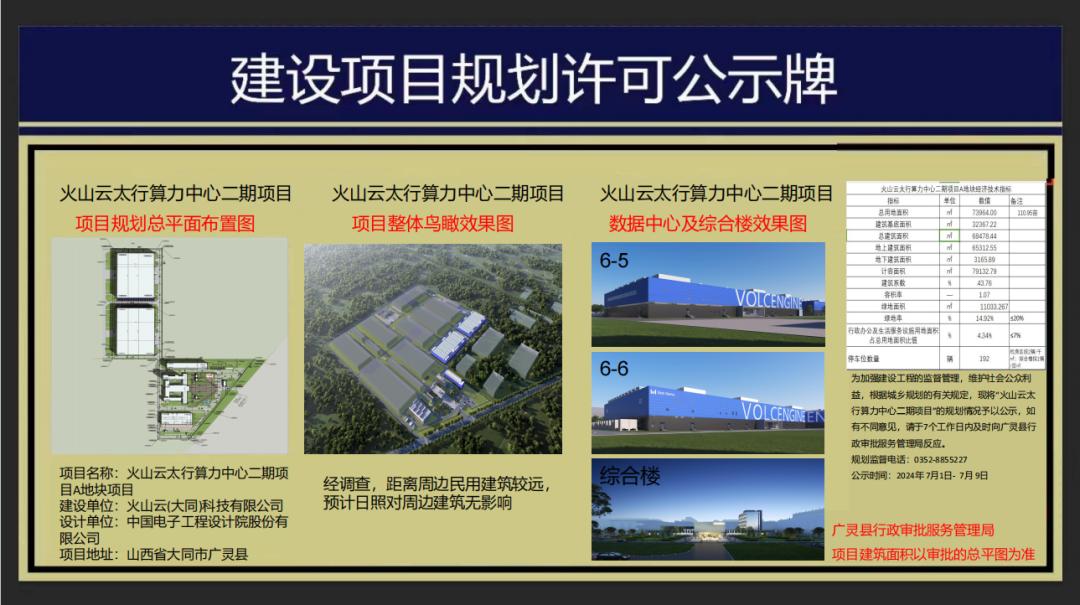
Source: Guangling County People's Government official website
The AI we see in daily life is chatbots and videos generated in a few seconds, but when it lands in the real world, it consists of rows of computer rooms, arrays of servers, and a huge set of supporting infrastructure behind them.
Although chips usually get the most attention, getting the chips is only the first step. The real difficulty lies in how to turn individual chips into stably operable computing power.
Since the beginning of this year, NVIDIA H200 sales to China have gone through repeated approval and delivery processes. Even with a license, it does not mean the chips can be obtained immediately. At the same time, the construction of data centers, equipment deployment and final power supply also take a lot of time.
This means that investment in AI infrastructure is not only huge in amount, but also requires advance layout and continuous capital injection.
As the demand for computing power continues to grow, the capital expenditure of major tech giants is also expanding rapidly.
At the beginning of 2025, Alibaba announced that it would invest at least 380 billion yuan in the next three years to build AI and cloud computing infrastructure, spending about 67.7 billion yuan in the second quarter of this year alone.
ByteDance is more aggressive. According to media reports, ByteDance previously discussed internally raising its 2026 capital expenditure to a maximum of $70 billion, equivalent to about 470 billion yuan, with the focus still on data centers and other AI infrastructure. This figure may be adjusted in the end, but it is enough to illustrate the scale of this competition.
This sense of urgency can also be seen in Zhang Yiming.
When he announced his resignation as ByteDance CEO in 2021, Zhang Yiming said in an internal letter that he hoped to "take a 10-year horizon" to spend more time learning knowledge, thinking systematically and researching new things.
In July this year, he made a rare speech at an internal meeting of the Seed team, clearly stating that the company should not rely on distilling competitors' models to obtain short-term rankings, and expressed his willingness to sacrifice part of the short-term revenue for long-term goals.
On model R&D, Zhang Yiming still emphasizes long-termism, but in terms of computing power and infrastructure investment, ByteDance is clearly accelerating its pace.
The reason is not complicated: if your model falls behind today, you can still iterate it in half a year. But if other players have already installed a large number of GPUs in the computer room and put them into operation, while your data center is still under construction and waiting for power supply, this gap in time will be almost impossible to make up.
Moreover, in the AI era, infrastructure is no longer just the support behind the business, it itself is becoming part of the business.
The maximum capability of the model, the number of users it can serve, and whether the cost can be reduced are all directly constrained by computing power. To a certain extent, the upper limit of business development is determined by how far the infrastructure is built.
Therefore, the competition in AI may last for many years, but the race for infrastructure layout is concentrated in the next few years. What major tech giants are really competing for is not just chips, but also time.
But this brings up another question: since they have hundreds of billions of yuan in cash on their books, why don't they just spend their own money?
Because the company's capital is never used for only one purpose. Share repurchases, acquisitions, and development of new businesses all require funds, and reserves also need to be set aside for potential risks and opportunities in the future.
Infrastructure such as servers and data centers will continue to generate value for many years. Using long-term funds to support long-term investment is a very natural choice.
Tencent is a very intuitive example. Although it does not earmark the bond issuance funds for AI, long-term funds obviously leave more room for large-scale investment in the future.
AI Is Starting to Generate Returns
Of course, there is another important premise for major tech giants to dare to spend money so aggressively. The accounts are starting to add up.
At Tencent's earnings meeting for the second quarter of this year, an analyst asked a very direct question: if calculated based on the capital expenditure of about 53 billion yuan in the second quarter, the annualized capital expenditure will exceed 200 billion yuan. How will the subsequent depreciation and amortization affect profits? How long will it take for the new revenue brought by AI to cover these costs?
The answer from James Mitchell, Chief Strategy Officer of Tencent, revealed another layer of logic behind the company's capital expenditure.
According to him, under the current computing power demand and rental price, if Tencent rents out the newly added computing power directly to third parties like some emerging cloud computing companies, it can almost immediately cover the equipment depreciation and soon get good returns.
Tencent President Martin Lau then supplemented the calculation: some of the computing power that was prepaid and ordered a few months ago can even generate a profit of more than 30% if resold now.
This is equivalent to providing a "safety cushion" for Tencent's AI capital expenditure: if the company's own AI business grows rapidly, the computing power will be used internally; if external demand is more prosperous, it can also be monetized through cloud services.
Computing power is changing from a pure cost to a productive asset that can generate revenue.
Alibaba is also doing similar calculations. In August this year, Wu Yongming, CEO of Alibaba Group, said at the earnings meeting that according to the current average gross profit margin of AI products, AI-related capital expenditure can be recovered in about 3 years. With the improvement of gross profit margin and operational efficiency, the payback period may be shortened to 2.5 years, or even about 2 years in the future.
He also mentioned that the A100 chips Alibaba purchased in 2020, and even the V100 chips purchased in 2018, are still running at nearly full capacity, and their actual service life is far longer than the theoretical depreciation cycle.
At the same time, revenue has also started to grow. Revenue from Alibaba's AI-related products has achieved three-digit growth for 12 consecutive quarters, with annualized revenue exceeding 49.5 billion yuan. In the second quarter of this year, Kuaishou's Keling AI also generated revenue of more than 850 million yuan.
These figures do not yet prove that the hundreds of billions of yuan invested in AI have been fully earned back. But at least, major tech giants no longer have to rely solely on imagination to calculate the future of AI. How much to invest, how long to get the money back, and how much revenue can be generated, these accounts are becoming clearer and clearer.
As a result, a new cycle is taking shape: the more computing power you have, the more models you can train and the more customers you can serve; after revenue grows, the company will have more confidence to continue investing, and it will be easier to get the next round of financing.
Capital is converted into computing power, computing power brings business growth, and business growth supports the next round of investment.
But the trend in the capital market is also changing.
In the first half of this year, whether in China or the United States, capital was very enthusiastic about AI. But entering the second half of the year, the market has become more cautious. Whether high valuations can be realized and how long it will take for huge investments to pay back are getting more and more attention.
This is also why Alibaba's HK$80 billion share placement is noteworthy. Alibaba is not short of cash, but it still chooses to raise the funds now. ByteDance's expansion of the syndicated loan scale and Tencent's issuance of long-term bonds actually have similar considerations behind them.
For major tech giants, it is obviously more prudent to prepare funds for the next few years in advance while financing is still easy, rather than waiting until they really need money to raise funds.
Because it is not just these few companies that need money next. Platform companies, chip companies, cloud vendors, and large model companies will all continue to increase their investment. When everyone needs tens of billions or hundreds of billions of yuan in funds at the same time, capital itself may become a scarce resource.
These major tech giants are increasingly aware that the AI battle is very different from the internet era. Technology determines whether you can get a seat at the table, and how deep your pockets are may determine how long you can stay at the table.
This article is from the WeChat official account "Huashang Taolue" (ID: hstl8888), written by Huashang Taolue, authorized for release by 36Kr.