The entire internet is astounded: an unsolved problem that had stumped a Fields Medal laureate has been cracked by two high school students using AI.
Can you believe this?
Before even enrolling in university, two teenagers have already carried forward the research work of a Fields Medal laureate.

Just today, a piece of news that stunned everyone came out of the UCLA Math Circle ——
Two high school students, Aayush Bathija and Prince Rohatgi, with the guidance of a postdoctoral researcher, solved a tough problem that mathematician June Huh had never managed to crack.
What is even more striking is that this proof was completed with heavy AI assistance!
The two AI tools used are Claude Opus 5 and GPT-5.6 Sol respectively.

At present, the 75-page paper titled Bounded Ratios of Lorentzian Polynomials has been published on arXiv.
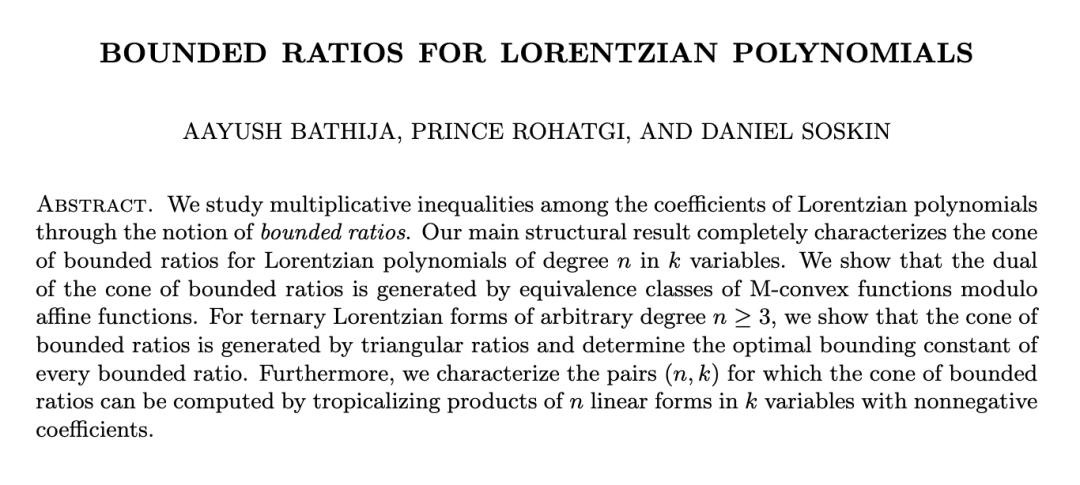
Paper link: https://arxiv.org/pdf/2609.05341
The names of the two high school students and one postdoctoral researcher are all listed in the author section.
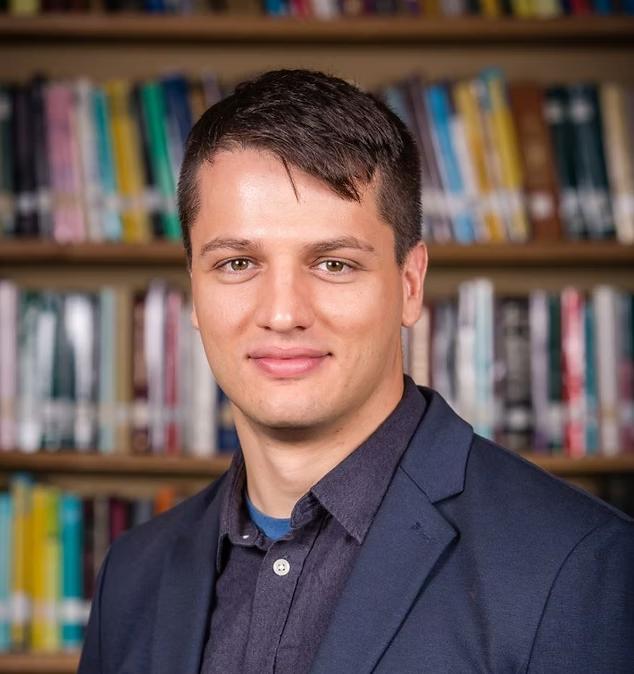
The supervisor of the two high school students, Daniel Soskin, postdoctoral researcher at UCLA
So what exactly is the problem they solved in this research?
To clarify this point, we have to start with the work of Fields Medal laureate June Huh.
What on earth did they work out?
June Huh is a Korean mathematician who won the Fields Medal in 2022.
His experience is also quite legendary: he dropped out of high school to work as a poet, then later switched to pure mathematics research, and won the Fields Medal at the age of 39 (the Fields Medal is only awarded to young mathematicians under 40).
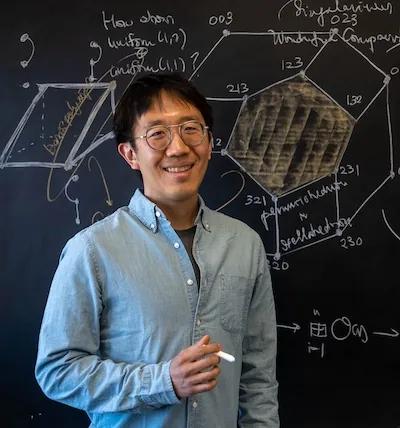
In 2020, the Lorentzian polynomial theory he established with his collaborators is one of his most important representative works.
The name may sound unfamiliar, but "polynomials" are something everyone has encountered in middle school. The number in front of each term is the coefficient.
The special feature of Lorentzian polynomials is that there are strict mathematical constraints between these coefficients, and they cannot be matched arbitrarily.
This theory connects problems in combinatorial mathematics with inequalities between geometry and coefficients.
What this research explores is exactly how strong these constraints are.
For example, multiply some coefficients and divide the product by other coefficients, and you will get a ratio.
As long as the polynomial meets the specified conditions, is there a "ceiling" for this ratio that can never be broken through?
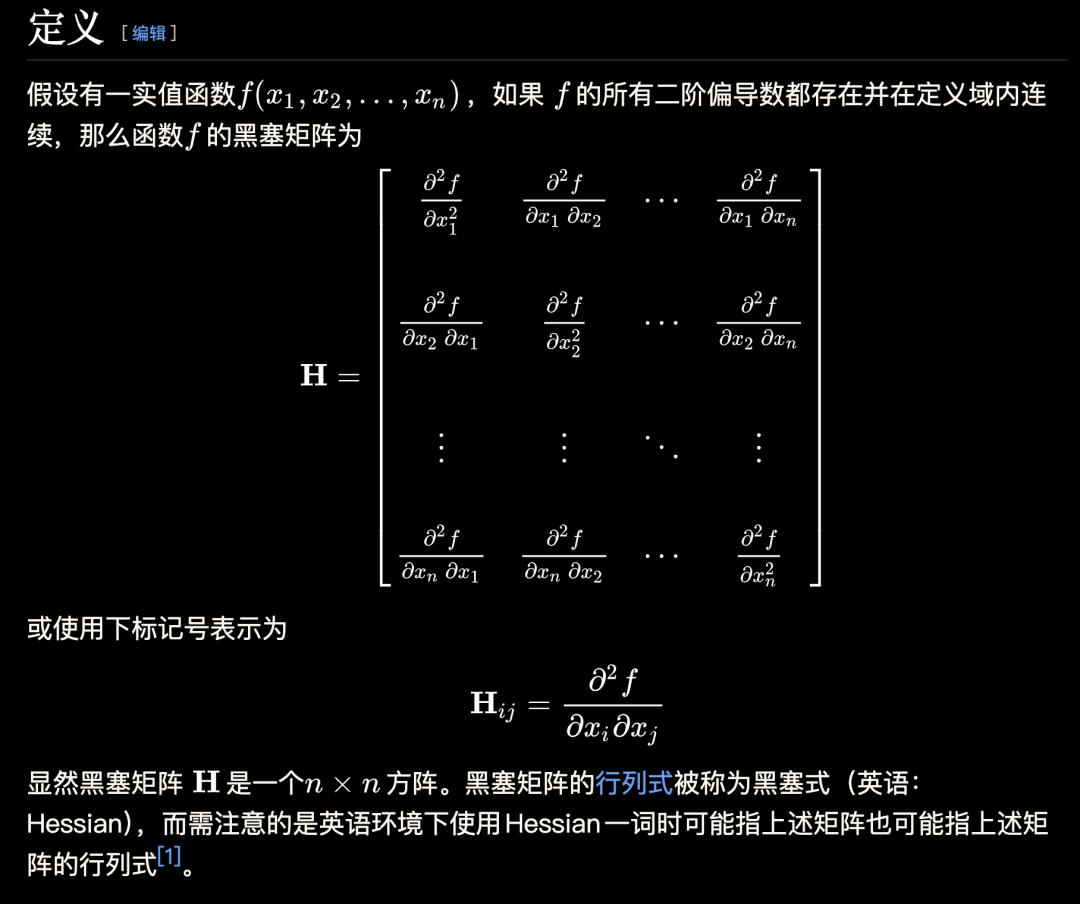
Do you still remember the definition of the classic Hessian matrix in advanced mathematics?
It is not difficult to calculate the ratio of a certain set of coefficients. The real difficulty is: facing an infinite number of polynomials that meet the conditions, determine which ratios always have an upper bound and which can increase infinitely.
If there is an upper bound, we need to further ask: how low can this upper bound be to get the most accurate answer?
Previously, June Huh and his collaborators have characterized which ratios have upper bounds in quadratic Lorentzian polynomials, and found the optimal upper bound in the case of three variables.
But this line of research is far from complete.
When we go from quadratic to cubic, quartic, or even any arbitrary degree, do the original rules still apply?
The higher the degree, the more complex the relationship between coefficients. The conclusions that hold in the quadratic case cannot be directly applied to higher degrees.
This is exactly the gap that the two high school students targeted in this research ——
Advance the research on coefficient ratios to higher degrees, clarify which ratios are always bounded, and further find the most precise upper bound.

The core formula of the paper, the "Main Structure Theorem", extends the previous conclusions related to quadratic Lorentzian polynomials to any arbitrary degree. It shows that whether a coefficient ratio has a uniform upper bound can be completely determined by a set of discrete convexity conditions.
At this point, you only need to remember one question: How high can these constrained coefficients push the ratio?
Next, we will use a simple example to explain this "ceiling" clearly.
Lorentzian Polynomials: There are "equilibrium constraints" between coefficients
First look at a polynomial:

Here a, b, c are all positive numbers. Writing the middle term as 2b is to make the subsequent relationship more concise.
In this simplest case, the condition for it to be a Lorentzian polynomial is exactly:
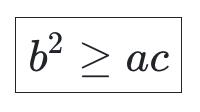
In other words: If the coefficients at both ends are very large, the middle coefficient cannot be too small. This is a beginner example of the log-concave property embodied in the Lorentzian structure.
For example, if a=4 and c=9, then b must be ≥6. You cannot arbitrarily change b to 1 and still expect it to belong to this polynomial family.
When there are more variables and higher degrees, these constraints will become more complex, and various derivative results need to jointly meet specific conditions. The formal definition involves a matrix describing curvature, which has an eigenvalue structure of "one positive and all others negative" in the strict case. The name "Lorentzian" corresponds to this positive and negative structure. However, just remembering that "the coefficients are subject to a set of interrelated constraints" is enough to understand the main line of this article.
Transform the inequality we mentioned earlier:
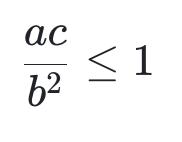
This is called a "bounded ratio": no matter how you choose the coefficients that meet the conditions, this ratio can never exceed 1.
But the reverse is not true:
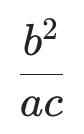
There is no uniform upper bound for this ratio.
For example, fix a=c=1, and let b keep increasing, which still satisfies the Lorentzian condition, but the reversed ratio can be arbitrarily large.
So it is natural to ask:
Facing more complex polynomials, when we multiply and divide different coefficients, which combinations have upper bounds and which do not?
This paper aims to systematically answer this question, and the previous quadratic example belongs to the existing basic case.
Two high school students teamed up with AI to crack the problem
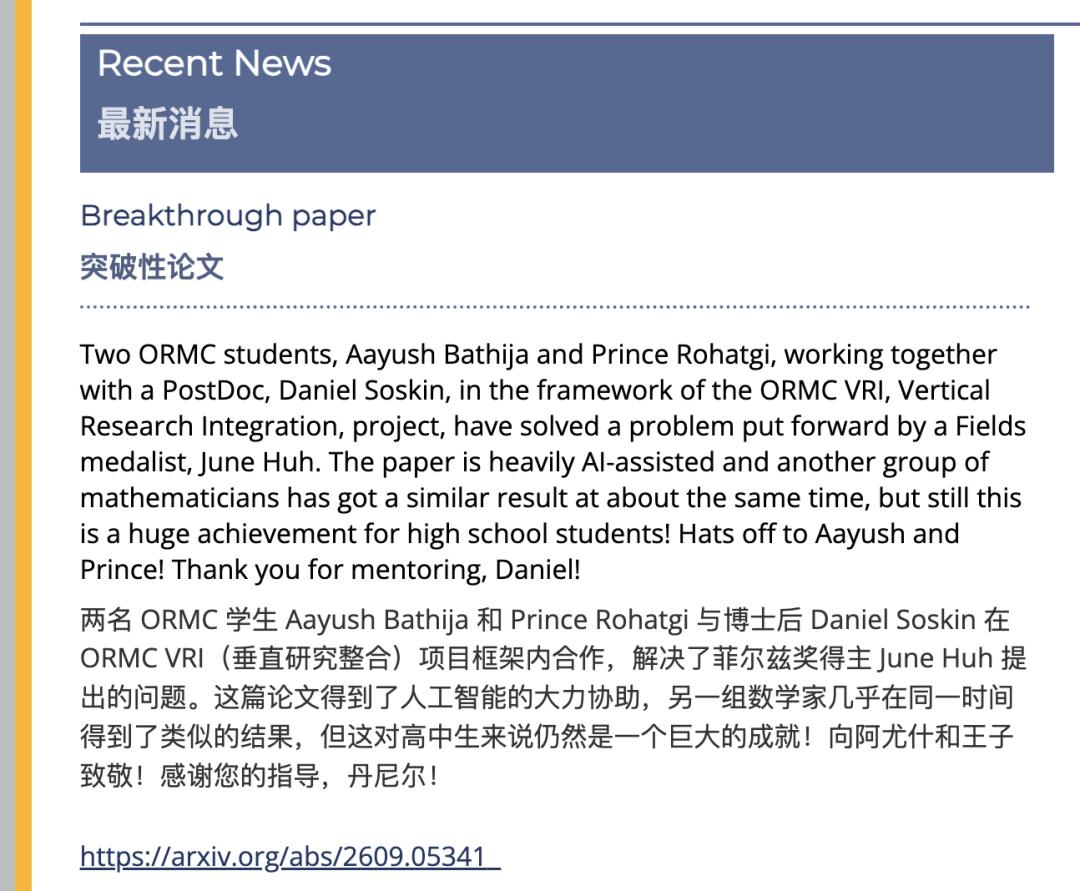
The two students who wrote this paper, Aayush Bathija and Prince Rohatgi, both come from Oak Park High School in California.
They are also members of the UCLA Olga Radko Math Circle (ORMC).
Aayush is a sophomore in high school and is an AIME qualifier. Prince is currently a senior, who has also been admitted to AIME, and serves as the lead teacher for the AMC 10/12 (equivalent to the grade 10 level) competition course in the math circle.
In the past, a high school student who wanted to get access to the "Fields Medal-level" field needed at least 5-8 years of university and doctoral training.
But this time, under the guidance of Daniel Soskin, a postdoctoral researcher in the Department of Mathematics at UCLA, they directly teamed up with AI to fight a beautiful blitz.
https://circles.math.ucla.edu/circles/index.shtml
The core of their problem-solving is to deeply embed AI and formal computing tools into the core workflow of mathematical discovery.
The overall core idea of the proof can be understood as: Check whether a ratio is likely to get out of control, and first study how it changes in extreme cases.
Turn complex values into simple exponents
Let t get closer and closer to 0, and the three coefficients are taken as:

Then:
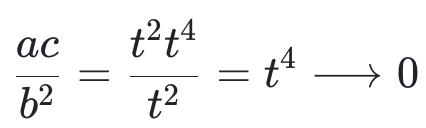
The reversed ratio is t^-4, which will tend to infinity.
The most useful point here is: Multiplication and division are transformed into addition and subtraction of exponents. The positive or negative sign of the exponent directly tells us whether the ratio will shrink or skyrocket.
This idea of extracting the "dominant power" is related to the "tropicalization" method used in the paper. The existing Lorentzian polynomial theory tells us that the legal power patterns are controlled by a discrete convexity rule called M-convexity.
It can be understood as a mathematical rule of "which change speeds can appear at the same time".
The key step of the paper is to prove: As long as a ratio can increase infinitely, we can find a path with this power characteristic to expose the out-of-control situation.
Therefore, the inspection of these paths can be upgraded to a complete criterion. Tools such as the curve selection lemma in semi-algebraic geometry are used in the proof.
And don't forget at this point that all these advanced achievements were accomplished by the two high school students with the help of AI.
Claude and ChatGPT participated in the "proof idea" generation
In the acknowledgements section of the paper, the authors stated directly ——
Claude Opus 5 and GPT-5.6 Sol are the core tools used in this proof.
