Even a 500-million-yuan order is rejected? Auto parts suppliers all want to escape the automotive black hole.
"From January to July 2026, the revenue of the automotive industry reached 6.078 trillion yuan, up 2.7% year on year; the cost was 5.4058 trillion yuan, up 3.8%; the profit was 216.2 billion yuan, down 20% year on year; the profit margin of the automotive industry stood at 3.6%."
Since the beginning of this year, China's automotive industry has not had an easy time. In addition to declining sales, the income of every industry practitioner has also started to shrink.
Cui Dongshu, Secretary-General of the China Passenger Car Association, said that in the first seven months of 2026, the revenue of the automotive industry increased slightly, but the final profit plummeted by 20%, with a sales profit margin of only 3.6%. Even in July, the monthly profit margin of the automotive industry further dropped to 2.4%.
The knock-on effect of the difficulty in selling vehicles has turned into the difficulty of making profits. Behind these figures, there is another easily overlooked problem: when the profit of vehicle manufacturers is under pressure, the pressure will inevitably be transmitted to the more upstream sector, the supply chain.
In the past few years, the automotive industry chain has attached the utmost importance to scale. Whoever can get large customers, enter large projects and obtain large orders will have greater room for survival.
Driven by the trend of the new energy vehicle era, new and old component suppliers for power batteries, chips, LiDAR, exterior and interior trims, etc., have even chosen to "lose money" to win customers in order to keep up with the market rhythm.
But now, more and more new and old component enterprises are starting to recalculate an account: which is more important, to stay alive or to fulfill orders?
01
Automakers' income shrinks, suppliers seek changes
Auto parts enterprises in the Yangtze River Delta have clearly felt this change.
In August this year, when Zhejiang media investigated the local new energy vehicle industry chain, it found that the average profit margin of more than 2500 auto parts enterprises above designated size across the province was generally lower than 5%. Some enterprises faced the dilemma of shrinking orders, idle production capacity, and even "the more orders, the more losses".
Among them, Cabey in Ninghai, Ningbo is a typical case.
"We just voluntarily gave up a 500 million yuan order," said Jiang Xiaojun, Deputy General Manager of Cabey. "We would rather not take orders from low-price customers."
As an important supplier in the field of new energy vehicle cables, Cabey's new energy orders still maintained growth in the first half of this year. However, in the face of a 500 million yuan order, the company finally chose to give it up voluntarily. The reason is very simple: the profit margin of this order is only single-digit, while the break-even profit rate calculated by the enterprise is about 10%.
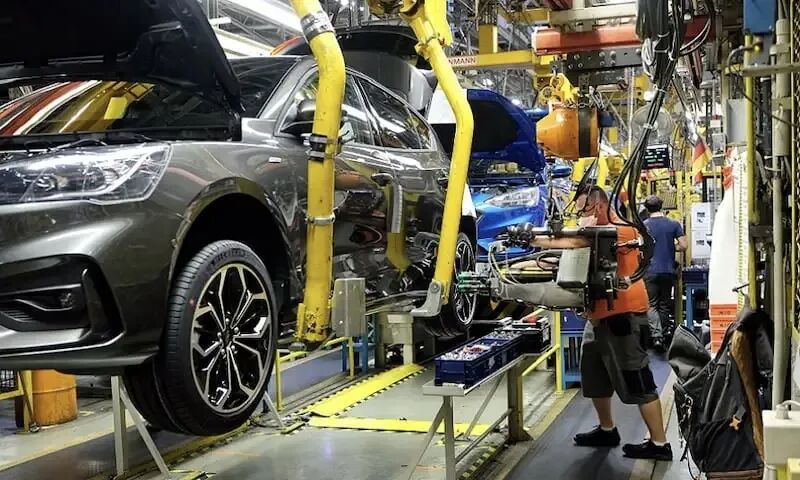
Giving up a 500 million yuan order sounds like "counterintuitive" operation. In fact, this is an epitome of component enterprises beginning to shift from "snatching orders" to "calculating profits".
For auto parts enterprises, the order amount does not equal revenue, let alone profit. Winning a large project often means purchasing raw materials in advance, expanding equipment, recruiting personnel, building production lines, and also bearing the costs of R&D, molds and quality management.
If the final product price is too low, coupled with the account period, quality claims, and idle production capacity caused by the lower-than-expected sales volume of related models, large orders will instead turn into a huge cash flow black hole.
The situation in Taizhou, Zhejiang is the same. A large number of auto parts enterprises supporting vehicle manufacturers are gathered here. In the first half of this year, the output value of many enterprises was basically the same as that of last year, but the overall profit scale was almost cut in half.
A local industry leader said bluntly that after the unit price of vehicles drops, the pressure will eventually be transmitted to suppliers — this is the really tricky problem of the current automotive industry chain.
Automakers cut prices in the terminal market, while suppliers can hardly raise prices synchronously when the costs of upstream raw materials, labor and energy rise.
Price drops can be transmitted quickly, but cost increases are difficult to pass down. Component enterprises caught in the middle have become the victims of the reform of the entire industrial chain.
02
Chronic problems: cutthroat competition, annual price reduction, account period...
The dilemma of the auto parts supply chain did not emerge suddenly, but is the result of years of accumulation.
The first is the inherent "active cutthroat competition" and "passive cutthroat competition". In the early stage, in order to obtain orders from automakers, many component suppliers often cut their own profits to enter the sight of automakers with low prices. After that, automakers will further compare prices and negotiate prices.
An industry insider revealed the details — "After the bidding, the automaker will publicize your price ranking, and then ask if you can lower the price. When no one can lower the price anymore, they will make a private appointment to finalize the bid... How can you play this game?"
The second layer of pressure comes from annual price reduction. The automotive industry has long had an annual price reduction mechanism for suppliers. Under the current domestic price war environment, the mainstream negotiation target for ordinary parts is 5%-10%, for low-threshold parts it can reach over 10%, and there is almost no annual price reduction for core monopolized parts.
Under normal circumstances, technological progress, scale expansion and production efficiency improvement can absorb part of the price reduction. But when the price war enters an extreme stage, the price reduction exceeds the enterprise's own cost optimization capacity, and suppliers can only bear the loss with their own profits.
What's more troublesome is that the costs of raw materials, labor and energy will not drop synchronously just because automakers cut prices.
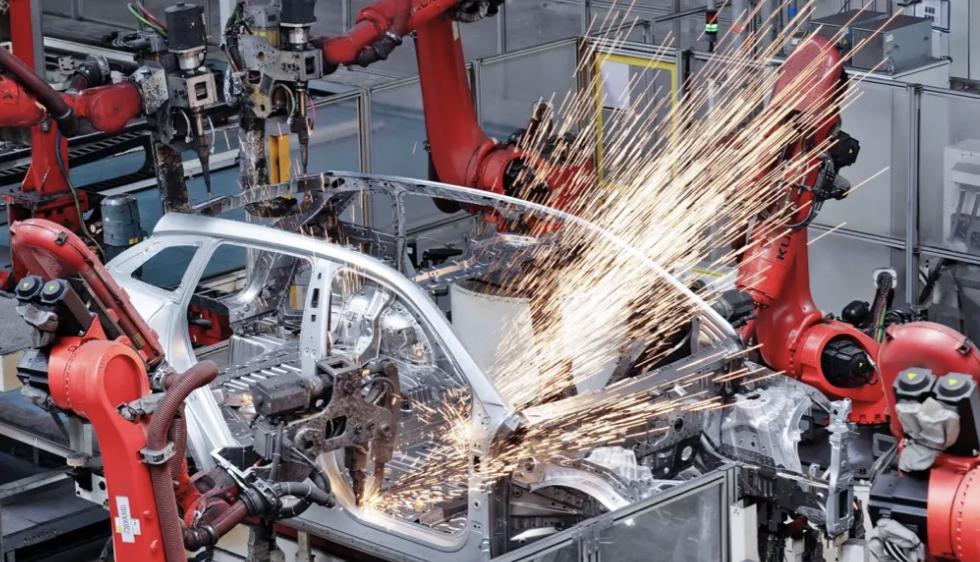
The third layer of pressure comes from the account period. The automotive supply chain itself is a capital-intensive industry. Suppliers need to purchase raw materials first, organize production, and then deliver the products to vehicle manufacturers. It takes a long time to actually get the payment.
For large suppliers, this may only be a pressure on financial indicators. But for small and medium-sized enterprises, it directly determines whether the enterprise can survive. Because when an enterprise really goes bankrupt, it is not necessarily because there are no orders, but because there is no money in the account.
The fourth layer of pressure comes from the huge gap between order forecast and actual sales volume.
When an automaker launches a new model, it usually releases a procurement plan to suppliers based on expected sales volume. In order to meet the production capacity requirements, suppliers will purchase equipment in advance, expand factories, add personnel, and even build dedicated production lines.
However, after the new car is launched, if the actual sales volume is far lower than expected, the orders will shrink rapidly. The production line originally prepared for a monthly output of 20,000 vehicles may finally only have 10,000 vehicles, or even 5,000 vehicles.
Orders are reduced, but factory rent, equipment depreciation and personnel costs will not decrease synchronously. For capital-heavy suppliers, this means that the lower the capacity utilization rate, the higher the unit cost. Therefore, the statement "the more orders, the more losses" is not exaggerated.
03
Escape is not the goal, surviving is
In the past automotive industry chain, automakers were responsible for selling vehicles, and suppliers were responsible for expanding production in advance; when vehicles sold well, suppliers made profits along with them; when vehicles did not sell well, the sunk costs of production capacity, inventory and equipment were left to suppliers.
This model could still operate during the period of rapid growth of the automotive industry. But now the automotive industry is gradually entering stock competition, and more and more problems are beginning to break out intensively.
For this reason, component suppliers have taken the initiative to find a second growth curve outside the automotive sector.
The first method is moderate divestment.
Enterprises like Cabey have not completely left the automotive industry. Instead, they have started to screen orders and tilt limited production capacity and R&D resources to higher-value products.
Cabey has previously invested funds to build R&D capabilities, and tried to extend automotive cable technology to fields such as AI data centers and commercial aerospace. This model may become more and more common in the future.
The automotive industry is still a huge market, but "entering the automotive supply chain" no longer means high-quality growth.
The second method is cross-border transformation.
For some small and medium-sized suppliers, if their product technology barriers are limited and they have been trapped in low-price competition for a long time, it may not be the best choice to stay in the automotive industry chain and keep struggling.
Some enterprises have begun to shift their original manufacturing capabilities such as machining, injection molding, cables and sealing to fields such as energy storage, industrial equipment, AI computing hardware and home appliances. This does not mean that these enterprises have abandoned the manufacturing industry, but that they are looking for new value outlets for their manufacturing capabilities.
The third method is production capacity relocation.
Chenyuan Sealing Parts, a leading enterprise in the field of rubber sealing parts in China, is a typical case. Facing the rising domestic raw material prices and continuous price pressure from vehicle manufacturers, the enterprise decisively transferred its production lines to Malaysia. Zhang Lingmin, the person in charge, said: "The automotive industry in Malaysia is still in a stage of rapid development, and a profit margin of about 20% can be maintained there."
This is actually the other side of the globalization of China's automotive supply chain. In the past, Chinese component enterprises went overseas more often following Chinese automakers. Now, the purpose of some enterprises going overseas has become more realistic: to find cost advantages, find new customers, and also find profit space outside the domestic market.
The fourth method is giant-style "decapitation of the tail".
This path is more obvious for multinational component giants. ZF has continued to carry out business restructuring in recent years, including selling its ADAS business, adjusting its electric drive transmission business, and improving profitability through layoffs and business optimization.
The adjustment of Continental Group is more thorough. It spun off its automotive subsidiary (Vitesco Technologies) and sold its ContiTech rubber business, finally concentrating its resources further on the tire business.
Therefore, the so-called "escaping from the automotive industry" does not mean escaping from the automotive industry itself, but escaping from the business model of low gross profit, heavy assets and strong bargaining pressure.
04
The automotive industry cannot rely solely on price wars
It is worth noting that the active "escape" of component suppliers has attracted the attention of the regulatory authorities.
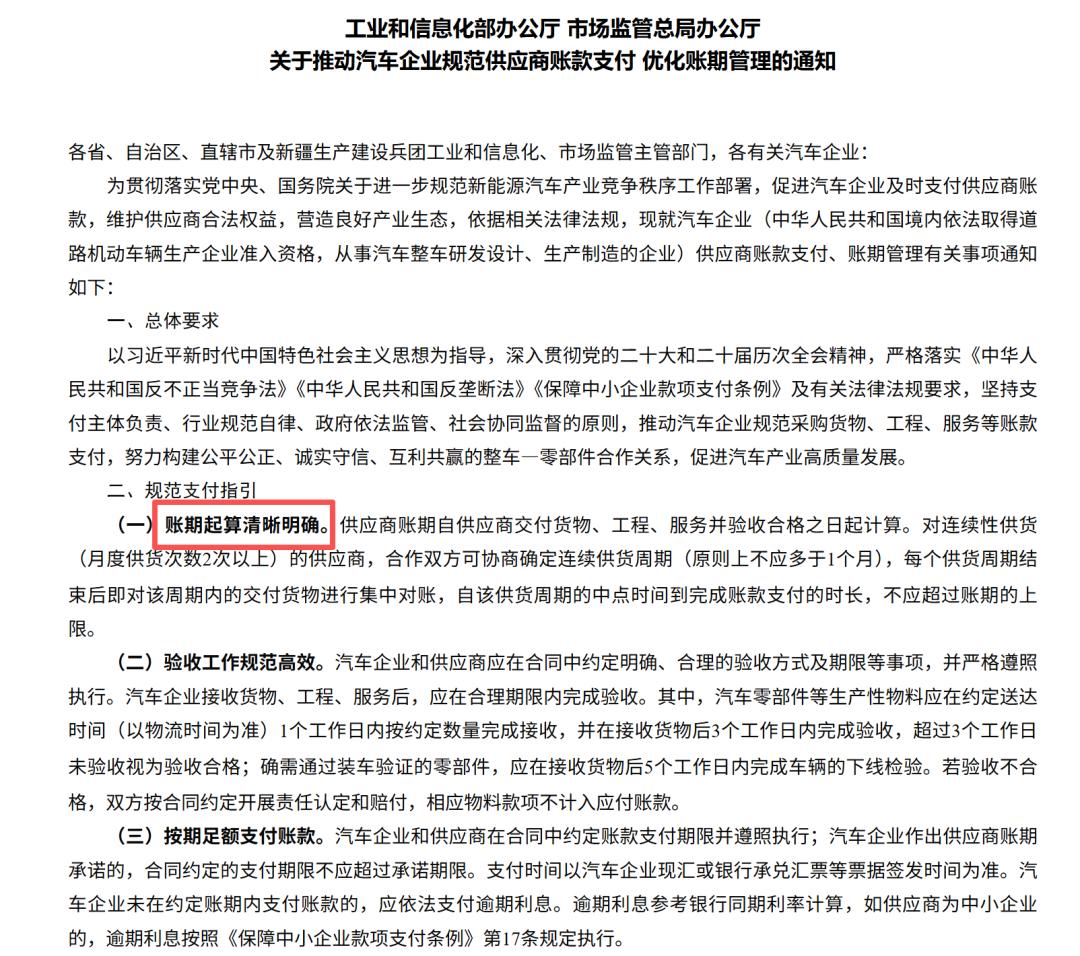
On September 2, the Ministry of Industry and Information Technology and the State Administration for Market Regulation jointly issued the Notice on Promoting Automotive Enterprises to Standardize the Payment of Supplier Accounts Payable and Optimize the Management of Account Periods.
The Notice clearly requires automotive enterprises to standardize the calculation, acceptance and payment of account periods, encourages SMEs suppliers to complete the payment for goods within 30 days after passing the acceptance, and the maximum period shall not exceed 60 days in principle; at the same time, it clearly prohibits forcing or coercing suppliers to accept non-cash payment methods such as commercial acceptance bills and supply chain bills.
This sends a very clear signal: the "anti-cutthroat competition" in the automotive industry is no longer only focused on the price of automotive products at the terminal.
If vehicle manufacturers pass the cost reduction pressure to suppliers, and suppliers pass the pressure to more upstream material enterprises, the entire industrial chain will eventually fall into a cost competition with no winners.
For automakers, lower supplier prices may make short-term financial statements look better; but if suppliers are in a state of low profit or even loss for a long time, it will inevitably lead to quality risks, delivery risks, reduced R&D investment, and more and more enterprises voluntarily exiting the market.
For suppliers, it is difficult to return to the era when "you can survive as long as you get orders" in the future.
The automotive industry chain is moving from incremental competition to efficiency competition. Only those who have core technologies, can control costs, have overseas markets, and can replicate a set of manufacturing capabilities in multiple industries will have real bargaining power and voice.
Therefore, the abandonment of the 500 million yuan order is not simply the meaning of "if you don't do it, someone else will", but more and more enterprises realize that scale is not the end of business, profit is.
Finally, a passage from Wei Jianjun of Great Wall Motors is shared with all automotive industry practitioners:
"Constantly cutting prices, launching price wars, and constantly squeezing suppliers, can he guarantee quality? I think we should be a community of shared interests, not regard the supply chain as a competitive relationship, but a cooperative relationship. Protecting the industrial chain and developing the industrial chain, I don't think it's a responsibility, it's an obligation."
Responsible Editor: Yang Jing Editor: He Zengrong
This article is from the WeChat official account "Auto Community" (ID: iAUTO2010), author: Zhang Zhidong, published with authorization from 36Kr.