Tesla cuts prices ahead of the peak sales season. Is it a good time to buy a car?
The peak season of "Golden September and Silver October" has just kicked off, and Tesla has once again taken the lead in cutting prices.
Among the offers, there is a RMB 5,000 final payment discount for in-stock Model 3, 0% interest for 5 years as financial support, and multiple configuration versions are also eligible for a RMB 8,000 insurance subsidy, plus a RMB 8,000 paint option benefit and a special charging benefit with three options to choose from.
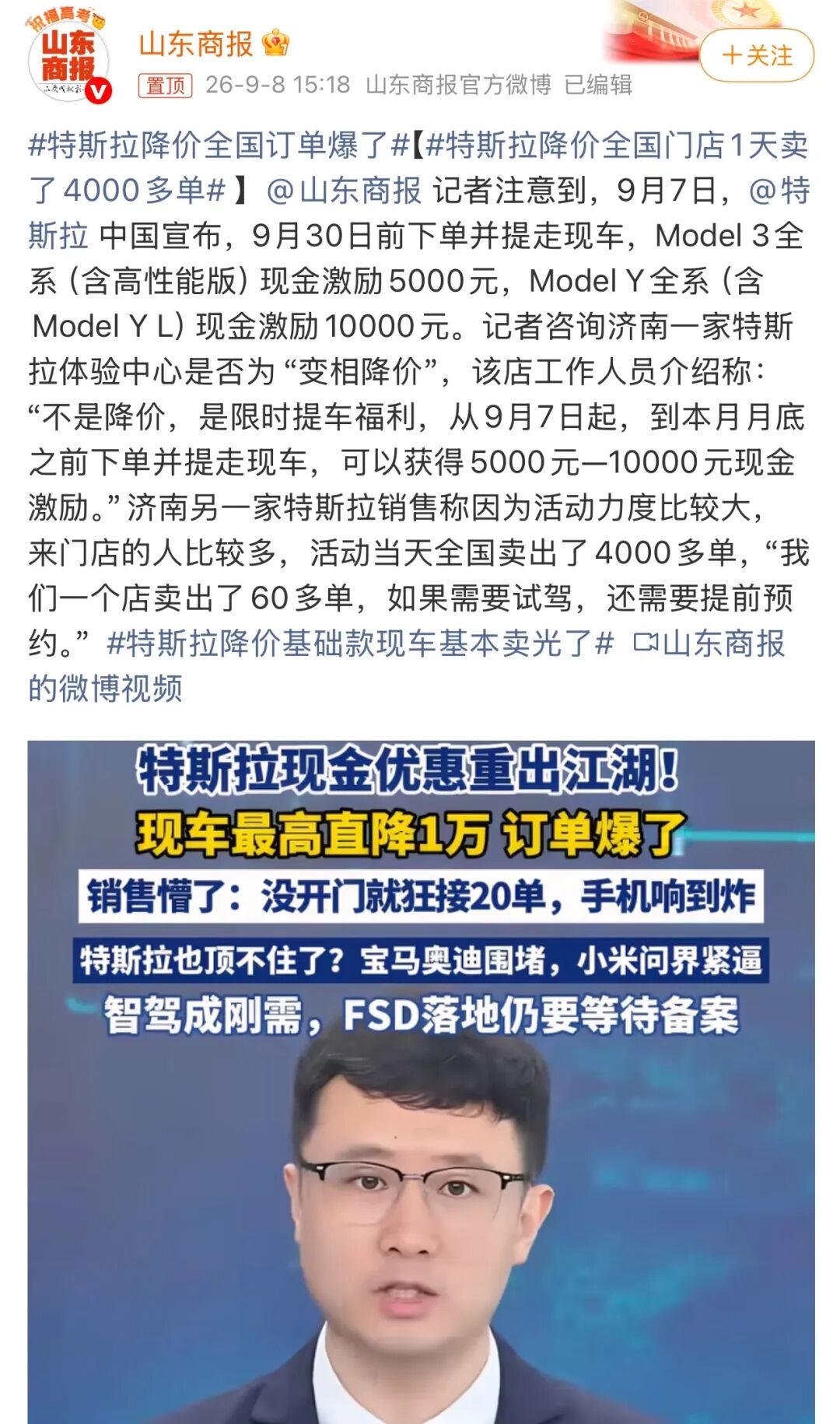
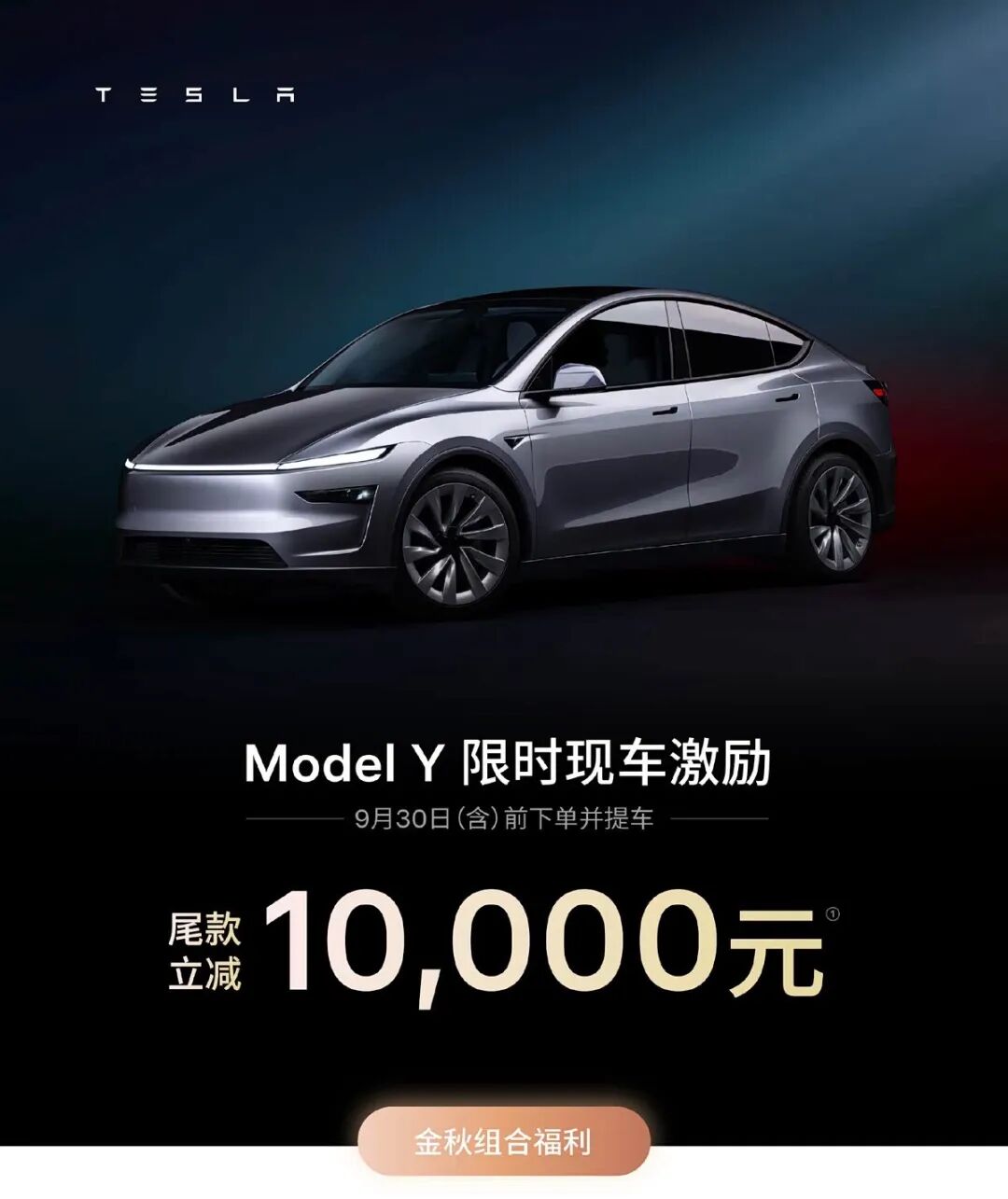
For the other top-selling model, Model Y, the instant final payment discount even reaches RMB 10,000.
Although no specific data is available yet, sales staff in many regions report a sharp surge in orders, and the hashtag #TeslaPriceCutsTriggerNationwideOrderBoom# has directly topped the trending search list.
People who know a little about cars will not find this surprising. Cutting prices when the market cools down has almost become Tesla's regular practice to boost sales.
The sales data tells a more straightforward story: in July this year, 25,158 units of Model Y were sold, showing a relatively steady performance, while Model 3's sales dropped to only 2,091 units. In August, both models returned to the 20,000-unit monthly sales club.
This also indicates that the overall market is picking up. After all, the traditional peak season of Golden September and Silver October is here. Not only Tesla has cut prices, but new favorable policies have also been released, and all mainstream brands have launched new sales promotions.
The general background is that from January to August 2026, the cumulative retail sales of domestic automobiles reached 11.799 million units, a year-on-year decrease of 20%. Many mainstream brands have seen a decline in sales, with their sales target completion rate generally ranging from 40% to 60%. Seizing the last 4 months to sprint for performance is the key window to achieve a turnaround against the trend.
Car companies are launching fierce price wars. For us consumers, is now a good time to buy a car? Old Fox will have an in-depth chat with everyone.
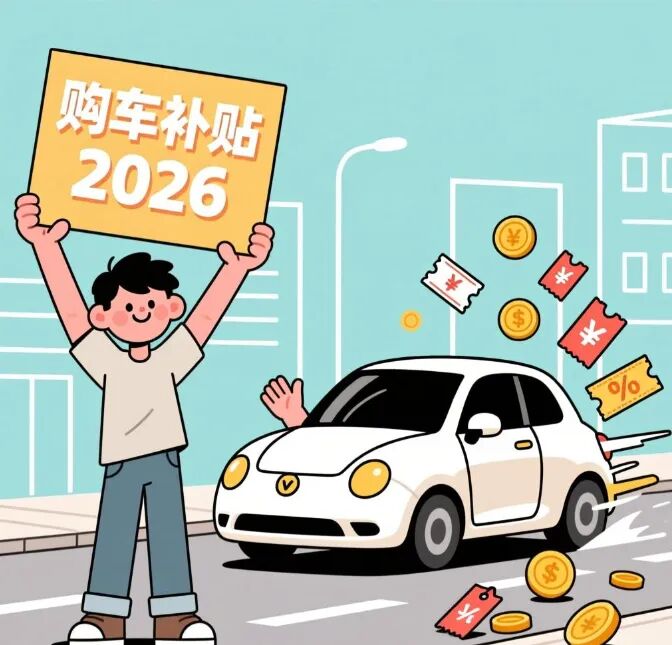
The first aspect is policy-related, covering subsidies, purchase tax and other relevant terms.
These include scrapping subsidies, replacement and renewal subsidies, local subsidies, and a newly added new purchase subsidy recently. There is also a separate purchase tax reduction and exemption policy.
Among them, the intensity of scrapping subsidies and replacement and renewal subsidies has actually shrunk this year. We won't go into details about the specific subsidy standards and amounts, as you can easily find plenty of relevant information online.
The key point lies in the subsidy distribution principle: most provinces and cities implement "quantified allocation, first-come-first-served, until the funds are exhausted". Although the application for subsidies closes at the end of December, according to last year's situation, most provinces and cities have basically distributed all subsidies by the end of October at the latest.
Therefore, for those who are attracted by the scrapping subsidies and replacement and renewal subsidies and do plan to replace their cars to get the subsidies, you really need to take action in the next two months.

As for local subsidies, the amount varies from district to district and from month to month, generally ranging from RMB 1,500 to RMB 4,000. This part is more or less a matter of luck, depending on which wave of subsidies you can catch when purchasing a car.
The newly introduced new purchase subsidy is a brand-new favorable policy, with a total fund pool of up to RMB 300 billion. Starting from September 1, individuals who have never registered small or mini passenger cars under their own names are eligible to apply.
For the purchase of pure electric passenger vehicles, the maximum subsidy is RMB 20,000 (8% of the total price including tax on the invoice). For plug-in hybrid (including range-extended) passenger vehicles, the maximum subsidy is RMB 12,000 (5% of the total price including tax on the invoice). For fuel passenger vehicles with a displacement of 2.0L and below, the maximum subsidy is RMB 6,000 (3% of the total price including tax on the invoice).
This policy is mainly designed to stimulate the consumption willingness of car-free groups such as fresh graduates and farmers. But judging from the differences across different power types, whether it is scrapping, replacement or new purchase, new energy vehicles always enjoy the highest subsidy intensity. There are no fuel cars in the top 10 best-selling models in August, and electrification has become an irreversible general trend.
In addition, you can only choose one from the new purchase subsidy, scrapping subsidy and replacement and renewal subsidy. Which one is more suitable needs to be calculated comprehensively based on the actual invoice of the new car you buy, different subsidy standards, and the residual value of your old car.
It should be noted that the purchase tax reduction and exemption is independent, which is different from the "first-come-first-served" rule of subsidies. The policy has made it clear that the validity period will be extended to December 31, 2027, during which the vehicle purchase tax will be levied at half the rate.
The next part is about the market situation.
The biggest difference from previous years is that although we have entered the traditional peak season, the price cut range of new cars is narrowing.
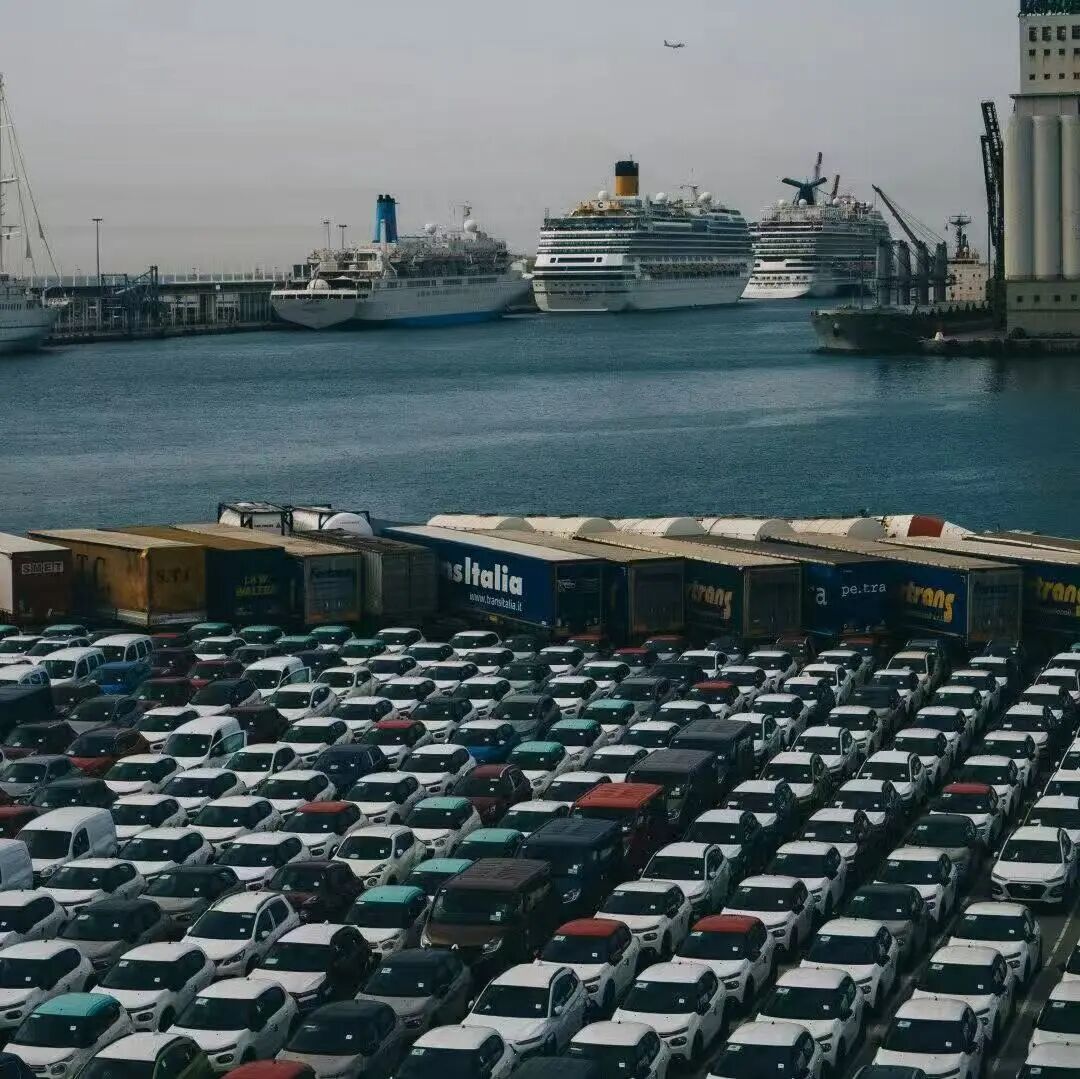
Cui Dongshu, Secretary-General of the China Passenger Car Association, released data: in August, there were only 10 models with price cuts across the whole industry, 13 fewer than the same period last year. The cumulative number of models with price cuts in the first 8 months was 100, 36 less than last year.
Moreover, most of the price-cutting models are pure fuel, hybrid and plug-in hybrid vehicles. The prices of pure electric models are more stable, with only 31 models seeing price cuts, a year-on-year decrease of 33.
In the first 8 months of this year, the price cut intensity of new energy vehicles was 11.5%, while the overall figure for the passenger car market was 12.3%. Cui Dongshu's explanation is that due to rising costs and insufficient demand, prices are relatively firm while consumption remains sluggish.
This situation needs to be viewed separately. On the one hand, the meager profits make car companies unable to sustain the price war. In the first 8 months of this year, the average profit of car companies was only 3.6%, which is "pitifully low" in the manufacturing industry.
At the same time, the domestic market has gradually become stable, with few phenomenal models emerging. A monthly sales volume of over 10,000 units already makes a model stand out in its segment market, and market share is being evenly distributed. There is greater uncertainty about how much actual effect price cuts can bring to boost sales.
On the other hand, the shift in demand and operation strategies has taken place. The more lucrative overseas market has become the main growth point for Chinese brands' sales. Compared with the 8.32 million units exported in 2025, China's passenger car exports have reached 5.244 million units from January to July this year, a year-on-year increase of about 143%.
It is highly likely that the domestic passenger car export sales will exceed 10 million units this year. The overseas market has supported half of the sales of domestic car companies. A very impressive example is Chery, whose overseas export sales in August reached 196,900 units, accounting for about 70.3% of its total sales.
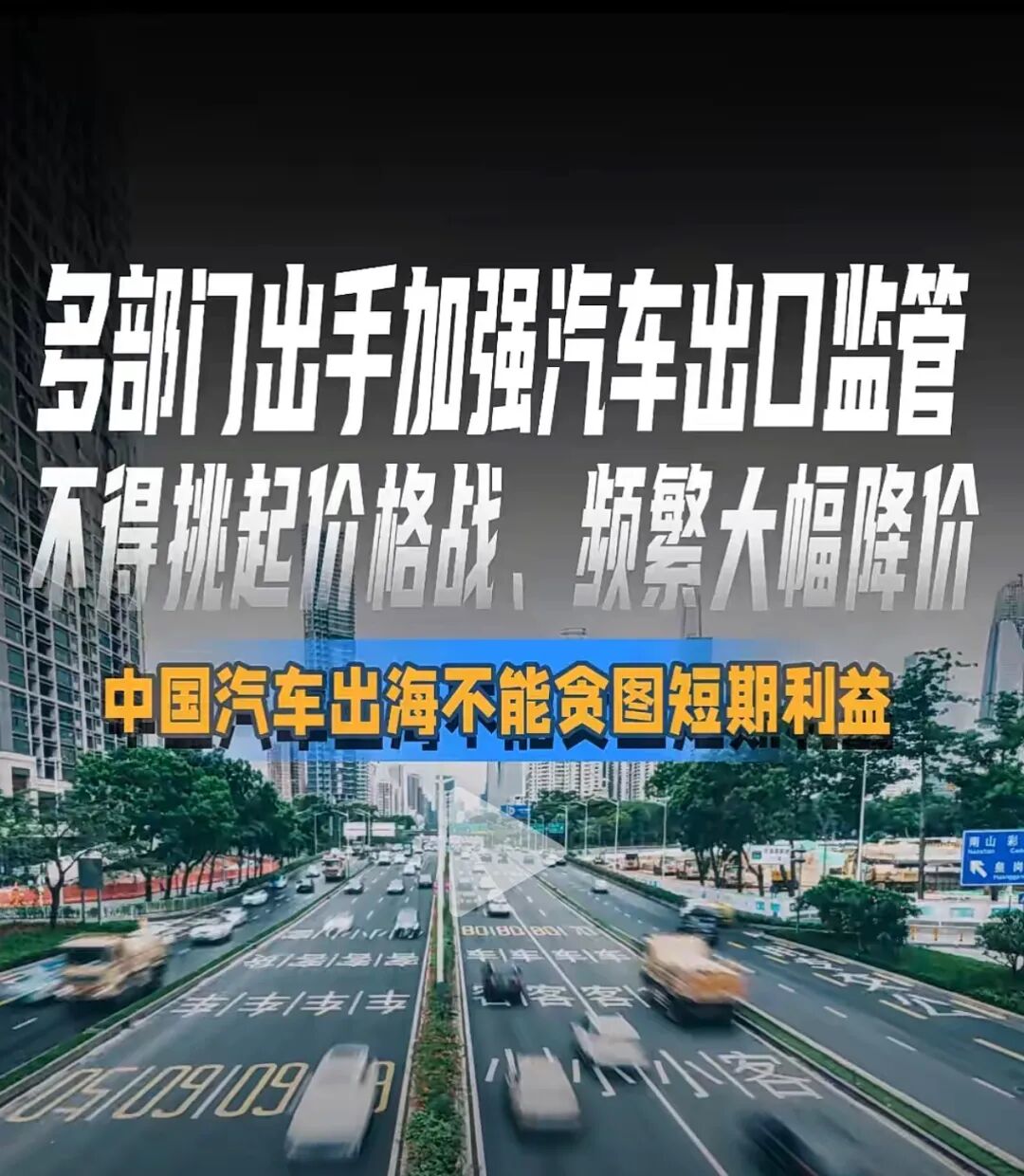
Coupled with the joint supervision of multiple functional departments, the era of "selling cars at a loss to boost popularity" in the domestic market is coming to an end.
But interestingly, the price war is actually unfolding in the overseas market. In the past two years, the average selling price of Chinese brand new energy vehicles overseas has dropped by 20%.
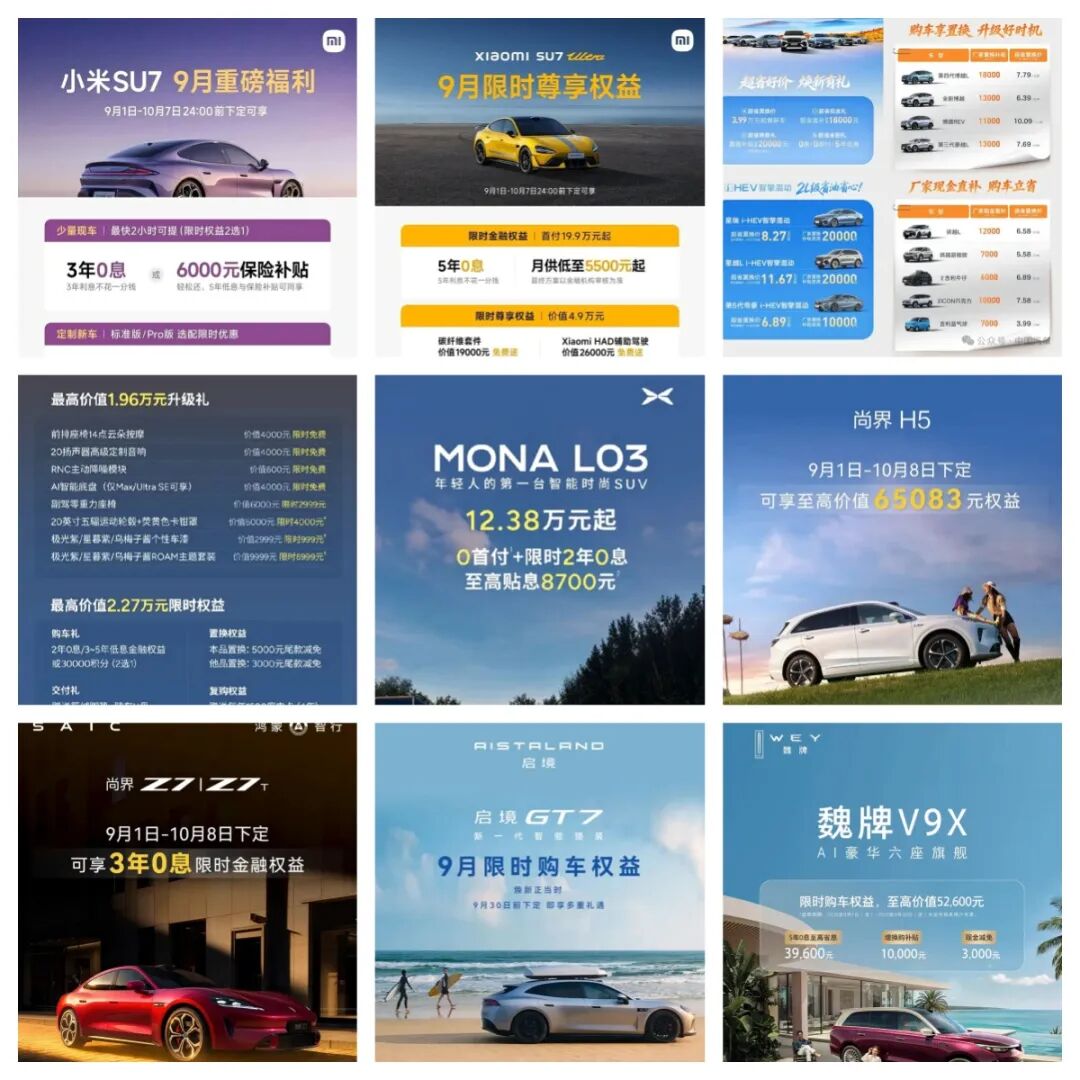
Old Fox also made statistics that in September, many brands including Xiaomi, XPeng, Geely, Seres, Arcfox, Wuling, Tank, Wey, and Aion have launched new preferential policies, but few of them cut prices directly like Tesla. Most of the offers are short-term and conditional benefits such as time-limited insurance subsidies, financial interest discounts, and free optional equipment.
We have talked about the catfish effect before. Although the current price cut range is not large, if Tesla, the "leader", sees its sales continue to surge after price cuts and thus seizes the market share of other brands' models, it is not impossible for a new round of collective price cuts to follow.
Overall, if you want to buy a car at a lower price with better discounts, joint-venture brands that rely on fuel vehicles such as BBA, Toyota, Honda and Nissan are offering more aggressive promotions.
By the end of the year, those who wait for better deals will hardly win easily. At present, some provinces and cities have announced the deadline for national subsidies (scrapping + replacement), most of which are set at the end of September. If you wait for bigger new car discounts, you will end up in an awkward situation where the subsidies are no longer available.
Don't panic if you encounter this situation. If replacing a car is not an urgent need, you can also wait and see if there will be other new subsidy policies next year. Judging from the market trend, the prices of mainstream best-selling new cars in China are gradually stabilizing.
This article is from the WeChat Official Account "Tech Fox" (ID: kejihutv), written by ZT, and republished by 36Kr with authorization.