The 4399 in the AI era is so incredibly fun that I've had an absolute blast with it.
The first ten minutes after I opened Pocket, I thought I had launched an Instagram-styled version of 4399.
Not long ago, Meta officially launched Pocket in the United States. The gameplay of Pocket is very easy to understand: users do not need to write code, just tell AI "what I want to build", and after dozens of seconds, you will get a directly operable mini-game, small tool or interactive page.
After finishing the creation, you can post it to Pocket's feed just like posting a social media status. Other users who come across it can play directly, comment, repost, or modify it to make their own version.
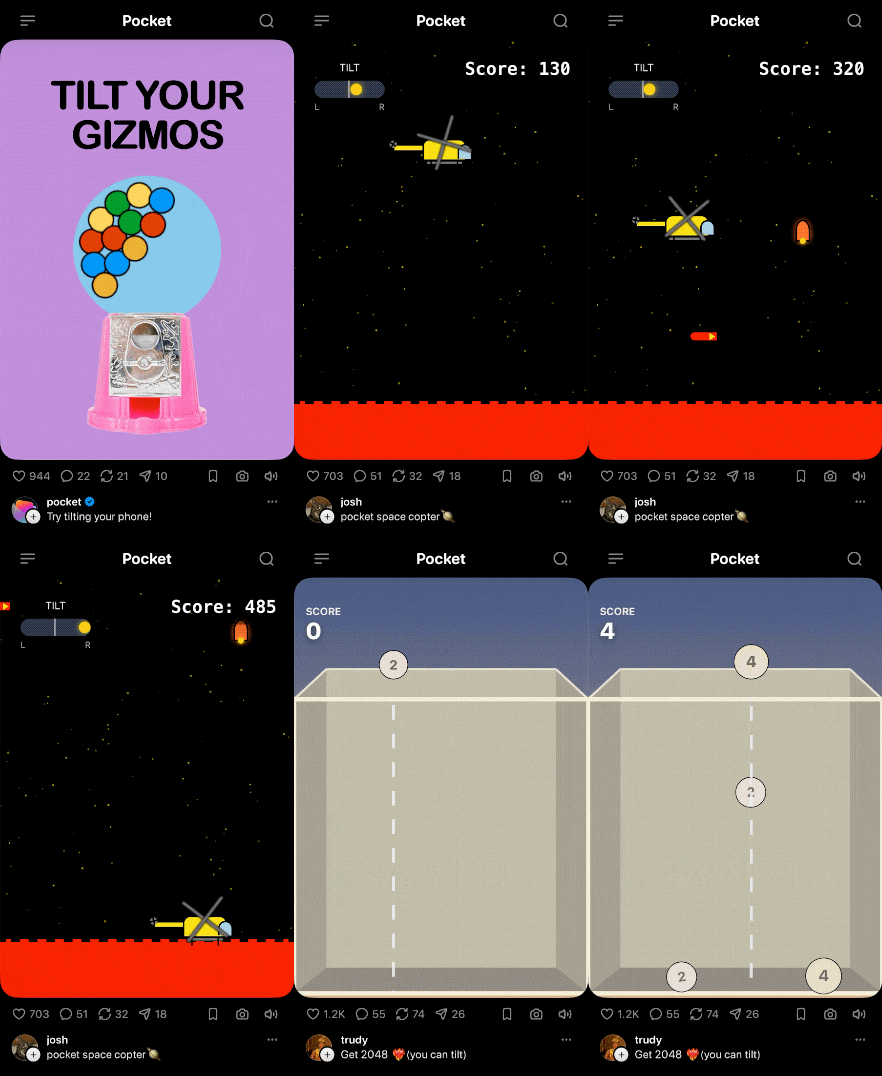
Mini-games you can find after opening Pocket | Image source: Pocket
Judging by the standards of a game player, most content on Pocket can hardly be called "games". They generally have simple visuals, little depth of gameplay, and some can be fully experienced in just over ten seconds.
But oddly enough, I kept scrolling down and couldn't stop...
Aren't they just a few crude mini-games?
The Pocket page is more like a social media platform, rather than a Steam or 4399-style game library. There are no game categories such as action, shooting, or puzzle solving on the page, and I don't need to select games either — I just "play whatever I scroll to".
This is completely different from my usual way of playing games. When I open Steam, I will go to the game library, click into the game introduction page, check if its gameplay is interesting enough, if the system has depth, and then look at the reviews from other players.
But in Pocket, there is only the simple action of "scroll down - play for a bit", and every page makes me curious "what is this?"
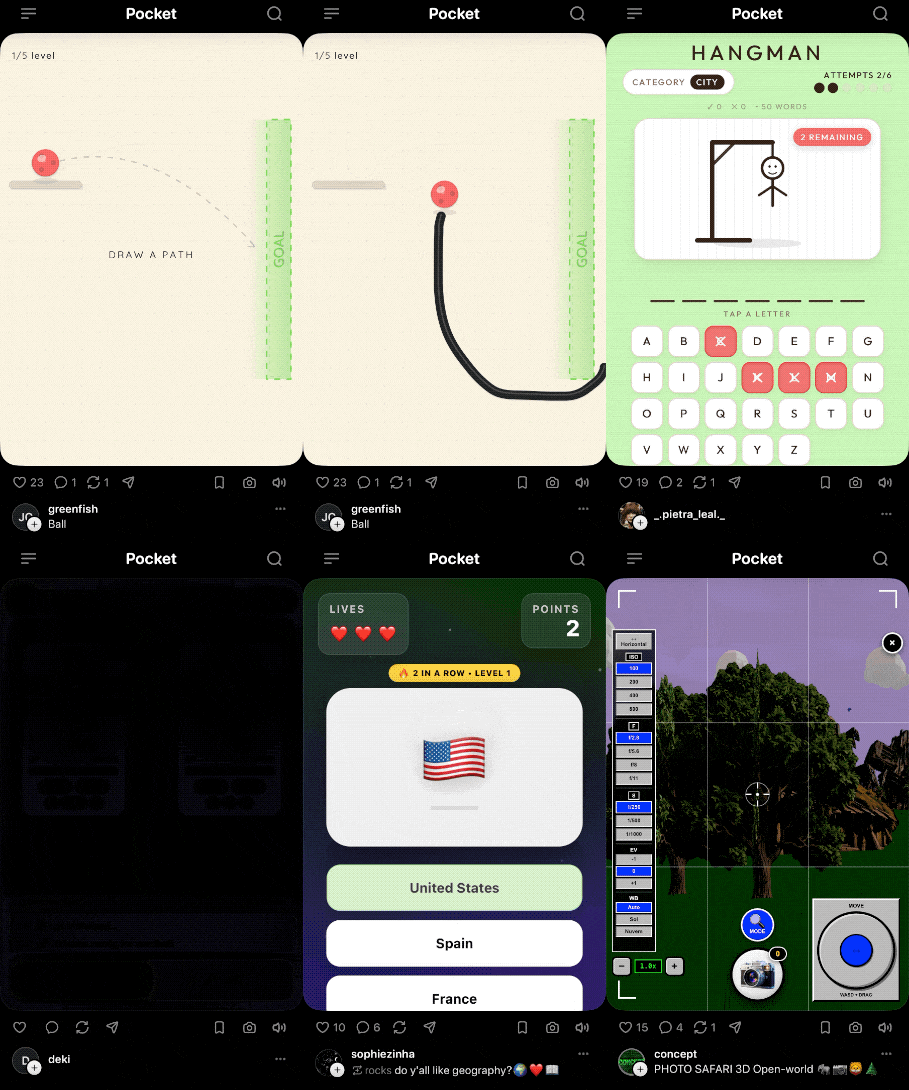
Every scroll down really gives you the feeling of "opening a blind box" | Image source: Pocket
A large part of this curiosity comes from the fact that the games in Pocket are so simple that they don't seem like products of this era.
The most common mini-games you come across in Pocket are the most basic mobile mini-games: for example, tapping the screen frantically to see how many times you can press it in one second; tapping anywhere to trigger dynamic animation effects, or just like *Flappy Bird*, tapping the screen to keep the character "flying", as well as pinball, ping pong, and brick breaker that are common in early video games.
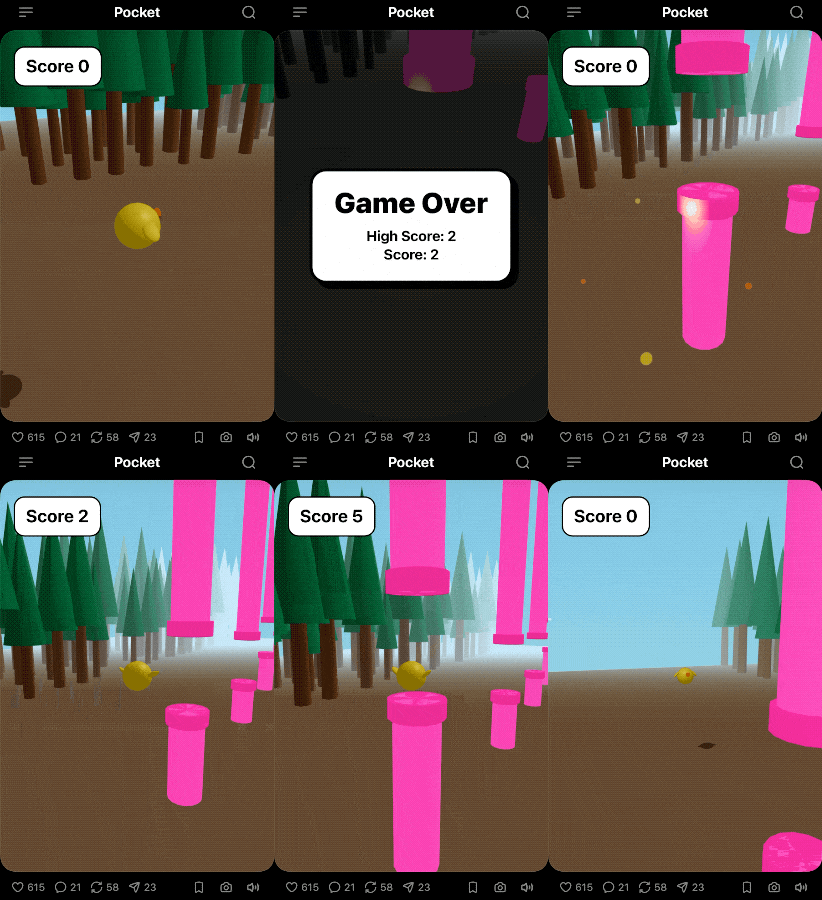
The 3D version of the once viral *Flappy Bird* | Image source: Pocket
There are some that don't even have clear rules, for example, putting several buttons in different positions on the screen, each click makes a sound, and finally you can piece together a piece of music by yourself.
Slightly more complex ones will call the gyroscope of the phone itself, such as letting you tilt the phone to control a marble to roll slowly to the finish line.
When playing these things, I always think of the years around the launch of iOS 7 and 8, when a large number of smartphone mini-games emerged.
Back then, a gameplay could be very simple, and the visuals were not complicated. As long as you brought a little freshness to the newly popular interaction methods of mobile phones such as touch screens and gravity sensing, it was enough for people and friends to take turns playing several rounds.
Many works in Pocket have this retro vibe: the gameplay is obvious at a glance, but when you scroll across them, you still want to play casually for a while.
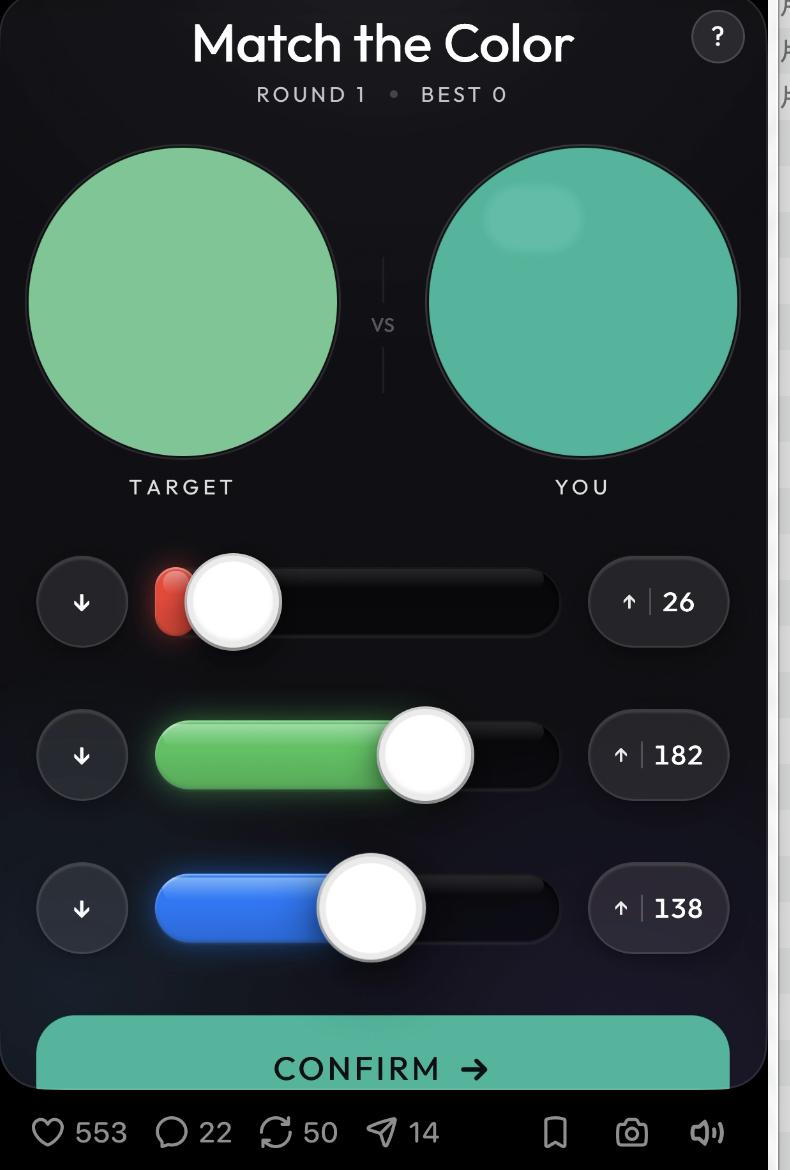
Adjust the RGB color frame to get the color that best matches the left side, with a full score of 1000 points, which is very suitable for friendly competitions | Image source: Pocket
What made me start to feel that Pocket is different from these old games is another type of equally simple content that obviously can only exist with the support of AI.
For example, I scrolled to a story generator, there are only four buttons on the page, corresponding to "introduction", "development", "twist" and "conclusion" respectively. Clicking different buttons will continue the story as required.
There is also an application I really like called "Life is a Poetry", which calls the mobile phone camera, and then generates a poem based on the picture through a large language model.
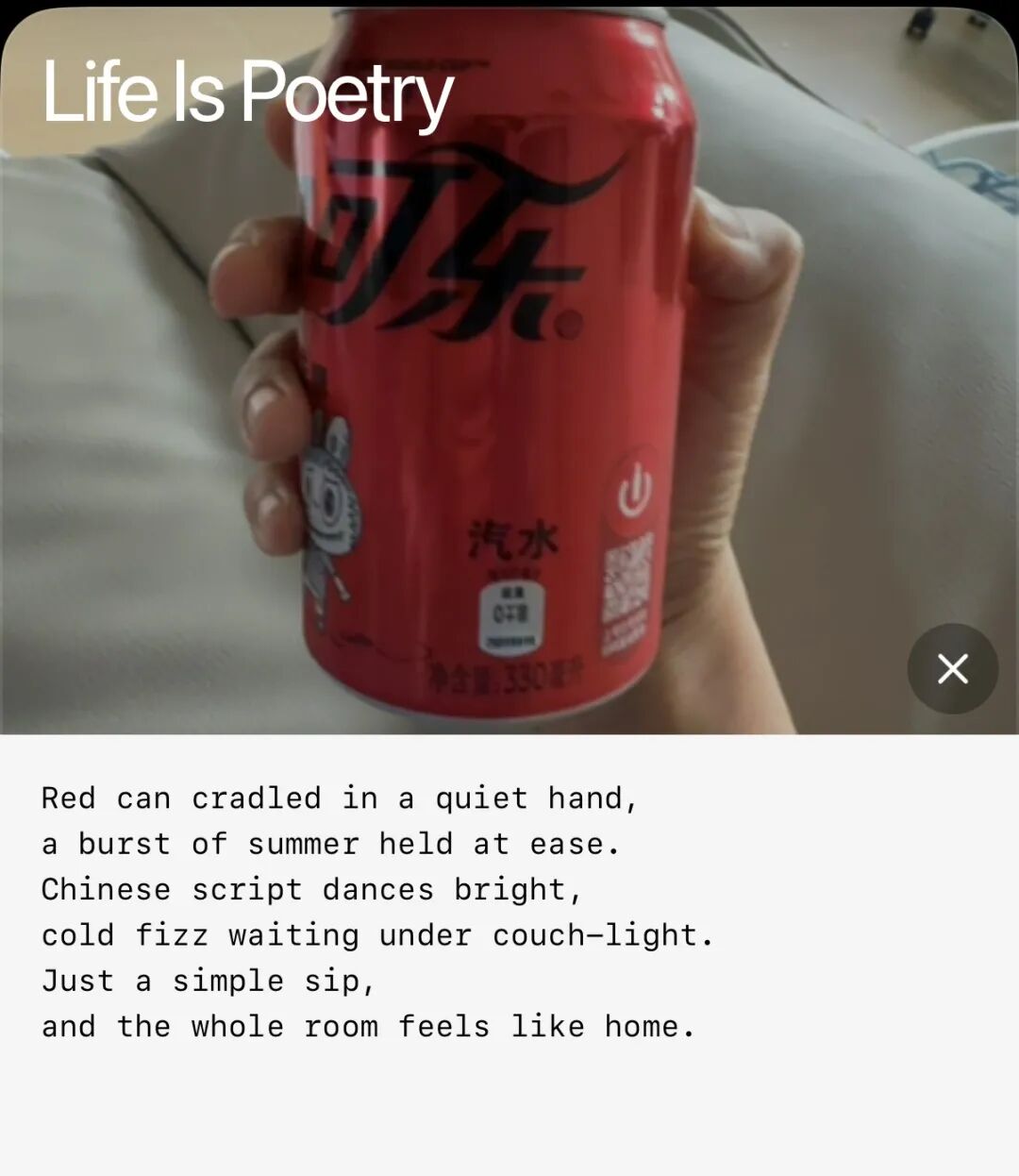
We once reported on a similar hardware device in the article *Finally There is a Proper AI Hardware, a Polaroid That Can Write Poetry* | Image source: Pocket
There are also things like "tarot divination", "generate recipes based on the ingredients in your fridge", "recommend movies and TV shows"... All these mini-games that dynamically generate content based on your input essentially wrap AI in an interactive shell.
During my experience with Pocket, I opened the app in many fragmented time periods, and ended up scrolling through dozens of mini-games as soon as I opened it. This feeling is actually closer to scrolling through Xiaohongshu, Instagram or short videos than playing on 4399.
The difference is that the feeds on other platforms let me "watch", while Pocket wants me to "play". The similarity is that social media, like Pocket, also wants me to post content.
Make your own mini-game in half a minute
After I logged in to Pocket for the first time and played through several mini-games, it guided me to create my own mini-game.
I don't need to think about any prompt writing skills, just describe an idea, and it can make the game come true, which is as easy as taking a few casual photos and posting them to Moments.
For example, at a friend gathering, we didn't bring a physical board game. At this time, I opened Pocket and wrote "Make a game based on the board game *Avalon*, so that everyone can use their mobile phones to draw their identities, and the identity information can be recorded."
I was originally prepared to go back and modify several rounds with AI. But in less than half a minute, Pocket gave a quite complete version.
The interface is simple and clear. Before the game starts, I can select the number of players, which identity cards to include, and manually edit the player names.
It even arranges the round table positions and speaking order, we only need to pass the phone to check our identity cards.
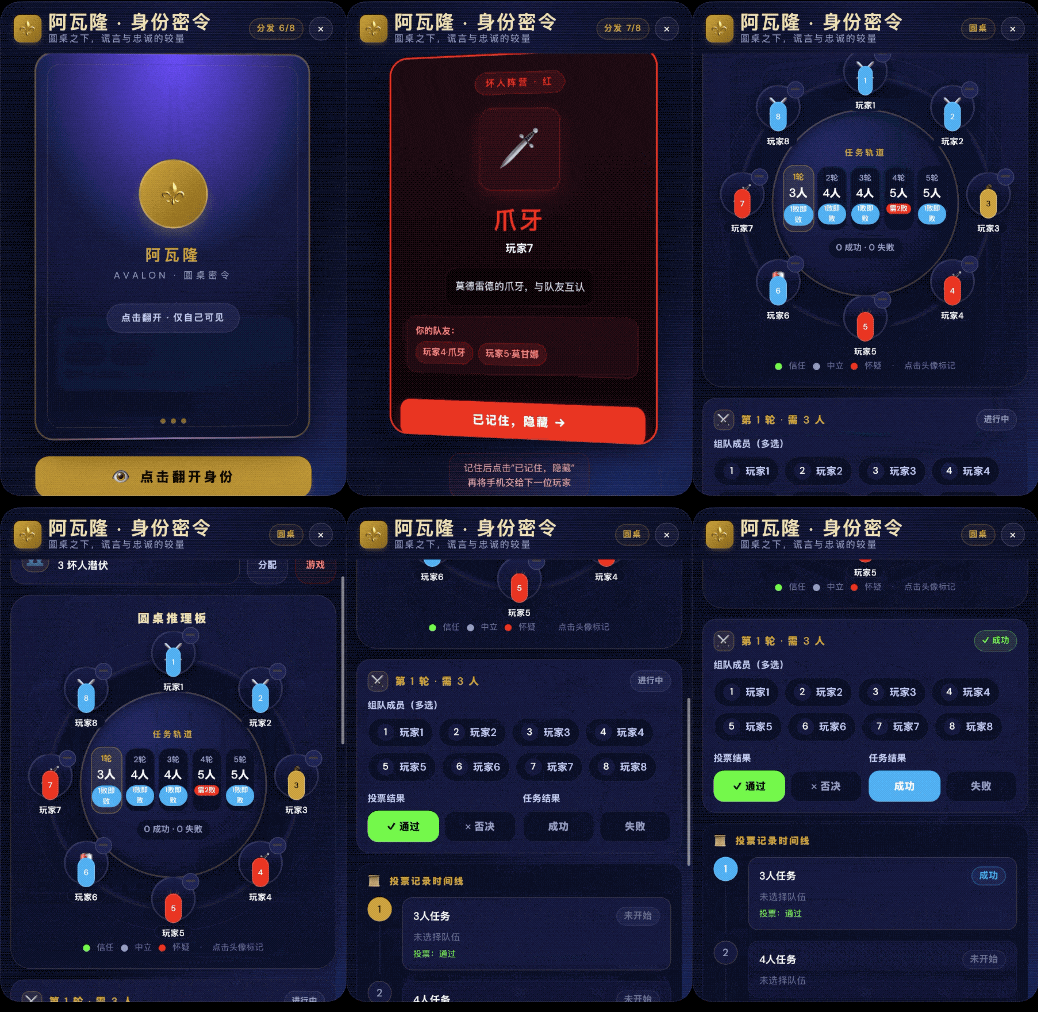
The "Avalon" generated by Pocket in one go | Image source: Pocket
We played several rounds of games with this "Pocket version of Avalon" and found no problems, so I clicked "Publish" casually, making it my first work on Pocket.
After being amazed by Pocket, I asked it to make a custom cocktail generator.
In my setting, I first select the flavor direction I want, such as sour, sweet, and then input abstract images like "tropical", "island", "farewell", so that it can automatically give the base wine, auxiliary materials and production method of a cocktail.
Pocket quickly made this process into a simple page, and then I further optimized it, such as adding BGM and "shaking wine" special effects, and giving each cocktail a special name and a one-sentence introduction.
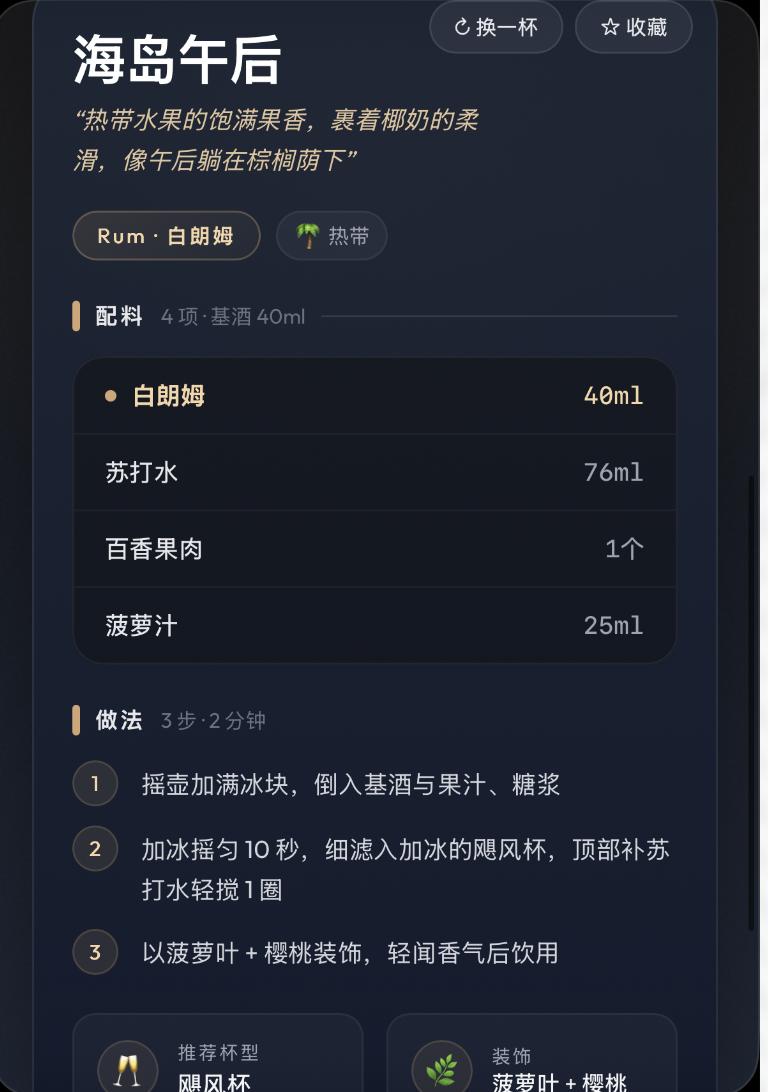
Custom cocktail menu generator | Image source: Pocket
Soon, I had my own "infinite custom cocktail menu". And this game made me understand Pocket better than "Avalon".
Because I can totally ask ChatGPT directly "I want a sour cocktail with ocean flavor to celebrate the end of a trip." to get a decent recipe.
But this process, after Pocket wraps it with an interactive and game shell, turns it into a very interesting little work.
This also means that simply understanding Pocket as "one-sentence mini-game generator" will underestimate its "addictiveness".
I think the most special part of Pocket is actually a sense of "lightness". It is very light to play Pocket, very light to create works on it, and there is almost no burden to share your works.
In the past, when I wanted to play board games with friends temporarily, I would first search in WeChat to see if there was a ready-made mini-program; if I suddenly wanted to make a cocktail recipe generator, I would at least go through several rounds of Vibe Coding, sorting out the requirements, pages and interactions with AI bit by bit. But Pocket skips all the processes, and your idea directly leads to the result.
It doesn't even have to be used for "scrolling". I can not play other people's works at all, and build a set of small tools that only serve myself: give me matching recipes when cooking, help me make a custom cocktail when I want to drink, recommend movies according to my preferences when I have no content to watch, and take them out to play social games when friends gather.
When the production time is compressed to dozens of seconds, these "interesting little gadgets that were not worth developing at all in the past" have instead become the most abundant content source of Pocket.
What is more interesting than generating from scratch is directly modifying others' works
Pocket is also obviously encouraging another way of playing: directly modifying other people's works.
As long as the author clicks "Allow Remix" when publishing, anyone can tell AI what they want to modify on the basis of the original work.
For example, the aforementioned "generate poetry from photos", I clicked Remix, wrote "Add a vintage camera frame, change the interface to Chinese, and the generated content to lines similar to traditional Chinese poetry." After more than ten seconds, it became a Chinese version of "generate poetry from photos".
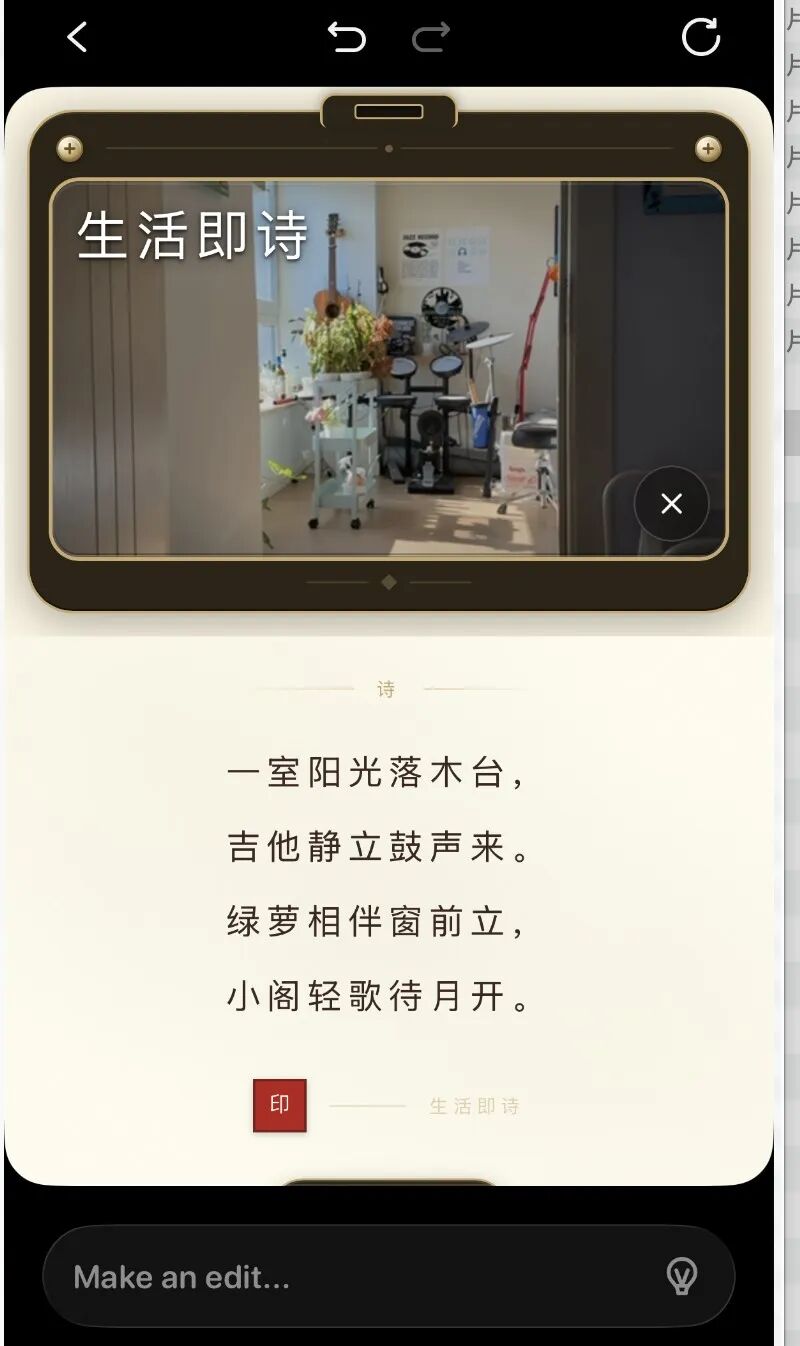
The remixed "traditional Chinese poetry version" | Image source: Pocket
The threshold for this kind of secondary creation is much lower than thinking of a new application out of thin air every day. After all, when you scroll to something fun, people's first reaction is often not "why didn't I think of this", but "I'll try to make one too".
We have experienced this creative path repeatedly in short video templates, filters, popular audio and various internet memes.
Of course, it was also during the secondary creation that I first clearly encountered the boundary of Pocket.
I scrolled to a work that cuts four pictures into different frame sizes and puts them into one picture. I immediately thought, replace my photos with classic scenes from movies, and then I can get a "movie aesthetic collage picture".
However, this secondary creation was not successful in the end.
After several rounds of adjustment, Pocket can let me enter the name of the movie, and it automatically captures the classic scene shots, but it cannot obtain movie pictures from the Internet, and can only generate pictures with AI.
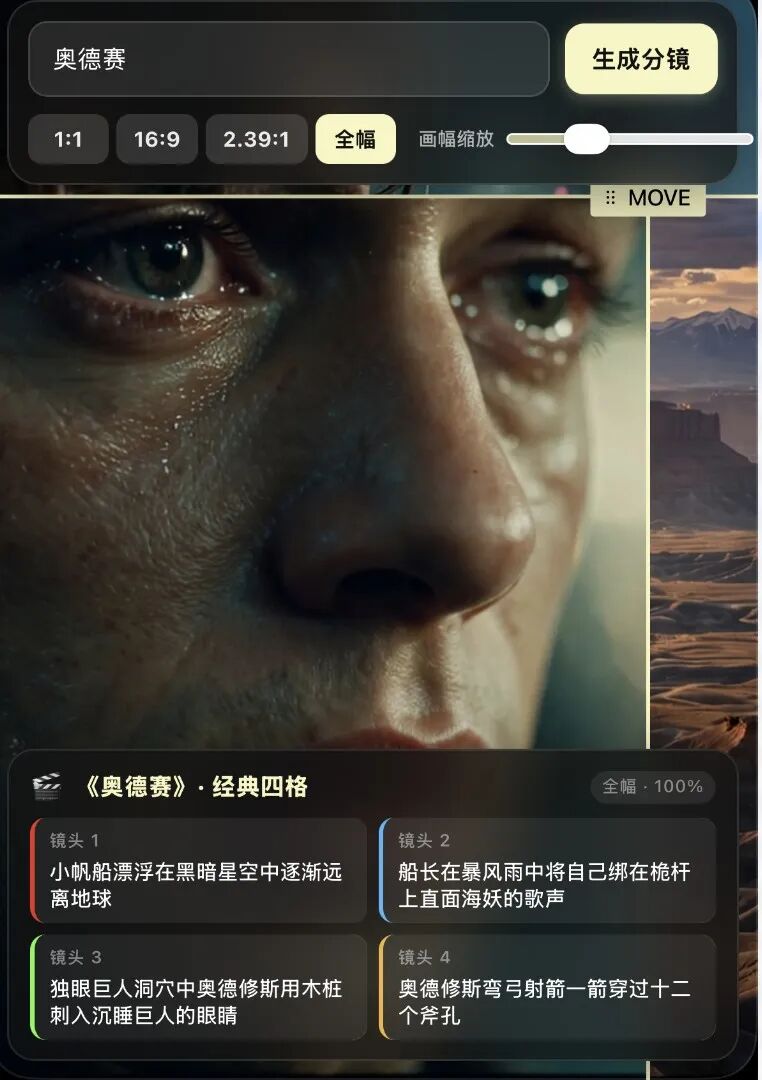
The classic scene from *2001: A Space Odyssey* is captured correctly, but the picture is AI-generated | Image source: Pocket
So after using it for a while, I found that Pocket is more suitable for carrying "ideas". Each work is like an operable card, which can be a mini-game, a test, a piece of AI generation content, or a simple interaction.
What Pocket is trying to test may be the next form of "content"
After using Pocket, I don't really want to classify it as a product in the category of "AI makes mini-games".
Because many AI products today can generate web pages, mini-games and small tools with one sentence. But Pocket is not built with the idea of making an AI product, it is more like an AI-native interactive content platform.
AI is responsible for turning an idea into a finished product quickly. It doesn't really matter whether the final output is a mini-game, test, camera, divination tool or a temporary utility.
The important thing is that it can be scrolled to like a normal piece of content, understood in a few seconds, played casually, and there is a chance to be sent to friends, or modified into another version, or even become a viral hit all over the network.
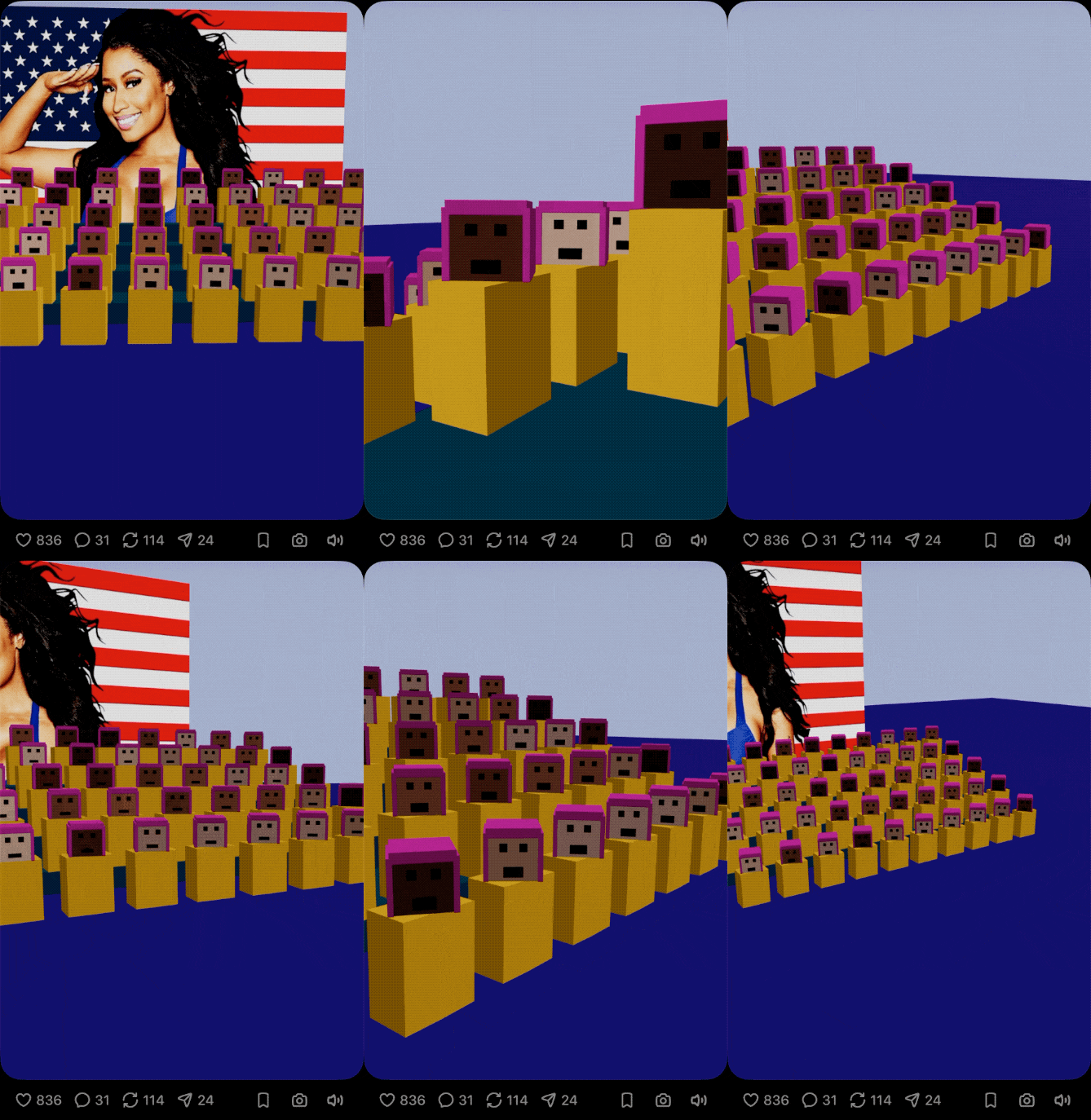
A very magical mini-program "turn your head along with the singer" that also has excellent transmission data | Image source: Pocket
From this perspective, many of Pocket's current "not exquisite enough" features, such as simple visuals, few complex interactions, and gameplay that can be seen through at a glance, are not all disadvantages. Because in the feed, if a work is too heavy, no one