This physical AI company is set to install a "brain" for 280,000 traditional factories across the United States.
The transformation and upgrading of traditional factories has become a key topic for every participant in the AI era. Whether it is digital employees powered by AI Agent or embodied intelligent robots, all are sparing no effort to tell the market: "I can walk into the factory and work instead of humans".
An American AI company across the ocean is also advancing rapidly on this path, targeting roughly 280,000 factories in the United States that still use traditional machinery and manual labor.
On September 9, Harmoni announced the completion of a $10 million Series A funding round led by Bessemer Venture Partners, and the company declined to disclose its valuation. On the same day, it launched HAL.
HAL is an AI deployed on the workshop floor.
Workers can ask it why a certain machine is running slower than usual, ask it to submit a maintenance request, or ask it to mark the problem for the next shift. According to founder David Caputo, this allows workers to "literally speak to the machines".
This line of business does not sound very large.
$10 million in funding, 40 customers, a 19-person team, but the direction it is betting on
is exactly the opposite of the hottest path in the United States right now.
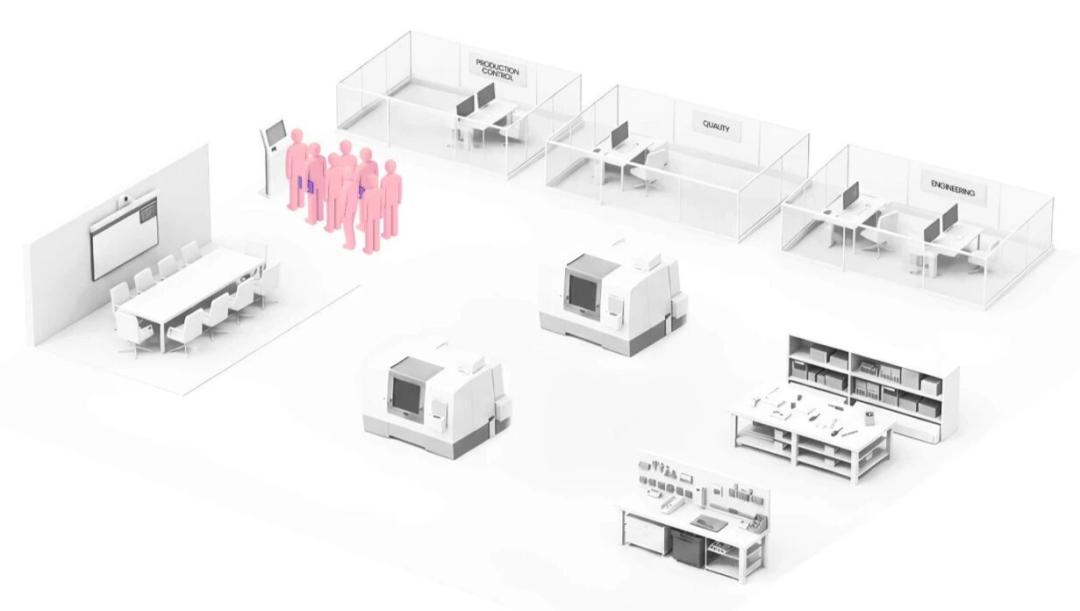
01 Workshop: Workers Line Up to Punch In, Everyone Holds a USB Flash Drive in Hand
In 2013, David Caputo left the investment banking industry and co-founded a fund with friends that specialized in acquiring manufacturing companies. The first time he walked into the workshop of the factory he had bought, he panicked.
"I remember walking around the workshop and thinking, my God, I made a mistake," he later recalled to Business Insider. Workers lined up to punch in one by one, and each of them held a USB flash drive containing the programs needed to operate the machine tools.
"This is not the way to do things," he said.
He spent a period of time looking for a piece of software that could connect machine tools, workers and processes, but found none. In 2020, he teamed up with Adam Ellis, who had worked as a manufacturing consultant for many years, to develop it on their own. The main entity of the company was officially established in 2022 and named Harmoni.

Harmoni founders David Caputo and Adam Ellis
Caputo once talked about two accidents that both happened in his own factories.
Once, an operator took the work instruction for the left-hand part to process the right-hand part, drilled the hole in the wrong position, and a part worth $18,000 was scrapped on the spot.
The other incident was even more troublesome. A senior employee who had worked for ten years had manually modified the USB flash drive used to load programs into the machine tools for a full decade. After he retired and moved to the other side of the world, the company spent a whole year reconstructing the programs in the USB flash drive, and the production of this product was also suspended for a full year.
Neither of these two incidents was caused by insufficient machine tool accuracy. They point to the same gap: ERP, machine tools and workers have never been truly connected.
In an article on Harmoni's official website, Caputo named this layer "wild west no man's land". The manufacturing industry has long followed the ISA95 standard to organize systems, with ERP and MES at the top, featuring a clear structure; at the bottom are machine tools and PLCs, whose technologies are also mature.
The middle layer has always been disconnected. Workers can only manually enter data on terminals scattered across the workshop, where efficiency losses and human errors are generated.
In the factories that Caputo acquired himself, this gap directly translated into scrapped parts and suspended production lines.
From the perspective of the entire industry, the situation is more common.
Shokoufeh Mirzaei, head of the Department of Industrial and Manufacturing Engineering at California State Polytechnic University, Pomona, told Business Insider that large companies like Amazon are far ahead in automation, but many small and medium-sized factories in the United States do not even have basic analysis capabilities, and still run systems that existed before the advent of the Internet. She said that manufacturers are generally reluctant to replace expensive equipment, but they have open permissions to transform existing machines.
It is open.
02 Path: Deploy Tablets First, Then Talk About AI
Harmoni's hardware is a customized tablet that is magnetically attached to the machine tool.
This tablet can connect to a wide range of devices, from modern CNC systems all the way to machines manufactured during World War II. Workers can punch in, view drawings, track work orders and report problems on it.
The real transformation takes place behind the tablet.
Harmoni uses RFID to identify who is approaching the machine tool, which work order they are working on, and which version of the program should be loaded. As soon as a person approaches, the system automatically calls up the corresponding work instructions, drawings and inspection checklists, automatically records working hours and machine status, and writes the data back to ERP. Multi-factor authentication at the machine tool level, one-click call for engineering and maintenance, real-time OEE indicator lights, and workshop dashboards are all implemented at this layer.
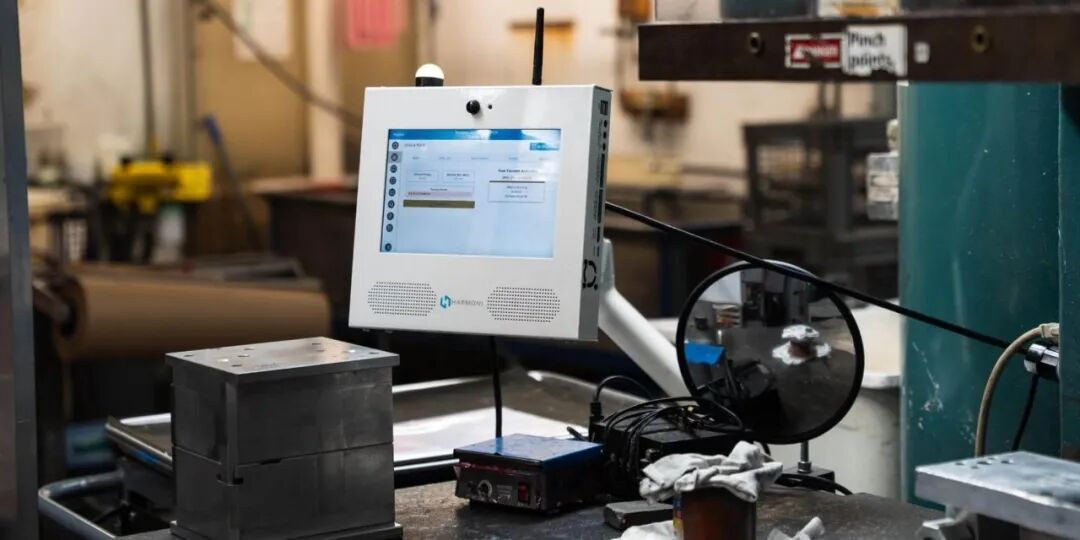
The official breaks down this logic into three pillars: Automation is responsible for eliminating non-production actions, such as working hour recording, ERP transactions, document retrieval, quality reports, and support requests; Process control is responsible for locking engineering data to the correct part version, making it impossible for operators to call up expired drawings or run the wrong program; Observability is responsible for synthesizing the data from ERP, machine tools, operators and RFID into a real-time view.
The deployment cycle is several weeks. Customer data shows that this set of automation creates 200 extra hours of productive time per operator every year. The figures given on the official blog are more detailed: each operator can recover 30 to 45 minutes per shift, with an input-output ratio between 2 and 5 times. The two calibers are consistent: calculated on the basis of 250 shifts a year, 30 to 45 minutes per shift just adds up to around 200 hours a year.
WessDel, a manufacturer based in San Jose that produces precision parts for aerospace and defense enterprises, started using Harmoni in 2024. Before that, workers had to queue up to punch in at three different terminals and manually enter machine information. Jeff McKay, Vice President of WessDel, said that these tasks could take up nearly an hour of a worker's working time. Now they only need to swipe their employee badges, and machine activities are automatically recorded.
Only after the tablet path is proven feasible can HAL have a solid foothold.
The upper limit of this AI's capabilities is constrained by the tablet. The system already knows which machine is running, which work order it is processing, and how the last run went, so workers do not need to provide background information first when asking questions. When asking "Why is this machine slow?", HAL already knows exactly which machine "this" refers to. This allows it to bypass the most difficult step for most industrial AI, which is to first teach the model to understand the on-site situation.
The official blog also mentions two prediction models running on its own data. The scrap prediction generator provides the management team with a heat map to prioritize quality inspection and intervene before defective parts are produced; the working hour output predictor analyzes workshop variables to predict the part production rate.
The largest segment of its customer base is aerospace and defense, with around 40 customers at present, and the company expects to add 10 more in September.
03 Route: Silicon Valley is Building New Factories, While It Transforms Old Ones
The United States is promoting reindustrialization.
Companies like Hadrian and Machina Labs adopt the approach of building new factories from scratch, designed directly to highly automated standards, focusing heavily on robots and automation.
But Harmoni is taking the opposite direction, targeting factories that still use traditional machinery and manual labor.
"We built this suite of tools to empower these people and enable them to compete with those highly automated factories," Caputo said.
The demand side of this path comes from the labor gap. A study by Deloitte and the Manufacturing Association estimates that by 2033, U.S. manufacturers will need up to 3.8 million additional workers, and about half of these positions may remain unfilled.
William Melek, a professor of engineering at the University of Waterloo and director of RoboHub, believes that tools like Harmoni can help manufacturers cope with the long-term labor shortage. But he also warned that technologies that automate some factory jobs may also trigger backlash from trade unions that are worried about job losses.
Caputo responded that the factories targeted by Harmoni will continue to employ people. It is designed to eliminate repetitive administrative tasks instead of cutting headcount. He added that his clients cannot recruit enough workers in the first place.
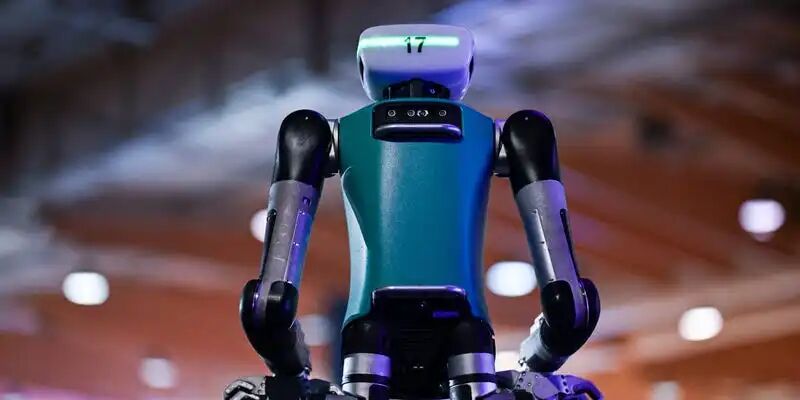
As for humanoid robots, Caputo believes that if that day really comes, Harmoni's system can also coordinate them, but that future is still far away. "The technology is not there yet," he said.
The competitive landscape is not lenient, as manufacturers' existing software systems are usually pieced together. MachineMetrics and Datanomix track machines and production, while other tools track workers, equipment maintenance and the operating procedures of specific work orders. Harmoni's proposition is that factories should not piece these systems together by themselves. It positions itself as an adhesive layer that uses the context obtained from automated processes to prevent human errors.
Whether this positioning can be established depends on a very simple thing:
Whether factories are willing to pay separately for "piecing systems together".
04 Comparison: Domestic Capital is Invested in Robots, While Its Capital is Invested in Tablets
When we put Harmoni's financing scale into the domestic market context, the contrast becomes obvious.
$10 million is equivalent to about 70 million RMB at the exchange rate. The company has not disclosed its valuation, with a 19-person team and 40 customers, the largest of which are small and medium-sized factories in the aerospace and defense sector.
The embodied intelligence track in China is on a completely different scale during the same period. According to data from IT Juzi, the total financing amount of China's embodied intelligence sector in the first half of 2026 reached 935 billion RMB across 322 deals. As of June 2026, 8 companies have reached a valuation of 20 billion RMB. In addition to the listed Unitree Robotics, the list includes Agibot, Galaxy Universal, Starsea Map, Qianxun Intelligence, Independent Variable Robotics, Zhisquare and Lingxin Qiaoshou.
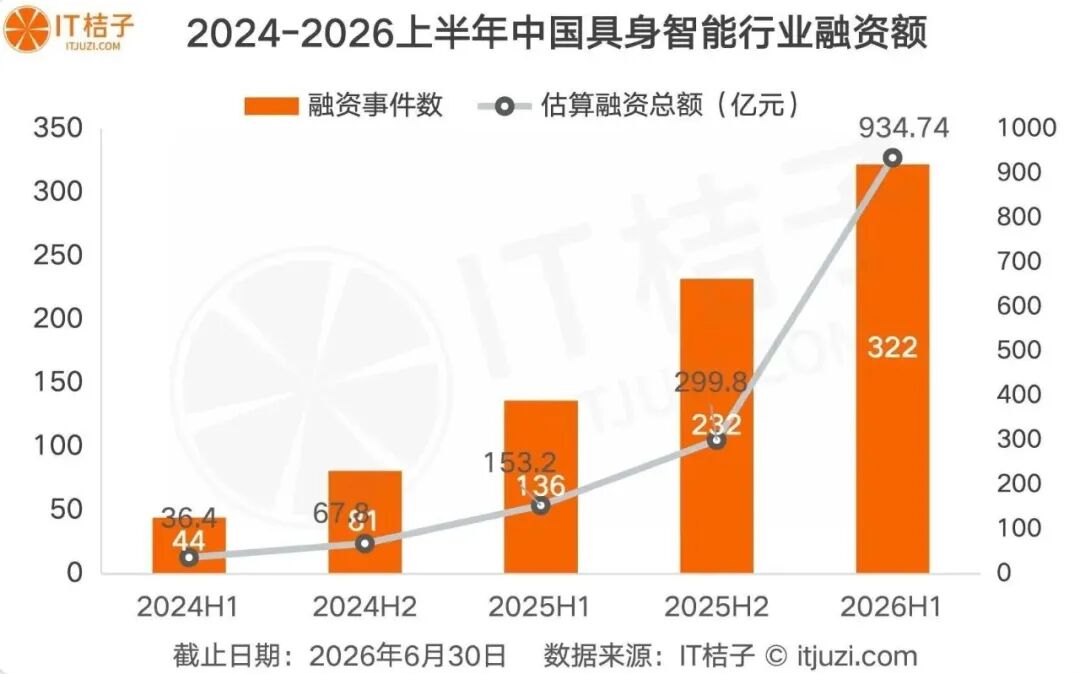
IT Juzi *2026 H1 China Embodied Intelligence Sector Investment and Financing Report*
The direction of capital flow is also different.
The current round of domestic financing is mainly invested in robot bodies, large models and data factories, to obtain larger parameter models, more degrees of freedom of movement, and self-built data collection production lines. The capital Harmoni obtained is invested in magnetic tablets, RFID and the intermediate software layer.
What is more worth noticing is the divergence in verification methods.
Domestic players compete in model capabilities, shipment volumes and winning bid amounts; while Harmoni competes in the 200 hours of saved productive time per operator per year. The former is a capability indicator, while the latter is a financial indicator.
These two paths reflect two different underlying market structures.
Among the 280,000 factories in the United States, some machine tools may still be manufactured during World War II. The pain point of these factories is the information gap, which cannot be solved by replacing robots. Most of the work on the stations is variable, small-batch and frequently changed, while traditional automation is good at highly repetitive physical actions. Harmoni chooses not to modify the existing equipment, but to fill the defects in the data layer first.
Although China has a more solid foundation in manufacturing automation, with the largest number of Lighthouse Factories in the world, leading enterprises are in a position to directly deploy robots to reconstruct production lines. However, the digital transformation of small and medium-sized factories is also a hard nut to crack, for which there is currently no corresponding capital narrative.
Another easily overlooked difference is that what Harmoni sells is "the ability to take new orders without replacing existing equipment", while the domestic first-tier players sell "reconstructing production lines with robots".
The former has a short customer decision cycle and a small transaction amount, and can be sold as software; the latter requires modifying the production line, acceptance testing, and running through the entire process, which naturally requires larger capital endorsement and a longer verification cycle.
05 AI Trend Insights
The most valuable part of Harmoni for domestic peers to learn from is the order in which it executes its work.
It spent three years laying out tablet technology, collecting workshop context such as RFID data, working hours, drawing versions, and machine tool status one by one, before deploying AI on top of this base. The upper limit of HAL's capabilities is constrained by that tablet, and HAL can only answer questions based on the context collected by the tablet. This logic is completely different from "connecting to a large model API and claiming to be industrial intelligent".
In the past two years, most of the domestic financing has been invested in "smarter robot bodies" and "smarter large models", and few people have specifically invested in the narrative of "connecting data on old production lines".
The reason is not hard to understand: this business is not glamorous, not fast, and cannot drive high valuations. It earns money from the 200 hours of saved working time per operator per year, not the money from building the next operating system.
However, the base of small and medium-sized manufacturing enterprises in China is much larger than that in the United States, and the demand for this layer also exists, which has not yet been covered by capital narratives.
When the valuations of domestic first-tier players have entered the 20 billion RMB club, and the progress of model capabilities lacks intuitive observation indicators like shipment volume, Harmoni provides a reverse reference: the moat of industrial AI may not lie in model parameters, but in what data can be collected by the tablet next to the machine tool.
