The 40-year rise and fall of Mitsubishi Pajero
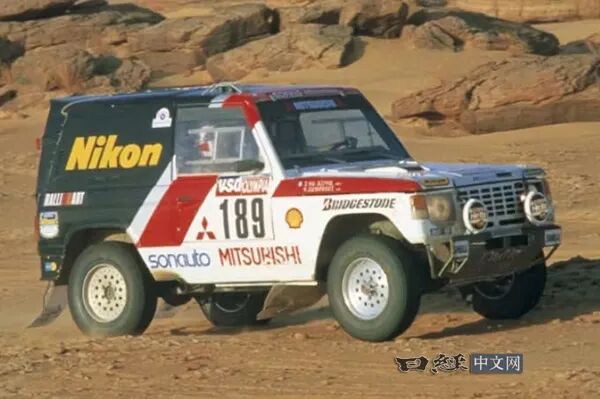
The Pajero once shone brilliantly at the Dakar Rally (1985)
Mitsubishi Motors' signature model Pajero was born in 1982, and claimed the overall championship of the Dakar Rally in 1985. The second-generation Pajero launched in 1991 reached its sales peak. However, due to successive scandals, it was discontinued in Japan in 2019. Recently, Mitsubishi Motors released the fifth-generation Pajero...
Mitsubishi Motors held a launch event for its off-road SUV "Pajero" on September 2. The Pajero was all the rage in the 1990s and served as the signature model of Mitsubishi Motors. However, affected by successive exposed scandals, it fell into a difficult situation after 2000. After Mitsubishi Motors completed a round of structural reform, this brand-symbolic model made a comeback after 7 years, and the company hopes to achieve a leap forward through this move.
"Pajero! Pajero!" At the end of the popular Japanese TV program "Sekiguchi Hiroshi's Tokyo Friend Park II", the live audience would shout loudly to cheer when contestants challenged the darts game. The grand prize that participants competed for was exactly the second-generation Pajero.
In the 1990s when the program premiered, the Pajero was the dream choice of countless people, often ranking among the top-selling domestic car models in Japan, making it a well-deserved signature model of Mitsubishi.
1982, The First-Generation Pajero Was Born
The Pajero was born in 1982. At that time, Mitsubishi Motors was facing a growth bottleneck. The Second Oil Crisis suppressed automobile demand, and Japan-US trade frictions restricted exports to the United States. Chrysler, its US partner in sales and other fields, fell into a management crisis. Under multiple blows, Mitsubishi Motors recorded its first revenue decline since its founding in the 1981 fiscal year.
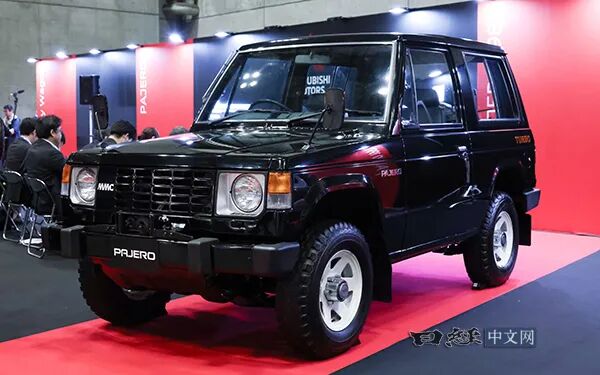
The First-Generation Pajero
Against the backdrop of the company-wide cost reduction drive, the development of the Pajero continued to face difficulties. Shortly after World War II, Mitsubishi Motors was entrusted with the OEM production of American-style jeeps, accumulating a large amount of four-wheel drive technology. The original intention of developing the Pajero was to use this set of four-wheel drive technology to create a passenger car that could also drive comfortably on paved roads.
1985, The Pajero Won the Overall Championship at the Dakar Rally
But at that time, Mitsubishi Motors' advantage lay in energy-saving models built with turbochargers from Mitsubishi Heavy Industries. The company's management did not have high expectations for the Pajero itself. What truly made the Pajero famous overnight was its first participation in the Dakar Rally in 1983, the second year after its launch.
The Dakar Rally takes three weeks to traverse deserts and mountains, covering a total distance of over 10,000 kilometers. When the first-generation Pajero was launched, it focused on daily practicality such as seat shock absorption and fuel-efficient engines, and was not regarded as a hardcore off-road vehicle. However, after winning the overall championship of the Dakar Rally in 1985, public perception completely reversed. In about 10 years, the global production volume of the first-generation model exceeded 680,000 units, making it a blockbuster hit.
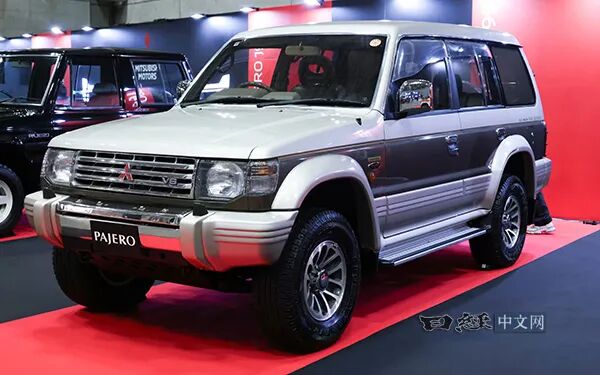
The Second-Generation Pajero
1991, The Second-Generation Pajero Achieved Leapfrog Development
The second-generation Pajero launched in 1991 reached its sales peak based on the brand foundation laid by the first generation. The second-generation Pajero allows drivers to select driving modes such as rear-wheel drive or four-wheel drive according to road conditions. It also optimized cornering performance, making it easy for new drivers to handle.
In the first half of the 1990s, the annual sales volume of the Pajero in Japan exceeded 80,000 units. Mitsubishi Motors also ushered in its heyday, ranking third in Japan's domestic market share after Toyota and Nissan.
In the mid-1990s, competing models also began to increase. A typical representative is Toyota's "Land Cruiser Prado" launched in 1990. At that time, the "Land Cruiser" was positioned as a commercial hardcore off-road vehicle, while the "Prado" focused on being friendly for urban commuting.
It was also at that time that Mitsubishi Motors began to serialize the Pajero. Leveraging the brand's popularity, it successively launched light vehicles such as the "Pajero Mini" and compact SUV "Pajero iO". The goal was to expand the product line and boost sales, but the new products formed internal competition with other in-house models, and the strategy did not work.
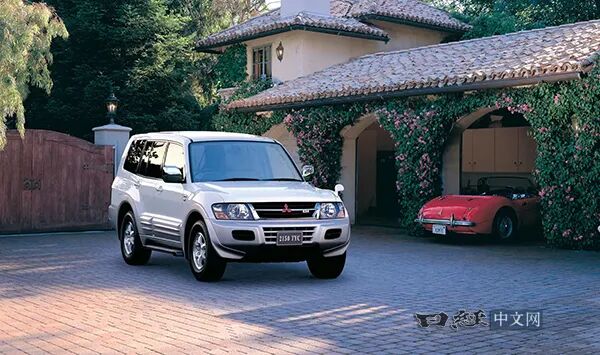
The Third-Generation Pajero Adopting a New Lightweight Frame
The Third-Generation Pajero Slid Into a Downturn Dragged Down by Corporate Scandals
In 1999, after the RV craze faded, the third-generation Pajero came out. The new car adopted a body-on-frame integrated design to achieve lightweighting, balancing fuel efficiency and durability.
Mitsubishi Motors originally planned to stage a comeback relying on the third-generation Pajero, but the hidden recall scandal broke out soon after. In 2004, another scandal of hiding tire component defects was exposed, causing a heavy blow to global sales. The Pajero was also impacted by the deteriorating brand reputation, with its global annual production shrinking to the level of 70,000 units.
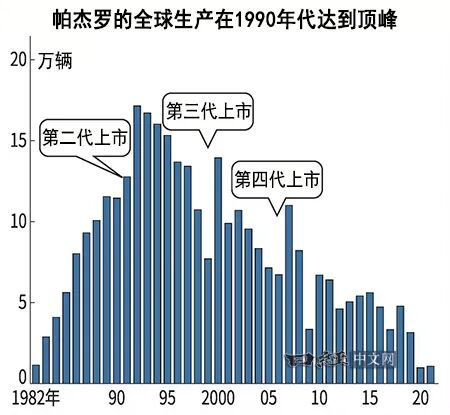
After successive scandals, Mitsubishi Motors was forced to start reconstruction work including layoffs with the support of Mitsubishi Group. The fourth-generation Pajero launched in October 2006 was exactly introduced during the company's difficult reconstruction phase.
The Revival Plan for The Fourth-Generation Pajero Failed
The fourth-generation Pajero largely inherited the appearance of the third generation, but with the suspension directly related to riding comfort as the core, nearly 70% of its structure was redesigned. Its target customer group was the 40-year-old demographic from the Pajero craze period, and it was also sold in overseas markets such as Europe. Then-president of Mitsubishi Motors Osamu Masuko stated at the launch event: "It is the booster for realizing our reconstruction plan."
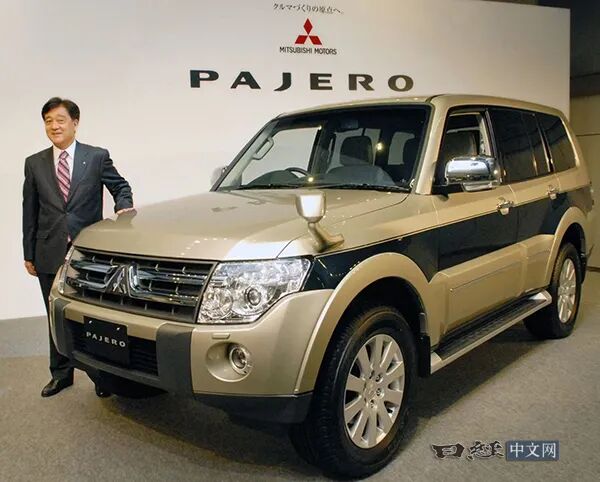
Osamu Masuko, President of Mitsubishi Motors, Unveiling the New Pajero (2006)
However, the fourth generation became the swan song of the old era of the Pajero. In 2016, Mitsubishi Motors was exposed for the scandal of tampering with fuel consumption data of passenger vehicles including the Pajero, forcing the company to pay compensation to its partners. Mitsubishi Motors no longer had the spare capacity to maintain the Pajero product line, and it was discontinued in Japan in 2019, with no model updates for as long as 13 years.
In 2020, the production subsidiary Pajero Manufacturing (Sakahogi Town, Gifu Prefecture) was confirmed to be closed. A Mitsubishi insider who knew the situation at that time recalled: "In order to convey the determination of reform to internal and external parties, we had no choice but to shut down the Pajero factory."
2026, The Fifth-Generation Pajero Was Launched to Tap Into New Customer Groups
7 years after being discontinued in Japan, Mitsubishi Motors officially released the brand-new fifth-generation Pajero on September 2. The new car adopts a pickup truck chassis and introduces a self-developed four-wheel electric drive system. It not only retains the off-road passing performance in deserts and forest trails, but also returns to the development concept of the first generation, taking into account quietness and low-jolt riding comfort.
Takao Kato, Chief Executive Officer (CEO) of Mitsubishi Motors, said: "In addition to our existing core fans, we hope to attract former users who once left Mitsubishi Motors as well as brand-new consumer groups."
After multiple rounds of structural reforms since 2016, Mitsubishi Motors has finally stabilized its profitability. For the next round of growth, the company is tilting its operating resources to off-road vehicles, and the success or failure of reviving the Pajero is directly related to the revival of Mitsubishi Motors itself.
This article is from the WeChat Official Account "Nikkei Chinese" (ID: rijingzhongwenwang), written by Koizumi Koki, and published with authorization from 36Kr.