I've been playing *Honor of Kings: All-Stars Chess* all day long, and I'm completely hooked.
Many people must have been "addicted to card games" today, especially veteran players of Honor of Kings.
There's no way around it, Chess of Kings is really incredibly addictive. If I didn't have to write this article, I would have spent my entire work time playing this game today.
Chess of Kings
Many people's first impression of Chess of Kings may only stay at the level of "a derivative game of the Honor of Kings IP". Even though its pre-registration volume across all platforms has reached 70 million, and it has climbed to 9th on the iOS bestseller list without much commercial design after launch, most people may still subconsciously have doubts before actually playing it.

Source: Qimai Data
This mindset is totally understandable. As the industry becomes increasingly competitive, there are far too many games that are all hype and deliver nothing like what they promise. Most people, even if they don't feel like "the wolf is coming", will still have some doubts in their minds.
I feel the same way.
But as a veteran Honor of Kings player, I thought it over and over, finally decided to download and try Chess of Kings, and then... played it for hours straight. The game feels like picking up a loaf of whole wheat bread, taking the first bite and finding a hot dog inside, then taking the second bite and tasting fragrant dried meat floss and cream. After that, you just can't stop.
Other players obviously have the same feeling as me. Since Chess of Kings was launched, many players on major platform communities have been obsessed with the game today.
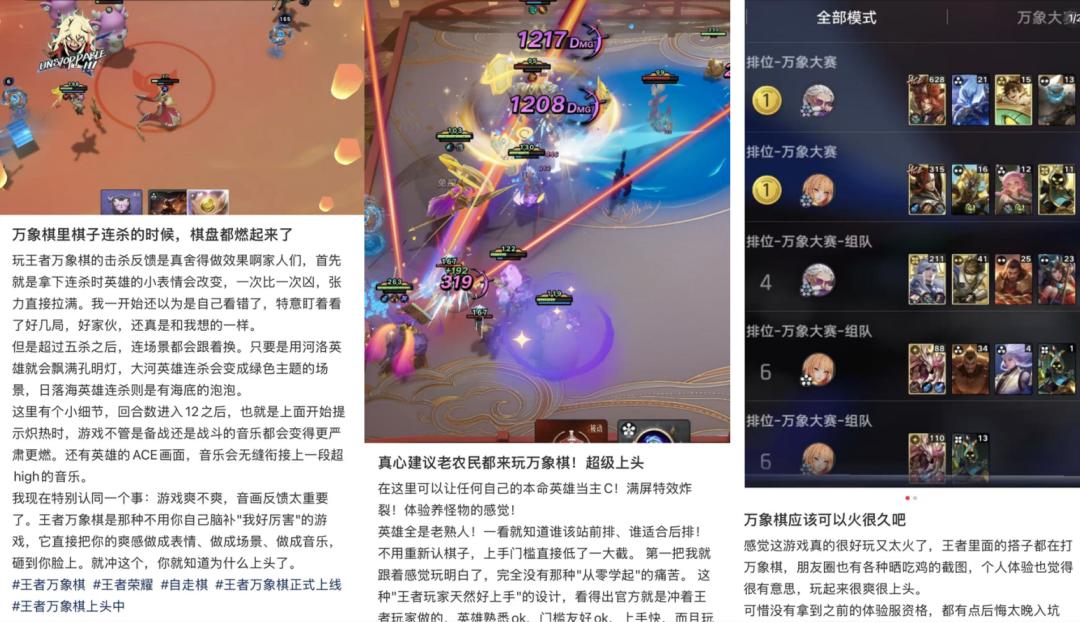
Players leave positive reviews spontaneously on major platforms
In the live stream on the night of August 27th, the official team summarized the gameplay of Chess of Kings as "refresh, upgrade, and blow up the field", which means players keep refreshing the card library, continuously purchasing and merging identical heroes. After players upgrade their heroes on the field to level 100, they can release extremely cool ultimate moves.
Yes, no matter how it sounds or looks, this part is really exciting. The familiar skills for Honor of Kings IP users, coupled with the completely different skill effects in Chess of Kings, bring a sense of surprise that can hardly be found in other games.
01
The first dimension that makes Chess of Kings truly addictive is that it does not throw all its complexity at players at the very beginning. Instead, it keeps attracting players to start a new round with new combinations, new solutions and new exciting moments.
In terms of actual experience, the whole process from getting started to being proficient in Chess of Kings is quite smooth. Its overall structure can be divided into three layers, which perfectly fits the entire process of players from getting familiar with the game to mastering it as their experience deepens.
Chess of Kings
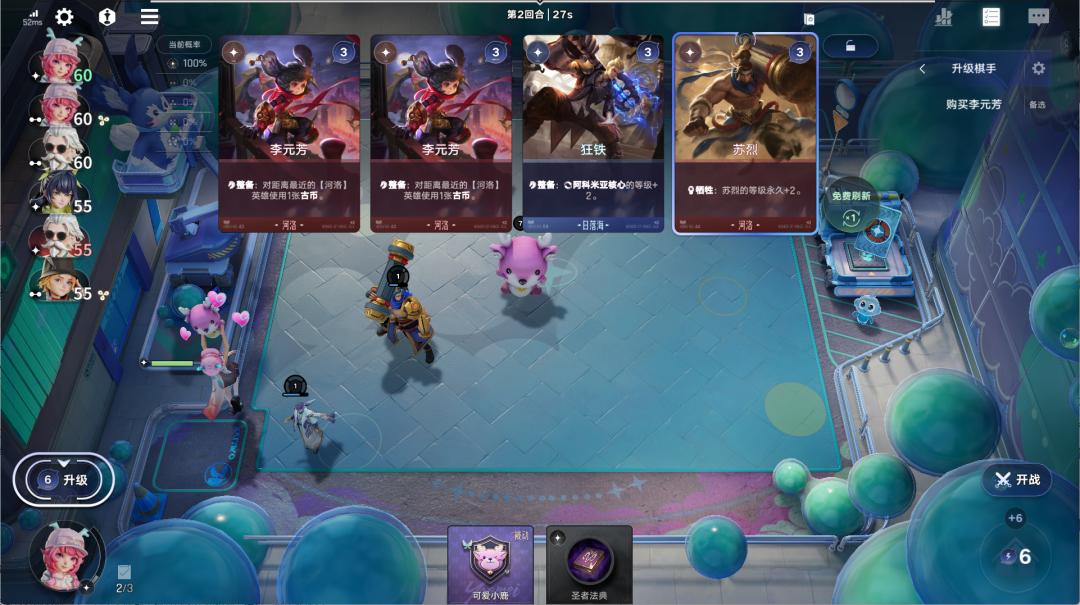
When you first start playing Chess of Kings, whether you are an old Honor of Kings IP user or not, the first thing you usually remember is the camp that each hero belongs to. Based on the basic perception of heroes from different camps, for example, Cao Cao and Zhao Yun both belong to the Land of Three Divisions, you will subconsciously start buying and deploying heroes of the same camp for your team.
Chess of Kings
Thus, players learn the first layer strategy of Chess of Kings. In the game, forming a team of heroes from the same camp is the most straightforward and easiest build direction in the early stage, which is completely familiar to Honor of Kings IP users. Most of the time, even if players only train heroes of the same camp, they can still achieve good effects in the middle and late stages, or create wonderful chemical reactions.
At this stage, most of the excitement that Chess of Kings brings comes from the familiar yet unfamiliar freshness of the heroes themselves.
As players gradually understand the keyword effects, skills of hero cards, and the keyword effects after awakening, they will naturally start to think about their builds.
For example, the keyword effects of Cao Cao and Zhen Ji from the "Land of Three Divisions" can be linked to refresh cards.
But the combination of hero keywords is not unique. For example, when actually building a lineup, many people will choose Luna instead of Lu Bu of the same tier from the "Land of Three Divisions" — even though Luna belongs to the Sunset Sea camp, her skills are more conducive to Cao Cao triggering effects and forming a hero keyword effect loop.
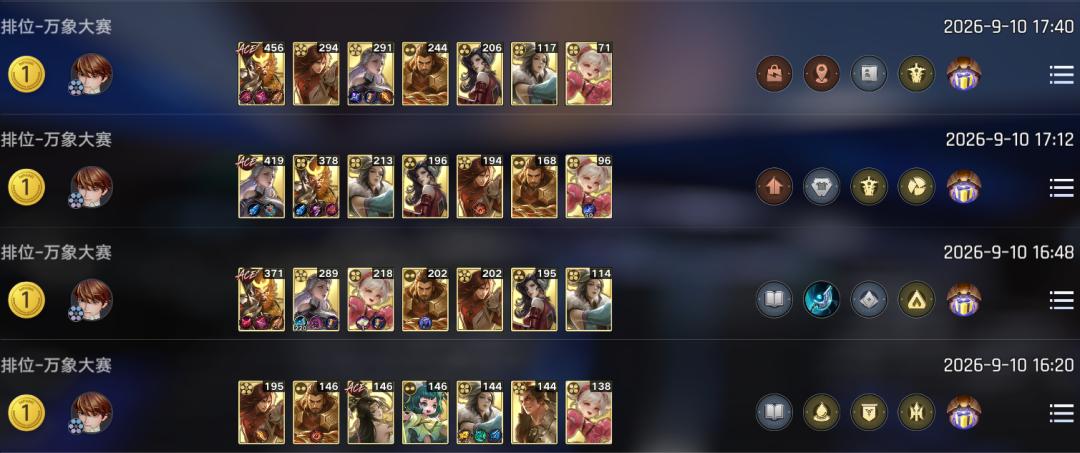
The final effect is indeed great once the lineup is formed
There are sometimes completely different keyword combination gameplay between heroes of the same camp. For example, some people will focus on the "Ancient Coin" system of the Heluo camp, and specially train a hero that can sweep the whole field at a high level, while others take the opposite approach, abandon the Ancient Coin core and use Li Xin to build a sacrifice flow. As long as other heroes in the team die, he can keep strengthening himself and finally sweep the whole field.
This is exactly the second stage when players start to understand the game. As they dig deeper into the camp lineups, players will understand what kind of keyword linkage effects can be triggered between different heroes, and which heroes from different camps can perform better through keyword linkage when the number of heroes on the field is limited.
This process is full of the joy of exploring the unknown. On the one hand, players' attempts are like doing an interesting experiment, and the process itself is fun. On the other hand, more often than not, players can dig out some non-mainstream lineup builds through accidental attempts, and finally achieve unexpected winning effects. I have reversed the situation many times with my experimental lineups against opponents' heroes that have been trained to hundreds of levels, and I have also completed a desperate comeback by training a single hero to hundreds of levels.
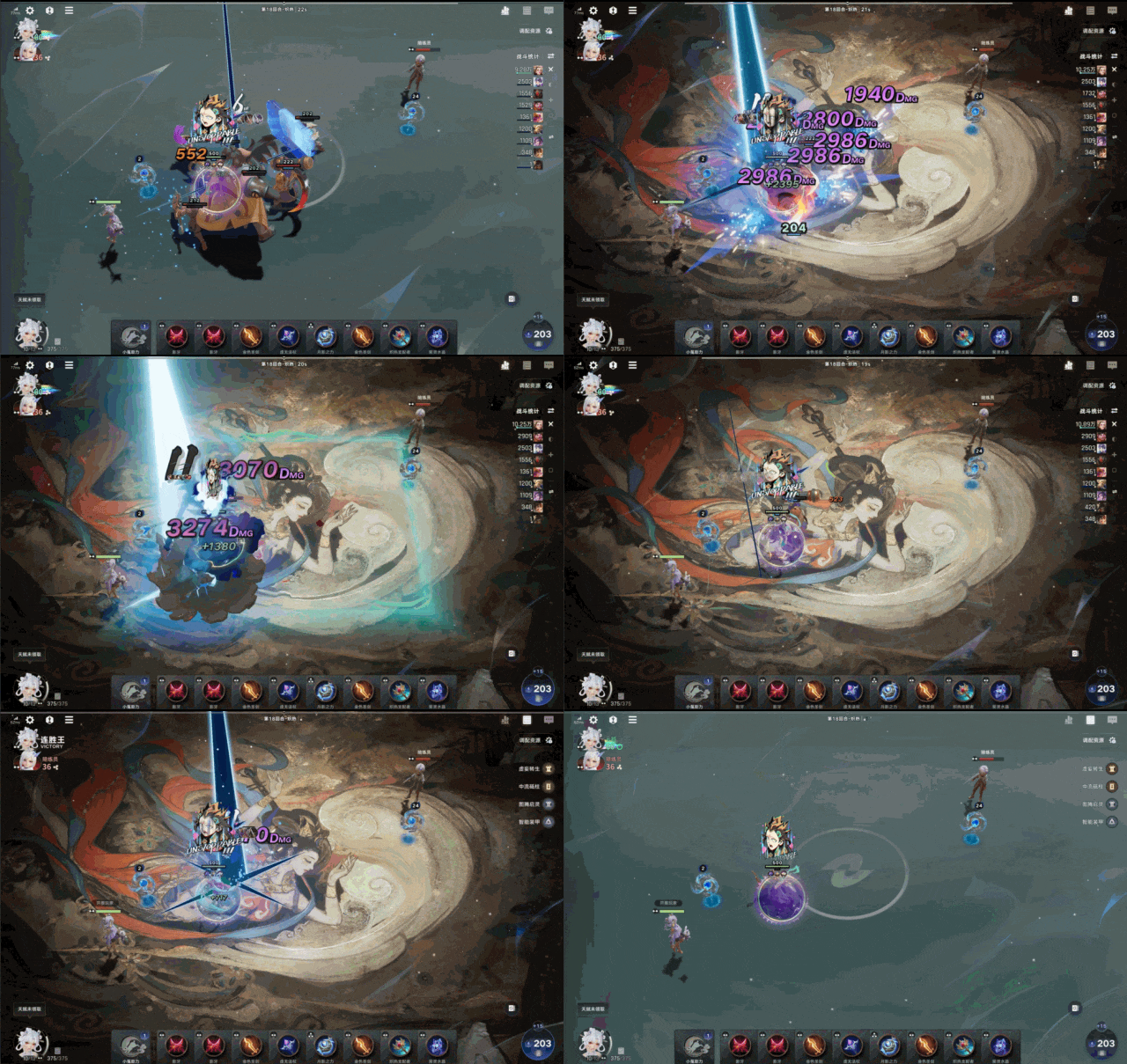
Chess of Kings
This sense of achievement can hardly be achieved in traditional games of the same genre. Because it requires not only game understanding and operation strategies, but also proper imagination.
To take the card game Fight the Landlord as an example, you can form a straight, a sequence of pairs, or a sequence of planes, but you will never encounter an awkward situation like 3,4,5,6 missing a 7. For hero keyword builds of the same logic, Chess of Kings also has more than one solution.
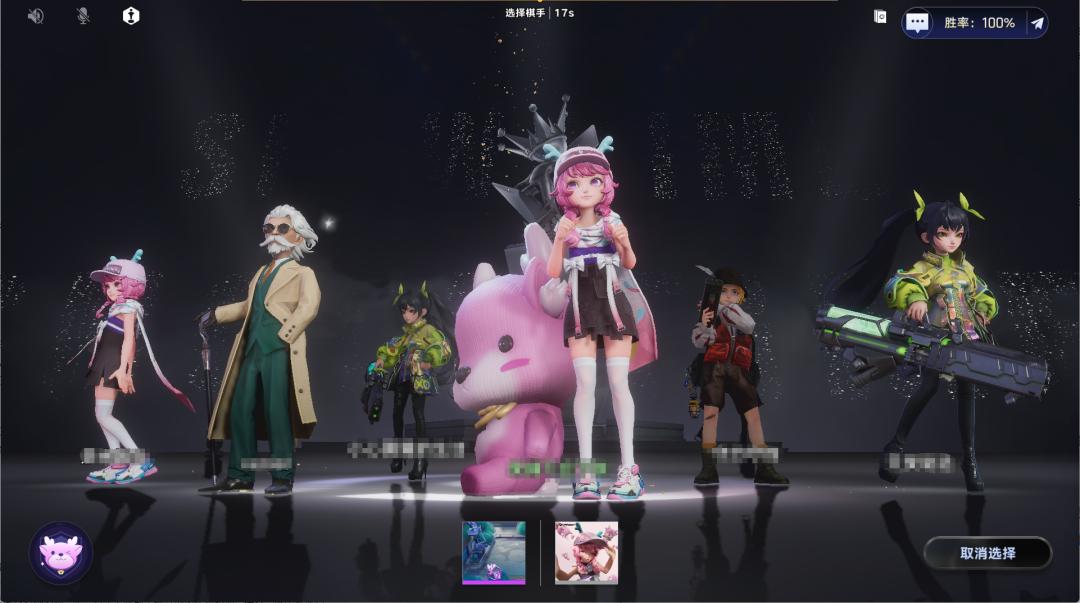
This also relates to the third layer of the game's mechanism design, namely the player characters and talent cards.
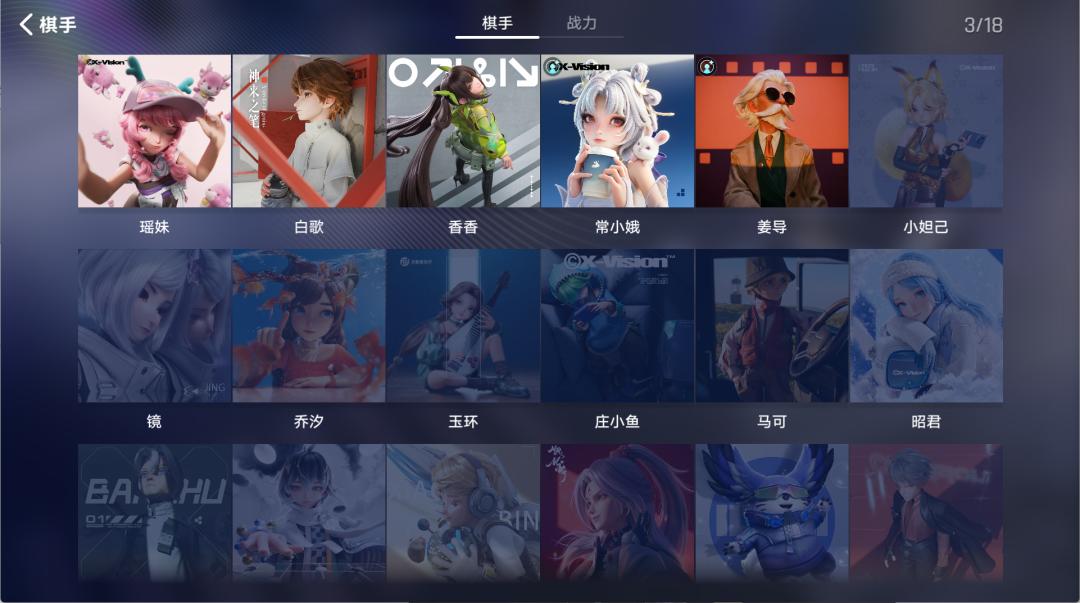
Chess of Kings
In Chess of Kings, each player character has different characteristics, and they are far more than just "the player's avatar". They are essentially a member participating in the battle on the chessboard.
A very obvious example is Xiangxiang, who can directly deal damage to enemy heroes on the field, and this damage accumulates with the level of heroes on the field and the damage dealt to enemies. In the late stage, the role Xiangxiang can play is sometimes no less than a hero of hundreds of levels, and even her damage can sometimes become the key to turning the tide of the battle.
When players upgrade their player characters, they also need to choose one from three talent cards. These talent cards cover a variety of different effects. For example, if players want to level up quickly, they can choose talent cards related to losing health, and if they want to stay stable, they can choose talent cards that directly increase combat power. Most importantly, talent cards provide too many possibilities for players to adapt to changing circumstances, and sometimes some talents can even completely change the direction of the player's subsequent lineup build.
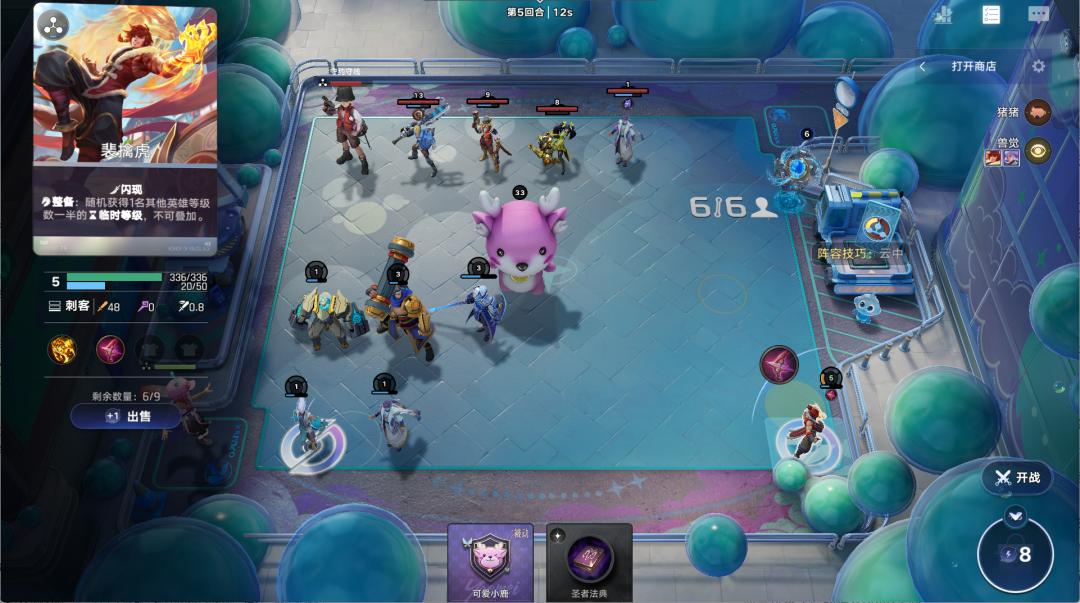
Chess of Kings
For example, this game basically directly determines that I will switch to the Yunzhongjun + Pei Qinhu lineup.
It is precisely because of the existence of player characters and talent cards that there is no "only meta lineup" in Chess of Kings. It contains all kinds of gameplay, but it will not overload players' minds. Every step seems to be traceable, yet it is hard to imagine that the development team has verified countless scenarios.
02
I remember some people call this design of Chess of Kings "brain-using but not brain-burning". But from the actual experience, it essentially removes a lot of meaningless fierce competition links, and returns the purest fun of card games to players.
To put it bluntly, all this eventually boils down to one point: if you ask me whether I won or lost, I would say I had a great time. This feeling is exactly the second dimension that makes Chess of Kings so addictive.
It is undeniable that Chess of Kings still has competition links, and there are wins and losses, but what it competes for is not who can build the lineup faster, or who can get more resources through subtle control.
The resources each player can get in a single round do not have a particularly large gap. It tests how players adapt to different player characters, talents, heroes and equipment in each round, and how to give full play to their own understanding and creativity. This point is even more obvious in the "Endgame Challenge" entertainment mode of the game.
But this kind of competition does not eventually lead to confrontation, but is more like a kind of "achievement showcase".
When I was playing a game today, my single-core Baili Xuance lineup was formed very smoothly. I thought I was sure to win, but in the final battle, I encountered the four-person team of Chang Xiao'e, whose heroes on the field were all hundreds of levels high, and could grow by more than a hundred levels every round. My single-core lineup, which I thought was quite strong, was instantly torn apart by the opponent. At that moment, what I felt was not the unwillingness of losing, but the urge to try a similar lineup myself.
As a result, after having fun for a few rounds, I was defeated by another player who used a creative off-meta lineup.
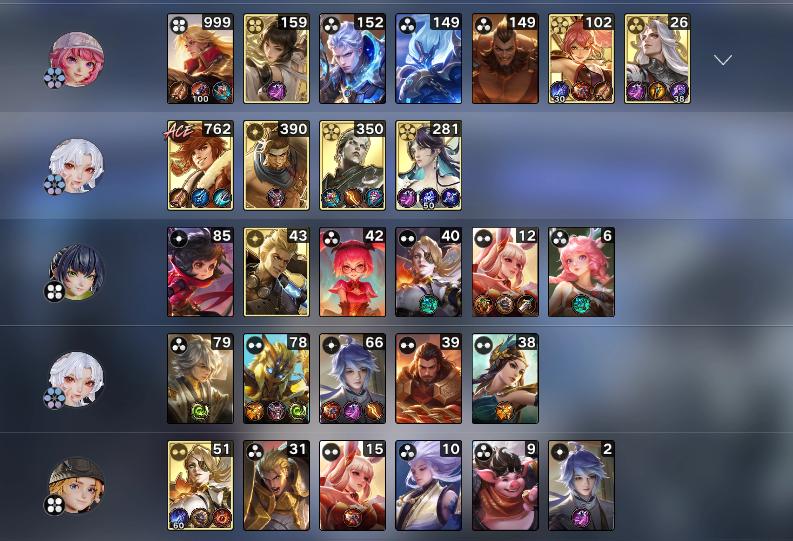
Chess of Kings
In other words, if you regard Chess of Kings as a competition, every player on the field is showing their own ideas rather than fighting against others. Just like a beauty pageant, people not only care about the final score, but also the ideas, thinking, and the sense of satisfaction brought by enjoying the whole process.
In fact, you can see from many designs that Chess of Kings cares more about whether players are happy than simple wins or losses. For example, each round of the game is started by 6 players together, but up to 3 players can team up to start the game, and finally all players get their scores settled according to the highest rank in their team.
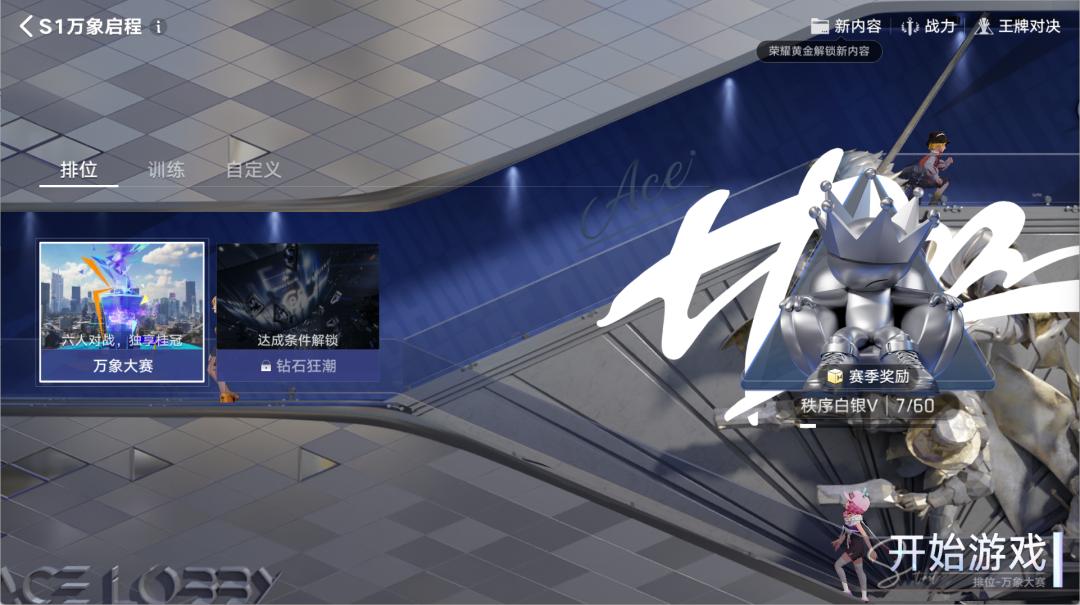
Chess of Kings
This of course means that players can climb the rank with the help of "strong teammates". But in a game mode where 6 people are essentially fighting for themselves, everyone can cheer for their friends' victory and feel sorry for their failure. This emotional resonance is perhaps more important and rarer than the rank points that increase or decrease.
It is worth mentioning that in addition to "sharing points together", Chess of Kings also has a private coaching mode. In this mode, friends can join their friends' games in the form of private chat, share their friends' screen, and have an independent voice channel.
These relatively friendly designs ultimately lead to a harmonious communication atmosphere. Players rarely complain about "luck-based wins" when their opponents get a certain core card, but are more happy to see each other's formed lineups.
03
This atmosphere can't help but remind people of the time when Honor of Kings first became a hit. At that time, many people called Honor of Kings a "social software", because it adapted to so many real social scenarios: when a group of people just met, they