The relentless pursuit of humanoid robots is essentially a "world-saving" business.
Humanoid robots may indeed be the most difficult and expensive type of robot, but they have a huge advantage — the world was originally built to fit the form of human beings.
Is there a new Terminator sequel coming?
I recently saw an interview with James Cameron, who revealed that the plot of the new Terminator will focus on how super AI truly enters the physical world. He also mentioned the classic "Terminator framework": Since cold metal and tracks have higher efficiency, why would super AI deliberately put on a "human shell" for itself?
The answer is simple: Humans are an extremely narcissistic and insecure species. Faced with cold steel, we only want it to do work for us; but only when it has eyes, hands and an upright posture, will we be willing to have deep emotional interactions with it and build trust.
Back to the real business world, many people are still questioning: Is humanoid robot nothing more than an expensive "big toy"? After all, isn't a robotic arm more suitable for screwing tasks in factories? Aren't quadruped robots or tracked vehicles more stable for cargo transportation?
So why are companies like Tesla and Xpeng still devoting all their efforts to the "humanoid" form? Just now, after reading the news that Xpeng's robot walked off the production line autonomously, I systematically thought about this issue again, and found that there are actually many logics behind it worthy of in-depth analysis.
01
Why do we deliberately
bother to make it "humanoid"?
There are three extremely practical accounts to consider: the emotional account, the social account, and the economic account.
First of all, what humans need is a "partner", not a cold machine.
He Xiaopeng once mentioned a touching story in a public program. He talked about his personal experience of caring for his sick father, and it was precisely those real yet extremely trivial needs in patient care that made him determined to develop robots.
Just imagine that scenario: When you are sick in bed, or you are old and have limited mobility, if a tracked robotic arm that looks like an excavator rumbles towards you, you will most likely only feel resistance and fear. But if a robot with a gentle posture that looks like a human walks over, people's psychological defense mechanism will be lowered immediately.
Secondly, humans cannot stand the sight of "aliens" all over the streets.
Elon Musk once said that there will be tens of billions of robots around the world in the future.
If the streets are full of oddly shaped mechanical spiders and tracked vehicles, the whole society will have a strong sense of strangeness. At present, the "humanoid" form is the robot form that is easiest to integrate into existing human society.
Thirdly, making robots humanoid is essentially a business that "saves the whole world's cost".
The height of stairs, the position of door handles, elevator buttons, car doors, wrenches for screwing... All of them around the world are built according to the proportion of human body.
Wheeled robots have to be redesigned when encountering only two steps; quadruped robot dogs cannot even turn the faucet of a sink. To make them work, companies have to completely renovate all factory, store and home environments. That is why bipedal robots like Figure can directly enter BMW's factory to work.
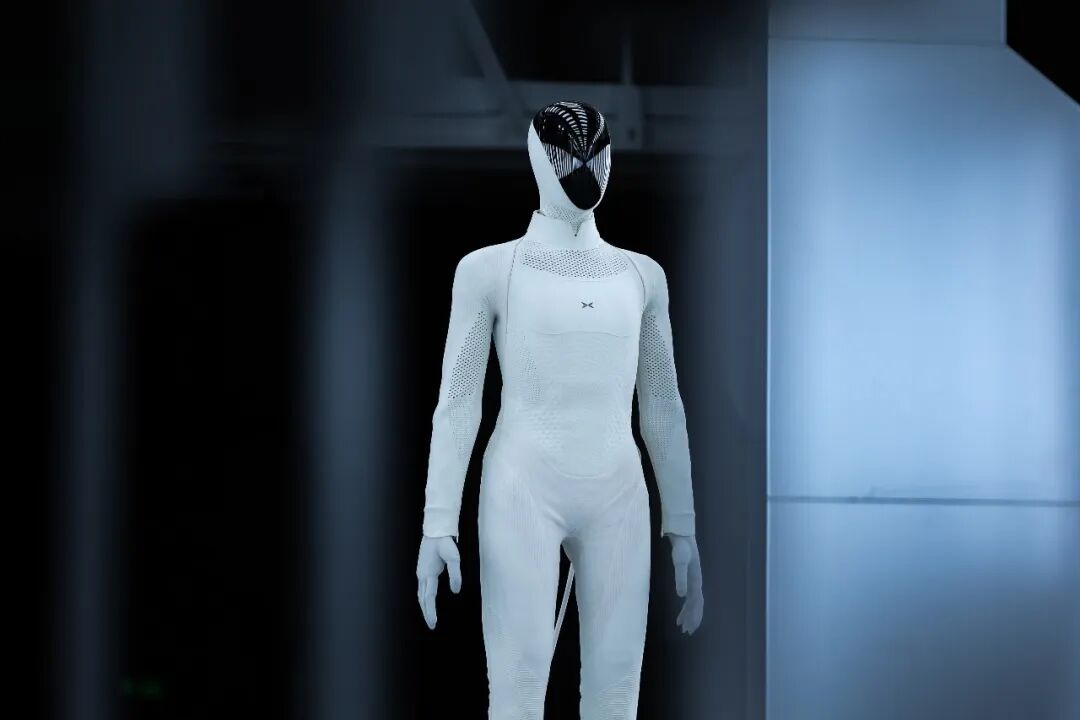
To put it in the words of industry insiders: A highly anthropomorphic form can naturally seamlessly adapt to all the infrastructure designed for humans in this world, which is the most cost-effective "universal solution".
02
To build a real "humanoid" robot,
what basic capabilities are required?
In the past, people thought humanoid robots were just "toys", because those previous robots could only dance or pose on the exhibition stage, performing purely based on pre-set codes.
To achieve the leap from "prototype demonstration" to real "industrial practical application", the whole industry is working on three core underlying capabilities to build a complete "physical AI architecture".
First, a set of dexterous "hard bones" just like human beings.
Human hands can thread a needle because they have enough joints. Therefore, Xpeng's robot is equipped with 76 degrees of freedom all over its body, and one hand alone has 21 degrees of freedom, which can not only screw screws but also hold a teacup. For safety, it is also wrapped with a flexible lattice shell outside.
In order to respond to public doubts before, the team even directly cut open the robot shell on site for demonstration (we even wrote a special article titled "The Inevitability of Cutting Open IRON" for this); even if it falls during the test, it will just dust itself off and continue iteration.
Second, a "hardcore brain" that understands the physical world.
It must be equipped with high-computing-power chips to run physical AI large models directly on the end side. Xpeng has installed 3 Turing AI chips on its robot, with an effective computing power of up to 2250 TOPS.
With this computing power base, the large model can run directly on the robot end side. Its perception of the world is no longer static photos, but dynamic "4D space-time understanding", and it no longer needs remote human manipulation in the background, and can act autonomously.
Third, massive learning ability to "consume human data".
There are decades of accumulated videos of humans working on the Internet. As long as the robot is humanoid, the AI large model can "consume" these videos and gradually convert them into its own motion capabilities.
More critically, it supports "cross-ontology migration". Car companies have a huge natural advantage in developing robots. For example, Xpeng has built a complete closed-loop capability covering real-world data collection, model training, testing, deployment, as well as user feedback and continuous optimization in the autonomous driving field, which can be reused for robot data training.
Xpeng's second-generation VLA large model enables cars to learn how to identify pedestrians on the road, how to avoid obstacles, and how to judge distances. After migrating to the robot with a different body, it can still work normally. Elon Musk also directly transplanted Tesla FSD's visual neural network and self-developed chip to Optimus.
From the perspective of car companies, whether it is a car running on four wheels or a humanoid robot walking on two legs, they are essentially terminals equipped with computing chips that can understand the physical world and make autonomous decisions.
03
From "overpriced toy" to truly
sharing human worries, how many hurdles are left to cross?
From the perspective of the industry, there are roughly four hurdles to cross as follows.
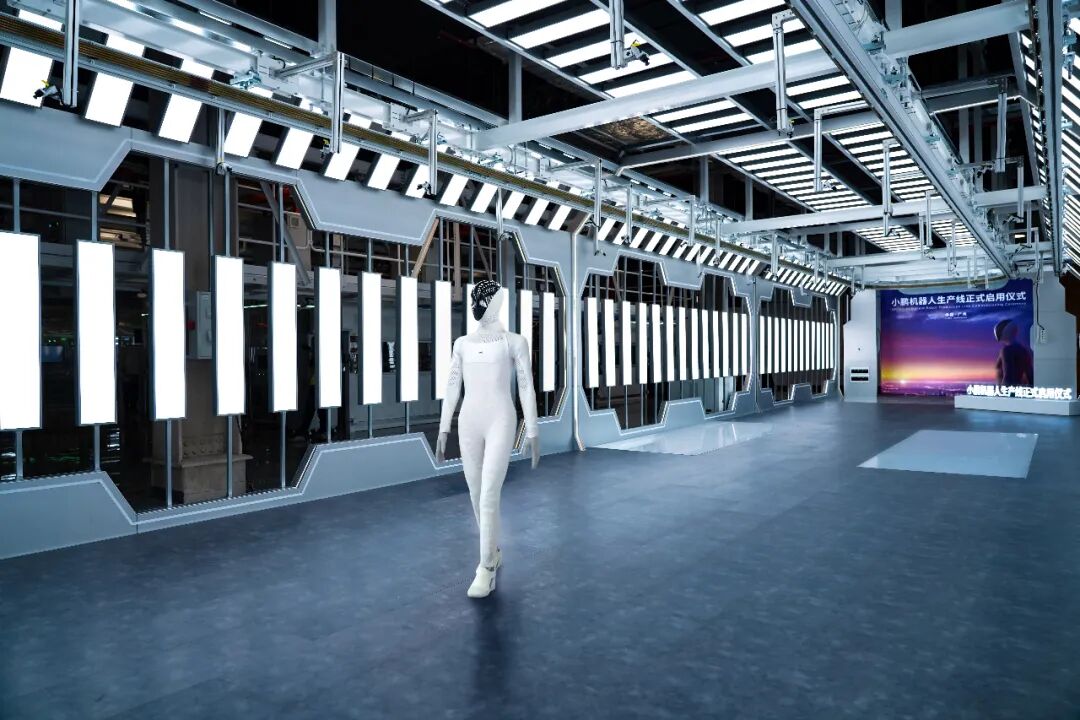
First hurdle: Walk off the production line and get manufactured first.
In the past, robots were mostly hand-polished trial products in laboratories, with surprisingly high costs. Take Xpeng as an example, it has built the world's first fully automated production line, with the automation rate of core manufacturing processes reaching more than 80%. It manufactures robots with the same strict standards as manufacturing cars, to stabilize product quality and reduce costs, which is the first step to achieve large-scale mass production.
Second hurdle: Enter factories and stores, and start working first.
Don't imagine that it can enter your home to cook and wash dishes as soon as it is launched, the real environment is far too complex. The most practical path is to let it run in semi-open environments first, expose problems and accumulate experience. Musk previously allocated the production line of Tesla's Fremont factory in California to the modified Optimus, letting it sort battery packs and transport parts in the Tesla factory first; Xpeng also plans to let its robot serve its own stores and parks after mass production at the end of this year.
Third hurdle: The data flywheel makes it smarter the more it is used.
The more work it completes → the more real-scene data it collects → the smarter the physical AI large model becomes → the stronger its ability to solve complex problems. This is the typical "data-model-application" flywheel.
Fourth hurdle: Reduce costs and enter thousands of households.
When the scale effect of production is activated and costs are reduced, robots will have the conditions to enter ordinary families. For example, Xpeng's schedule shows that it will enter the mass production stage at the end of this year, and it is expected to officially launch and deliver its robot to the global market in 2027.
Moreover, from the perspective of business logic, this is definitely not a loss-making business that only attracts attention. Because high-end general-purpose humanoid robots have extremely high technical barriers and very limited high-quality supply, official forecasts show that its gross profit margin per unit in the future will be much higher than that of new energy vehicles.
Since the beginning of this year, Xpeng's actions in the robot sector have become increasingly intensive: He Xiaopeng took direct charge of the robot business in June, completed the over 900 million US dollar first round of financing in August, and the production line was officially put into use in September. Connecting these nodes, you will find that this is no longer a car company "testing the waters" in the robot field, but treating robots as a long-term industry.
Capital and car companies are not stupid. Devoting all efforts to the "humanoid" form seemingly means choosing the most difficult and most capital-consuming path; but from another perspective, the biggest value of humanoid robots is precisely that there is no need to re-transform the whole world for robots. Of course, at the current stage, the real problem to be solved is to enable AI to have the ability to enter the real world — which is also the path with the lowest cost for AI to enter the human physical world.
As long as the direction is correct, you will not be afraid of the long journey ahead.
This article is from WeChat official account "Yangtze River Delta Momo", written by Sanhuo, authorized for release by 36Kr.