Do not engage in involution-style competition, and look at Elon Musk's "technology endgame mindset"
On one side, Tesla is streamlining its vehicle product line to shift production to robots and the fully autonomous Cybercab; on the other side, Chinese automakers are adopting a "sea of cars" tactic by launching a large number of new models intensively. What separates these two scenarios is not a gap in product capabilities, but a divergence in two distinct mindsets: one is placing bets on the next decade, while the other is only scheduling production for the current quarter. Elon Musk follows a "technology endgame mindset": he first judges where technology will lead the industry, then works backward to determine where to allocate resources today, rather than first looking at where current market share lies and then deciding which products to deploy.
On the evening of September 3, 2026, in Austin, Texas, the United States, Tesla held a launch event that was not live-streamed to the public, open only to invited attendees who were also required to sign non-disclosure agreements. This company, known for its high-profile style, announced in the most understated way in its history a development that the entire industry had been waiting for nearly two years: the Cybercab was officially put into commercial operation.
This is the world's first mass-produced vehicle built entirely for full autonomy, with no steering wheel, no pedals, no traditional rearview mirrors, and only two bench-style seats in the cabin plus a 22-inch central control screen. Equipped with a 47.6 kWh battery pack, it delivers a range of 673 kilometers and a power consumption of 10.2 kWh per 100 kilometers. When deployed in ride-hailing services, the travel cost per kilometer is approximately 0.84 RMB, which is only about one-tenth of the average level across the U.S. industry.
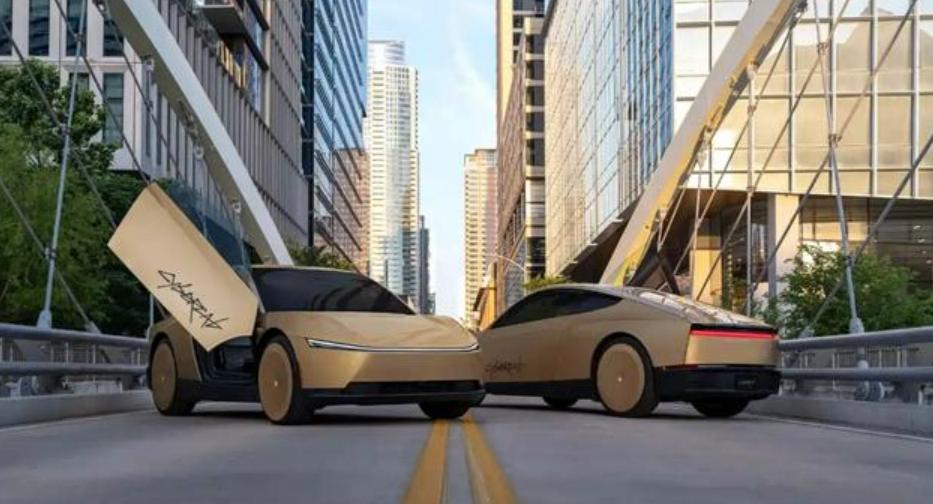
Meanwhile in the Chinese market, in May 2026, as many as 9 flagship models under the "9 Series" were launched within a single month, with price points ranging from 250,000 RMB to 900,000 RMB, setting a new record for the number of flagship models launched in a single month in the history of China's automotive industry. BYD's five brands cover around 50 available models spanning the 150,000 RMB to over 1,000,000 RMB price bracket; NIO's three brands put 11 models on display simultaneously; XPeng announced that by the end of 2026, it will build "a complete product layout covering all mainstream market segments from compact to full-size" in the 100,000 RMB to 500,000 RMB price range; Geely's Galaxy, Zeekr, and Lynk & Co brands are advancing in tandem, with parallel development of multiple powertrain routes including pure electric, plug-in hybrid, range-extended, and methanol hybrid.
On one side, Tesla's two core models Model 3 and Model Y have been on sale for nearly a decade, the Model S and Model X have been phased out, and the freed-up production lines are being repurposed to manufacture humanoid robots, with its next ace bet placed on a vehicle with no steering wheel; on the other side, the "sea of cars" tactic sees dozens of new models launched every year, with layouts covering every vehicle size, every price bracket, and every powertrain type.
These represent two completely different competitive philosophies within the same industrial transformation. Understanding this difference means grasping what makes Elon Musk's mindset unique.
1
The Voluntarily Surrendered Sales Volume
Let's start with a counterintuitive fact.
In terms of product capabilities, Tesla faces almost no difficulty in expanding its product line. Its three core electric technologies, manufacturing system, brand momentum, and global distribution channels are more than sufficient to support the rapid launch of mid-size, full-size sedans and SUVs beyond the Model 3 and Model Y, covering more price segments. According to the prevailing logic in China's automotive industry, every new product line means an incremental sales volume of tens of thousands or even hundreds of thousands of units. In 2023, Tesla delivered 1.8086 million vehicles globally, of which the Model 3 and Model Y accounted for around 95% — if its product line doubled, even by conservative estimates, total sales would easily secure its position as the world's top-selling pure electric vehicle brand.
But Tesla did not take this path. In 2025, with total deliveries of 1.636 million units, it ceded the global top spot in pure electric vehicle sales that it had held for many years to BYD. Its full-year revenue recorded its first annual decline since going public, with net profit falling 46% year on year. The outside world expected it to strike back with new product lines, but its response was an announcement at the January 2026 earnings call that the Model S and Model X would be phased out before the second quarter of that year.
The origin of this decision dates back to the famous "death of the Model 2" incident in 2024.
The 25,000 USD affordable Model 2 was once seen as Tesla's next sales growth engine, originally scheduled for launch in 2025. In April 2024, Reuters reported that the project had been canceled, and engineers had been reassigned to the Robotaxi project as early as the end of February that year. Musk first denied the news on social media, then came clean at the Q3 2024 earnings call, uttering the line that would be repeatedly cited later: "There is no point in making a conventional 25,000 dollar car... that would be silly, completely against what we believe in."
According to insiders, he put it even more bluntly on another occasion: "Making cheap cars will not change the world." In 2024, almost 10 billion USD of Tesla's budget was fully invested in autonomous driving and AI.

Looking further back, in 2006, Musk released his "Secret Master Plan", outlining three steps: first make money with the high-priced Roadster sports car, then build the luxury Model S/X sedans, and finally launch the mass-market Model 3/Y. The four letters S, 3, X, Y spell out "SEXY" (the Model E was renamed Model 3 later due to trademark issues) — this master plan was fully completed when the Model 3 entered mass production in 2017. In the nearly ten years that followed, Tesla never launched another brand new mass-market model.
A company with unquestionable vehicle manufacturing capabilities spent a decade insisting on competing in the global market with only two core products. This is not a capability issue, but a choice issue. On Musk's balance sheet, expanding the product line only delivers value in terms of sales volume, but no strategic value.
2
The Other Side of the Sea of Cars Tactic: The Essence of Involution
To understand the weight of this choice, we need to see the full picture of the "sea of cars" tactic in China's auto market. The product expansion of Chinese automakers follows a strict matrix logic.
The first dimension is vehicle size: every market segment, from small, compact, mid-size, full-size to large, must have a corresponding product. For example, XPeng's product planning is a standard example: the MONA series targets the 100,000 RMB to 150,000 RMB segment, the G01/GX series pushes into the 380,000 RMB to 500,000 RMB full-size flagship segment, with the goal of building "a complete product layout covering all mainstream market segments" by the end of 2026.
The second dimension is powertrain form: the same model is offered in multiple pure electric, range-extended, and plug-in hybrid versions. For instance, XPeng's P7+, G7, and X9 all come with both pure electric and range-extended powertrains; Geely's lineup is even more comprehensive, adding a methanol hybrid route alongside pure electric and plug-in hybrid options.
The third dimension is branding: BYD uses its Dynasty, Ocean, Denza, Fangchengbao, and Yangwang five brands to cover the entire price range from 150,000 RMB to over 1,000,000 RMB; NIO has spun off its LeDao and Firefly brands, putting 11 models under three brands on the market at the same time.
When these three dimensions are multiplied, the product line expands at an astonishing speed. This strategy was reasonable in the demand growth era, when the market expanded every year and every segment brought incremental sales, so launching one more model meant one more source of revenue. But after China's new energy vehicle penetration rate reached 62.9% and the industry completely bid farewell to the era of incremental growth, the same strategy changed its nature. Every new model launched in the market is essentially snatching customers from other players' plates.
From January to August 2026, retail sales of passenger vehicles in China fell by nearly 15% year on year. With a stock market overlaid by a tightly packed product matrix, price wars, technological involution, and cash flow competition have become the norm. The top 10 automakers now account for 85.2% of total market share, with a large number of smaller, weaker players exiting the market. The scene of 9 "9 Series" flagship models launching in a single month in May 2026 is less a sign of prosperity, and more the peak of homogenized competition. All 9 models target the exact same group of users, competing on who has the most fully equipped refrigerators, large screens, and luxury seats.
What is most thought-provoking is how the entrepreneurs in this industry view the situation themselves. On May 29, 2026, Li Bin, Chairman of NIO, said at the Future Automotive Pioneers Conference: "More cars do not equal better results... We will no longer develop models that are clearly unprofitable. We will definitely not work on range-extended or plug-in hybrid vehicles anymore, and we do not need to develop new MPV models either."

He also publicly criticized the industry in April for "severe resource waste caused by excessively fast new model iteration", using batteries as an example: AA and AAA batteries are highly standardized, so companies do not need to repeatedly develop different specifications for different products. But what his competitors are doing is exactly the opposite: developing a dedicated model for every tiny size segment, every powertrain type, and every gap in the price range.
Li Bin's reflection confirms the predicament of the sea of cars tactic from an internal perspective: the longer the product line, the more dispersed resources become, the more rushed the iteration process, and the less profit each individual vehicle makes. When the mindset of chasing sales volume and market share is pushed to the extreme, it turns a company into a non-stop product printing press, printing products that continuously depreciate in value, before printing new ones all over again.
3
Musk's Arithmetic: One Car Equals Five Cars
So where did Musk direct the saved resources and energy after rejecting the sea of cars tactic?
The answer lies in two things: the Cybercab, a vehicle that can drive itself, and the humanoid robot Optimus. To understand this choice, we must first grasp Musk's judgment on the endgame of the automotive industry.
He stated at the Q3 2024 earnings call: "The future belongs to autonomous electric vehicles. Non-autonomous gasoline cars will be like horseback riding and flip phones in the future — horses still exist, but only as a niche hobby. Most automakers have not internalized this point, and they will pay the price later."
This is not just a slogan, it is a calculated account. At the "We, Robot" launch event in October 2024, Musk did the math: a private car is only used for about 10 hours a week, and spends the remaining 158 hours parked, depreciating in value. Once fully unsupervised autonomous driving is realized, the same vehicle can go out to operate as a service, boosting its utilization rate by an order of magnitude. His conclusion is: "In the Robotaxi era, the value of the same vehicle will increase 5 times, maybe 10 times."
This calculation explains the full logic behind the "death of the Model 2": if autonomous driving is the endgame of the automotive industry, then before that endgame arrives, spending resources on building a few more "ordinary cars" is essentially building inventory for assets that are about to depreciate. An ordinary 25,000 USD car is just a one-off sale once it is delivered; but an autonomous Cybercab has 5 to 10 times its value, and will continue to appreciate as its software iterates. Given that, with the same 10 billion USD budget, would you rather fight for a share of today's stock market, or buy a ticket to the industry's endgame? Musk made his choice without any hesitation.
23 months later in Austin, this calculation began to produce the first verifiable figures. The Cybercab took only 18 months from its concept unveiling to the start of mass production. The first production unit rolled off the line at the Texas Gigafactory in February 2026, mass production started in April, and it was officially put into operation in September. It adopts a "boxless" manufacturing process, where sub-components are produced in parallel before final assembly. Musk set the target for this production line as "one vehicle rolling off the line every 10 seconds, or even every 5 seconds". Its cost structure comes from extreme energy efficiency design: with a curb weight of 1412 kg, a 47.6 kWh battery, it consumes only 10.2 kWh of electricity per 100 kilometers. The end-to-end pure vision system is trained on a cumulative total of over 12 billion miles of assisted driving data from Tesla's global fleet. It does not rely on LiDAR or high-definition maps, using 8 cameras paired with a neural network, sharing the exact same technology stack as the system on the Model 3 and Model Y. While the "5x value increase" multiplier is yet to be fully verified, the "1/10 cost reduction" division has already been embedded in the product design, and the latter is exactly the prerequisite for the former: only when the cost is low enough can the operating network expand, and only when the network expands can the per-vehicle utilization rate support the 5x value calculation.

The same logic extends to Optimus. In September 2025, Musk laid out his judgment in Chapter 4 of the "Master Plan": "Optimus will account for about 80% of Tesla's future value, far exceeding the electric vehicle business." This figure sounds exaggerated, but the progress is very tangible: in January 2026, over 1000 Optimus Gen 3 units were already working on the workshop floors of the Fremont Factory. By the second quarter of 2026, the last batch of Model S/X units rolled off the production line, and the former production lines were officially converted into dedicated lines for Optimus, with a planned annual production capacity of 1 million units. The second robot production line at the Texas Gigafactory is already under construction, with a long-term designed annual capacity of 10 million units, scheduled to go into operation in the summer of 2027. Musk calls it "the most difficult manufacturing ramp in Tesla's history" — almost all components of the robot are brand new, there is no existing mature supply chain, and a large number of production steps can only be completed in-house.