Qwen and Zhipu have started ground promotion campaigns to compete for users.
Large model vendors are competing for users, and the competition has expanded to offline scenarios.
Recently, two quite interesting events have taken place simultaneously in Hangzhou.
On one hand, Zhipu AI launched the offline GLM Coding Plan event tailored for Hangzhou; on the other hand, Hangzhou Talent Management Service Center, in cooperation with Qwen Office, is preparing to distribute Token cards directly to young people in the entrepreneurship parks.
One focuses on AI Coding, the other on AI office work. These seem to be two separate events, but the logic behind them is actually very similar:
Deliver Tokens directly to developers and entrepreneurs, and get them to use the products first.
To put it more bluntly, large model vendors have also started to do "offline grassroots promotion" to grab users.
Qwen Delivers Tokens Directly to Entrepreneurship Parks
Let's start with Qwen.
Starting from September 20, entrepreneurs and employees at 35 municipal-level college student entrepreneurship parks in Hangzhou can collect Qwen Office Token cards.
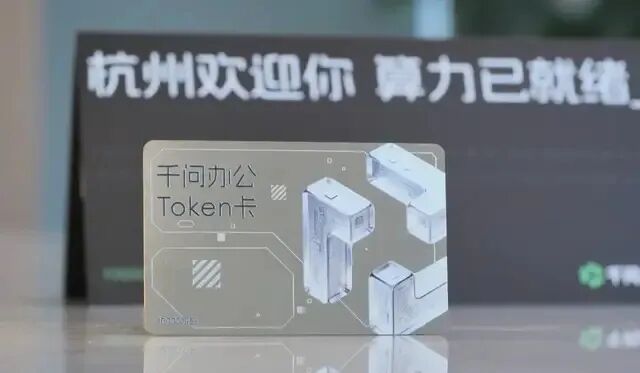
The first batch has 1000 cards, each containing 10000 points with a market value of about 500 yuan. If a 10-person startup team collects all the cards, it is equivalent to getting an AI quota of about 5000 yuan. Public reports mention that it is no longer unusual for a 10-person startup team to spend thousands of yuan on Tokens every month.
And the collection process this time is very simple.
Starting from September 20, employees working in these 35 entrepreneurship parks can apply for one card per person at the park management department with their work ID badges.
There is no complicated project application process, nor do you need to write dozens of pages of materials. After getting the card, scratch off the redemption code, redeem the points in Qwen Office and you can use them directly.
This is nothing like the traditional "entrepreneurship subsidy".
In the past, when entrepreneurship parks attracted entrepreneurs to settle in, the common benefits included rent exemption, free workstations, utility bill reductions and talent subsidies.
Now they are starting to give away directly:
Tokens.
This change is actually very representative.
Because for more and more AI entrepreneurs and small teams, Tokens have truly become a daily production cost.
You need Tokens to write code, make PPTs, run Agents, analyze data, generate web pages and process documents, all of which consume Tokens.
In the past, company bills included rent, water, electricity, servers and SaaS subscriptions.
Now there is very likely an additional line added to the list:
Large model.
Therefore, the shift from rent subsidies to Token subsidies seems a bit novel, but in essence it is only a change in the cost structure of startup companies.
What Is More Notable: Model Vendors Start Competing for the "Default Model" Position
If it were only the government distributing some AI benefits to entrepreneurs, this event would not be that worth writing about.
The really interesting part is that Zhipu AI on the other side is also doing similar things.
Zhipu AI has launched the GLM Coding Plan related activities specifically for Hangzhou, also targeting developers and AI Coding users.
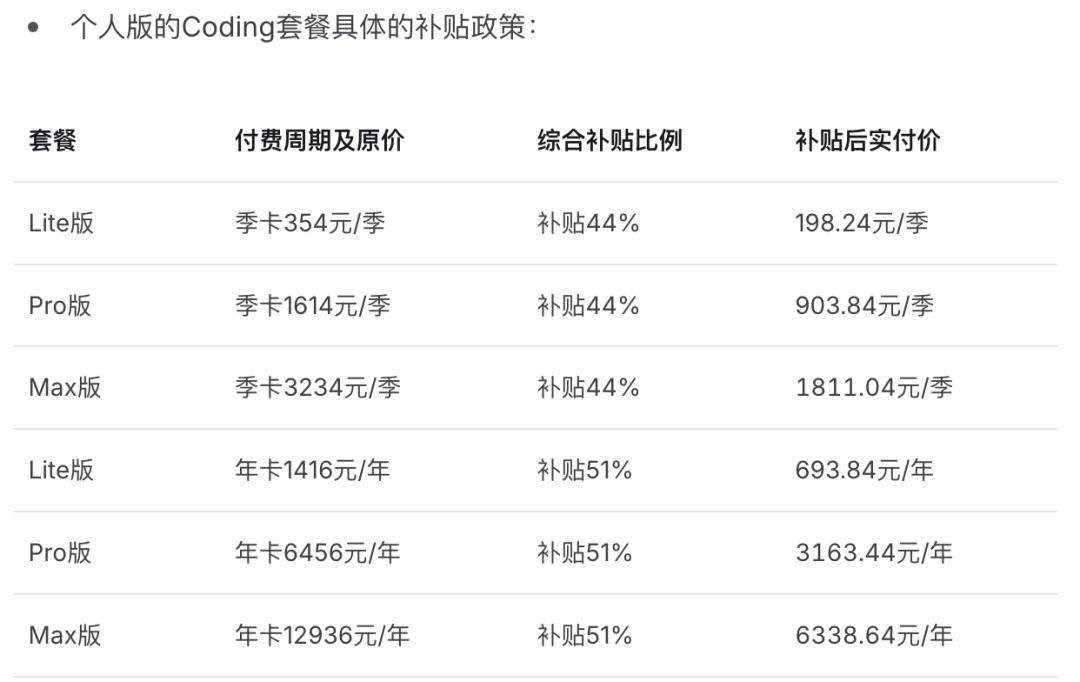
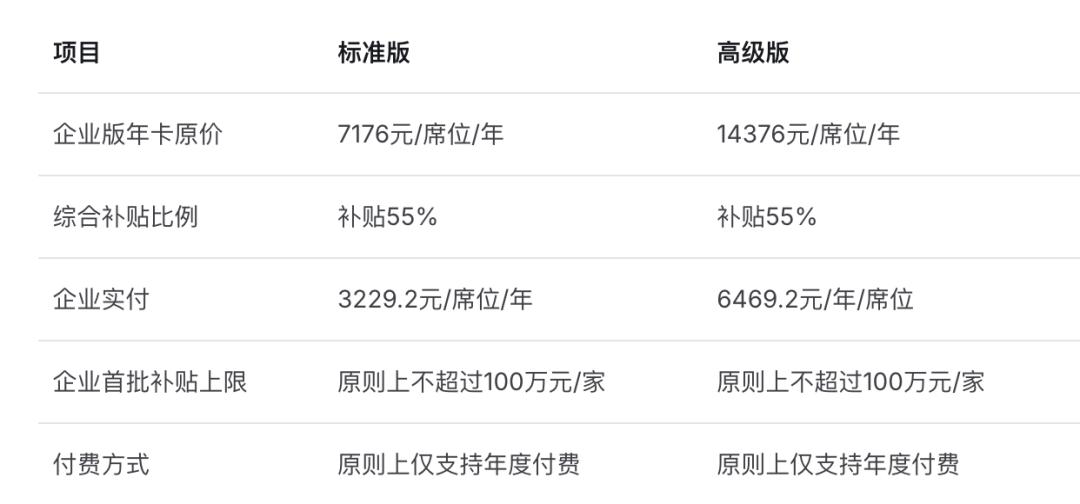
Why have all parties suddenly started targeting this group of people?
Because what is truly scarce in the large model industry today is no longer just ordinary users, but users with continuous usage demands and willingness to pay.
An ordinary consumer who occasionally opens a large model to ask a few questions may not contribute much revenue in a year.
But a programmer is a different case.
He uses the model to read code, modify code and run Agents every day, and a single task may consume hundreds of thousands or even millions of Tokens.
A startup team is even more different.
Once the company's code, office workflows, Agents and even its own products are all connected to a certain vendor's model, it is likely to become a paying customer for many years.
Therefore, what vendors give away today seems to be Tokens worth a few hundred yuan, but in fact they are competing for a very important position:
Your "default model".
This set of tactics is not new at all.
More than a decade ago when cloud computing first emerged, Alibaba Cloud, Tencent Cloud and AWS competed for startup companies by giving away cloud servers upon registration and cloud usage quotas for participating in entrepreneurship programs.
Because everyone knows that if a company uses a certain vendor's cloud service on its first day of starting a business, the cost of migrating away will get higher and higher once its business is fully up and running.
Today, the scenario is replaced by large models.
In the past, servers were given away for free.
Now Tokens are given away for free.
The Large Model War Has Shifted From Parameter Competition to Channel Competition
There is another recent phenomenon that can well illustrate this point.
In early September, Tokens were even put on sale on Taobao.
Tmall launched the "AI Space Station" section, where products from Alibaba Cloud, Zhipu AI, Kimi, MiniMax, DeepSeek and other vendors started to sell packages such as Token Plan and Coding Plan in a centralized manner; Zhipu AI also opened its official flagship store on Tmall.
Relevant reports show that 48 hours after Zhipu AI opened its store, its brand search volume increased by 50 times month-on-month, driving the transaction volume of AI Token and other subscription products on Taobao and Tmall to increase by more than 160% month-on-month.
Putting these events together, the whole picture is very interesting.
In the past, large model vendors kept telling you:
How much the model has been improved, whose Benchmark score has been surpassed, how large the parameters are, and how powerful the reasoning capability is.
Now they are increasingly behaving like mature internet companies:
Opening flagship stores, launching packaged products, offering discounts, giving away Tokens, entering entrepreneurship parks and conducting offline promotions.
The technological war is not over, but it has clearly entered the next stage.
Because after the model capability reaches a certain level, we still need to answer a most fundamental question:
Why do users choose to use your product?
Model capability is one part, price is another, ecosystem is the third, and "letting users form usage habits first" is also an essential part.
This is also why I think the term "offline grassroots promotion", although sounding a bit unrefined, is particularly suitable for describing the current situation.
No matter how high-tech a business is, when it comes to real commercialization, it ultimately cannot avoid user acquisition, retention and conversion.
Tokens Are Likely Becoming the "Utilities" in the AI Era
Even greater changes are taking place on the other side.
When the government starts to include Tokens in the entrepreneurship support system, it itself shows that Tokens are gradually transforming from a technical term to a means of production.
In the past, the support for entrepreneurship included venues, rent, water and electricity.
Later when internet entrepreneurship boomed, cloud servers and computing power vouchers were provided.
In the AI era, we have taken one step further:
Providing model call quotas directly.
This kind of thing may become more and more common in the future.
When entrepreneurship parks attract investment, in addition to "half-year rent exemption", there may really be offers like "free half-year AI Coding package", "10 million free Tokens" and "model call subsidy provided".
Even in the future, when measuring whether a place is suitable for AI entrepreneurship, people may no longer only ask about the rent level and the number of available talents.
They will also ask:
Whether the computing power and Tokens are affordable.
Therefore, these two events of Qwen and Zhipu AI are just individual activities when viewed separately.
But when viewed together, they are very much like a signal:
Large model vendors have finally moved from the "model development" stage to the "model commercialization" stage.
In the past, everyone competed on parameters in the lab.
Now they start to sell packages on e-commerce platforms, distribute Tokens in entrepreneurship parks, and compete for developers offline.
The next war for large models will less and less likely be a purely technological war.
Instead, it will increasingly resemble the familiar internet industry competition we have seen before.
Just grab the users first, and figure out the rest later.
This article is from WeChat Official Account Everyone Is A Product Manager (ID: woshipm), Author: Guai Ge, Published with authorization from 36Kr.