Having completed three rounds of financing within one year, the "Gongzhi Ocean" team from the ocean engineering discipline of Harbin Engineering University is dedicated to developing deep-sea robots, and has already secured intended orders worth 100 million yuan | Underwater Project
In 1854, a young man named Cyrus Field decided to lay a submarine cable across the Atlantic Ocean. After several failed attempts and nearly all shareholders demanding the termination of the project, the cable was finally laid in August 1858. The voice of the British Queen was transmitted to the United States through the cable, marking the first time in human history that information was transmitted across the ocean in units of minutes.
169 years later, the total length of global submarine optical cables has exceeded 1.4 million kilometers, carrying more than 95% of intercontinental data transmission. However, humanity's daily maintenance capability for submarine cables still remains in the "Stone Age".
"The daily operation and maintenance of almost all submarine cables around the world is nearly zero," said Guo Chunyu, founder of deep-sea embodied intelligent robot company "Gongzhi Ocean". "Once a submarine cable breaks, the maintenance cycle is counted in months, and the cost can reach as high as tens of millions of yuan."
This is not a unique dilemma for submarine cables. Extreme environments such as complex ocean currents, highly corrosive seawater, and biofouling communities leave traditional underwater operation equipment almost helpless.
Guo Chunyu's team is providing a solution to the deep-sea operation dilemma. "We have been engaged in scientific research for more than 20 years, and have solved 70%-80% of the problems in deep-sea operations. It is time to translate our technical capabilities into productivity as soon as possible."
In 2025, Guo Chunyu founded Gongzhi Ocean. Relying on the self-developed flexible undulating fin + vector pump-jet coupling technology, the company has obtained intentional orders worth 100 million yuan in less than a year since its establishment with a team of less than 20 people, covering multiple high-barrier scenarios such as deep-sea mining, combustible ice exploitation, submarine optical cable operation and maintenance, and polar scientific investigation.
Relying on 40 years of technical heritage, pioneering a low-disturbance, low-noise deep-sea propulsion solution
The starting point of Gongzhi Ocean is much earlier than most startups in the same field.
Guo Chunyu works at Harbin Engineering University, whose predecessor was the Department of Naval Engineering of the PLA Military Engineering Institute, with its naval architecture discipline ranking top in China. Guo Chunyu's supervisor, Professor Huang Sheng, is one of the first batch of underwater propulsion experts in New China who studied shipbuilding technology abroad.
Guo Chunyu is not only a professor and doctoral supervisor at Harbin Engineering University, but also a national leading talent, director of the Key Laboratory of Underwater Propulsion Technology under the Ministry of Industry and Information Technology, one of the top 2% of scientists in the world in 2024 and 2025, and holds academic positions such as expert of the special demonstration group for ship energy efficiency improvement of the Ministry of Industry and Information Technology and member of the Ship Mechanics Academic Committee of the Chinese Society of Naval Architects and Marine Engineers. He is one of the early scholars in the world who systematically carry out research on the theory and experimental methods of ship underwater flow field.
Based on more than 40 years of academic inheritance and scientific research accumulation, Guo Chunyu proposed that body noise and limited visibility are the core technical problems that almost all deep-sea operations have never been able to solve.
The traditional propeller propulsion solution commonly used in the industry in the past has strong power. However, its high noise prevents the sonar from working effectively, and it will also disturb seabed sediments, reducing the visibility of equipment. Environmentally friendly solutions, on the other hand, sacrifice power and speed, which limits the equipment's current-resistance capability and makes it difficult to perform high-intensity operations.
Gongzhi Ocean's solution is the world's first flexible undulating fin + vector pump-jet coupling technology. The flexible undulating fin imitates the swimming mode of the deep-sea Persian carpet flatworm, using flexible materials for undulating propulsion to reduce disturbance to the surrounding water; the pump-jet propulsion adopts the pump-jet propulsion technology used in military submarines, which greatly reduces the body noise.
After the two are coupled, the robot can not only approach at high speed when needed (maximum 15 knots, endurance of more than 72 hours), but also switch to low-noise mode during operation (radiated noise as low as 86dB, compared with 100-170dB of traditional solutions). The sediment plume is only 1/500 of that of traditional equipment, with almost zero disturbance, allowing legal operation in ecologically sensitive sea areas.
In addition to technological innovation in the power system, Gongzhi Ocean has also self-developed sensing, control, navigation and communication, waterproof and intelligent systems, jointly forming an underwater operation technology platform system. Among them, the sensing system builds an image enhancement model integrating physical laws and AI algorithms based on the team's accumulated multi-modal, multi-scenario datasets and a total computing power of 200 TFLOPS. Equipped with a 5MP high-definition camera, it increases the perception distance by 25%, and the target recognition accuracy exceeds 95%.
Schematic diagram of application scenarios of deep-sea robots
Understanding the market, moving from scientific research institutes to the commercial world
Leading technology is one thing, and commercialization capability is another. Since starting his business, Guo Chunyu has spent a long time adapting to the transformation from a scholar to an entrepreneur: "Scholars are quiet, even stubborn, and they need to be free from external interference to conduct research. But entrepreneurs need to have a broad mind to let more people help them, and be able to listen to different opinions. These two modes of thinking are at two extremes, and I am also evolving myself."
Guo Chunyu recalled that during the seed round financing, a listed company offered a valuation two to three times higher than that of another early institution. After thinking all night, he chose the latter. "Gongzhi Ocean does not need to prove itself through valuation, but to learn more things beyond money from the institution."
"Deep-sea technology" was written into the government work report in 2025, listed alongside commercial aerospace and low-altitude economy. The popularity of the primary market has also increased rapidly, but almost all investments are concentrated in shallow water scenarios such as hull cleaning and consumer-grade underwater drones, while the deep sea still seems niche and mysterious.
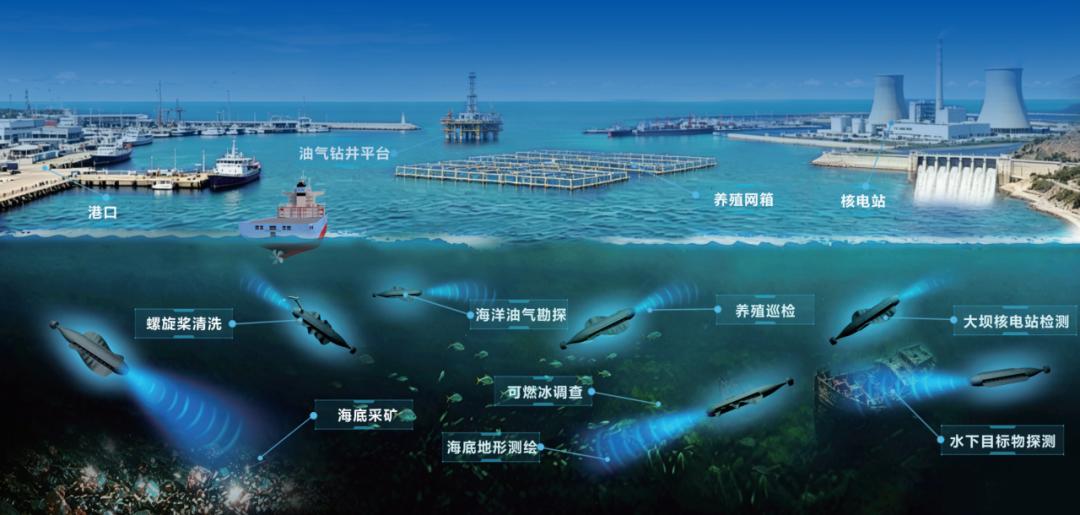
Schematic diagram of application scenarios of deep-sea robots
Against this background, that early investor actively promoted Gongzhi Ocean in Beijing's venture capital circle. Coupled with the scarcity of Gongzhi Ocean in the field of deep-sea technology, more investors saw a target that can truly tackle tough problems. In just one year, more than a dozen investment institutions took the initiative to contact Gongzhi Ocean, which had hardly made any public announcements before.
Guo Chunyu revealed that Gongzhi Ocean has completed three rounds of financing so far. The Series A financing just completed in August this year includes investors such as Zhongxin Embodied Intelligence Fund, Small is Big Venture Capital and Hidden Peak Capital.
He also frankly admitted his shortcomings: "We are not actually low-key, but we are not doing well in commercialization. Almost all of our 20 team members are scientific researchers, and we have no extra energy to do promotion, and we have not even participated in large-scale exhibitions."
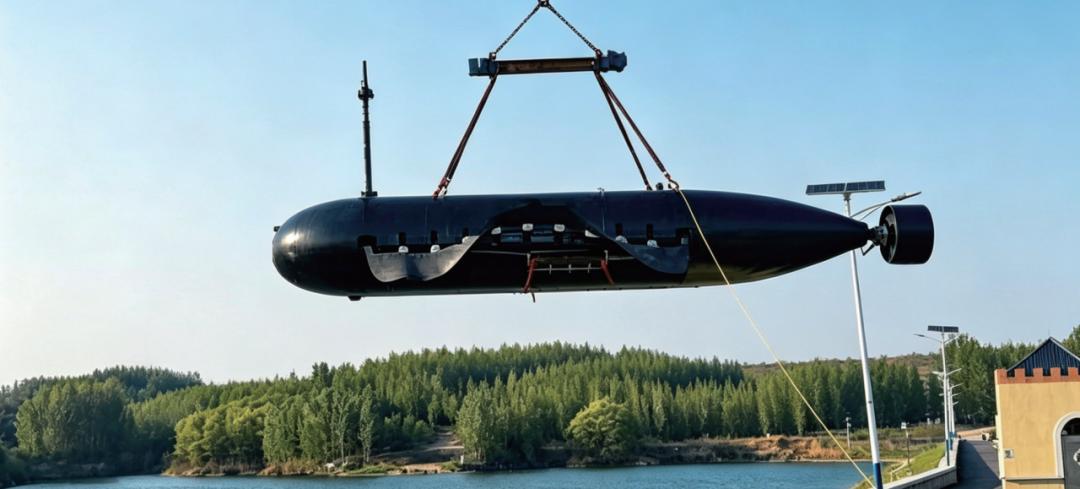
In order to more intuitively prove the technical feasibility to the market, Gongzhi Ocean once chose a reservoir as the "examination room".
At first glance, shifting from the deep sea to the reservoir is a dimensionality reduction strike, but Guo Chunyu said that the reservoir has extremely narrow space, high requirements for wall-adhering precision, complex water flow disturbance, and there are obstacles such as fishing nets and branches in the water. This unstructured environment makes operation more difficult than in the open deep sea.
"The difference between a reservoir and the deep sea is like a humanoid robot running on an empty playground versus working in a room full of sundries. Which one do you think is more difficult?" Guo Chunyu said.
The result of the reservoir verification is that the single operation cost of Gongzhi Ocean's robot is reduced from 5 million yuan to 700,000 yuan, the full-process inspection cycle is shortened from 6 months to 20 days, and the efficiency is increased by 90%. Guo Chunyu said, "This is a ticket for us to quickly open up the government procurement and large state-owned enterprise infrastructure operation and maintenance market."
The cost is far lower than traditional solutions, and nearly 100 million yuan of intentional orders have been obtained
Guo Chunyu found in a customer communication that "the customer previously purchased two underwater robots from an overseas company at a price of tens of millions of yuan. The leader hoped to use the machines to reduce costs, but the actual feedback from front-line engineers was that in order to maintain these two machines, they had to hire several more people, the operation was not user-friendly, and the machines could not be repaired once broken, so they were actually left idle in the end."
Therefore, Gongzhi Ocean pursues the goal of "making underwater robots as easy to use as mobile phones, which can be used immediately after power on". For example, the "handbag-style" underwater robot being developed for COSCO Shipping weighs only a few kilograms, with a pre-sale price of less than 100,000 yuan.
At present, Gongzhi Ocean's robot products include 25kg small bionic ROV, 1000kg large bionic AUV and a number of self-developed high-performance underwater propulsion systems, and the price is less than 1/10 of that of traditional underwater robots.
Guo Chunyu explained that the core reason for the lower price is that everything from drawings to assembly is independently developed, and core components are produced independently. But he is very clear about this advantage: "The reason why we can achieve this price is largely because we do not count the 20+ years of scientific research costs. But the technology can never be kept closed. We must continue to innovate and maintain technical advancement."
Gongzhi Ocean is laying out the R&D of core component technologies such as underwater manipulators, and at the same time cooperating with an academician team to develop cutting-edge technologies combining underwater inertial navigation and DVL to solve the problem of underwater load bearing.
Translating "academic dividend" into real commercial value also requires the establishment of real engineering and mass production capabilities.
At present, Gongzhi Ocean has obtained nearly 100 million yuan of intentional orders in the core scenario of deep-sea mining. In high-barrier application scenarios such as remote equipment operation and maintenance and military marine investigation, it has completed technical parameter confirmation and business negotiations with customers, and has reached a strategic cooperation with the 704th Research Institute of China Shipbuilding Industry Corporation to provide key technical support for the national polar scientific research project.
In addition, breakthroughs have been made in overseas markets. A framework agreement for underwater cleaning ROV has been signed with a local marine engineering service provider in Singapore, with the first batch of delivery scale reaching tens of millions of yuan; an exclusive supply agreement for core components worth 30 million yuan has been signed with Canadian APG-Neuro.
In order to take on larger-scale orders as soon as possible, in July 2026, Gongzhi Ocean's intelligent factory in Qidong, Nantong, Jiangsu started construction, which is expected to produce nearly 100 underwater robot bodies per year.
Guo Chunyu predicts that the company will achieve a revenue of 30 million yuan in 2026, and is expected to exceed 100 million yuan in revenue and achieve profitability in 2027.
Talking about the long-term vision, Guo Chunyu said: "Huawei's development history is very similar to the history of our team. I especially hope that Gongzhi Ocean can become the 'Huawei of the deep sea'."
This vision is supported by sufficient technical confidence, and has also obtained preliminary market verification and phased trust from capital. The subsequent capacity ramp-up and order delivery performance will be the most intuitive test.