Apple's foldable device is finally here, how much of the pie will Jiangsu-based suppliers get?
This hardware boom led by the iPhone 18 and the first foldable iPhone has seen Jiangsu-based manufacturers not only deeply involved, but also securing multiple critical "first breakthrough" positions in core segments such as precision manufacturing, structural components and heat dissipation.
Apple held its 2026 Fall Launch Event in the early hours of September 10.
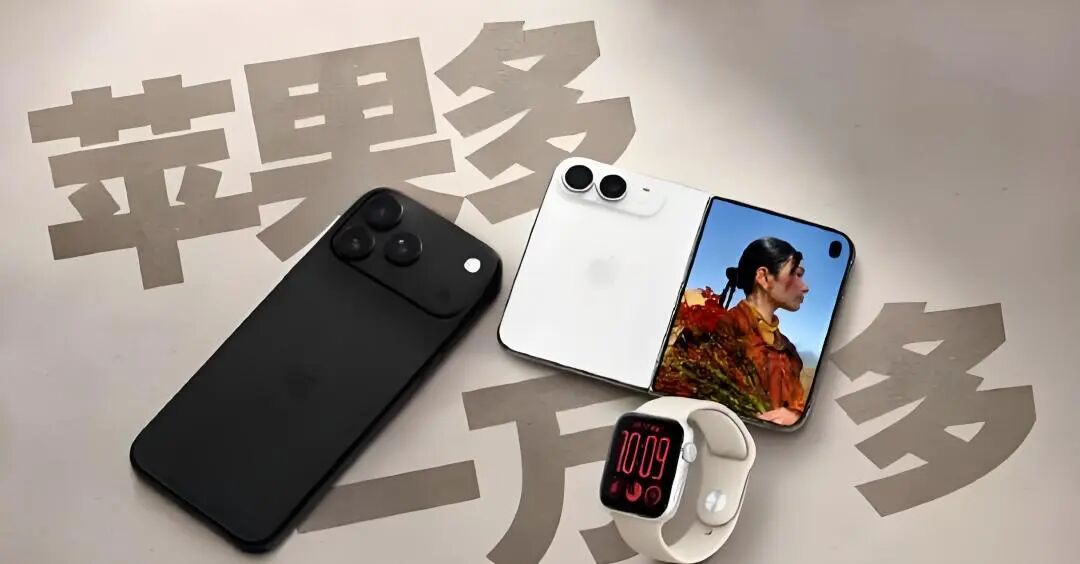
Three new smartphones including the iPhone 18 Pro, iPhone 18 Pro Max and the first foldable iPhone Duo, alongside two wearable devices the AirPods 5 and Apple Watch Series 12, were unveiled together, officially drawing the curtain on this year's flagship smartphone tech showcase.
Interestingly, Apple's long-awaited foldable phone, launched against the backdrop of across-the-board price hikes in the Android camp, has unexpectedly led many netizens to exclaim "Apple's new products are the most cost-effective flagships this year."
While most people are digging into the product performance, Deep Finance Society would like to bring you a new perspective today: what are the suppliers behind Apple's extremely "cost-effective" positioning? And which Jiangsu-based suppliers have reaped the dividends of this wave of new products.
The Most Cost-Effective Apple Products
Different from previous years, Apple did not update the standard iPhone lineup this year, but directly released three high-end models.
It is worth mentioning that the iPhone 18 Pro/ProMax is equipped with the world's first mass-produced A20 Pro chip built on TSMC's 2nm process, which delivers a 15% performance boost while reducing power consumption by 30%.
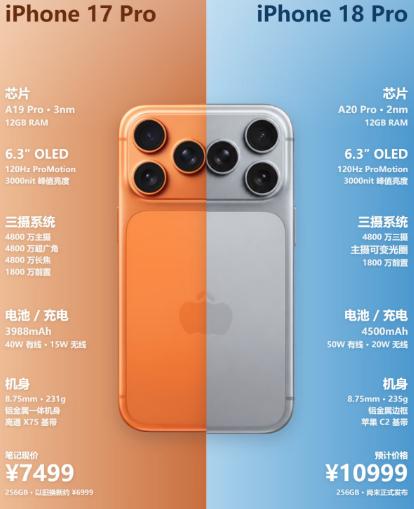
Next comes the highly anticipated imaging system upgrade: for the first time, the main camera is equipped with a physical variable aperture that supports stepless adjustment across 10 aperture levels from f/1.4 to f/4.0.
The battery life performance has been pushed to the extreme: the Pro model supports up to 36 hours of wireless video playback, and the ProMax reaches 45 hours, both setting new records for iPhone battery life.
In terms of pricing, the 256GB versions of the China mainland market are priced at 9999 yuan and 10999 yuan respectively, 1000 yuan higher than the previous generation.
In addition, Apple's foldable phone that has been delayed for 6 to 7 years has finally been launched this autumn.

Apple's first new foldable device named iPhone Duo adopts an inward-folding design, with a 7.6-inch large screen when unfolded and a 5.4-inch portable size when closed, and both screens support 120Hz high refresh rate.
It is the first iPhone to adopt an under-display front camera, paired with a custom variable-torque hinge, so that the screen flatness after unfolding is close to that of a bar smartphone.
It is also equipped with the same A20 Pro chip, with exclusive interactions optimized for foldable screens such as multi-task split screen and dual-screen preview shooting.
With such extreme hardware specifications and a brand new form factor, the price of the foldable phone has naturally risen: the 256GB version for the China mainland market is priced at 15999 yuan, and the top 2TB version sells for 26499 yuan.
The numbers do look staggering at first glance. But this year, the costs of memory chips and SoCs are skyrocketing, and the starting prices of domestic flagship phones are also rising collectively.
In comparison, the price of Apple's Pro series has risen from 8999 yuan to 9999 yuan, an increase of about 11.1%, which is even smaller than the price hike of some Android flagships.
No wonder some netizens joked that "Apple's cost-effectiveness this time does not come from Apple cutting prices, but from its competitors raising prices even more drastically."
Full Picture of Jiangsu Supply Chain for 18 Series & Duo
Deep Finance Society found that the highlights of the supply chain behind this launch event are even more thought-provoking than the products themselves.
As we all know, Apple's supply chain spreads all over the world: TSMC handles chip manufacturing, Samsung supplies display panels, and Sony provides optical sensors.
But in this hardware boom led by the iPhone 18 series and the first foldable iPhone Duo, Jiangsu-based manufacturers are not only deeply involved, but also have secured multiple critical "first breakthrough" positions in core segments such as precision manufacturing, structural components and heat dissipation.
Luxshare Precision is a name that has to be mentioned. As the core main force of Apple's assembly partners, Luxshare's Kunshan base has secured 70% of the assembly share of the iPhone 18 ProMax, and its share of the Pro series has also risen sharply to nearly half of the total.

More importantly, Luxshare has entered the foldable screen assembly supply chain for the iPhone Duo for the first time, breaking the market expectation that Foxconn would have a monopoly on foldable iPhone assembly.
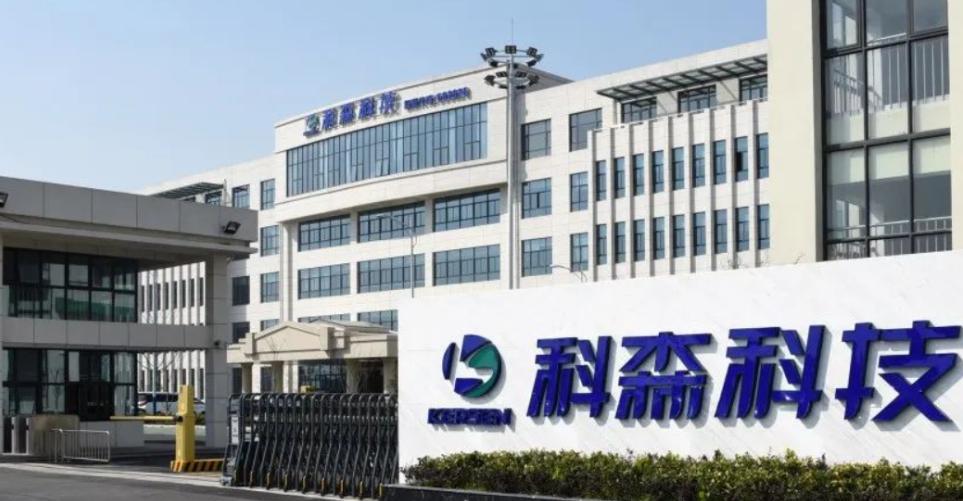
Also based in Kunshan, Kesen Technology, the core supplier of Apple's precision metal structural components, has long been responsible for the front-end processing of iPhone stainless steel middle frames and the hinge components of MacBook.
The precision small parts of the iPhone Duo such as the hinge metal base and middle frame connectors are also stably supplied by it.
AAC Technologies based in Changzhou has fully reaped the heat dissipation dividends.
From the first introduction of VC vapor chamber on the iPhone 17 Pro to the standard configuration of the new generation ultra-thin VC across the entire 18 series and Duo lineup, AAC's Changzhou factory is the core supplier.
According to a report by Securities Times, in the first half of 2026, the revenue of AAC's heat dissipation business directly reached 1.1 billion yuan, a year-on-year surge of about 400%, making it one of the top global consumer electronics heat dissipation players.
In addition to heat dissipation, as a long-established audio supplier that has cooperated with Apple for more than 17 years, the dual-speaker solution and ultra-thin heat dissipation module of the iPhone Duo are also developed and supplied by AAC.
Then look at Lens Technology based in Taizhou. Its Taizhou base is responsible for the precision processing of iPhone metal middle frames and glass structural components, and the core appearance components such as front and back ultra-ceramic crystal cover plates, microcrystalline ceramic satellite back covers, and lens protection glass are almost exclusively supplied by Lens.
The inner and outer glass cover plates of the foldable iPhone Duo have extremely high requirements for flatness and folding resistance, Lens has obtained all the precision processing orders, and the value of glass per unit has increased several times compared with bar smartphones.
Benefiting from Apple, But Not Only Relying on Apple
With years of technical accumulation, Jiangsu's suppliers have taken the lead in reaping the first wave of dividends from Apple's foldable products.
However, they are no longer Apple's "exclusive factories".
"Apple supply chain" used to be a term that people loved and hated, but now, leading suppliers in Jiangsu are removing the label of "over-reliance on a single major customer".
As the top player in Apple's supply chain, Luxshare Precision achieved a revenue of 174.504 billion yuan in the first half of 2026, a year-on-year increase of 40.16%; the net profit attributable to shareholders reached 7.843 billion yuan, a year-on-year increase of 18.04%.
Although Apple's business still contributes about 60% of its consumer electronics revenue, Luxshare's business portfolio is far from single. In addition to undertaking part of the assembly orders for Huawei's Mate series and Xiaomi's digital series, its explosive growth in the communication interconnection sector is particularly impressive.
With the surge in demand for AI servers, Luxshare's core component business including high-speed connectors and power supplies doubled in the first half of the year, effectively hedging the cyclical fluctuations of the consumer electronics industry.
If Luxshare is an all-round player, AAC Technologies is the smartest "shovel seller" on the foldable screen track.
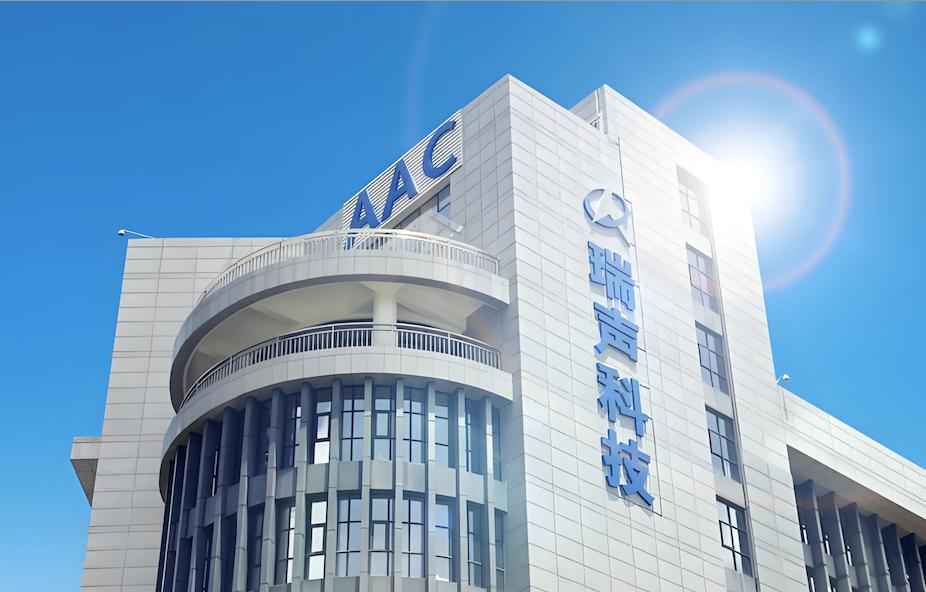
In the first half of 2026, AAC's revenue reached 14.51 billion yuan, and the net profit attributable to shareholders was 901 million yuan. After excluding the impact of fair value changes, the non-recurring profit net profit increased by 37.4% year-on-year. In addition to about 40% of revenue contributed by Apple, AAC has an extremely high penetration rate in the Android camp.
As Huawei, Xiaomi, Honor, OPPO and Vivo are fiercely competing on the foldable screen track, almost all of their products, whether hinge structural parts or heat dissipation modules, adopt solutions from AAC.
The mass production of Apple's iPhone Duo, coupled with the outbreak of Android foldable phones, has allowed AAC to fully obtain "double dividends".
Lens Technology is also making efforts on the foldable screen track.
In the first half of 2026, Lens recorded a revenue of 28.866 billion yuan, and a net profit attributable to shareholders of 577 million yuan, a year-on-year decline. This is mainly affected by the high depreciation and amortization of the new UTG production line for foldable screens in the early stage, as well as the adjustment of major customer order schedules.
But the good news is that the net profit in the second quarter alone reached 726 million yuan, turning positive with a year-on-year growth of 1.77%, showing a significant sequential improvement.
In terms of customer structure, in addition to Apple, Android giants including Huawei, Xiaomi and Samsung account for more than 50% of the total revenue. With the mass production ramp-up of Apple's iPhone Duo, Lens's foldable screen glass business is expected to enter a performance realization period.
With the release of the iPhone 18 series and iPhone Duo, this year's smartphone competition has basically come to an end. Brands including Huawei, Apple and Xiaomi have all launched their mid-to-high end foldable products with top-tier hardware configurations.
But the competition in the supply chain has just entered the second half of the foldable screen era. And these "hidden champions" in Jiangsu have already got the tickets to the second half of the game.
This article only sorts out public information and provides personal subjective comments, and does not constitute any investment advice. For information of listed companies mentioned in the article, please refer to the official announcements of the China Securities Regulatory Commission, stock exchanges and the listed companies.
This article is from the WeChat official account "Deep Finance Society", author: Han Jun, authorized by 36Kr for release.