From "Huangmei King AI Podcast" to Xiaogui Travel Talk, are new "species" emerging in the video podcast space?
Podcasts emerged from the "ear economy" — why do they need visuals? Video podcasts are increasingly offering a clear answer to this question.
Recently, Hong Huang mentioned in a video podcast recording that one of the values she originally saw in podcasts was that listeners could consume audio content with their ears while freeing their hands to do other things. But when she worked on a video podcast episode about fabrics, she gradually realized the irreplaceable role of visuals — both the patterns and luster of Song brocade, as well as the texture of different fabrics, must be presented through images.
Only by seeing these details can the audience truly understand the "beauty" the guests are talking about.

Image source: *Conversation with Lin Jian and Wu Zhenfei: Making Song Brocade Fun*
When video footage is interspersed in conversations, the audience gains a more tangible, immersive experience.
This experience manifests in at least two dimensions. On the one hand, visuals can assist in expression, just as Hong Huang demonstrated fabrics in her video podcast.
On the other hand, visuals can also convey personal information that cannot be captured by audio alone. For example, in the conversation between Lu Yu and Yi Lijing, what touches the audience is not only what the two say, but also the glances they exchange, the moments of hesitation, the sudden silences and choked sobs. These subtle reactions are also part of the content, conveying emotions beyond words.

Image source: *Chen Lu Yu's First Conversation with Yi Lijing | Chen Lu Yu · Slow Talk EP01 【Video Podcast】*
In addition, we have also noticed new explorations in popular video podcasts today.
For example, in the video podcast *Learning to Sing and Dance in the Deserts of Xinjiang with Xiao Gui*, co-created by Bilibili UP hosts "Xiaolu Lawrence", "HOPICO" and Xiao Gui, the three sat down to chat on the last day of their trip, recalling the things they had experienced together. As the conversation unfolded, the video continuously played back footage of the journey.
"Xiaolu Lawrence" regards this as a new attempt at "travel + podcast", but some netizens think this episode is more like a travel vlog. This difference in definition is an example of how the boundaries of video podcasts are being discussed and continuously tested.
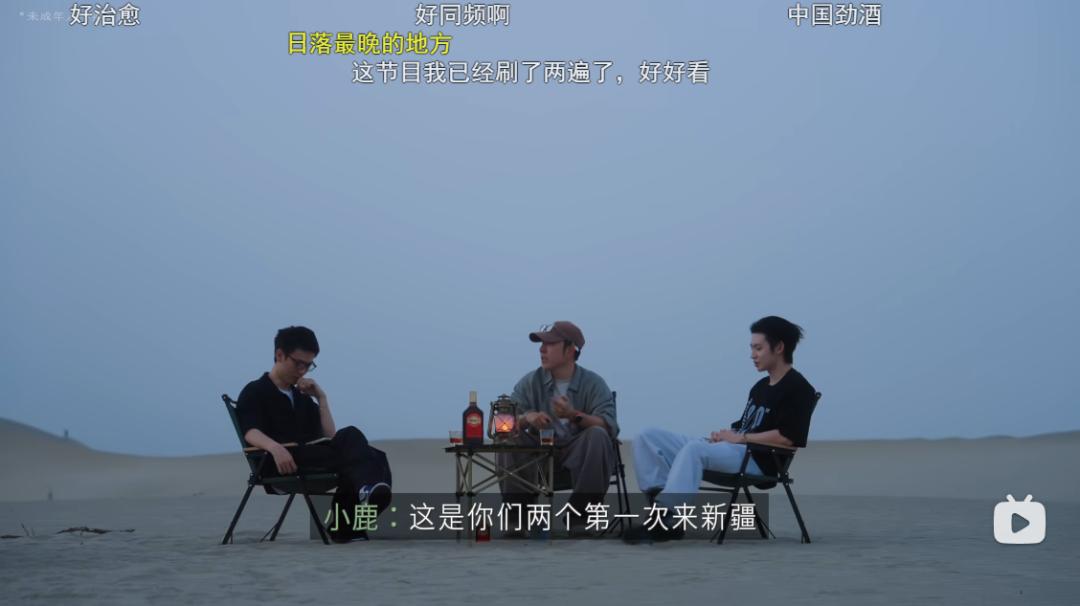
Image source: *Learning to Sing and Dance in the Deserts of Xinjiang with Xiao Gui*
UP host "Yun's Design Talk" has also provided a new paradigm for expanding the boundaries of video podcasts. He used AI to create a video podcast that can be described as an "AI version of *Round Table*", inviting the Yellow Eyebrow King from *Journey to the West* as a guest to discuss the "workplace ecology" of the Heavenly Court from the perspective of the mythical character.
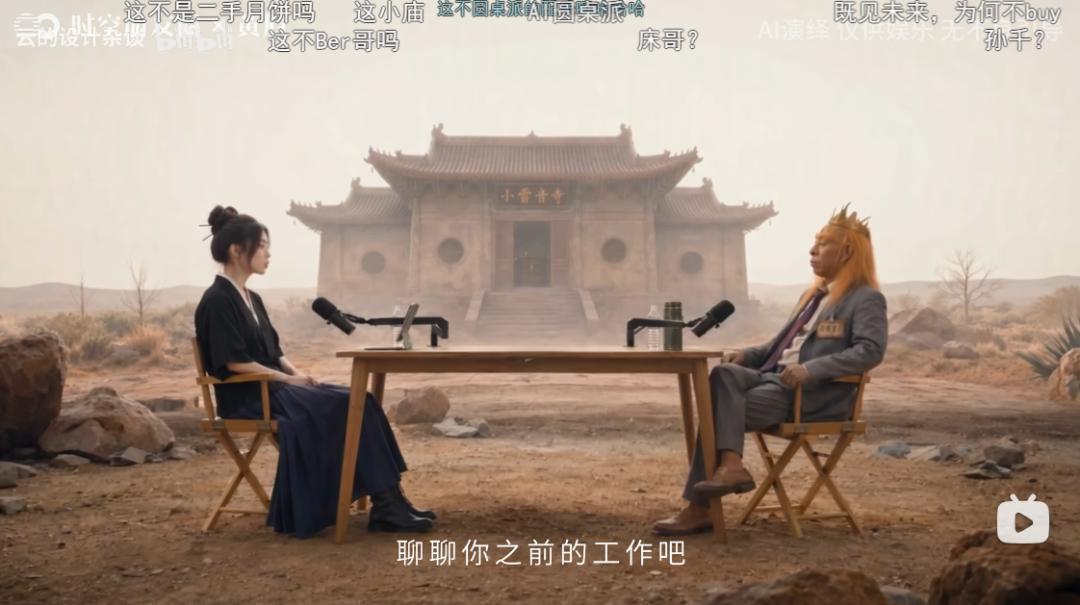
Image source: *Conversation with the Yellow Eyebrow King:
The interlocutor is not a real person but AI. This episode breaks the most frequently mentioned "authenticity" label of video podcasts, but unexpectedly received a lot of attention and discussion. So far, it has recorded over 2.47 million views on Bilibili and ranked No.2 on the 3rd "Bilibili Video Podcast Hot Monthly Chart".
Prior to this, the Newrank editorial team had already released two consecutive popular "Monthly Charts", which comprehensively evaluate the content influence of video podcast programs based on 9 indicators including playback duration, completion rate, interaction volume and follower growth.
The following is the 3rd "Bilibili Video Podcast Hot Monthly Chart", with the statistics period from August 1 to August 31, 2026.

Among the works on this month's list, there are not only innovative content like *Conversation with the Yellow Eyebrow King* that uses AI to expand the form of conversation, but also a surge of works in vertical tracks such as film and television, games, and ACG culture.
In a sense, all of them are answering a question that has always accompanied the development of video podcasts: When video visuals are introduced into podcasts, what can podcasts become?
The answer may not be unique. As creators keep experimenting with new technologies, themes and expression methods, video podcasts are being conceived and defined in continuous explorations.
Over 2.47 Million Views: Is the AI-powered Video Podcast Here?
If we only look at the presentation form, *Conversation with the Yellow Eyebrow King* already has the typical configuration of a video podcast — the host and guest sit facing each other, microphones are placed in front of them, the camera switches between the two, and the conversation forms the main body of the content.
The difference is that the host, guest and even the recording scene in this video podcast are all AI-generated.
In the original *Journey to the West*, the Yellow Eyebrow King was the chime-tapping boy in front of Maitreya Buddha. He stole the golden cymbal and the human race bag to go down to the mortal world as a demon, set up the Little Thunder Sound Temple to pretend to be Tathagata, and caused a lot of trouble for Tang Sanzang and his disciples. In the book, he is only one part of the "eighty-one difficulties", and his character image is not fully developed.
In this AI video podcast, the Yellow Eyebrow King has a more specific image: a middle-aged "demon" wearing an old suit, with unwillingness and loneliness hidden in his eyes.
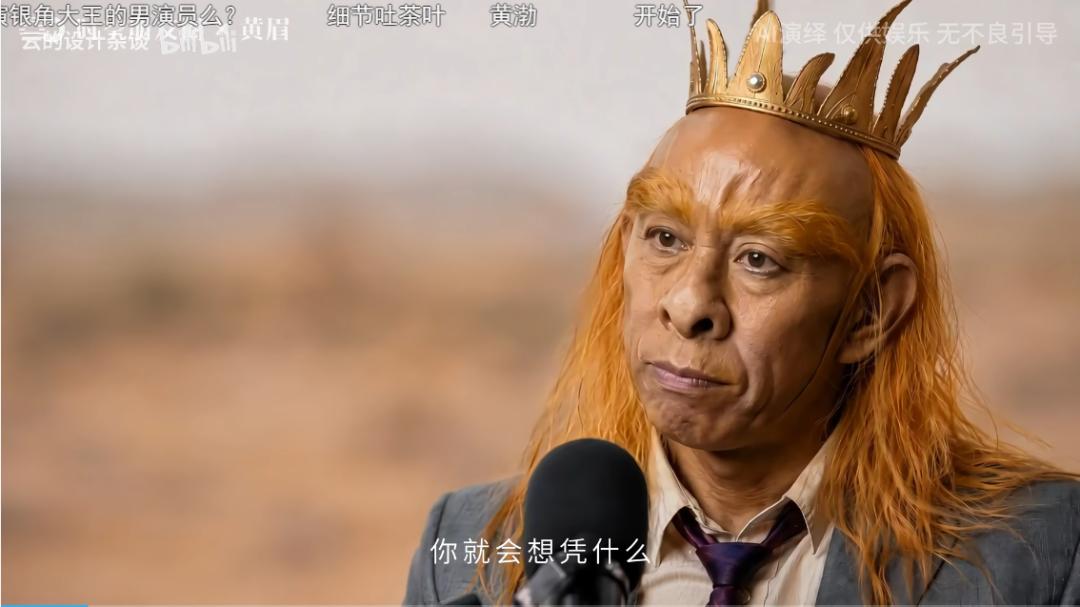
He compares the journey to fetch scriptures to a workplace drama: Tang Sanzang is the boss's trusted confidant, Sun Wukong is a senior vice president who has made major mistakes but still returns to the core project, and the White Dragon Horse is a prince with the background of the Dragon Clan. In contrast, he himself is a temporary worker who taps the chime, and even the chime hammer he uses for "rebellion" is "public property".
The mutual reflection of classic characters and real-life topics provides the audience with another way to understand *Journey to the West*.
What surprises many viewers the most are the AI-generated details, or in other words, the AI's acting skills. Whether it is the micro-expression of the Yellow Eyebrow King wiping tears, or the soft sighs during the conversation, they make this demon, who was not described much in the original work, show specific and complex emotions.

What the audience sees through this episode is how creators use AI to understand and reconstruct this character. From this perspective, *Conversation with the Yellow Eyebrow King* is more like a new type of content creation that borrows the form of video podcasts. The form of the podcast is retained, but the production mechanism of characters and content has undergone essential changes.
This episode was featured on this month's "Monthly Chart", which to a certain extent reflects the exploration of the boundaries of video podcast forms by content creators. The "conversation" emphasized by video podcasts does not necessarily only happen between two real people, but can also become a content structure.
If *Conversation with the Yellow Eyebrow King* explores the boundaries of video podcasts at the technical level, then *Learning to Sing and Dance in the Deserts of Xinjiang with Xiao Gui* pushes the discussion of video podcasts to the level of program form.
During this trip to southern Xinjiang, "HOPICO" Zhou Yang was responsible for providing music knowledge, "Xiaolu Lawrence" gave full play to his strengths in image creation, and Xiao Gui participated in the experience as a musician. The three not only got to know Muqam (the transliteration of "classical music" in Uyghur) following the singing and dancing of local people, but also talked about local Xinjiang music and Xiao Gui's own original music.
The podcast was recorded on the last day of the trip. When talking about some details, the picture cuts back to the scene at that time, performing the function of "intercalation", allowing the audience to listen to the three people's memories while seeing how things happened.
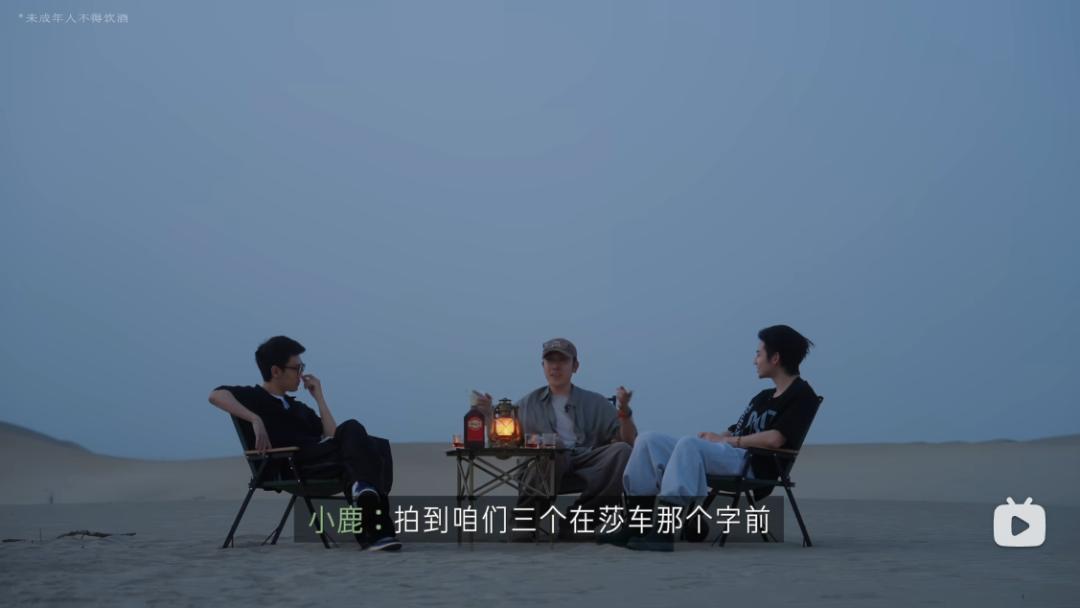

Scene switching
In traditional video podcasts, visuals are usually used to directly show the conversation process. But in this episode, the conversation in turn becomes a clue that connects the travel footage. This is also why it sparked controversy: many viewers will ask, "Is this a podcast or a vlog?"
Judging from the content structure, the conversation between the three is still the main narrative axis. Judging from the viewing experience, a large number of travel footage and live music scenes go beyond the scope of conventional video podcasts. With the rapid development of the video podcast category, how to define the new derived forms and how they will develop in the future are all topics worthy of observation.
So far, this video has reached 3.19 million views on Bilibili and has been included in the 389th issue of "Weekly Must-Watch".
Video Podcasts Are Becoming a New Entry Point for Film and Television Promotion
In addition to formal innovations, this month's "Monthly Chart" also presents a content trend: film and television topics are becoming an important source of themes for video podcasts.
Film and television video podcasts have gained attention in the summer season, not only because of the natural popularity of the summer release schedule, but more importantly, these film and television works themselves have a lot of content worth discussing.
For example, in the video podcast *From War to Daily Life: Talking about the Real Dragon Restaurant with One of the Story Prototypes | Qiu Wenping x Gold Digger Who Likes Wandering x Li Xiang Sees the World* by "Li Xiang Sees the World", which ranks 11th on the "Monthly Chart", Li Xiang Sees the World talked with Liu Lei, one of the prototypes of *Welcome to Dragon Restaurant*, about the story behind the movie.
In 2003, Liu Lei, who originally worked in the IT industry, went to Iraq and opened a Chinese restaurant named "China Dragon" in Baghdad. This experience later became one of the materials for the movie's creation. During the conversation, Liu Lei talked about his life in the Middle East, and also admitted that his experience was not exactly the same as Xu Fu, the character played by Shen Teng. After returning to China, he would still instinctively lie down when hearing explosions, which is the trace left by that experience.

If Liu Lei's narration attracted attention because of the gap between the audience's imagination of the characters in *Dragon Restaurant* and the real experience, then another popular movie *Spider-Man 4*, with the inherent discussion heat of its mature IP, opened up another space for topics.
In the fifth episode of the video podcast *So It Turns Out*, "Guan Zeyuan" invited film and television UP host "BuriedAlien" to discuss the plot and popular memes of *Spider-Man 4*, the future direction of the Marvel and DC superhero universes, and the original intention of "BuriedAlien" to create the "10,000-word Breakdown" series. This video podcast ranked 12th on the "Monthly Chart".
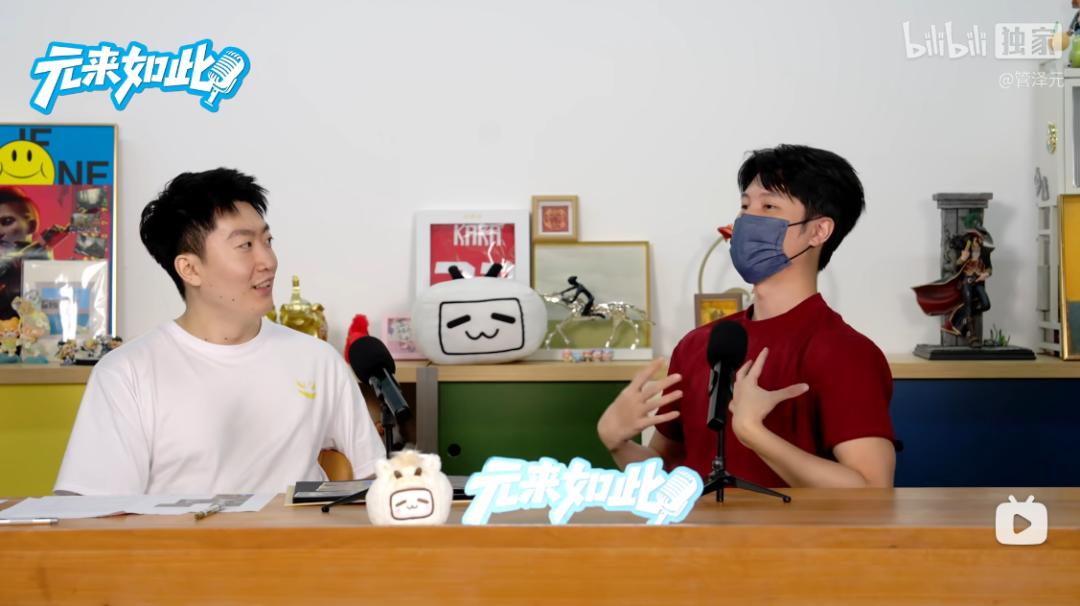
These two types of video podcasts provide two paths to explore film and television topics: one is to approach real people and supplement the stories and experiences behind the works; the other is to enter interest circles and discuss the movies in the longer-term IP context