The major crisis two decades ago allowed this small northern city to reap significant achievements in the AI era.
The small city of Ulanqab, located in the central part of Inner Mongolia Autonomous Region, has achieved its "major milestone" this year.
Since two years ago, riding the boom of AI computing power infrastructure, Ulanqab has signed 100 data center projects, with investors including but not limited to large technology and financial enterprises such as Huawei, Alibaba, Apple, Kuaishou, DeepSeek, China Data, etc., with a total investment of over 500 billion yuan.
500 billion yuan is simply an astronomical figure for this small northern city whose GDP is only 126 billion yuan.
What is even more staggering than the total investment of over 500 billion yuan is the computing power production capacity brought by this huge investment. The current operating scale of computing power in Ulanqab is 172,000 P, which is expected to exceed 200,000 P by the end of 2026, a year-on-year increase of over 112%, its computing power scale has accounted for 8.7% of the national total. In the first half of 2026, the revenue of the computing power industry exceeded 3.66 billion yuan, with power consumption of 3.267 billion kWh, a year-on-year increase of 89.52%.
It is truly a scene of "vibrant vitality, all things thriving".
For this reason, the local government has put forward the goal of building the "Capital of Token", planning to make the revenue of the computing power industry exceed 8 billion yuan in 2026.
Today, we will have an in-depth discussion on the computing power industry in Ulanqab. On the one hand, we will see why capital has bet heavily on Ulanqab, and on the other hand, we will see whether this wave of AI infrastructure can bring a round of dividends to all small northern cities like Ulanqab.
Ulanqab, a Blessing in Disguise
Why choose to build computing power centers in Ulanqab?
Many people's first reaction should be the local advantages in climate and geography.
This is certainly not wrong. After all, Ulanqab is located at 42 degrees north latitude, with an average annual temperature of only 4.3℃. It can use natural cold sources for cooling for nearly 10 months every year, which has inherent advantages in energy saving.
For data centers, the so-called "power hogs", their PUE (Power Usage Effectiveness) can be reduced to below 1.2, which can save about 30% of energy consumption under the same technical conditions. Calculated based on a data center with 10,000 cabinets, it can save 200 million to 300 million kWh of electricity every year, saving hundreds of millions of yuan only in electricity bills.
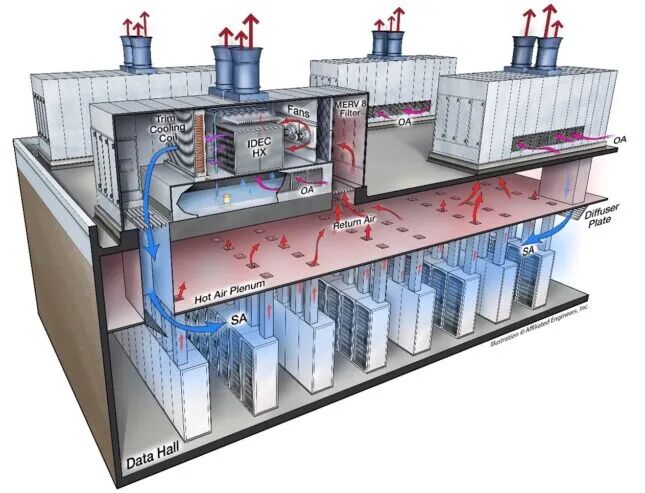
It's not just the elderly at home who hate the high electricity cost of turning on the air conditioner, but also the owners of data centers
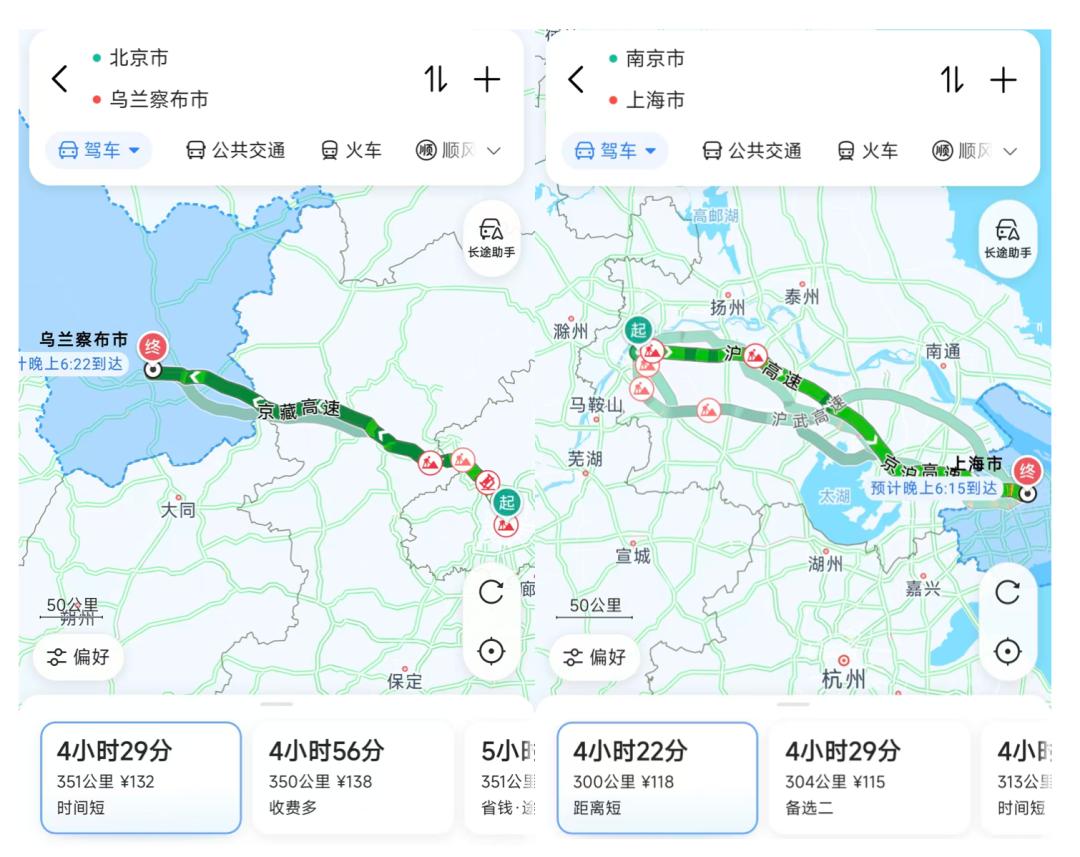
Besides, although Ulanqab is in Inner Mongolia, it is actually only more than 300 kilometers away from Beijing, which is similar to the distance between Nanjing and Shanghai, the point-to-point bidirectional optical cable between the two places has been put into operation long ago, with a network latency of only 4.2 milliseconds, and the one-way measured value can reach 2.1 milliseconds. This means that large technology enterprises in Beijing can deploy their computing power in Ulanqab with almost no data transmission delay.
However, these are all advantages, but not the decisive ones.
First of all, there are countless cold places in China. Harbin and Qiqihar in Northeast China, Qinghai and Gansu in Northwest China, all of them are extremely cold. If you can become a computing power center just by being "cold", there would have been "Capitals of Token" all over northern China long ago.
Secondly, "proximity" is indeed an advantage, but this advantage only works for Beijing, and it is really a bit far away for southern China.
Therefore, geographical and location advantages are not the fundamental motivation for capital to bet unswervingly on Ulanqab. The fundamental motivation for capital to deploy here is the extremely cheap local electricity price in Ulanqab, the industrial electricity price that costs 0.8 yuan per kWh in other regions is only a little over 0.3 yuan here.
So why is the electricity price in Ulanqab so cheap?
This has to start with a big trouble that plagued Ulanqab and even the entire Inner Mongolia 20 years ago.
As we all know, there are two major power grids in China's power system. One is State Grid, which covers 26 provincial-level administrative regions across the country, and the other is China Southern Power Grid, which covers five provinces in South China. But outside these two power grids, there is an independent existence that many people do not know — West Inner Mongolia Power Grid.
And Ulanqab is exactly within the coverage of West Inner Mongolia Power Grid.
West Inner Mongolia Power Grid did not intend to develop independently from the very beginning. In fact, it was forced to operate independently. In 2002, the national power system reform was launched, and the State Power Corporation was split into five major power generation companies and two major power grids. The predecessor of West Inner Mongolia Power Grid wanted to merge into State Grid because of its small scale and heavy debt, but State Grid did not want to take over the mess at that time, so West Inner Mongolia Power Grid was "left behind".
But no one expected that only two years later, the situation had taken a huge turn.
In 2004, a nationwide power shortage broke out, and West Inner Mongolia Power Grid rose to prominence with its abundant coal, wind and solar resources. At this time, State Grid realized the value of it and wanted to acquire it, but at this time West Inner Mongolia Power Grid had already become a backbone enterprise of Inner Mongolia Autonomous Region, and the autonomous region was unwilling to sell it.
It is hard to say who is right and who is wrong in this process, but it is certain that West Inner Mongolia Power Grid has become an isolated island and a "nail household" in the northern power system — it has power generation capacity, but the electricity cannot be transmitted to the outside, the external transmission volume is even less than one tenth of the power generation volume, and 24 million kW of installed capacity has to be shut down during the summer peak of electricity consumption.
This is the so-called "power hoarding" — too much electricity is generated to be fully used, supply exceeds demand, so the price can only be reduced.
The most extreme case happened in 2012. At that time, in order to open up the external transmission channel, West Inner Mongolia Power Grid joined hands with Shaanxi Local Power, which was in the same situation, planning to build an external power transmission line. But this line had to pass through the already built Shaanxi main power grid of State Grid.
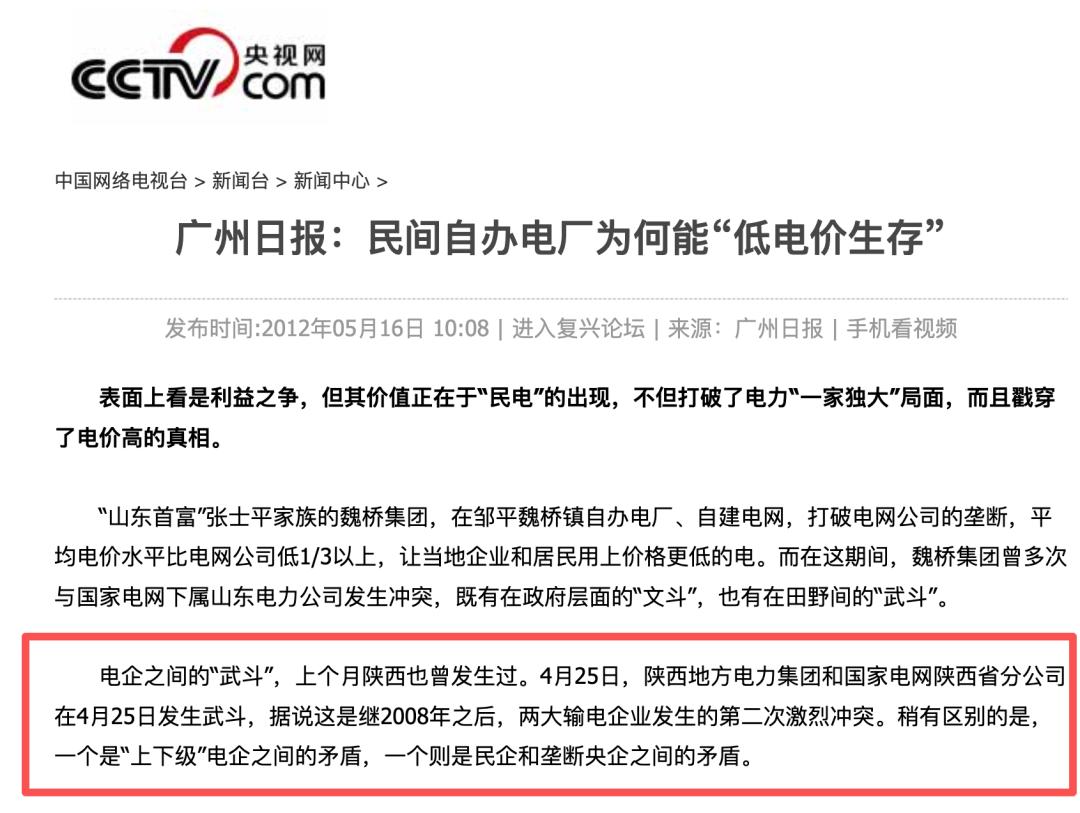
State Grid naturally expressed strong opposition, but Shaanxi Local Power, which insisted on transmitting electricity out, also firmly stuck to its position. The two sides broke out in a fierce conflict, and dozens of local special police officers were dispatched to the scene to control the situation.
But no one expected that when this bug lasted into the mobile Internet era and the AI era, everyone was relieved instead.
First of all, the former "power hoarding dilemma" has transformed into a unique "energy advantage" — the electricity price of West Inner Mongolia Power Grid is extremely cheap, the electricity price for end users of data centers is only 0.33-0.36 yuan per kWh, while that in eastern Inner Mongolia is 0.8 yuan per kWh, and that in Beijing is 0.6-0.7 yuan per kWh.
The electricity price in Ulanqab is only about half of the mainstream market price.
Moreover, as a local state-owned enterprise, West Inner Mongolia Power Grid does not need to implement the rigid rules of "unified scheduling and cross-provincial coordination" like State Grid. It can set prices independently, trade independently, and explore new power business models independently.
With the superposition of these two factors, the West Inner Mongolia Power Grid where Ulanqab is located has directly become a "special power supply zone" with cheap electricity prices and flexible mechanisms — In July 2025, China Data landed the country's first data center "source-grid-load-storage integration" project in Ulanqab. The wind farm built by the enterprise itself directly transmits power to the computer room through a dedicated line, which can provide 848 million kWh of self-generated and self-used green electricity every year. The National Development and Reform Commission requires that the proportion of green electricity in new intelligent computing centers exceed 80%, and the actual green electricity consumption of new projects in Ulanqab has steadily exceeded 86%. The Chahar High-tech Zone is building a zero-carbon computing power park, and the independent settlement system of West Inner Mongolia Power Grid makes the closed loop of "green electricity + computing power" possible.
Therefore, the real advantage of Ulanqab is not simply the superficial climate and geographical location, but itself and the West Inner Mongolia Power Grid behind it. The "major milestone" Ulanqab has achieved this year is essentially taking advantage of a bug in China's power system.
Computing Power Infrastructure is an Aristocratic Game
After talking about why capital is deployed in Ulanqab, let's talk about what will happen after the capital arrives.
First of all, it must be clear that computing power infrastructure is not the kind of infrastructure we are familiar with, nor is it the same as the Internet model.
The kind of infrastructure we are familiar with is part of the urbanization wave, which has strong "inclusiveness" and can benefit thousands of people easily.
In the real estate era, a real estate project from land acquisition to delivery, involving cement, steel bars, furniture and real estate agencies, the upstream and downstream industrial chains involved can support half of the city's population. In the era of Internet e-commerce, the jobs created by platforms for express delivery, warehousing and customer service, as well as the opportunities for countless small businesses to survive, are extremely inclusive.
But computing power infrastructure is different. A super-large data center requires manpower during the construction phase, but the demand is far less than that of traditional civil engineering, and the supply chain behind it is limited to a small number of technology enterprises. After the construction is completed, the number of formal employees is usually only 200 to 500.
Writing here, some friends will definitely ask: even if there are not many jobs, the GDP should be real, right? If the per capita GDP goes up, won't the ordinary people get rich together?
Unfortunately, that is not the case.
Let's look at several sets of data. Ordos, with a per capita GDP of 272,700 yuan in 2025, ranks first in the country. But the per capita disposable income of urban residents is only 63,946 yuan. The per capita GDP is 4.3 times the per capita disposable income. Karamay has a per capita GDP of about 268,000 yuan, and the per capita disposable income of urban residents is about 65,000 yuan, with a ratio of about 4 times.
Looking at Shanghai, its per capita GDP is about 216,800 yuan, and the per capita disposable income of urban residents is 79,610 yuan, with a ratio of about 2.7 times. Wuhan has a per capita GDP of about 137,000 yuan, and the per capita disposable income of urban residents is 58,449 yuan, with a ratio of about 2.3 times.
Do you see the problem?
Although the per capita GDP of resource-based cities is very high, not much of it falls into the hands of ordinary people. The local mineral resources can be sold for a lot of money, but there are not many people who can earn that money.
The reason for this phenomenon is called "the industrial chain is not local".
Although coal is produced locally, excavators are not produced locally, and mining equipment is not manufactured locally. Although coal can be sold for a lot of money, it has little to do with ordinary local people, because the value-added links are not here, and the profits are taken away by other links.
From the perspective of the value chain, Ulanqab is repeating this script, except that the protagonist has been changed from "coal" to "computing power".
Ulanqab has a strong advantage in energy cost, but this advantage cannot make Ulanqab occupy a dominant position in the value chain. In fact, the profit distribution of the entire AI computing power industry chain is extremely uneven: the upstream takes all the big profits, the middle stream gets the leftover scraps, and the downstream can only lick the plate.
The upstream players who take the big profits are mainly core component manufacturers such as NVIDIA, TSMC, HBM memory vendors, and optical module enterprises.
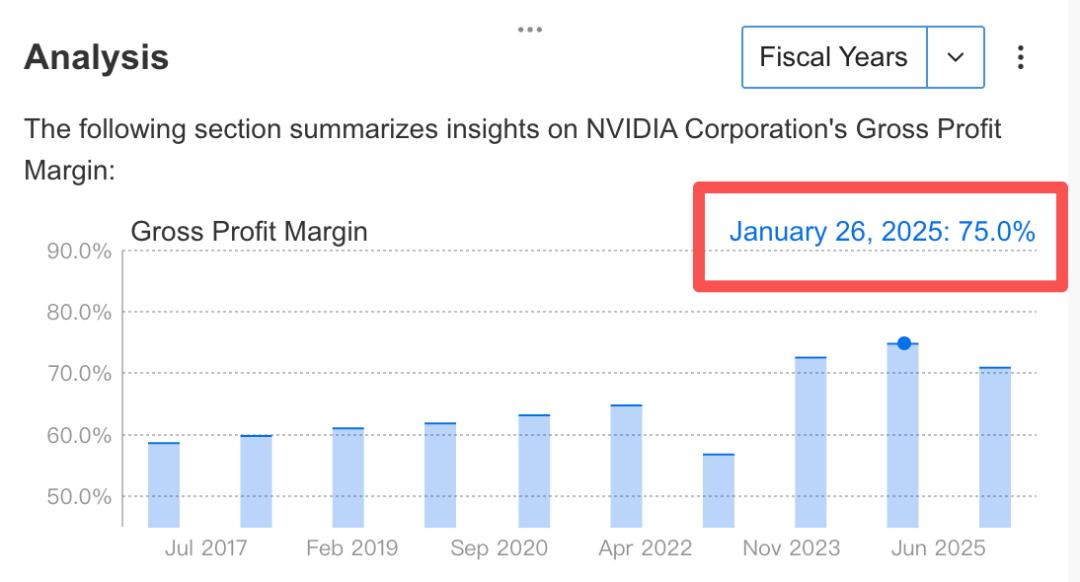
NVIDIA's gross profit margin for fiscal year 2026 is as high as 75%. A B200 chip may cost only a few thousand US dollars, but it can be sold for 30,000 to 40,000 US dollars. TSMC's gross profit margin is also above 55%. The leading optical module firm Innolight saw its revenue increase by more than 100% year-on-year in 2025, and its gross profit margin remained above 30%.
The midstream players who get the leftover scraps are server manufacturers, whose profit margins are much lower than those of upstream chip enterprises.
And the downstream, that is, the computing power center operators deployed in Ulanqab, have an industry profit margin of about 10% to 20%. But the problem is that many operators are headquartered in the south, and the profits earned by the computing power centers are eventually transferred to Shenzhen, Hangzhou, and Beijing.
What Ulanqab can retain locally is mainly electricity bills and land rents.
Therefore, the 500 billion yuan of investment will probably flow in this way in the end: 40% to 50% is taken by upstream giants such as NVIDIA, TSMC and Innolight for core chips and components such as GPU, HBM and optical modules; 15% to 20% goes to Foxconn Industrial Internet and Inspur for server assembly; Only about 10% to 15% of the total, including electricity bills, land rents and some construction and installation costs, are actually retained locally in Ulanqab.
Where is the Real Opportunity for Ulanqab
So here comes the question: Is it possible for Ulanqab to avoid the trap of resource-based cities?
Yes, my friend, it is possible.