With costs skyrocketing and the market forcing the pace, the driverless light truck industry is on the eve of explosive breakout.
From 2025 to 2026, the autonomous delivery vehicle track has ushered in a period of intensive market entry. Enterprises including Wuling Motors, Zhuoyu Technology, Youjia Innovation, Dongfeng Motor, Changan Automobile and others have entered the market one after another. The competition in the track has evolved from a few players to a multi-party contest. Amid the bustle, who will break through? Who will fall behind in the reshuffle? What problems exist in the industry? This series will track and observe the developments.
Autonomous driving is gaining strong momentum, with current applications mainly concentrated in the freight sector. While autonomous delivery vehicles are advancing rapidly in the last-mile scenario, autonomous light trucks are also gearing up for large-scale deployment.
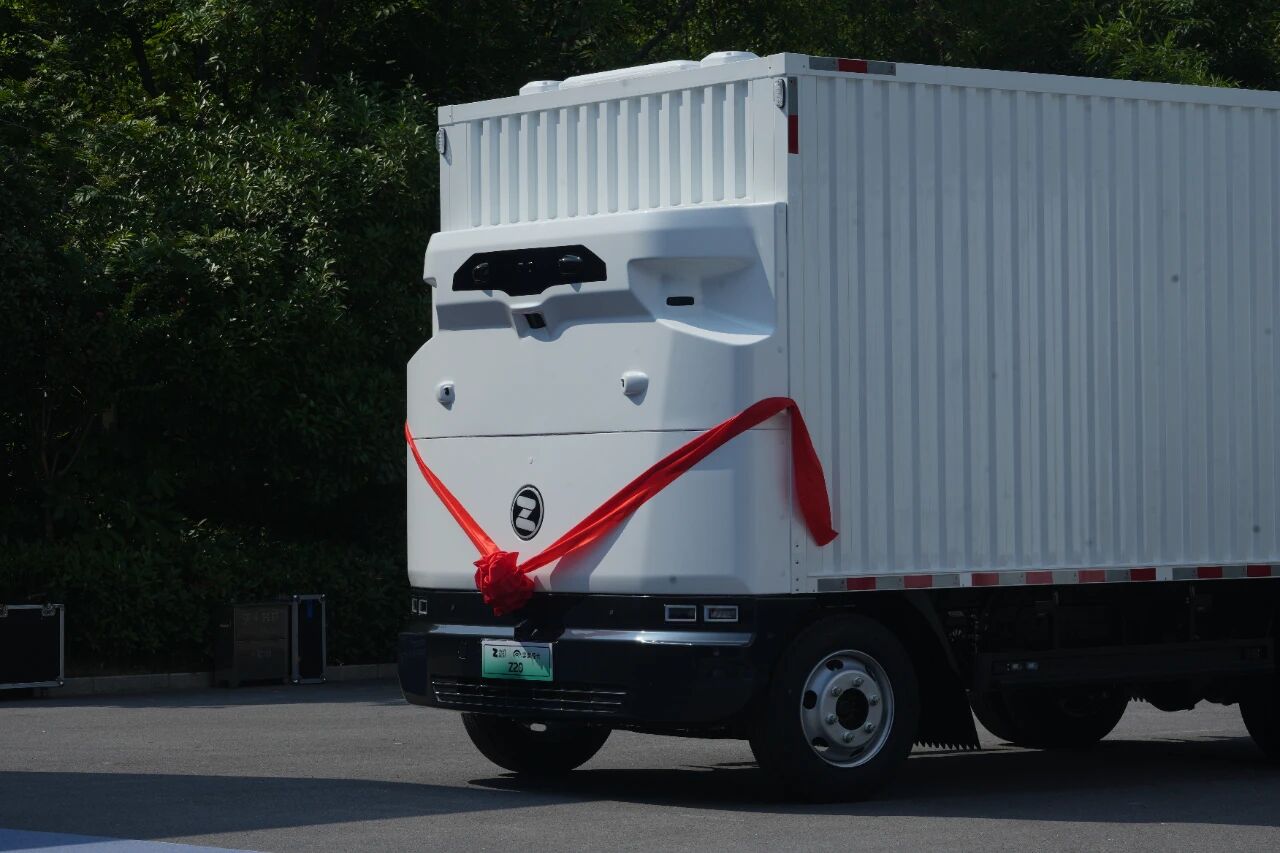
In August 2026, the 4-ton load capacity autonomous logistics light truck Jiusi Z20, jointly launched by Jiusi Intelligence and Yutong Light Truck, rolled off the production line in Zhengzhou. In April 2026, Pony.ai partnered with CATL to release the world's first full-vehicle-spec, full-redundancy L4 autonomous driving light truck.
At the end of January 2026, the 24m³ ultra-large capacity autonomous light truck White Rhino R24 started test operation in a logistics park in Shenzhen. In July 2025, JD Logistics first released its self-developed autonomous light truck product, JD Logistics VAN...
In the past, the autonomous driving industry's focus in the freight sector was mainly on small vehicles for last-mile delivery. Now, why has the industry set its sights on autonomous light trucks?
I. Autonomous Light Trucks, the Optimal Choice for Cost Reduction
"From the essence of freight transport, light loads (around 1 ton) are only suitable for light express parcels; while urban distribution scenarios cover heavy goods such as water delivery and hardware supplies, heavy-load vehicles have wider applicability, can avoid overloading, and improve service life and safety. The entire industry's shift toward heavy loads is a natural extension of the freight market," said Xue Yapeng, Vice President of Jiusi Intelligence and General Manager of the Ecology Business Division.
Owners of logistics companies always have an endless account to calculate in their minds.
They calculate costs when opening the account book, and feel anxious when closing it: oil prices remain high, labor costs are under pressure, rents are hard to reduce, maintenance costs are rising day by day, while freight rates are trending downward against all expectations. A slight misstep will put the capital chain at risk of loss.
The days when you could make easy money in the logistics industry are gone forever. Today, cost reduction is not an optional choice, but a mandatory task, and autonomous light trucks are exactly one of the solutions.
According to an article published by the Port and Logistics Office of Sichuan Provincial People's Government, "the premium of traditional light trucks is as high as 15,000 to 20,000 yuan, and the safer performance brought by autonomous driving technology is expected to further reduce the premium."
This 15,000 to 20,000 yuan premium is exactly a hidden hard nut in the traditional logistics cost structure.
On the surface, the premium is just a fixed annual expense, but in-depth analysis reveals that it is essentially the pricing of driving risks in the logistics industry: it accounts for a large proportion of depreciation costs, is closely related to driving safety issues at all times, and is one of the most difficult hard nuts to crack in the process of cost reduction and efficiency improvement.
The cost reduction space brought by autonomous light trucks goes far beyond the premium. What is more noteworthy is that it directly eliminates a large part of the traditional logistics cost structure — labor costs: the annual salaries, social security, subsidies and other expenses of several truck drivers add up to a considerable amount.
According to *Logistics Times Yangtze River Delta*, the Z20 launched by Jiusi Intelligence and Yutong Light Truck supports two cooperation modes: sales and leasing. The standard version of the vehicle is priced at 228,800 yuan, the long-range version at 248,800 yuan, and the autonomous driving function adopts a monthly subscription model of 3,000 yuan.
This means that huge labor expenses and maintenance expenses will gradually disappear from the financial statements.
More importantly, the elimination of labor costs also simultaneously eliminates a series of hidden expenses such as fatigue driving, personnel turnover, and management losses.

A set of industry calculation data cited in the article published by the Port and Logistics Office of Sichuan Provincial People's Government is enough to make all logistics practitioners feel the impact, "Autonomous light trucks can reduce the freight cost per kilometer by 40% to 50%."
Outsiders see the logistics industry as a busy scene of vehicles coming and going; business owners see it as a struggle over every cent. In this industry, only those who can reduce costs can catch their breath in the red ocean of fierce competition.
II. Autonomous Light Trucks, Non-Stop Transport Capacity for Factory Zones
With only technology and products but no market, autonomous light trucks are nothing more than self-entertainment.
What is a light truck? It is a transport truck between a micro truck and a medium truck with a total mass of 1.8 to 6 tons, mainly used for urban distribution, short-distance logistics and other scenarios.
Therefore, different from the last-mile small parcel delivery of autonomous delivery vehicles, the core scenario of autonomous light trucks is to undertake high-frequency, large-volume heavy cargo transfer work in closed or semi-closed scenarios such as factory zones, industrial parks, logistics hubs and storage areas, serving as the core transport capacity of internal logistics.
On the basis of intelligence, it realizes the dual improvement of cargo carrying quantity and weight, and achieves the leap of autonomous transport capacity from delivering small express parcels to moving bulk goods.
"As of 2025, there are about 77,000 to 80,000 various parks across the country, and about 526,000 industrial enterprises above designated size," Hu Hao, Head of Product at Jiusi Intelligence, said in a group interview.
Xue Yapeng, Vice President of Jiusi Intelligence and General Manager of the Ecology Business Division, added that "there are at least 20,000 factories among them that urgently need to solve their cargo transfer problems."
These 20,000 factories are not simple "cargo transfer demand parties", but pain points that the entire industrial system wants to solve. They are spread across industries such as steel, building materials and machinery. Many factories need to operate 7x24 hours in cycles. If relying on manual labor, two shifts of day and night are required, which leads to high labor costs, great fatigue driving risks, and a ceiling on labor efficiency. These problems are exactly where autonomous light trucks can play their role.
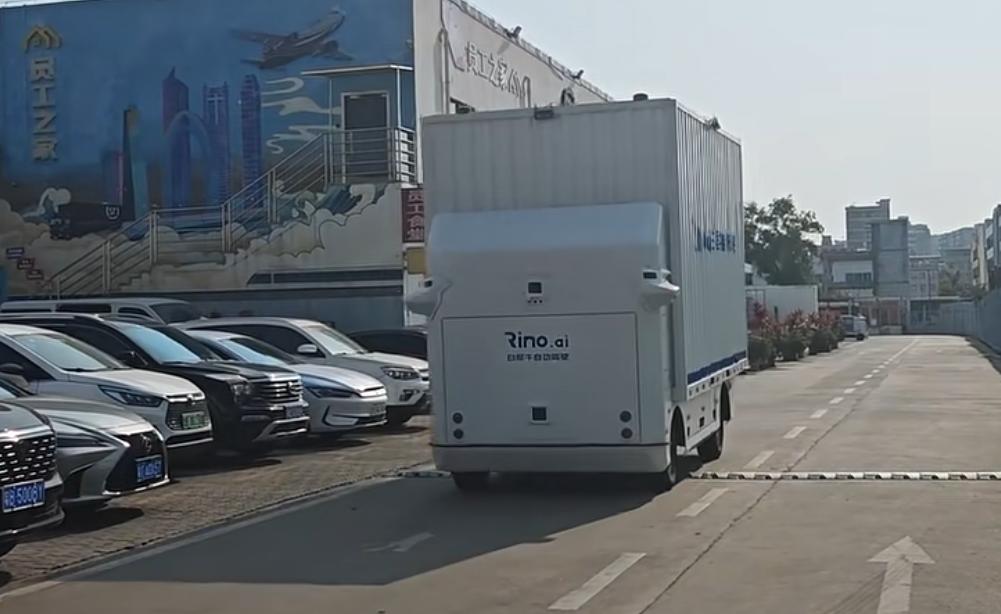
What autonomous light trucks replace is far more than human drivers. More importantly, they reconstruct the transportation logic of internal scenarios such as factories and logistics parks: they bring a set of non-tiring, highly accurate and fully traceable transport capacity system.
When autonomous light trucks become standard configurations, 7x24-hour operation will no longer be a heavy burden, but the core competitiveness of the factory itself. This deterministic, low-cost and high-efficiency transport capacity can help unlock full-time operation value.
That said, it does not mean that all problems of autonomous light trucks have been solved. There are still many core controversies to date.
First, the liability issue. When there is no driver behind the steering wheel, once an accident occurs, multiple parties will be involved, and the liability needs to be clarified: should it be the factory/logistics park that actually uses the vehicle, the R&D enterprise of the autonomous driving function, or the remote safety supervisor?
Second, the employment and unemployment issue. Just like autonomous delivery vehicles, this issue is also the most unavoidable topic beyond the discussion of cost reduction and efficiency improvement for autonomous light trucks. For frontline driver groups, what they see is not an "efficiency revolution", but the cold reality of losing their jobs.
The market is ready, and the problems are already on the table. What autonomous light trucks bring is not the choice of "whether to adopt them or not", but the topic of "how to make them work well". It forces us to rethink: how can a more efficient society also be a society with harmonious human-machine collaboration?
This article is from the WeChat Official Account "Delivery Guide", written by Wu Yan, and published with authorization from 36Kr.