The hard-pressed five-star hotels have begun selling 12-yuan rice with toppings for takeout.
Another five-star hotel has made a "decision that goes against its long-held traditions".
To protect guests' privacy, many five-star hotels enforce strict rules that prohibit food delivery from being brought upstairs.
Luo Yonghao previously posted online to complain that some high-end hotels costing two to three thousand yuan per night do not even allow guests to order takeout.
But now, the five-star hotels that once shut out takeout have unexpectedly started selling their own 12-yuan rice bowls for delivery.
Recently, a netizen shared a takeout menu of Shenyang Marriott Hotel on social media, in which a signature rice bowl only costs 12 yuan, sparking widespread discussion.
"I never expected that when I order takeout at Marriott, the takeout would actually be provided by Marriott itself."
The topic of "purchasing power of Northeast China's currency" quickly went viral, and countless people sighed: Has the competition in the catering sector of high-star hotels become so fierce?
Scrolling through major social platforms, 6-yuan Swiss rolls, 9.9-yuan buffet breakfasts, and 10-yuan meals for the elderly, similar content keeps popping up one after another.
While the outside world only sees the superficial phenomenon of cut-throat competition, many five-star hotels are faced with practical dilemmas such as shrinking catering revenue and idle kitchen production capacity.
Beneath the popular online memes lies the awkward survival reality of high-star hotel catering that is caught in a dilemma.
01
The 12-yuan rice bowl misinterpreted by the public
After the 12-yuan takeout rice bowl of Shenyang Marriott went viral, many people got the illusion that five-star hotels are going to compete with street restaurants for business.
However, a careful breakdown of the rules shows that this low-priced product has clear boundaries set from the very beginning of its design.
Hotel staff repeatedly emphasized in public responses that this is an exclusive price for in-house guests, with small portion sizes suitable for single-person consumption only. Dine-in is not open to the public, and non-staying guests cannot place orders.
In other words, this takeout menu is essentially in-room dining service, not a social catering business open to the public.
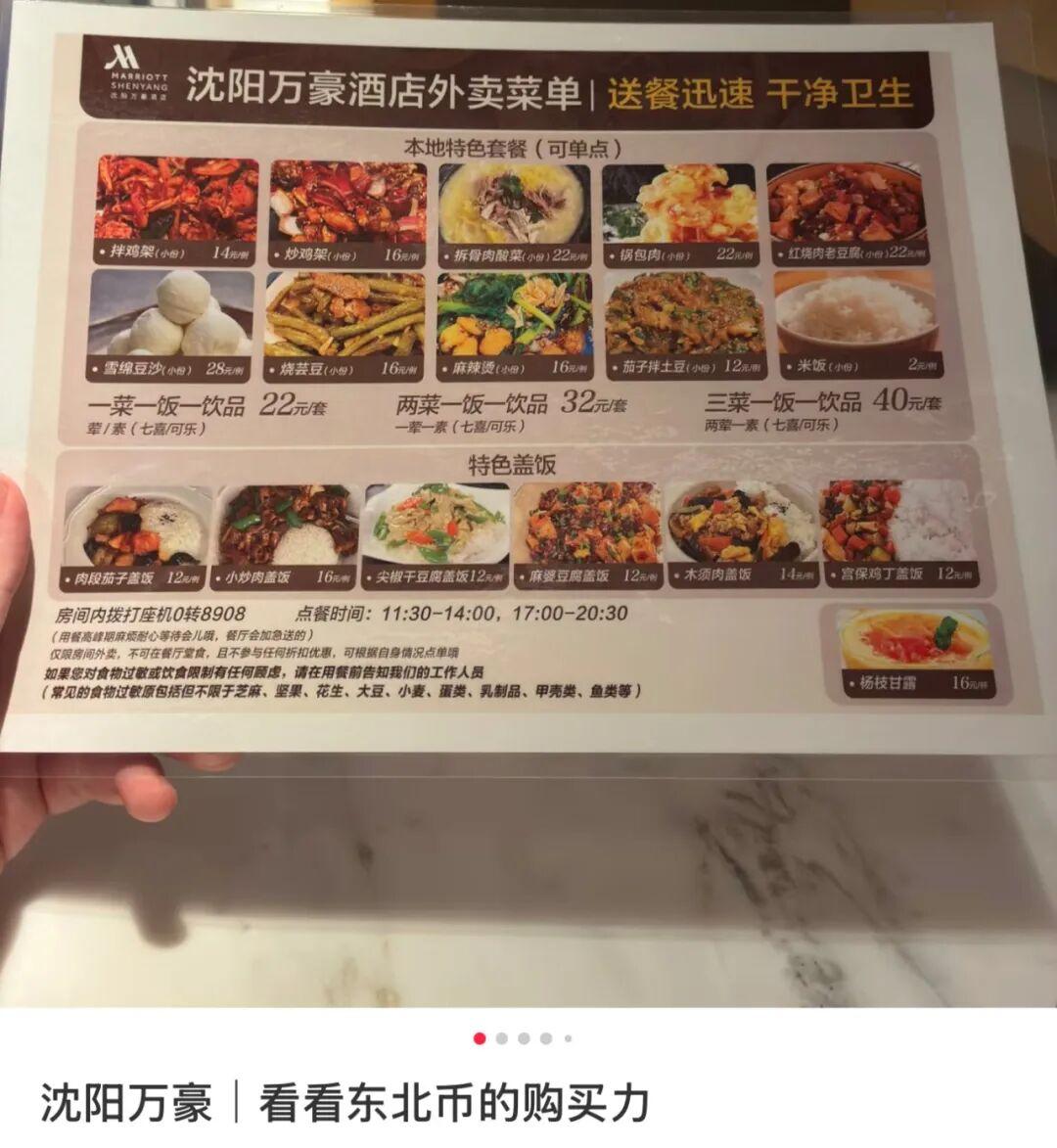
Image source: Xiaohongshu
The in-room dining service of traditional five-star hotels has long been a major source of complaints on social platforms.
A bowl of instant noodles costs 68 yuan, a bottle of mineral water is 30 yuan, which is even more exorbitant than overcharging at scenic spots, plus an extra service fee.
Many guests are unwilling to waste money on such overpriced items, so they order third-party takeout to be delivered to the hotel. But for hotels, guests ordering takeout is a troublesome issue.
Food delivery riders shuttling back and forth in the lobby transfer all food safety risks to the hotel. Once guests get stomach trouble from takeout, many will directly blame the hotel management. Hotels restrict the entry and exit of takeout on the one hand, but cannot provide cost-effective products to retain guests on the other, leaving them in a dilemma.
As a result, many five-star hotels restrict takeout from going upstairs, forcing guests to go down to the lobby to pick up their food. This worsens the guest experience, and the catering revenue that the hotel should have earned directly flows into the pockets of external merchants.
The catering system of five-star hotels never only includes one restaurant, but also executive lounges, lobby bars, and food delivery services, among others.
To maintain this system, hotels need to employ executive chefs, Chinese food chefs, Western food chefs, pastry chefs, banquet chefs, waiters, procurement staff, and warehouse keepers. The labor cost of this team amounts to at least several million yuan a year, and up to tens of millions of yuan.
The entire catering sector accounts for 20% to 25% of the total operating costs of five-star hotels, even much higher than the cost of the guest room sector, making it the largest cost item in hotel operations.
This 25% does not even include the costs of administration, sales, energy, and maintenance.
If these are added in, the proportion may exceed 30%.
It can be said that if the hotel does not operate catering services, its overall expenditure will be reduced by 30% immediately.
Most of the time, during the off-peak hours of lunch and dinner dine-in, a large number of manpower and equipment in the kitchen are left idle, resulting in wasted production capacity.
This affordable takeout service of Shenyang Marriott is precisely targeted at this pain point.
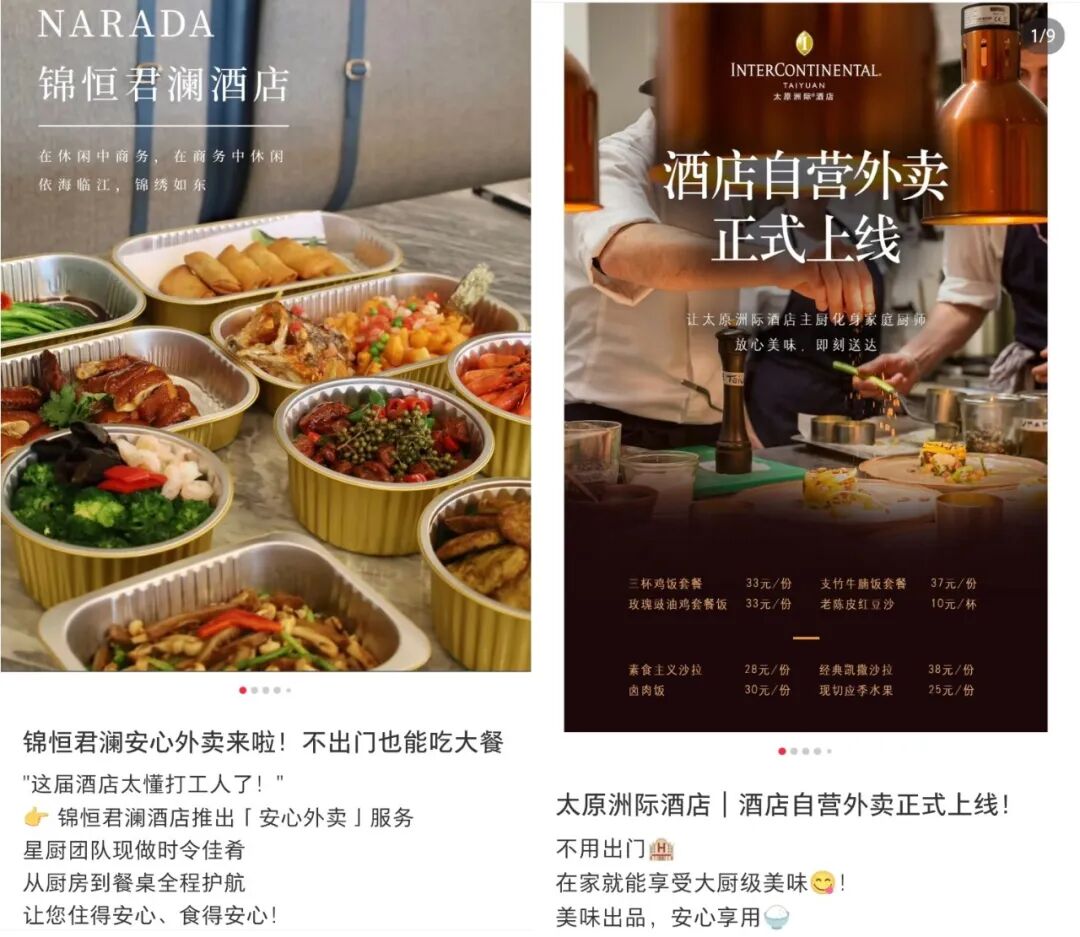
Image source: Xiaohongshu
With consumer-friendly pricing, the hotel keeps guests' dining needs within the property. The kitchen uses idle hours for production, does not occupy the lobby restaurant space, saves the labor cost of waiters for dine-in services, and only needs to simply deliver the food to the guest rooms.
This is different from hotel group-buying deals. Many high-end hotels in different cities directly list 9.9-yuan breakfast coupons and dozens of-yuan afternoon tea deals on Douyin, allowing non-staying ordinary guests to consume in the hotel, which is equivalent to directly opening the door to attract local customers.
The 12-yuan rice bowl of Shenyang Marriott is a service that exclusively targets guests who have already paid for their rooms.
The underlying logic of the two models is completely different.
02
Why are high-star hotel catering businesses collectively engaged in low-price competition?
The viral popularity of Shenyang Marriott's 12-yuan takeout rice bowl is just a microcosm of the general trend in high-star hotel catering.
Although many five-star hotels do not allow takeout to be delivered upstairs, they do not impose such strict restrictions on themselves.
Since last year, many established high-star hotels have started setting up stalls at their entrances, selling coffee, desserts, and light meals at prices much lower than their in-restaurant rates.
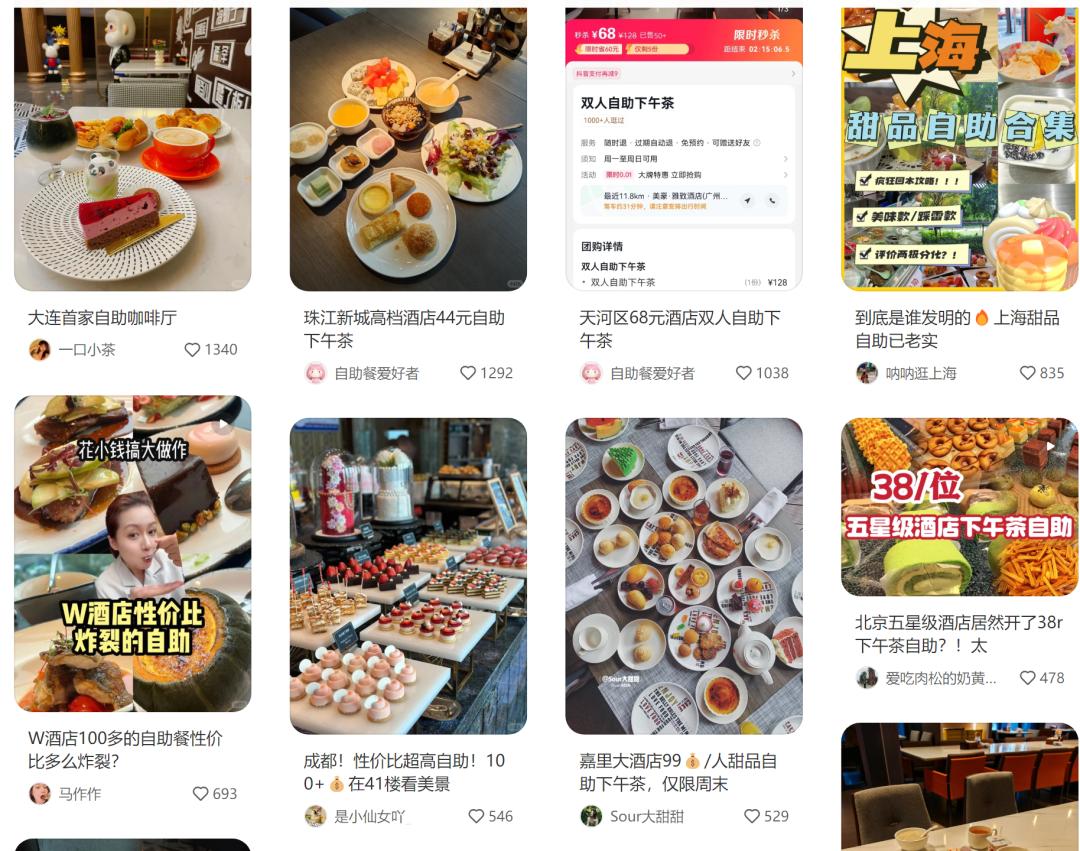
Image source: Xiaohongshu
The Swiss roll at the pastry shop of Jinjiang Hotel Chengdu only costs 6 yuan, and the Black Forest cake is priced at 8 yuan.
The 288-yuan cake at W Guangzhou has a group buying price of 248 yuan per pound, while birthday cakes are sold for only 99 yuan.
Some hotels also offer very cost-effective buffet breakfast cards. For example, Shanghai Hongkou Baolong Hotel previously launched a 498-yuan package for 30 days of breakfast, which works out to only 16.6 yuan per meal.
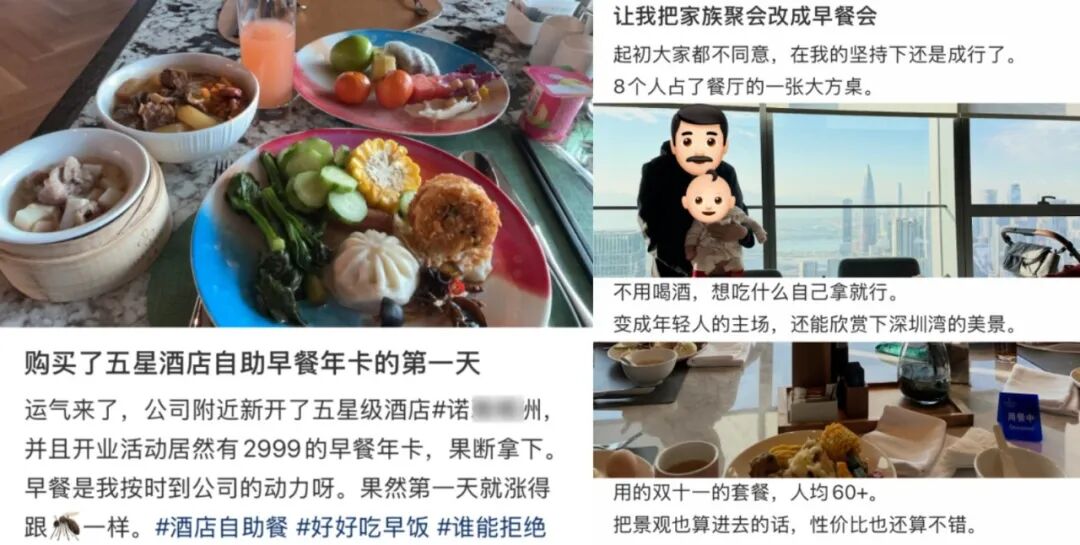
Image source: Xiaohongshu
A high-star hotel in Zhengzhou offers even greater discounts. For only 9.9 yuan, consumers can enjoy a buffet breakfast plus free parking, with a dining time limit of up to 120 minutes.
Changzhou Wenpu Hotel previously launched leftover food blind boxes, with 10 yuan per box for breakfast and 20 yuan per box for lunch and dinner. The contents are unsold freshly cooked hot dishes and cooked food from the buffet, aiming to reduce food waste.
Wyndham Garden Wuhan Lingkonggang even launched an "Internet + Elderly Meal Assistance" activity last year, where the original 12-yuan rice set meal is available for the elderly at only 10 yuan.
The Red Cantonese Restaurant under China World Hotel, Beijing settled on takeout platforms as early as 2022 and started selling its signature Peking duck.
There are even some high-star hotels that have joined flash sale group buying campaigns on Taobao, and appeared on Meituan's "Pinhaofan" group buying section. The dishes are not fancy gourmet food, but affordable and approachable home-style dishes.
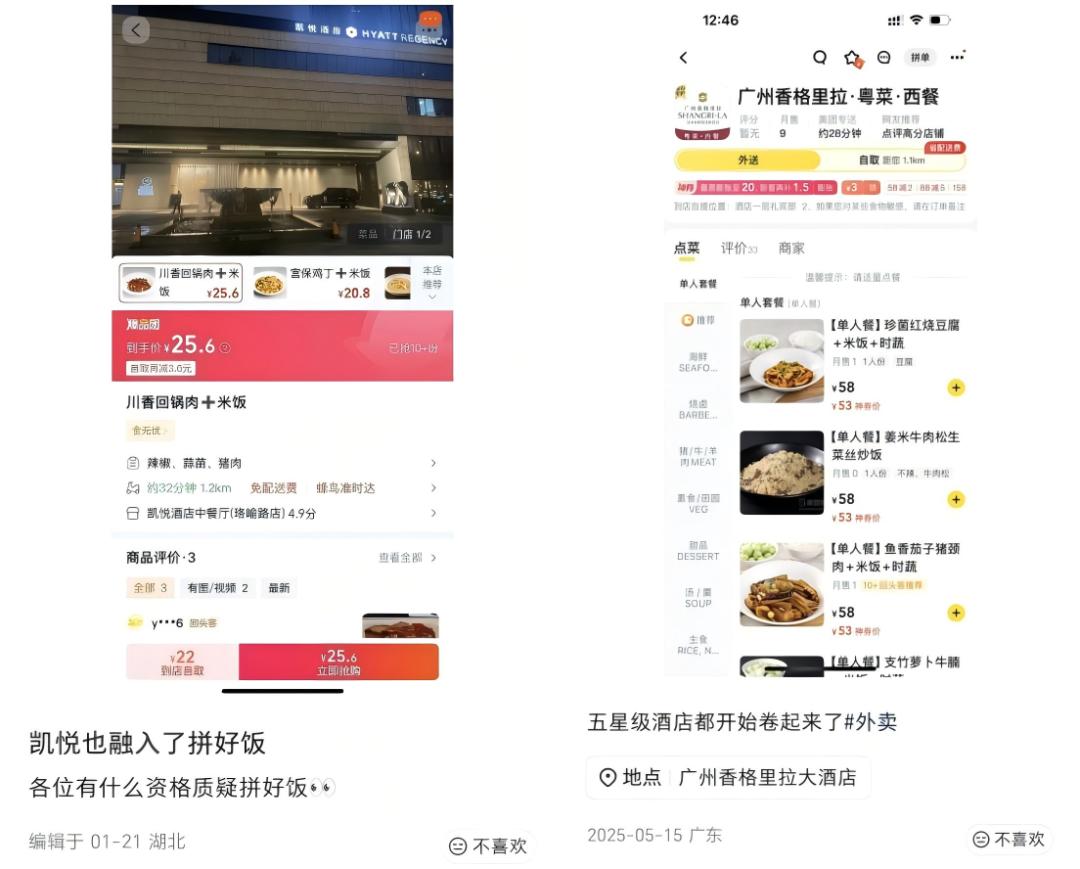
Image source: Xiaohongshu
Why have five-star hotels suddenly collectively entered the fast food business and competed for the living space of small street vendors?
From the perspective of the market environment, the hotel industry has indeed had a tough time in recent years.
In 2025, the average room rate of star-rated hotels across China was 360.2 yuan, and the average occupancy rate was 46.8%, both lower than the figures in 2024; total operating revenue decreased by about 7% year-on-year.
In the first half of 2026, there were 435 judicial auction projects for hotels with a value of over 10 million yuan across China, of which only 21 were sold, with a transaction rate of 4.8%.
Facing huge operating pressure, five-star hotels do not have many options to choose from.
Directly cutting the catering sector is not allowed by the star rating standards, as many mandatory indicators require catering support. If they rigidly stick to high prices, customer sources will become fewer and fewer, the kitchen will remain idle, and losses will continue to expand.
Offering affordable catering services has become a practical choice for many high-star hotels.
This is the survival instinct of five-star hotels in a harsh operating environment.
At the very least, these five-star hotels are not sticking to old conventions, but actively adapting to market changes.
It is already remarkable that they dare to make the "decision against their long-held traditions" and seek new growth points through innovative methods.
03
Low price is not a universal cure
Low price is only a supplementary means to revitalize idle production capacity, by no means a universal remedy to save high-star hotel catering.
In recent years, domestic breakfast prices have dropped to the "9.9-yuan" critical line, and lunch prices have bottomed out into the "10-yuan era"...
But the cost is severe. According to the monitoring data from GeoHey, the catering industry in major cities across China has seen rare negative growth in the first half of 2026.
This shows that catering merchants in both big and small cities may not be having an easier time than before.
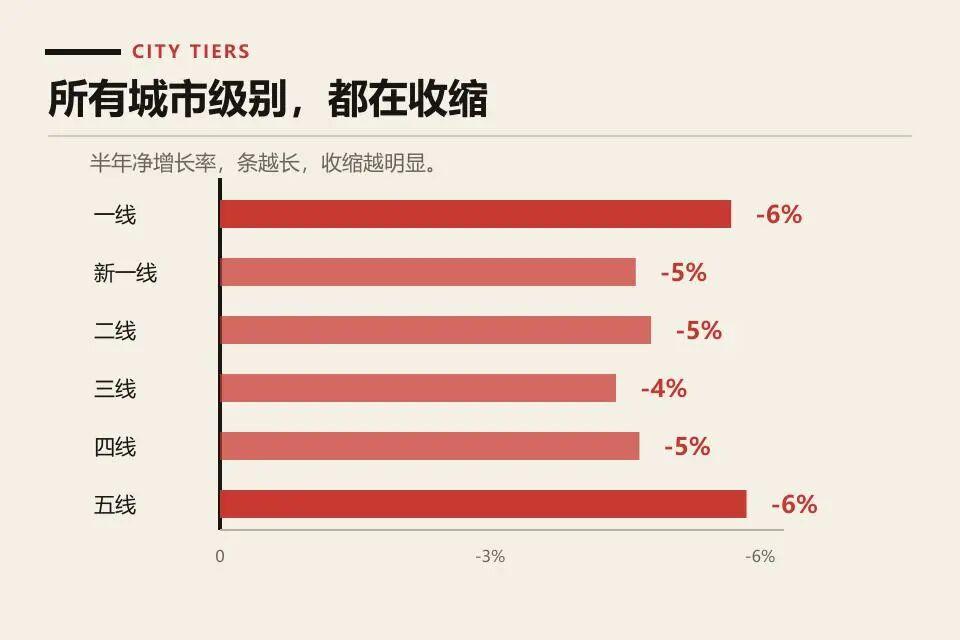
Image source: GeoHey Brand Monitoring
All low-price competition that deviates from the cost base is a high-stakes gamble with no safety net.
Small profits but quick turnover is never a universal formula. Its establishment requires three hard prerequisites: costs are diluted by scale, profits are stabilized by efficiency, and risks are hedged by the system.
If any link is missing, the price war is a war of attrition with no winners.
In the high-star hotel catering track with rigid costs, only "low cost" can support "low price". Low prices without cost barriers are not competitiveness, but vulnerability.
Once customer flow drops, rent rises, or market conditions change, the first to be eliminated are always those who only know how to wield the price knife.
And those that can survive through cycles are never the cheapest ones, but the most resilient ones, which can withstand cost fluctuations, customer flow changes, and competition from rivals.
Of course, damage to brand value is another sword hanging over many high-end hotels.
The core asset of a hotel is its brand. A large part of the premium of high-end hotel rooms, wedding banquets, and business conferences is built on the high-end brand perception in consumers' minds.
When cheap boxed meals and low-priced takeout become the inherent impression of five-star hotels in the public, the brand label in consumers' minds will shift.
In the future, when hotels try to sell high-end banquets and high-end afternoon tea again, they may face greater resistance.
In addition, hotels also need to deal with the practical problem that it is difficult to take into account all aspects of consumer experience.
Even if all the food is made by five-star hotels, affordable light meals require compromises in terms of portion size and ingredient quality.
The staff of Shenyang Marriott has already stated that the 12-yuan rice bowl has a small portion, which can only meet the simple dining needs of one person.
However, many netizens still assume that for just over ten yuan, they can enjoy the full quality of dine-in food at a five-star hotel.
After they actually make the purchase, they find that the food portion is insufficient and the dishes are simple, leading to a gap in expectations, and various negative reviews will follow. Low prices bring huge online traffic, and traffic is a double-edged sword.
A sudden viral hit will attract a large number of users who only want to take advantage of the bargains, rather than the real target customers.
After the popularity fades, it remains uncertain whether this traffic can be converted into real, sustained consumption.
What is really worth thinking about is what the core competitiveness of five-star hotel catering is.
The popularity of the 12-yuan rice bowl will fade one day, but the survival problems faced by five-star hotel catering will most likely exist for a long time.
Consumption attitudes have changed, market demand has changed, sticking to the old arrogant way of doing things no longer works, but blindly engaging in price competition will also not lead to long-term development.
The catering sector of five-star hotels is now striving to find a difficult balance between high-end positioning and mass demand.
This article is from the WeChat Official Account "Hotel Finance", written by Da Sheng, and published with authorization from 36Kr.