In the stock era, subway fares are about to be raised in another city.
On September 7, the highly anticipated public hearing for Shanghai Metro fare adjustment was held.
According to the two fare adjustment schemes discussed that day, a "price hike" is almost inevitable. Both schemes raise the average fare per passenger trip by about 1 yuan, with a similar increase rate, and the main difference lies in the fare structure.
This is the first optimization and adjustment of the Shanghai Metro fare mechanism in 21 years, which means another city has joined the ranks of metro fare increases.
Last year, the fare adjustments of Chongqing and Kunming Metro drew widespread attention; Guangzhou is also preparing for the change. According to the plan, Guangzhou will complete the "optimization of metro fare mechanism" before December this year, and its current fare mechanism has been in use for 20 years.
Behind this round of fare adjustment is the long-standing "living beyond its means" dilemma faced by the metro industry.
According to the data disclosed by local metro groups, except for a few cities such as Guangzhou, the operation of most cities is highly dependent on government subsidies.
In recent years, discussions on whether subsidies should continue have been intensifying, which is essentially a seesaw battle between the public service attribute and the sustainable operation of enterprises.
Price Hike
In recent years, calls for metro fare increases have been growing louder.
Kunming and Chongqing are among the first cities to promote metro fare adjustment in this round. Similar to Shanghai, Chongqing held a public hearing last May to solicit public opinions on its first metro fare adjustment since 2005.
According to the final implemented scheme, based on the calculation that an ordinary citizen travels 44 times on 22 working days per month, the per capita monthly metro travel expense increases by 24.2 yuan; earlier, Kunming implemented the new metro fare scheme in April of the same year, which reduced the number of kilometers available per unit price.
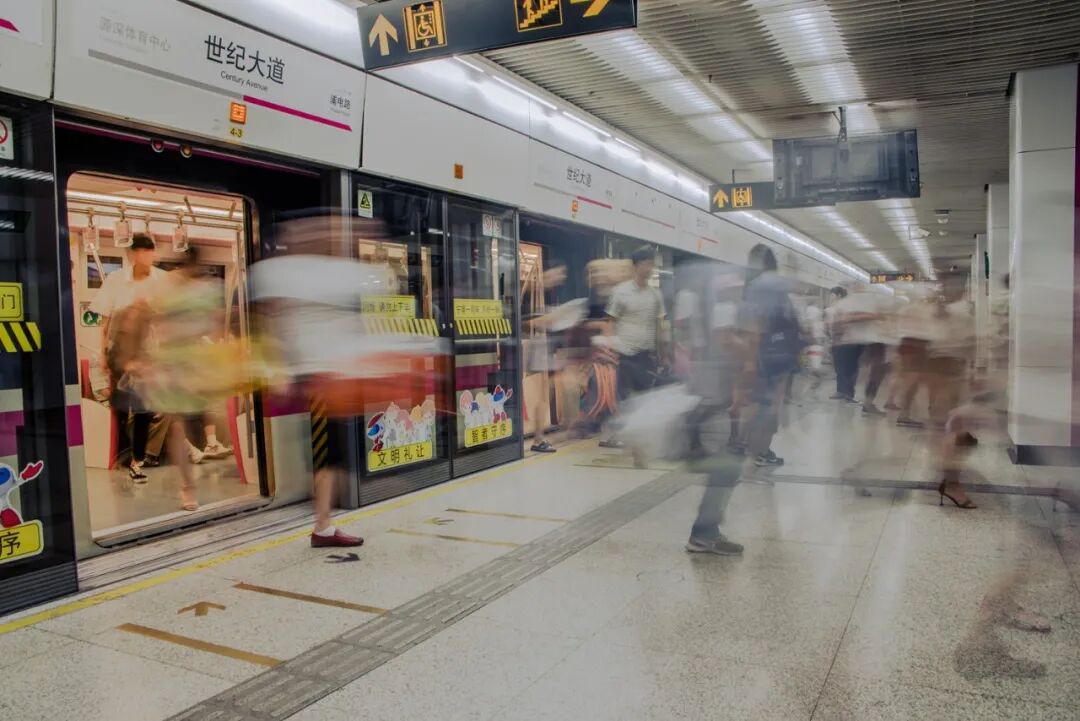
Image source: 58pic_500524982
Compared with direct fare adjustment, more cities adopt more implicit ways to "cut expenditures".
In 2023, Guangzhou Metro cancelled the "60% discount after 15 trips" policy, and adopted a new billing method: 20% off for the part of monthly expense between 80 yuan and 200 yuan, and 50% off for the part exceeding 200 yuan; Foshan adjusted its operation strategy by closing all lines 30 minutes in advance, which was also interpreted as "cost reduction and efficiency improvement".
However, as the city with the second longest rail transit operation mileage and the largest passenger flow in China, this fare adjustment in Shanghai is still quite special.
The last time Shanghai adjusted its metro fare was in 2005, when Shanghai Metro was just entering a peak construction period with rapidly growing passenger flow, and some lines were fully overloaded during peak hours. The metro used the price lever to "peak load shifting" to regulate peak passenger flow and ease the overloaded operation pressure during peak hours.
Over the past 20 years, calls for Shanghai Metro fare increase have emerged from time to time. In 2024, relevant news spread among the public.
At that time, the Shanghai Development and Reform Commission announced the fare mechanism scheme for new suburban rail lines in Shanghai, setting the starting fare at 4 yuan, higher than the 3 yuan starting fare of the urban metro lines. Local media specially issued articles to clarify that the new suburban lines with new pricing run faster, serve the travel efficiency and comfort requirements of specific groups, and will not affect the existing metro fares.
However, changes soon emerged. In 2025, China Association of Metros issued a guidance opinion, aiming to promote the solution of the industry's financial sustainable development problem.
As the operator of Shanghai Metro, BI Xiangli, Chairman of Shanghai Shentong Metro Group, previously mentioned that the adjustment mechanism of urban rail transit fares in China has long been lagging behind. "It not only fails to grow with economic and people's livelihood indicators such as residents' disposable income, per capita consumption expenditure, CPI and GDP, but also is lower than the price increase of other public service products such as energy and railways. The actual fare level per passenger kilometer even shows a downward trend."
In contrast, there are many examples of cities around the world flexibly adjusting fares according to economic development indicators. Hong Kong, China and Singapore are typical representatives.
Since its establishment in 2007, MTR Corporation has introduced a fare adjustment mechanism that links fares with social inflation rate, nominal wage index and productivity factors. In the past 20 years, except for 2021, MTR has raised fares 11 times and frozen fares 5 times in total following the local rising inflation rate.
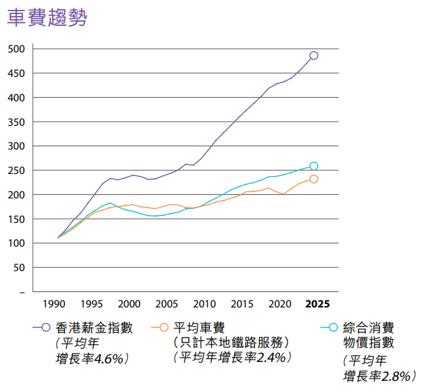
Average fare trend of MTR in recent years Image source: MTR 2025 Annual Report
Similarly, Singapore adopts a floating fare mechanism determined by indices such as consumer prices, wages and energy prices to promote annual fare changes.
Bottleneck
Back to Shanghai, the reason for fare adjustment first lies in the long-discussed metro operation problems.
ZHOU Xiaoqin, Executive Vice President of China Association of Metros, once pointed out that there has long been a contradiction between the public welfare attribute and market rules in China's metro fares. "The public welfare attribute requires low fares to ensure people's livelihood, but rigid costs such as electricity and labor rise rigidly with the CPI index, and the coverage rate of ticket revenue continues to decline, forming a structural contradiction between 'policy loss' and 'market-oriented survival'."
According to the annual report of Shanghai Jiushi Group, the controlling shareholder of Shanghai Shentong Metro Group, the annual operating cost of Shanghai Metro reached 27.893 billion yuan in 2025, with a gross operating loss of 18.74 billion yuan. This part of the loss is mainly covered by government subsidies. Data shows that the financial subsidy for Shanghai Metro last year was as high as 17.583 billion yuan.
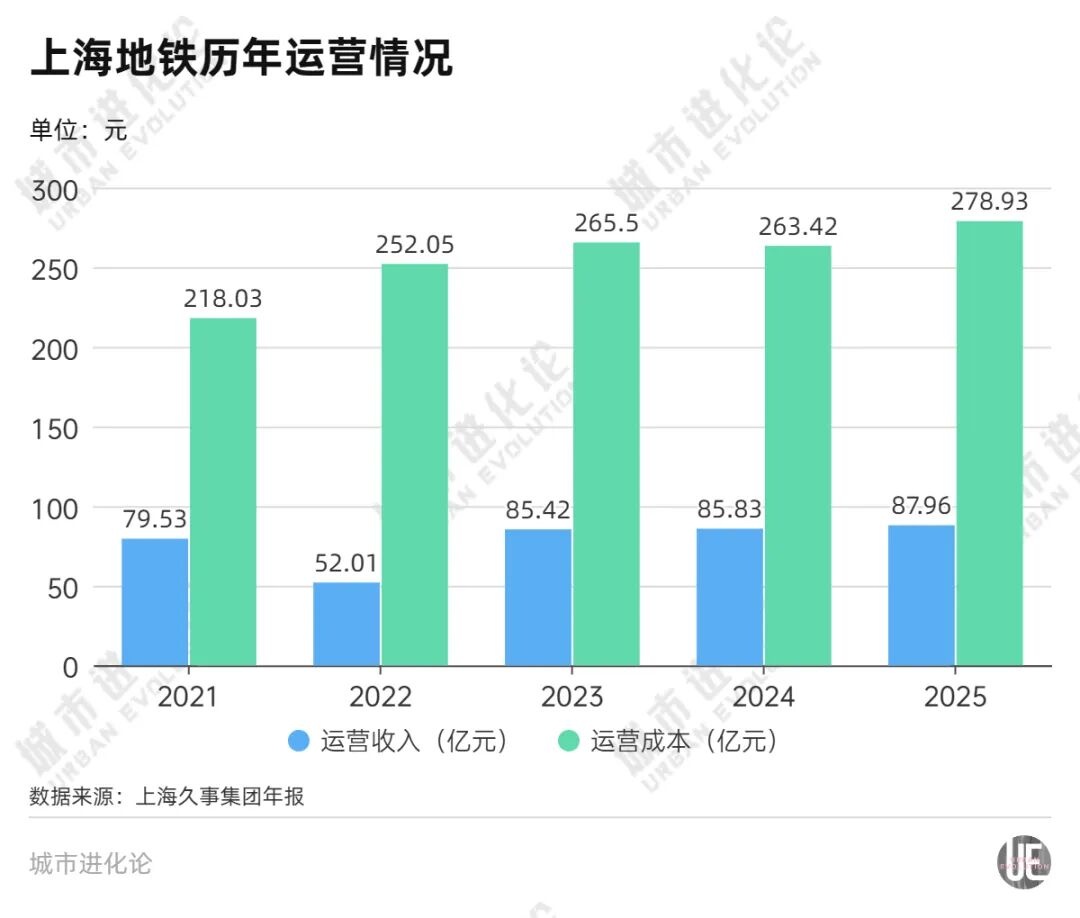
Moreover, the gap between revenue and expenditure of metro operation may further widen.
Not long ago, discussions on the decline of metro passenger flow in first-tier cities began to intensify. Data shows that since last year, the passenger flow of Beijing and Shanghai Metro has shown a downward trend. The passenger flow of Shanghai Metro not only decreased by 1.53% year on year last year, but also declined in many months of this year.
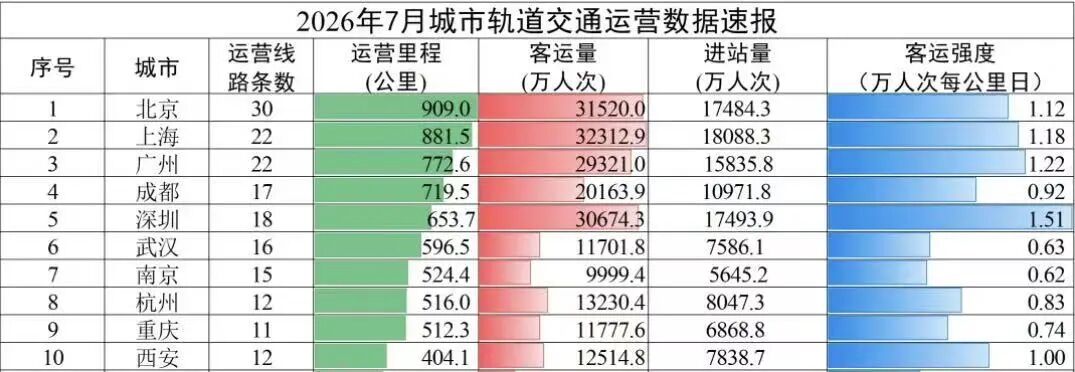
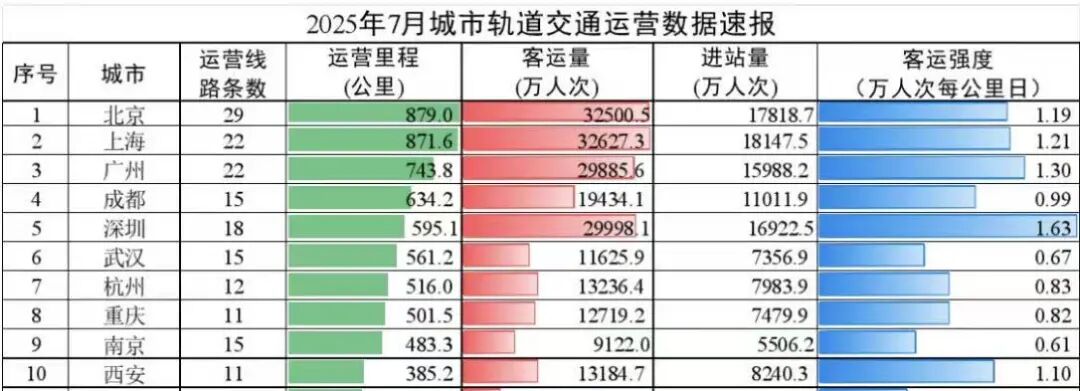
Comparison of urban rail transit passenger flow data in major cities Image source: Ministry of Transport of the People's Republic of China
No matter it is a short-term phenomenon or a long-term trend, it is an inevitable trend that the metros in megacities have entered the era of stock passenger flow development.
QIN Guodong, Deputy Secretary-General of China Association of Metros, previously wrote that at present, the urban rail transit networks in many megacities such as Beijing and Shanghai have taken initial shape, facing bottlenecks such as weak growth of travel sharing rate and declining passenger flow intensity; at the same time, they are also facing dual competition from cars and electric bicycles.
With the peak of passenger flow, the growth space of ticket revenue is limited, while construction investment is still increasing and operating costs are rising rigidly.
According to the data of China Association of Metros, Shanghai completed an urban rail transit construction investment of over 36 billion yuan last year, ranking second in China only after Shenzhen; by the end of last year, the approved investment of Shanghai's urban rail transit projects had exceeded 400 billion yuan, ranking first in the country.
According to the "15th Five-Year Plan" for Comprehensive Transportation Development of Shanghai, the city will promote the construction of lines 19, 20, 21 and 23, etc., and the total urban rail transit mileage will reach 1260 kilometers by 2030. Shanghai is also expected to become the first city in China with a rail transit mileage exceeding 1000 kilometers.
Breakthrough
But metro pricing itself is a complex economic and social calculation. As early as 10 years ago, the person in charge of urban planning of MTR Corporation pointed out that the success of MTR lies in discovering a rule that "metro operation should be priced according to market rules, instead of arbitrary pricing, but non-competitive fares will lead to losses, which is a contradiction".
In fact, even MTR with market-oriented pricing still faces the problem that metro ticket revenue cannot cover costs. Data shows that since 2019, the EBIT of MTR's Hong Kong transport operations has been negative, reaching a peak of -5.408 billion Hong Kong dollars in 2022, and the loss narrowed to 254 million Hong Kong dollars last year.
Nevertheless, MTR still achieved an EBIT of 21.98 billion Hong Kong dollars last year. In terms of profit structure, in addition to the frequently mentioned "real estate business" whose profit was 13.22 billion Hong Kong dollars, the profit from MTR station commercial business and property leasing and management business reached 3.66 billion and 3.82 billion Hong Kong dollars respectively. In other words, the commercial operations inside and outside the stations have become another "golden finger" of MTR.
For mainland cities, as the real estate industry behind TOD enters a period of adjustment, revitalizing various side businesses has increasingly become the key to making up for losses.
Image source: 58pic_500818985
In 2024, Guangzhou Metro opened its personal advertisement placement business, which sparked widespread discussions for a while. Some industry insiders analyzed at that time that facing the impact of online advertising, traditional advertising formats such as metro and public transport need to create new revenue sources; this is also a new attempt that fits the current emotional consumption trend.
Shanghai Metro has also made many new explorations. At the end of 2023, express delivery companies such as China Post and SF Express piloted related businesses during off-peak hours of Shanghai Metro, with a trial operation period of 3 months; Shanghai Metro even built distributed photovoltaic power stations on the roof of rail transit facilities, generating a revenue of nearly 30 million yuan in 2022, which effectively made up for the shortage of metro ticket revenue.
No matter what kind of attempt, it is centered on the remodeling and reconstruction of the original space and functions of the metro.
In 2025, MTR set up a national commercial investment platform in Chengdu, and then expanded its business to many cities such as Xi'an and Zhengzhou. Its target is not the line operation and TOD project development it previously promoted in cities like Shenzhen and Hangzhou, but the in-station commercial business — which is not a new thing in local metros, but needs further optimization and improvement. One of the key points is how to transform metro stations from commercial carriers into operators.
This involves the transformation of the whole set of metro operation ideas. For example, how to design the circulation routes more reasonably, introduce business formats and brands, unify identification systems, make the public service attribute and commercial attribute of metro stations cooperate with each other, and convert passenger flow into commercial flow, are all key details hidden behind MTR's commercial data.
In any case, for metro companies that want to get rid of subsidy dependence and promote sustainable operation, fare adjustment is not the final answer.
This article is from WeChat Official Account "City Evolution", written by YANG Qifei, and authorized by 36Kr for release.