The first half of John Ternus's life
On September 1, 2026, John Ternus officially succeeded Tim Cook and became the new CEO of Apple.
Twenty-five years ago, when he first walked into Apple, he was only a mechanical engineer in his twenties.
At that time, the first-generation iPod had not yet been released, and the iPhone was far from being launched. Faced with a group of smart, confident colleagues who were almost harsh on product details led by Steve Jobs, Ternus once doubted whether he really belonged here.
Twenty-five years later, at the age of 50, he took over the top command of Apple.
Different from the current trend of academic elites starting businesses, he graduated from the University of Pennsylvania with a bachelor's degree and had no outstanding academic background, nor did he have any dazzling work experience outside Apple;
Different from Cook, the successor handpicked by Steve Jobs, he did not rise to the CEO position from the sales, finance or supply chain system, but advanced step by step along the path of an engineer.
Looking back on the first half of Ternus's life, he majored in mechanical engineering, spent almost all his career at Apple, and was in charge of hardware R&D for a long time...
But anyone who has work experience knows a truth, never underestimate a person who can work in a company for more than ten years, no "working emperor" is just a nominal title.
Nowadays, this low-key working emperor has finally reached the peak of his life, and the moment he stepped onto the stage with Apple's first highly anticipated foldable phone iPhone Duo, everyone knew that:
From this moment on, Apple has entered the Ternus Era.
01 Discipline Formed in the Swimming Pool
Ternus was born in California, the United States in 1975.
Different from many Silicon Valley executives, he rarely talks about his family in public. Information such as what occupations his parents had, what his childhood life was like, and whether he had other siblings in the family, neither appeared in Apple's executive resumes, nor was rarely mentioned by himself.
This protection of private life later became part of Ternus's public image.

Even after entering Apple's top management, he still rarely accepts interviews themed on his personal life, and is not keen on running social media. What the outside world can observe is mainly his performance in the workplace:
Emotionally stable, cautious in speech, detail-oriented, and rarely expresses judgments without full preparation.
There is not much publicly available information that can confirm his early experiences. One relatively clear clue is that he became interested in mechanical structures and how objects operate very early. This focus on real structures later led him into the field of mechanical engineering and determined his career direction for more than 20 years afterwards.
After graduating from high school, Ternus left the West Coast of the United States for Philadelphia, and entered the School of Engineering and Applied Science of the University of Pennsylvania to study mechanical engineering.
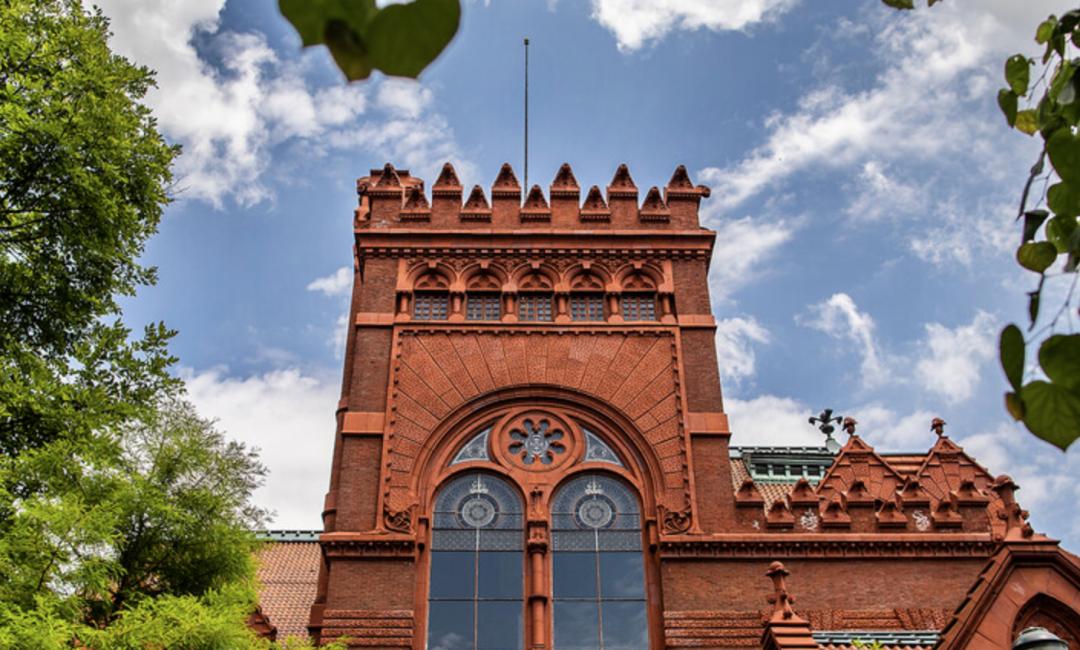
At the University of Pennsylvania, Ternus had two identities: a mechanical engineering student and a member of the university's men's swimming team.
During his college years, he participated in short-distance freestyle, backstroke and individual medley events. Records from the University of Pennsylvania's student newspaper show that in an intercollegiate competition in 1994, he won two championships in the 50-meter freestyle and 200-meter individual medley.
College swimming seems to be an individual sport, but in fact it is highly dependent on team training and long-term discipline. Athletes need to complete a large number of trainings according to the plan every day. During the winter vacation, the University of Pennsylvania swimming team would also go to Florida for centralized training, doing two high-intensity exercises a day.
The swimming pool will not shorten its length because the athlete is in a bad mood, and the timer will not show mercy to anyone. Every turn, breath adjustment and stroke may affect the final result, and the leading in one competition cannot replace the normal training the next day.
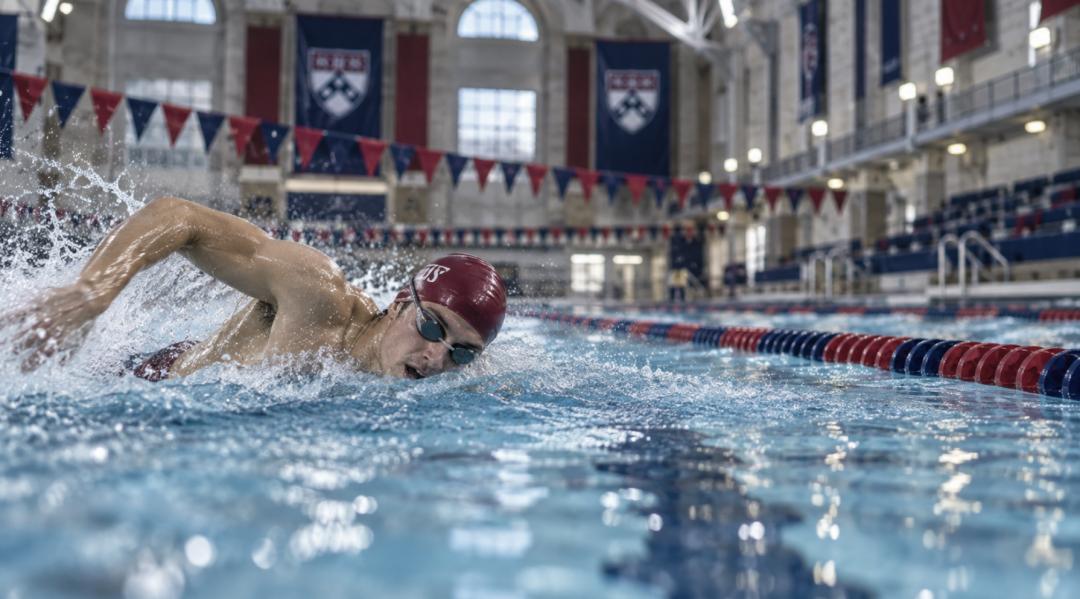
It is widely believed by the outside world that this environment shaped Ternus's well-known working style later.
In fact, Ternus's college teammates once recalled to the media that he had always been a person with very stable emotions.
He is low-key, self-disciplined, very cautious when making decisions, and hardly acts hastily when he is emotional. His teammates described him as "confident, but not oppressive", and he is rarely seen expressing negative emotions publicly.
Many years later, when Ternus began to manage Apple's large-scale hardware engineering team, these characteristics are still clearly visible. The development cycle of consumer electronic products can last for several years, filled with design failures, test anomalies, supply chain changes and mass production pressure.
For managers, what really matters is often not a sudden burst of inspiration, but maintaining a steady pace continuously over a long period of time.
From this perspective, the swimming team was perhaps the first management lesson in Ternus's life:
Individuals must be responsible for their own swimming lane, but the final result cannot be separated from the training system of the whole team.
02 A Spoon Controlled by Head Movements
Ternus's four years of college life at the University of Pennsylvania passed in the blink of an eye, and the last footprint he left in this university was his graduation thesis.
Different from domestic universities, western universities generally attach more importance to practice. Ternus's graduation thesis is not a dozens of pages of project proposal, but a device called Head Actuated Nutritional Device Feeder (H.A.N.D. Feeder for short).
The reason why he chose such a project at that time was that he thought some quadriplegic people had lost the motor function of their hands and feet, but could still control their heads and necks. If these movements could be converted into mechanical movements, they would be able to eat on their own with less reliance on caregivers.
This idea does not seem complicated, but the actual implementation is far more difficult than expected.
A complete eating action includes moving the spoon towards the plate, adjusting the angle, scooping up food, keeping balance and sending it to the mouth. The mechanical structure must not only capture the user's conscious head movements, but also filter irrelevant shaking. It must not block the line of sight, nor add too much burden to the neck.
Ternus and several of his collaborators chose a more challenging path:
Try not to use motors and complex electronic equipment, but directly convert the movements of the head and neck into the movement of the spoon through connecting rods, steel cables and pulleys.
According to their vision, when the user turns his head left and right, the spoon will move in the horizontal plane. Raising and lowering the head can control the process of scooping food and sending it to the mouth, and a slight side tilt of the head can adjust the pitch angle of the spoon to reduce food spillage.
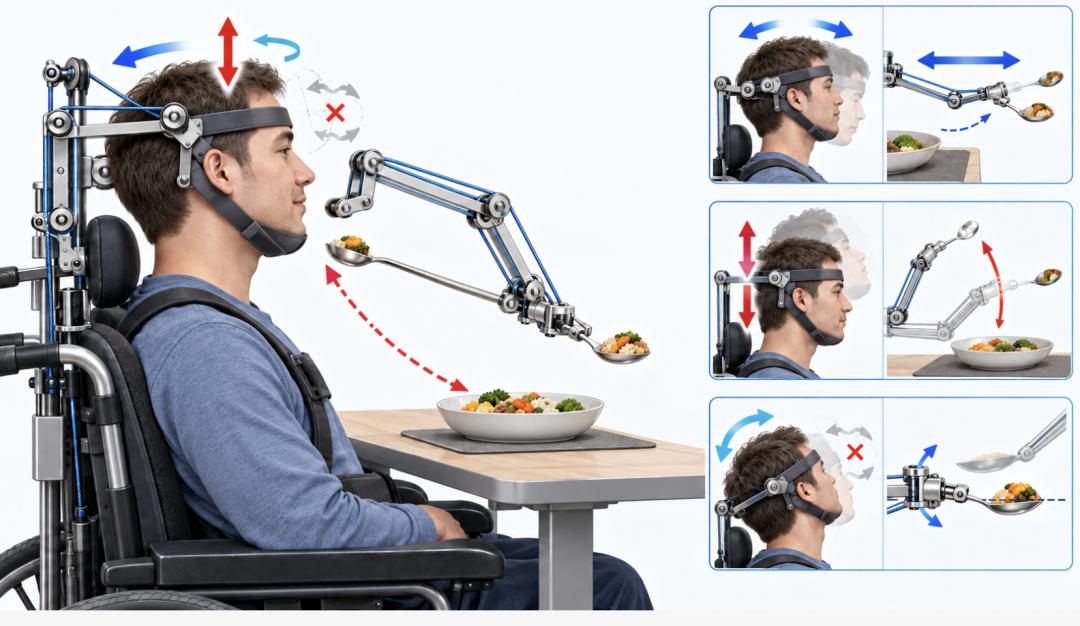
This device is more like a mechanical extension of the human body, rather than an independently operating robot. The research team calls this kind of auxiliary device connected to the human body and driven by the remaining motor capacity of the human body a telethesis.
During the research of this project, an accident occurred that Ternus still remembered deeply many years later.
That was when he was operating the first and only CNC milling machine at the University of Pennsylvania at that time, Ternus executed the wrong instruction, the tool hit the workbench, and the huge noise from the machine made everyone present startled.
Ternus, who nearly damaged this precious equipment, was later given a nickname by the staff of the machining workshop: "Crash".
This slightly embarrassing nickname accompanied him for a long time.
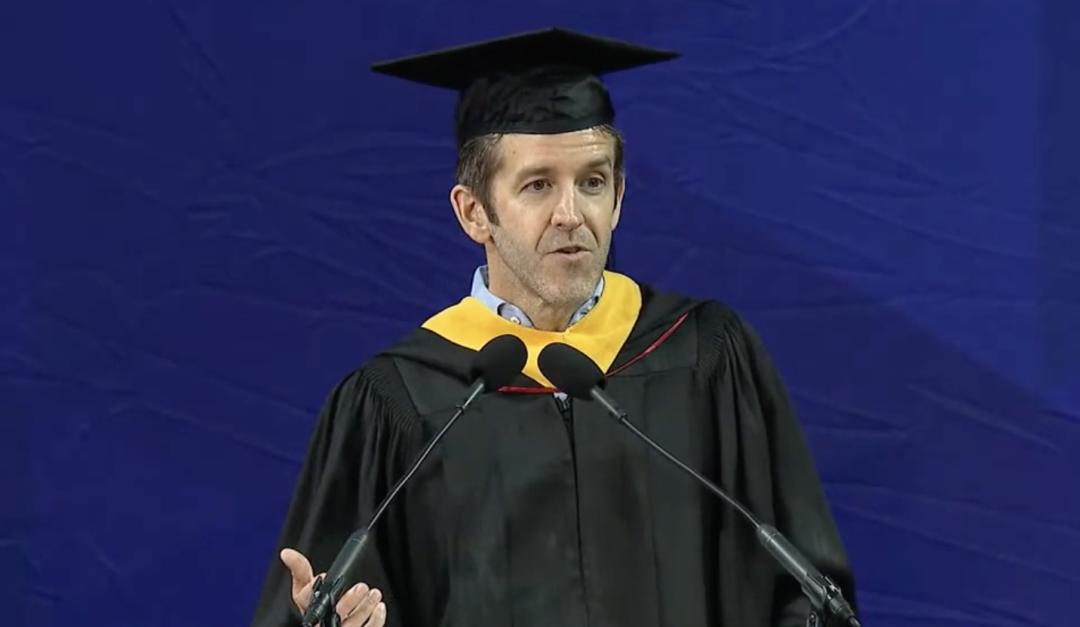
For an engineering student, this accident is a more direct practical lesson than textbooks. A wrong dimension on the drawing or a wrong instruction in the computer will generate force, sound and loss in the real world. Engineers must not only put forward ideas, but also be responsible for the results after the ideas are implemented.
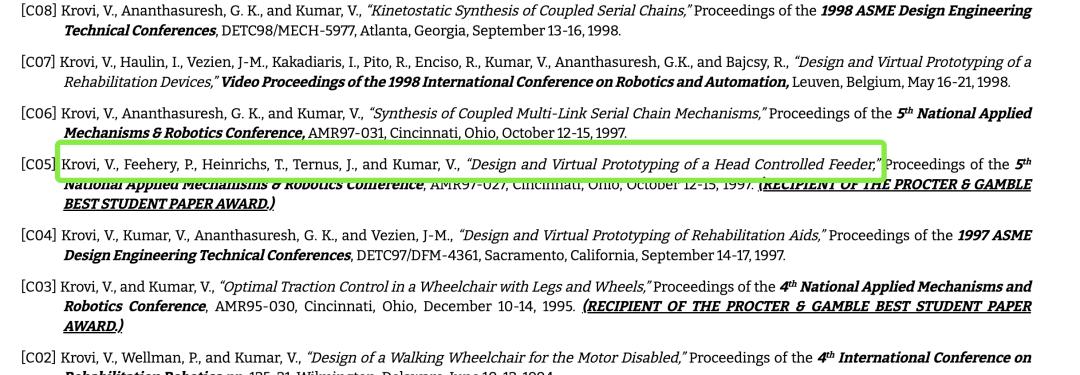
However, H.A.N.D. Feeder finally completed the whole process from human body modeling, virtual simulation, rapid prototyping to mechanical processing and physical prototype. The paper formed by this project "Design and Virtual Prototyping of a Head Controlled Feeder" was also published at the 5th National Applied Mechanism and Robotics Conference held in 1997, and won the Procter & Gamble Best Student Paper Award.
It is worth mentioning that Vijay Kumar, another collaborator of Ternus in this graduation project, later became a well-known scholar in the field of robotics and is now the dean of the School of Engineering and Applied Science of the University of Pennsylvania.
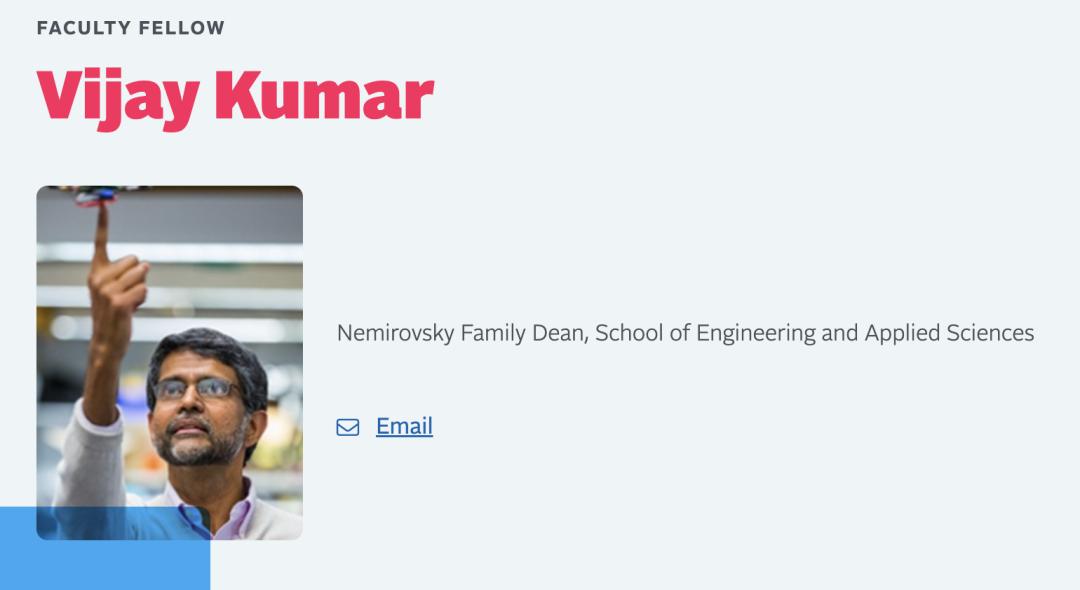
Different from Vijay Kumar, Ternus did not pursue further studies, but returned to California and got a job.
03 From Designing VR to Joining Apple
After graduating from university in 1997, Ternus returned to California and joined a company called Virtual Research Systems, becoming a mechanical engineer at this company.
Virtual Research Systems was a technology company that developed virtual reality VR devices at that time.
In the late 1990s, VR devices were far less popular than they are today. At that time, VR devices were large in size and high in price, and were mainly used for flight simulation, military and industrial training, scientific research visualization and professional 3D design, rather than entertainment products for ordinary consumers.
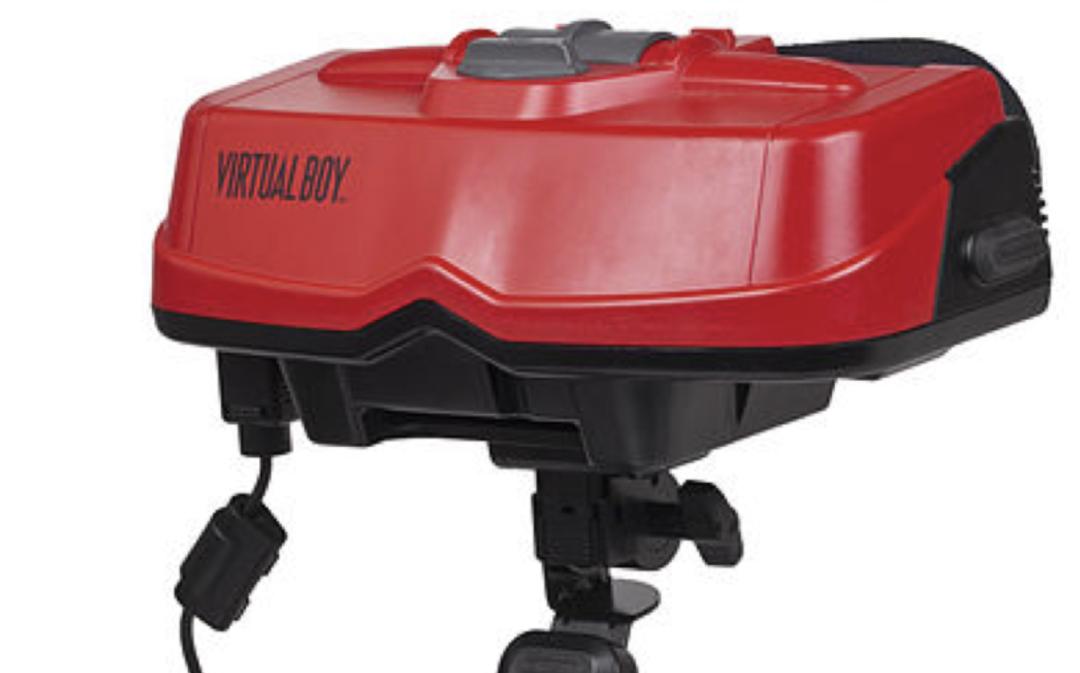
Ternus worked here for almost four years. He was exposed to not only mechanical structure design, but also display technology, human-computer interface, weight distribution, wearing comfort and coordination between different components inside compact hardware.
Some industry insiders later linked him to professional headsets such as Virtual Research V8, believing that he might have undertaken the main mechanical engineering work for such products. However, Ternus rarely mentioned these experiences in public, and the news can only be found in media articles.
What is certain is that more than 20 years later, Ternus has become the head of Apple's hardware engineering and participated in the overall planning of the R&D and design of Apple's first-generation MR product Apple Vision Pro.
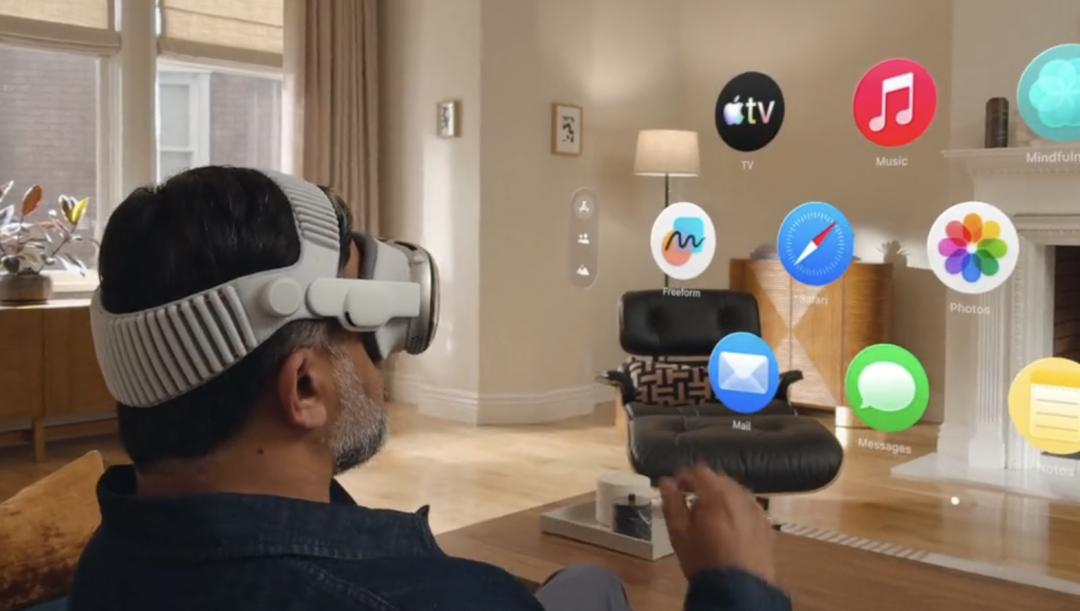
I wonder if Ternus would think of his work experience at Virtual Research Systems 20 years ago when developing Apple Vision Pro.
Speaking of which, Ternus officially joined Apple in 2001. At that time, the 26-year-old was still inexperienced in the world.
At that time, Steve Jobs had returned to Apple and led the company out of the most dangerous period. The iMac rekindled the market's attention, but the first-generation iPod had not yet been released, and Apple was still a computer company with Mac as its core business.
Ternus later recalled that when he first joined Apple, he once felt inferior.
The colleagues around him seemed to be smarter, more confident and more knowledgeable than him. They had an almost instinctive judgment on products, as if they knew what should be retained and what must be deleted as soon as they started, and how far a product was from "good enough".
Ternus was not sure if he really belonged here.
The first project he participated in was the Apple Cinema Display. His work involved display panels, metal shells, brackets, heat dissipation, connectors, part tolerances and supplier manufacturing quality. Sometimes the team only discussed the notch of a screw on the back of the display.
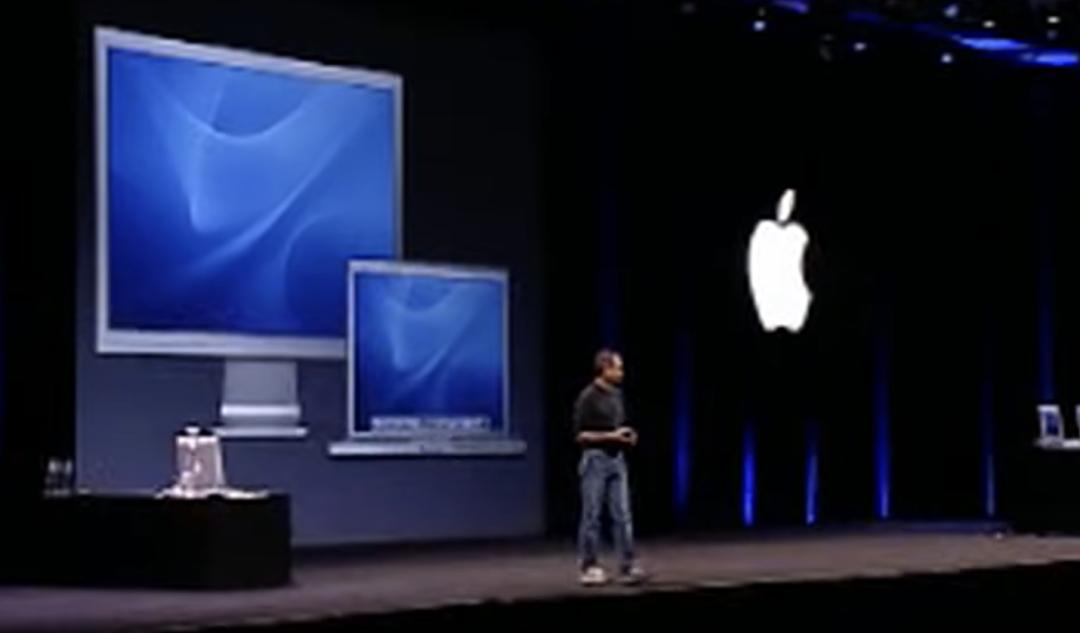
It is in these details that Ternus began to find his own position. He gradually realized that the "product" emphasized by Apple is not an abstract concept, but composed of a large number of seemingly tiny engineering decisions.
At that time, Jony Ive was already a pivotal figure in Apple's engineering design, but Ternus and Ive did not follow the same career path:
The industrial design team led by Ive is responsible for defining the appearance,