Can it be driven manually? The "hidden steering wheel" of Tesla Cybercab has been exposed.
No wonder Tesla's Cybercab dares to go without a steering wheel.
It turns out Tesla had a backup plan all along: the vehicle actually hides a set of "backup steering wheel" that only exists on the central control screen.
What's more, this feature was accidentally discovered by a passenger, who even tried toggling it twice to see if he could actually drive the car away:
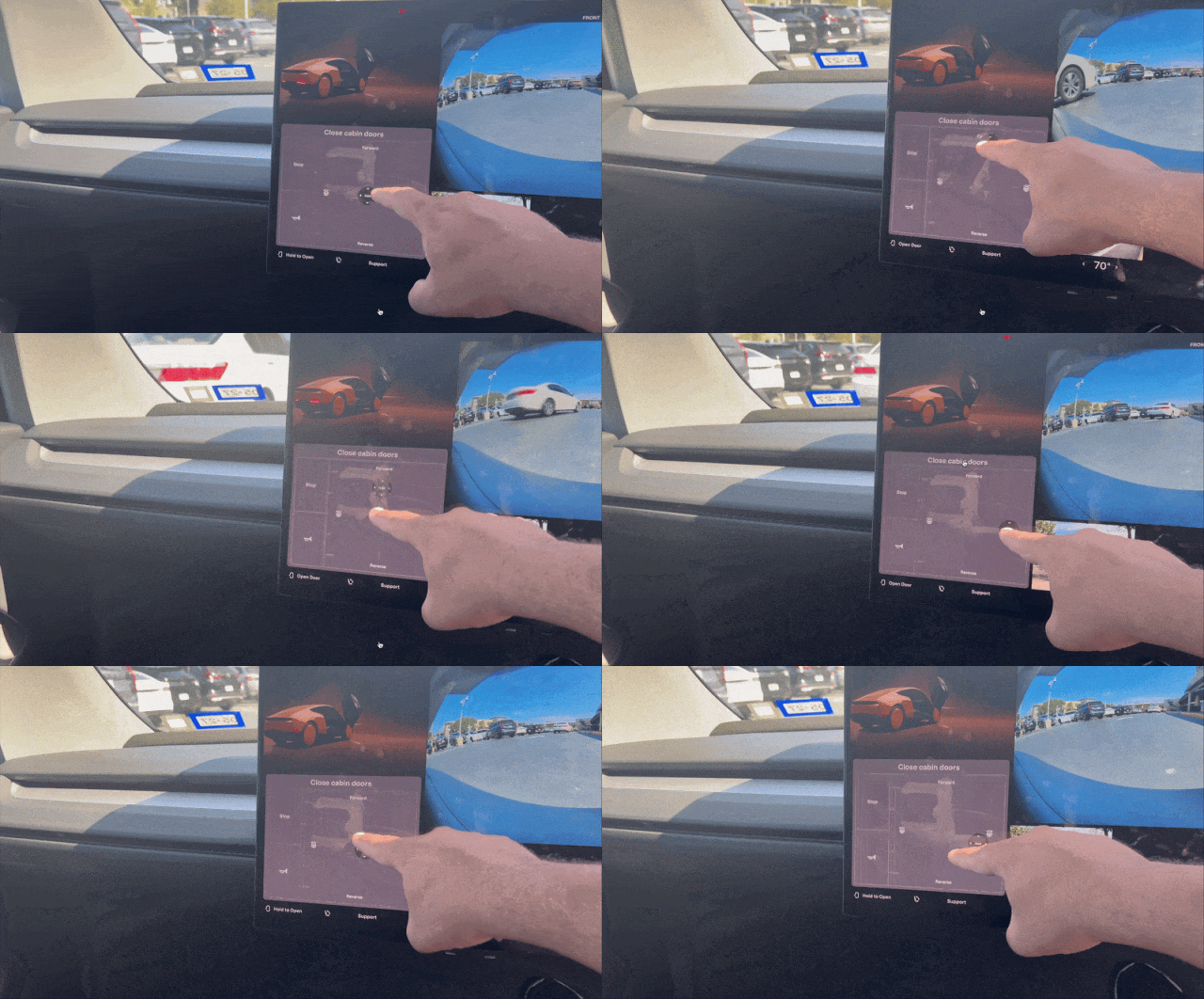
Fortunately, the vehicle did not move.
Well, the Cybercab has been really bustling these two days, but it has also encountered quite a lot of troubles...
Tesla Cybercab Exposed to Have Built-in Virtual Control Joystick
Recently, a passenger encountered something "unusual" while riding in a Tesla Cybercab.
The display screen is supposed to show a riding interface that reminds passengers to fasten their seatbelts and start the trip:
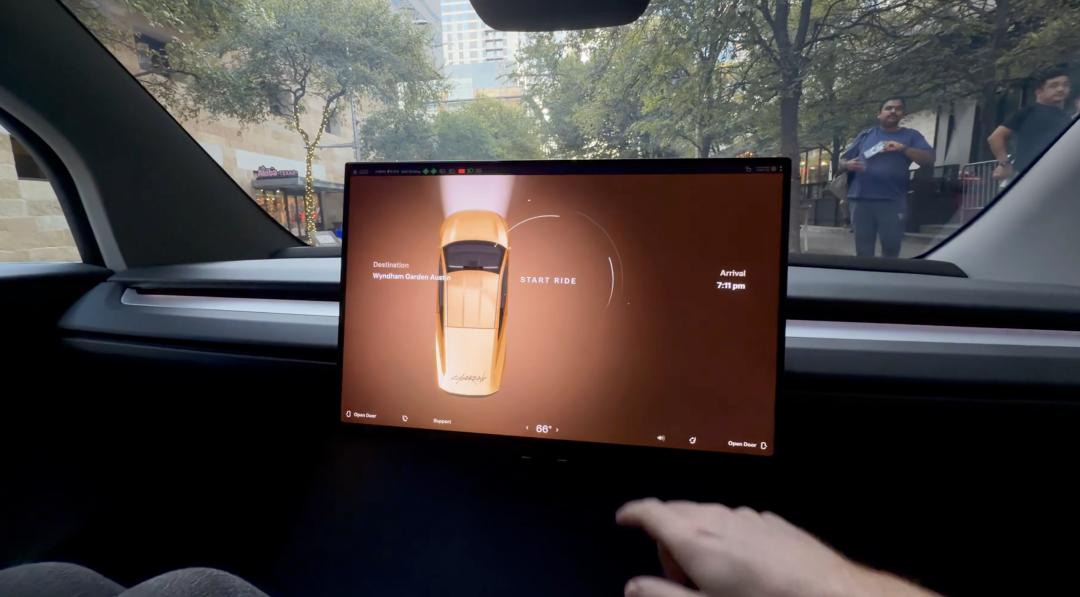
However, when this passenger got into the vehicle, he found that the central screen displayed an interface with a different configuration, showing several camera feeds. What caught his attention the most was the square virtual control area at the lower left corner:
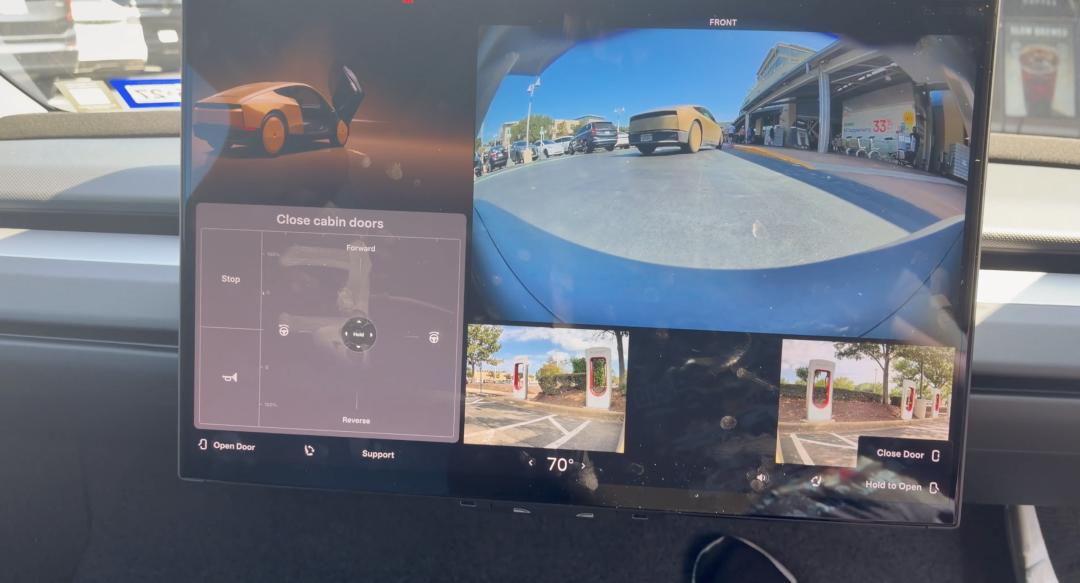
In the center of this area is a joystick icon, with "forward" displayed on the top and "reverse" on the bottom. Buttons for braking, honking, and door control are also arranged around the joystick.
According to statistics from foreign media, at least two passengers have encountered a similar interface so far.
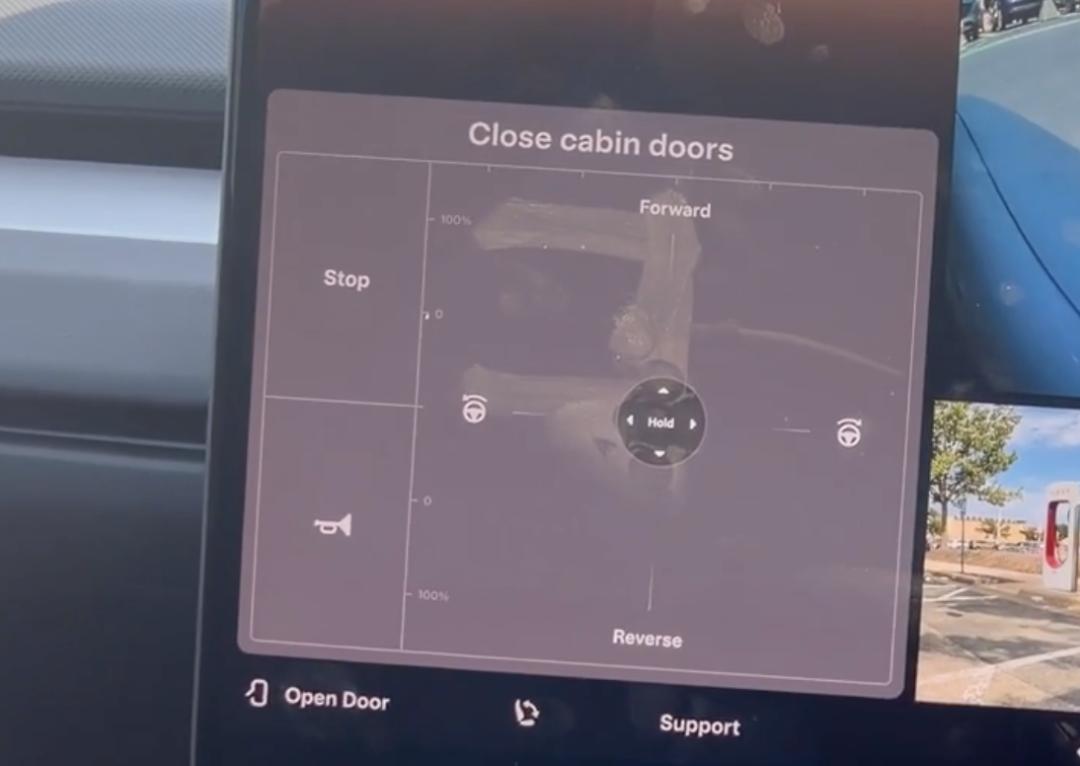
Several passengers have tried to operate this virtual control system, but the vehicle did not respond, which looks more like a bug in the internal test system.
At present, Tesla has not publicly explained why the internal interface appeared in front of ordinary passengers.
Judging from existing videos, this feature most likely requires employee privileges, and is mainly used for testing, maintenance and fleet operation personnel.
In fact, this feature had already been discovered by netizens before Cybercab officially started carrying passengers.
On August 30, a Cybercab was testing automatic parking at the Austin Supercharger station, but it parked slightly off position, making the charging cable out of reach.
This netizen captured footage showing that the staff in the vehicle directly called up the manual driving interface on the screen, drove the car out of the parking space, and then reversed it back in again.
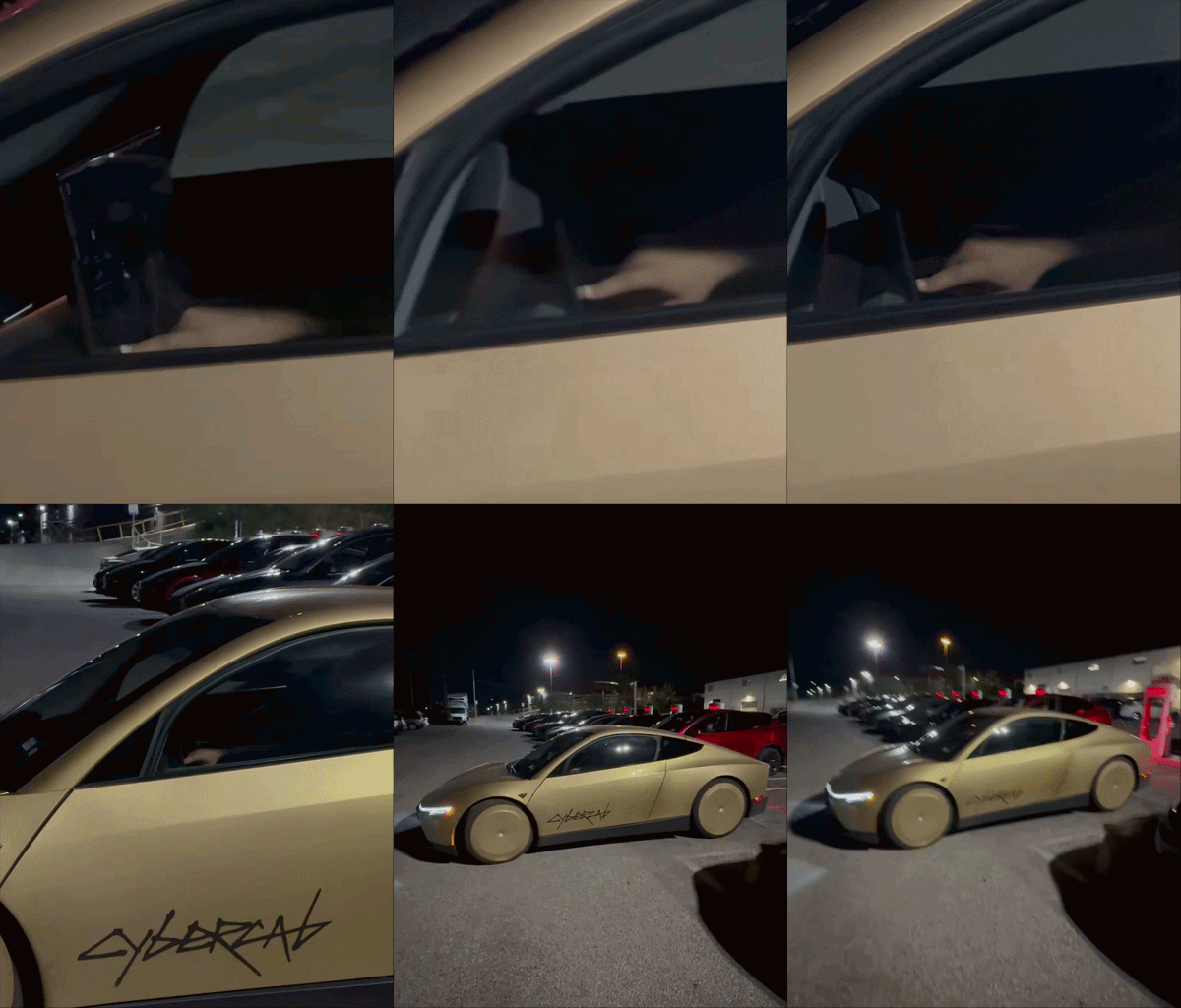
Therefore, Cybercab actually does not completely lack functions such as steering wheel and pedals, but Tesla has integrated these functions into software.
After all, without a human driver, the vehicle may still face failures, accidents or situations where autonomous driving cannot work temporarily, so a low-frequency manual operation mechanism needs to be reserved separately.
This is even more in line with the overall design philosophy of Cybercab: eliminate all long-term hardware that can be omitted, and only reserve a software entry for extremely rare manual operations.
Some foreign media also pointed out that this interface may also be used by law enforcement officers or emergency rescuers in the future, for example, when it is necessary to move a Cybercab that has lost autonomous driving capability away from the middle of the road.
From this perspective, Cybercab is indeed gradually getting on the right track... But troubles in the real world have also come one after another.
One Week on the Road: Cybercab Starts to "Face" the Real World
Tesla Cybercab has been officially put into operation for nearly a week. It is still very popular so far, and many netizens have shared their travel experiences.
Many people have found that the low cost that Tesla has repeatedly emphasized before has been initially reflected in real orders.
After Cybercab opened for hailing service, a passenger simultaneously checked the price of the same trip to a well-known bar in Austin, USA:
The price of Model Y Robotaxi is $12.10, while Cybercab only costs $7.77, about 35% cheaper.
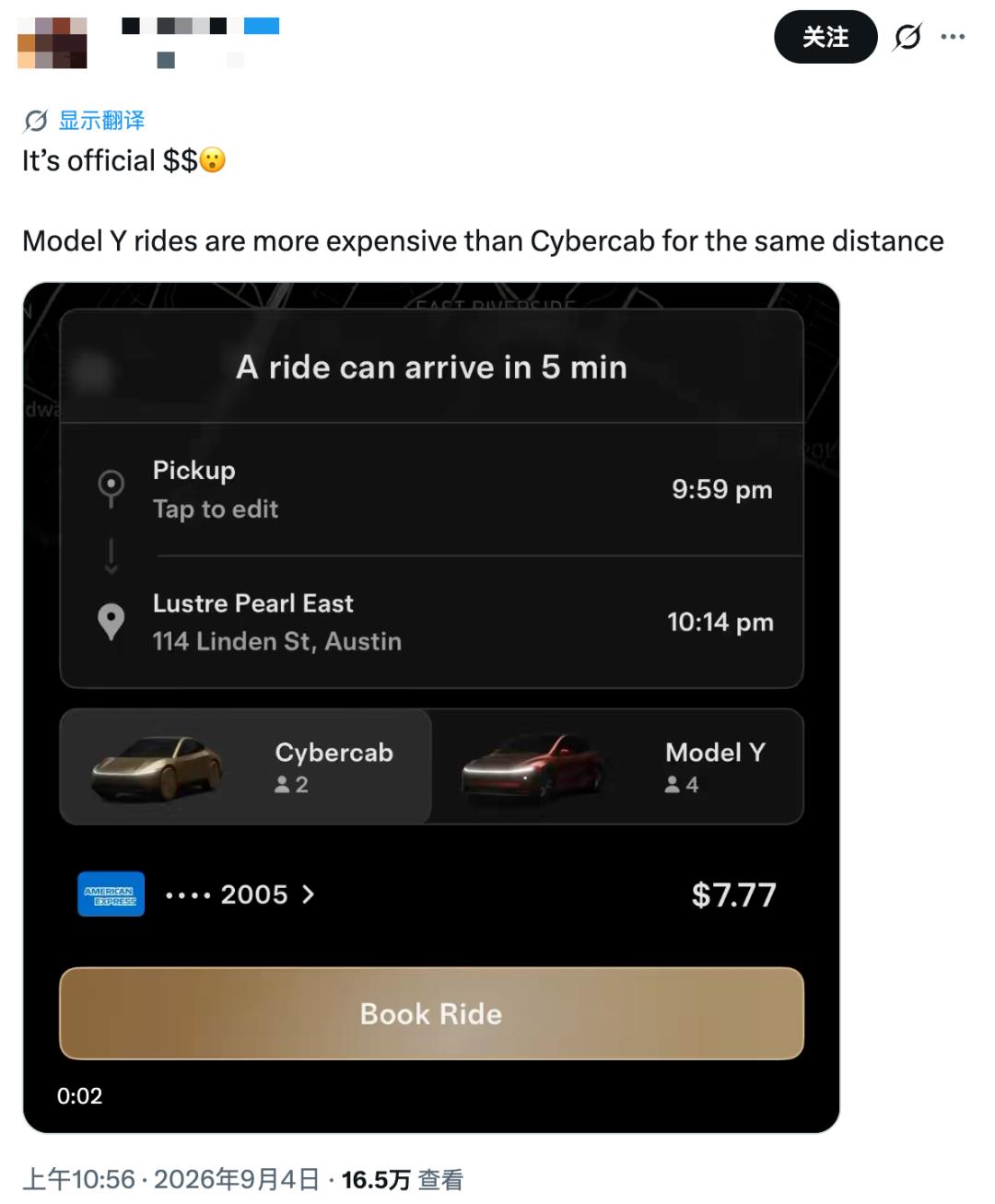
The actual riding experience has not caused major problems so far.
A reporter from the US automotive magazine MotorTrend hailed Cybercab 5 times in a row within about 24 hours.
He believes that the way to hail a Cybercab is very similar to that of the ride-hailing giants Uber and Lyft.
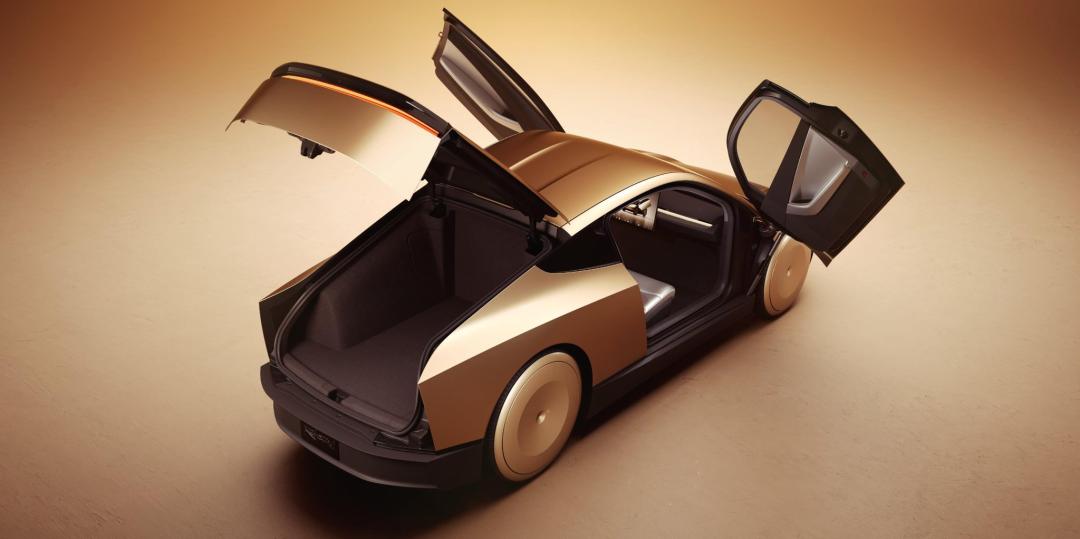
The gull-wing door can open automatically when the vehicle approaches, the driving process is quiet and smooth. During the trip, another vehicle suddenly cut in, and Cybercab stopped by itself to complete the avoidance.
However, after Cybercab continued to operate for a few days, the price seemed to fluctuate. Especially when demand rises on weekends, some passengers found that the dynamic pricing of Cybercab has increased significantly.
Spread user screenshots show that the estimated waiting time for Cybercab at the same time once approached 1 hour, and the quotation even exceeded that of Model Y Robotaxi and Uber.
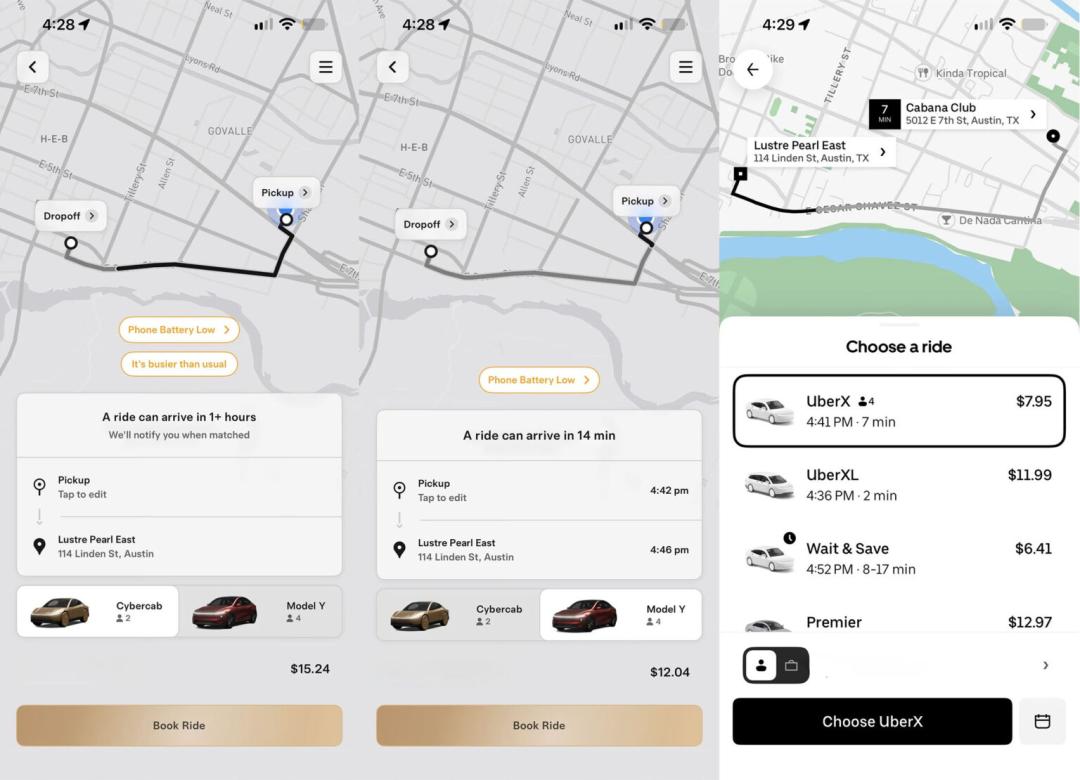
△
The five actual rides of the MotorTrend reporter also reflected price fluctuations. They traveled a total of 11.5 miles and spent 33.72 US dollars, with an average of $2.93 per mile (about 12.22 yuan per kilometer).
However, three of the trips were short distances of less than 2 miles, and the starting price significantly raised the average value; the longest 6.2-mile order cost 11.44 US dollars, about 1.85 US dollars per mile.
Silvio Brugada, head of Tesla's Cybercab vehicle software, also made it clear that dynamic pricing will be used to balance supply and demand at present. As the number of Cybercab increases, waiting time and average price will continue to fall.
That means the current scale of Cybercab cannot support stable low prices for the time being, and the fleet is still in the process of balancing costs.
At the same time, in the actual operation process, Tesla has also encountered many troubles.
For example, some passers-by deliberately "tease" the driverless car, deliberately running in front of Cybercab to block it.
After the car stops, he walks away; when Cybercab restarts, he rushes in front of the car again; after the vehicle brakes again, he repeats the action... In the end, Cybercab simply turned on the hazard lights and stopped on the road.
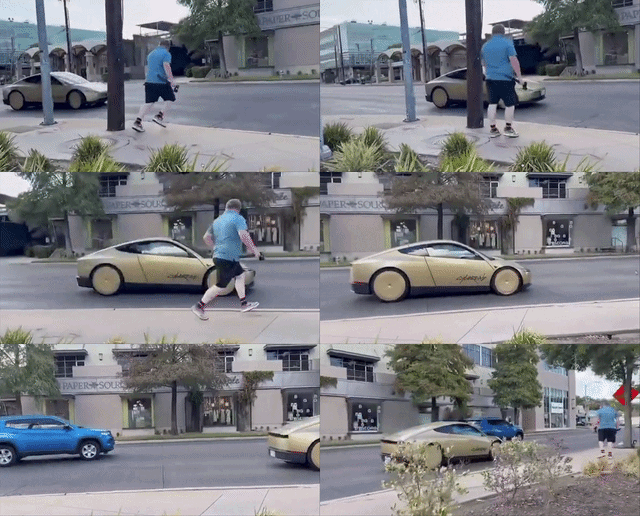
Judging from the vehicle's reaction, Cybercab recognized the pedestrian and stopped in time without collision. But this scene raised another kind of problem:
Ordinary drivers can honk, communicate, and handle according to the on-site situation when someone deliberately blocks the road, but driverless cars can only act in accordance with the established safety strategy.
This may cause road users to take advantage of these rules and increase the difficulty for driverless car operation. In fact, similar scenarios have previously troubled driverless fleets such as Waymo.
But for Tesla, bigger troubles are yet to come.
The day after Cybercab launched commercial operation, the National Highway Traffic Safety Administration (NHTSA) officially launched an investigation involving up to about 1,000 vehicles.
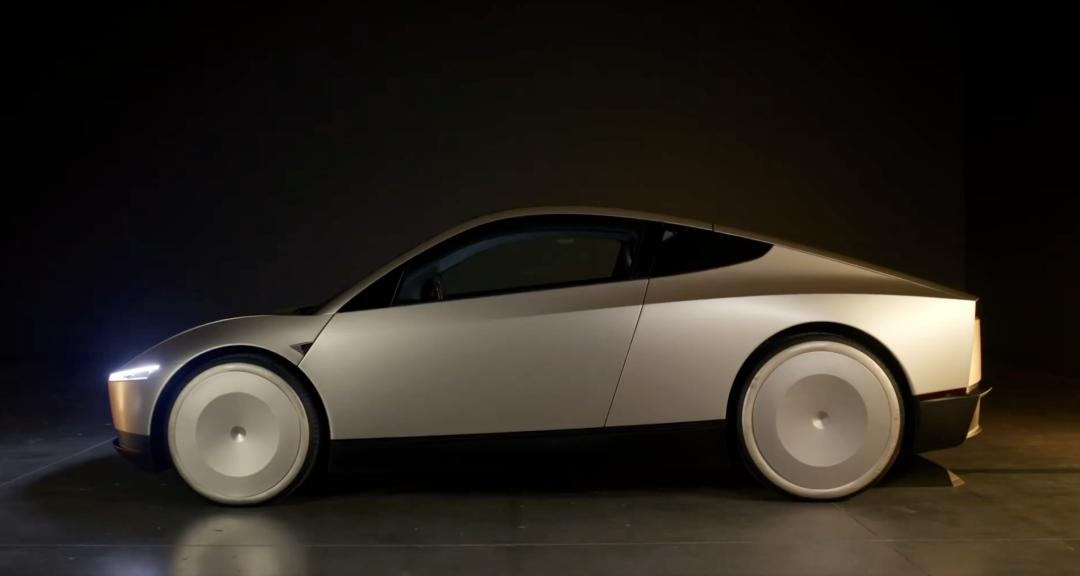
Here is a background note: the US automotive regulatory system allows automakers to self-certify, and automakers do not need to send each new car to NHTSA for approval to obtain marketing permission in advance.
But Cybercab is special. This car even cancels steering wheel, brake pedal, accelerator pedal and traditional rearview mirror, while many current US motor vehicle safety standards are still formulated around human-driven vehicles.
Although NHTSA has proposed to revise relevant regulations in June this year, including removing the requirement that autonomous vehicles must be equipped with manual brake pedals, the relevant adjustments have not been fully completed, so the current standards are still being implemented.
In fact, there is another way to obtain marketing permission, which is to apply for exemption.
According to the current system, NHTSA can approve each manufacturer to put a maximum of 2,500 vehicles without traditional manual control devices on the road every year. In July this year, Zoox, an autonomous driving company under Amazon, obtained limited commercial deployment permission through this path.
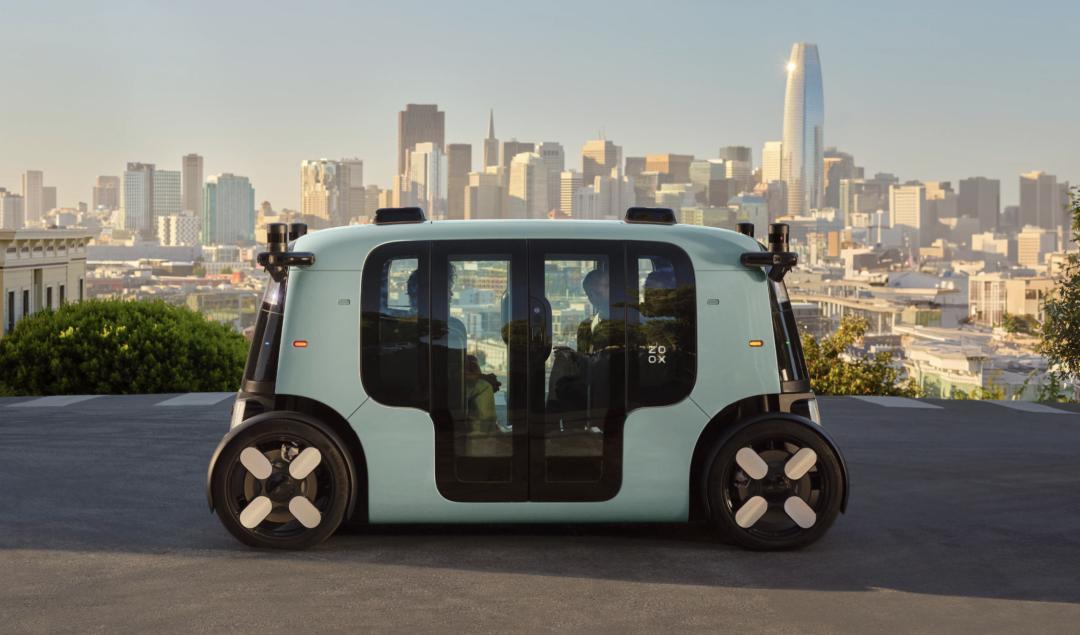
But Tesla did not apply for similar exemption for Cybercab before, but chose to directly carry out compliance self-certification.
Therefore, the core of NHTSA's current investigation is what technical data and judgment Tesla based on to determine that Cybercab meets relevant federal safety standards, or that some of these standards are not applicable to Cybercab.
It can only be said that Cybercab has not yet been judged to be non-compliant by the regulatory agency, but when Tesla wants to expand the fleet to hundreds, thousands or even larger scales in the future, regulatory issues obviously can no longer be avoided.
One More Thing
After many people expressed their praise for Cybercab, they also began to pick faults for it.
The most complained part is the seat.
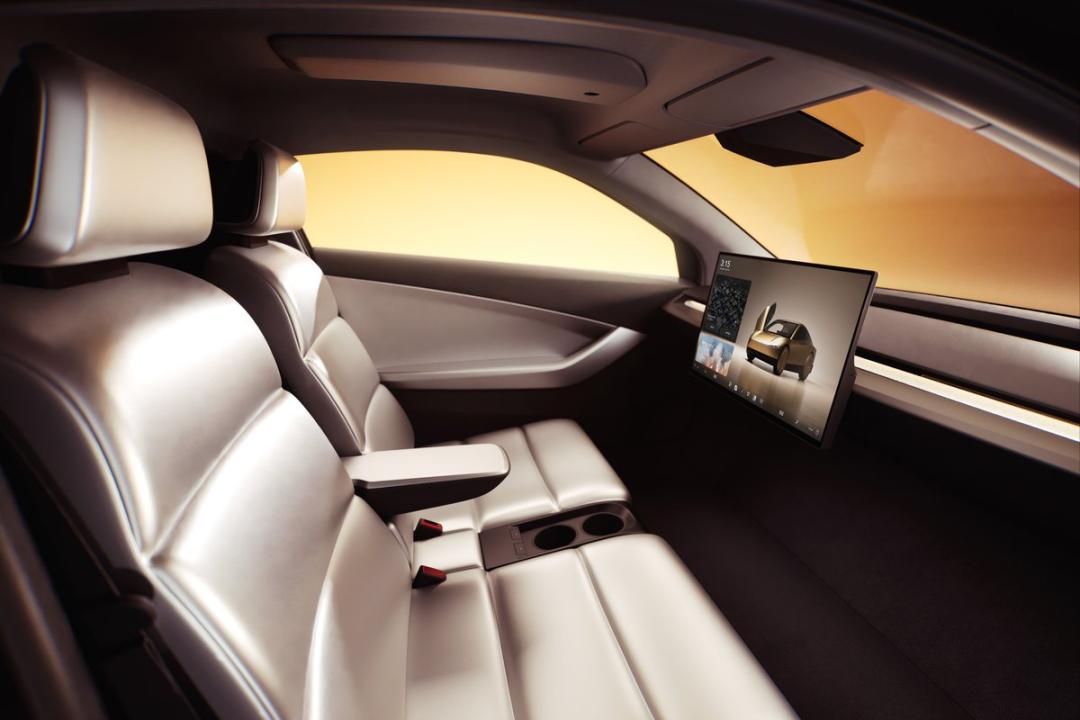
Many people said that the two seats of Cybercab look very thick, but the actual backrest is relatively flat, lacking lumbar support; on roads with poor pavement, the vehicle will also have obvious bumps.
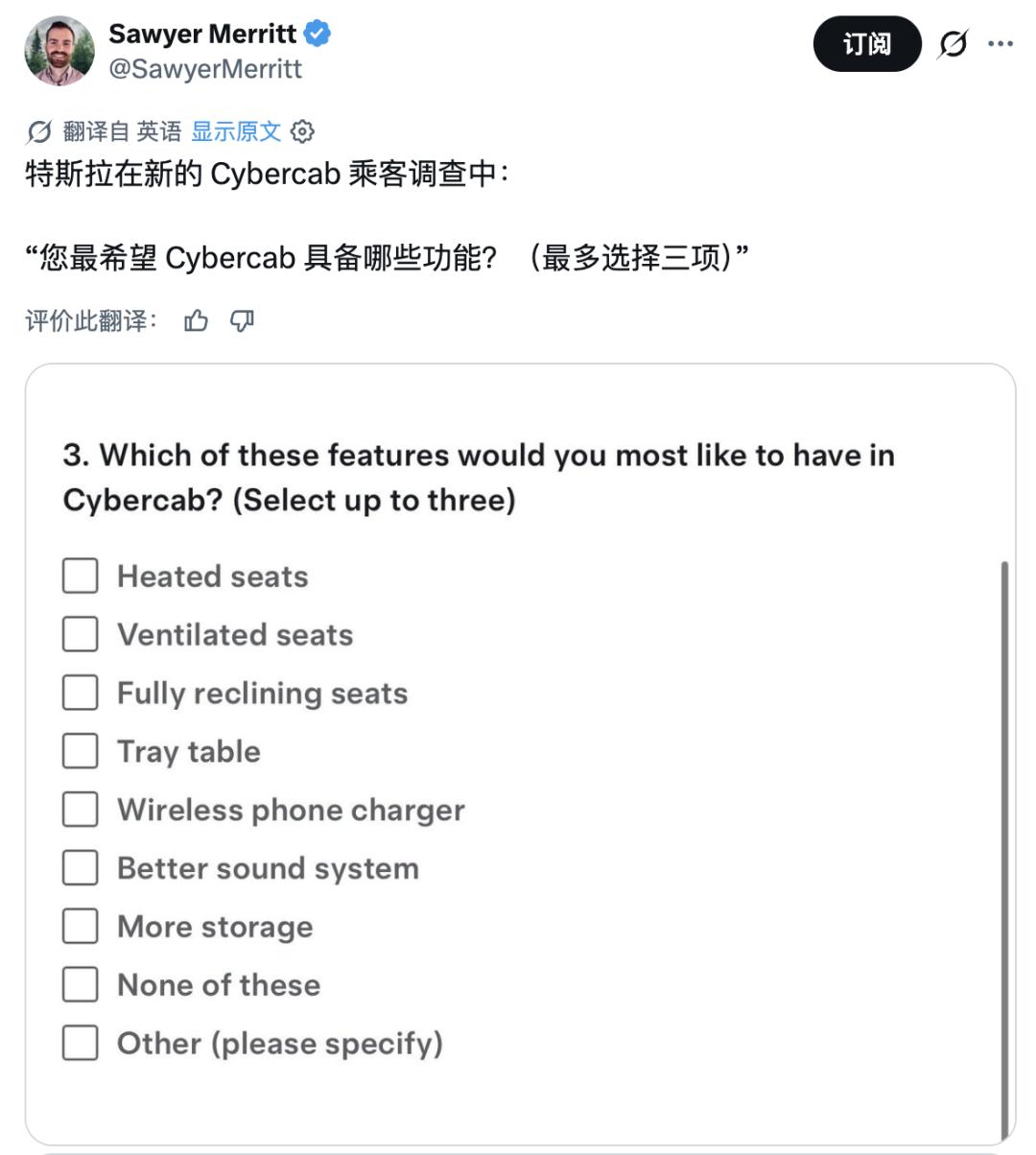
The good news is that Tesla has started collecting opinions and opened the first batch of passenger questionnaires to the public.
The questionnaire requires passengers to score items such as vehicle availability, waiting time, doors, screens, App, seat comfort, space, riding experience, cleanliness and trunk.
The questionnaire also sets up the question "What do you most want to add to the next version of Cybercab?", allowing up to three selections, and the alternative answers include:
Seat heating, seat ventilation, fully flat seats, folding small table, wireless mobile phone charging, better audio system, and more storage space.
This is interesting: in order to reduce costs as much as possible, Cybercab deliberately cut off a large number of traditional passenger car configurations, even including the second row of seats.
But now it seems that passenger experience comes first after all, and some features really cannot be reduced.
Then some people may ask, when can we see this golden Cybercab?
Don't worry, today Cybercab has started its Asian tour exhibition in Hong Kong as the first stop, and it is estimated that everyone will be able to see it soon~
This article is