Half of the IFA is filled with Chinese brands, but the world hasn't woken up to that yet.
On September 4, 2026, the world-famous global IFA Consumer Electronics Show was held in Berlin as scheduled, with the theme of AI Creates Everything.
As one of the invited media, Zhengjie Bureau entered the venue two days in advance, and one of the biggest impressions was:
I mistakenly thought I was back in China.
During the exhibition, foreign exhibitors and local on-duty staff couldn't help but sigh from time to time:
"There are too many Chinese people."
Why do they say that? Let's look at the official data first: this year's IFA has more than 1900 exhibiting brands from 49 countries. The number of Chinese enterprises has reached 932, a sharp increase of over 230 compared to 700 last year, accounting for nearly half of the total scale of the exhibition.
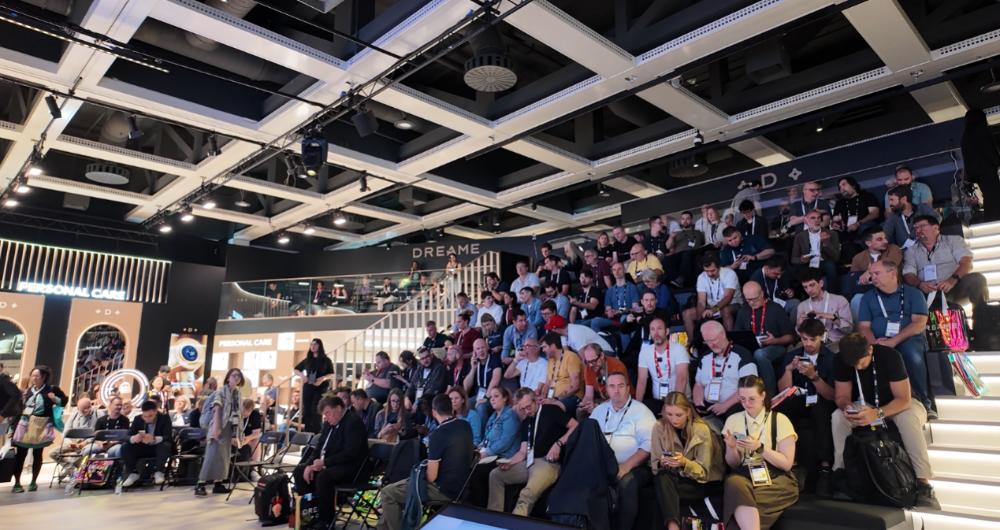
Dreame's press conference at IFA was fully packed with audiences (Photography: Zhengjie Bureau, the same below)
From the exhibition's naming rights sponsor (TCL), to the posters in the pavilions, to the main stage of each venue, almost all are Chinese brands.
But what really caught my attention was not this "quantity".
After wandering around the pavilions for four days, one question kept lingering in my mind:
When Chinese people "occupy" IFA, what exactly do we rely on to achieve that?
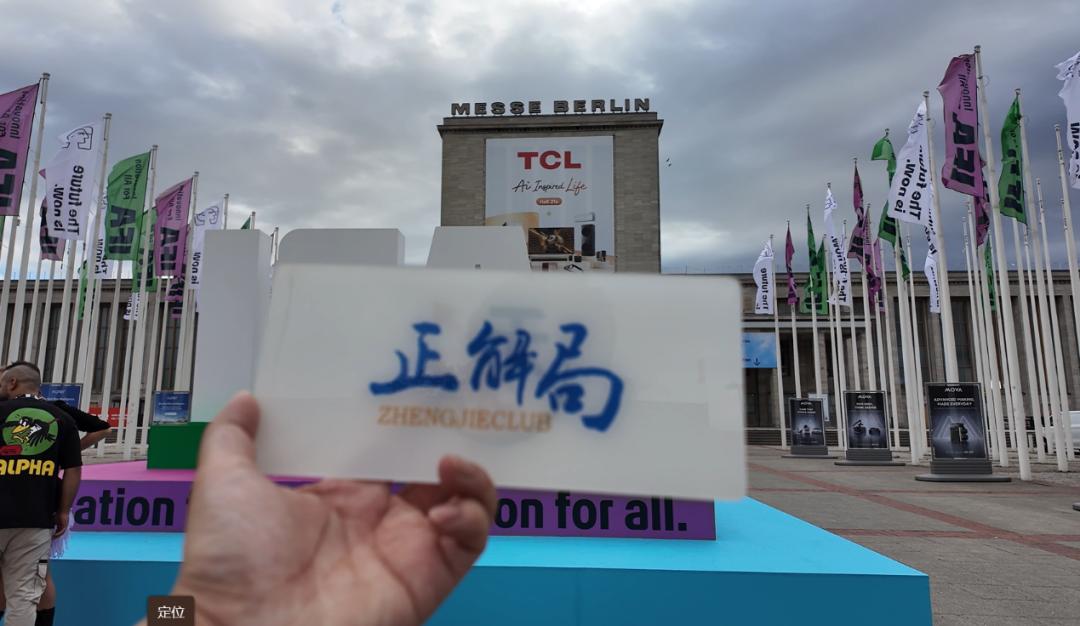
Zhengjie Bureau at the scene
Win by Quality, Chinese Home Appliances Show Obvious Generation Gap Advantage
At the IFA site, the perception that "the offensive and defensive positions have been reversed" hits you immediately.
In the past, when talking about high-end home appliances, many people would blurt out: Siemens, Sony, Samsung...
This year, as the face of European home appliance industry, Siemens still occupies the prime location in Hall 1.1.
But their products have almost nothing to do with the exhibition theme of "AI". They still have the exact same appearance as 10 years ago, with traditional functions, and their selling points are smaller size and higher energy efficiency.
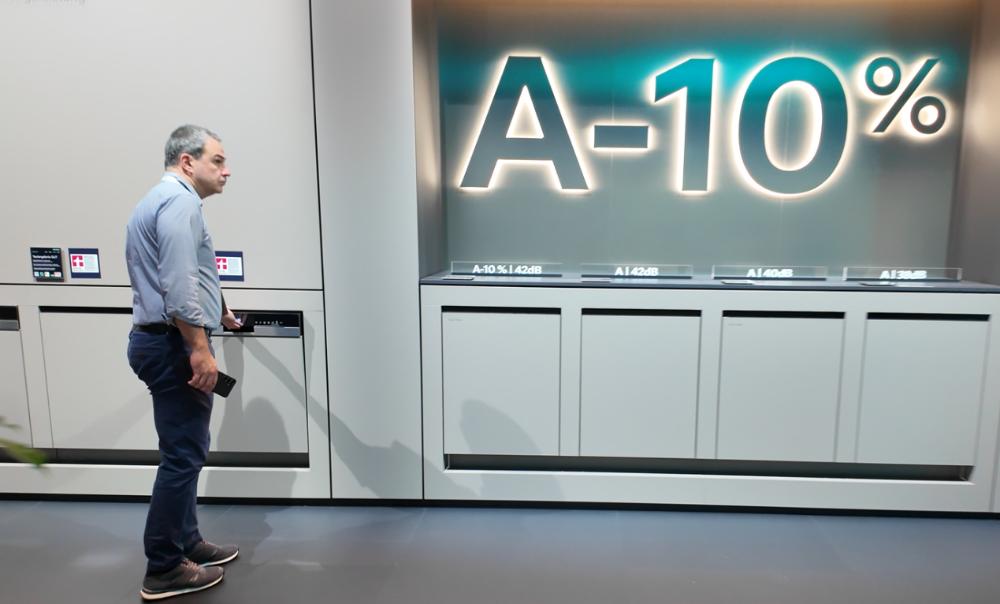
Siemens exhibition hall
However, when you walk out of the Siemens booth and step into the booths of Haier and Midea, you will doubt that you have stepped into the next era.
The products have a more futuristic tech look, with more novel functions and all equipped with AI. Take refrigerators as an example: Siemens claims that its hardware is upgraded to keep fresh food for a longer time, while Haier demonstrates that its AI Eye 2.0 can identify the type and quantity of food ingredients, and the refrigerator will tell you the best storage position for each item.
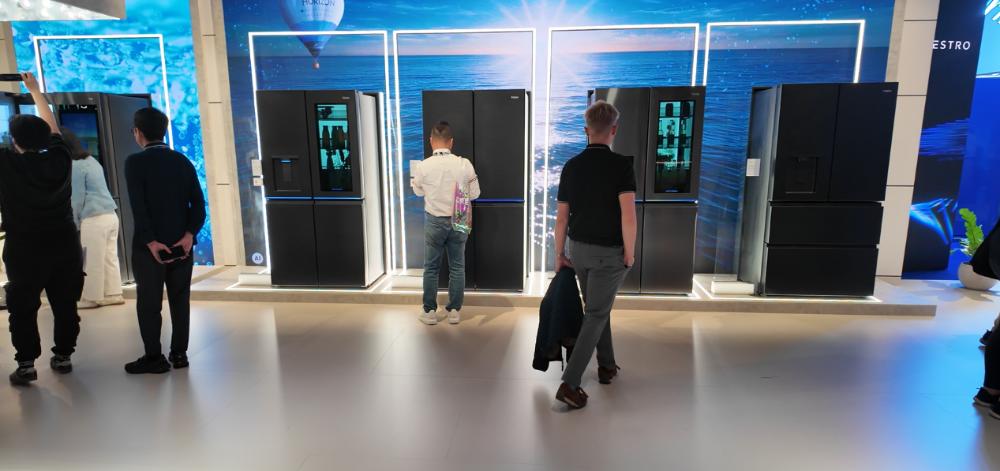
Haier exhibition hall
In addition, Haier directly launched a cross-category AI home robot that can link the whole process of washing, drying and storage. The most impressive part is its energy consumption: the NX11 washing machine is 75% more energy-efficient than the highest Class A energy efficiency standard of the EU, making it the most energy-efficient washing machine in the industry.
Midea, on the other hand, cooperated with Teka, a high-end European home appliance brand, to bring a full-house home solution. Executives from Microsoft and the president of the CSA Alliance all visited its booth.
In terms of on-site popularity, the number of media and visitors at Haier and Midea's booths far exceeds that of Siemens and Bosch, by a huge margin!
Speaking of air conditioners, Chinese air conditioners have sold very well in Europe this year, leaving almost no room for counterattack for European and American brands. At this year's IFA, we also saw many black technologies, such as AUX's AI air conditioner, which can sense the position of people in the room and automatically adjust the air blowing direction and air volume, which amazed many visitors.
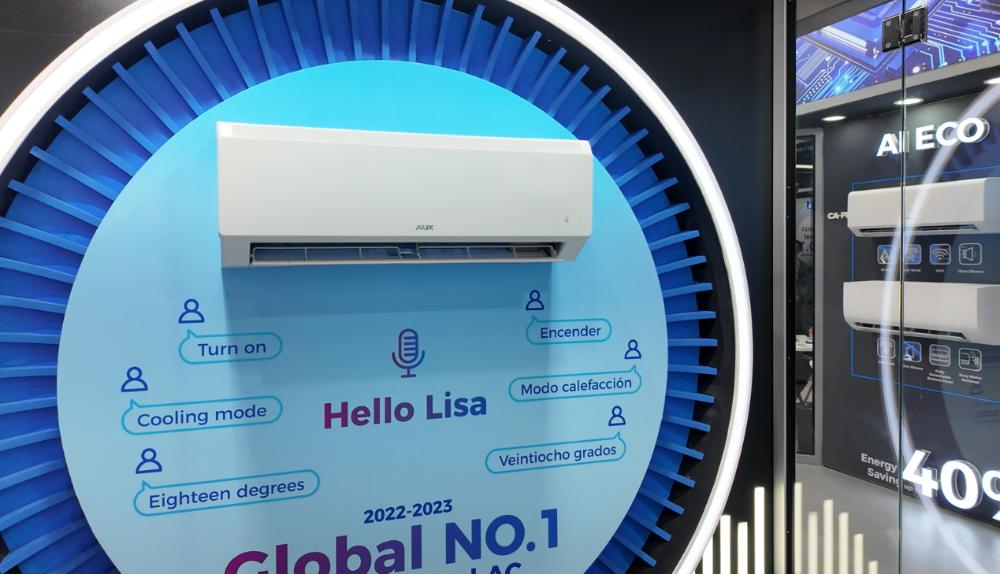
AUX AI Air Conditioner
In the past, Europeans defined "high-end" by brand power and material quality, but now Chinese people have redefined "high-end".
We achieve that relying on AI and stronger technological innovation capabilities.
The same is true for digital product categories. DJI globally launched the Osmo 360II for the first time, equipped with a 1-inch square HDR sensor and supporting 8K/60fps panoramic video, the booth was crowded with European and American visitors; Insta360 won four IFA Official Innovation Awards. IDC data shows that in the first quarter of 2026, its global market share in the panoramic camera market reached 71%, meaning 7 out of every 10 panoramic cameras sold worldwide are from Insta360.
Europeans and Americans love lawn mowers and automatic cleaning robots, so which brands have the largest foot traffic on site?
MOVA, Dreame, Roborock, Ecovacs, once again, all of them are Chinese enterprises.
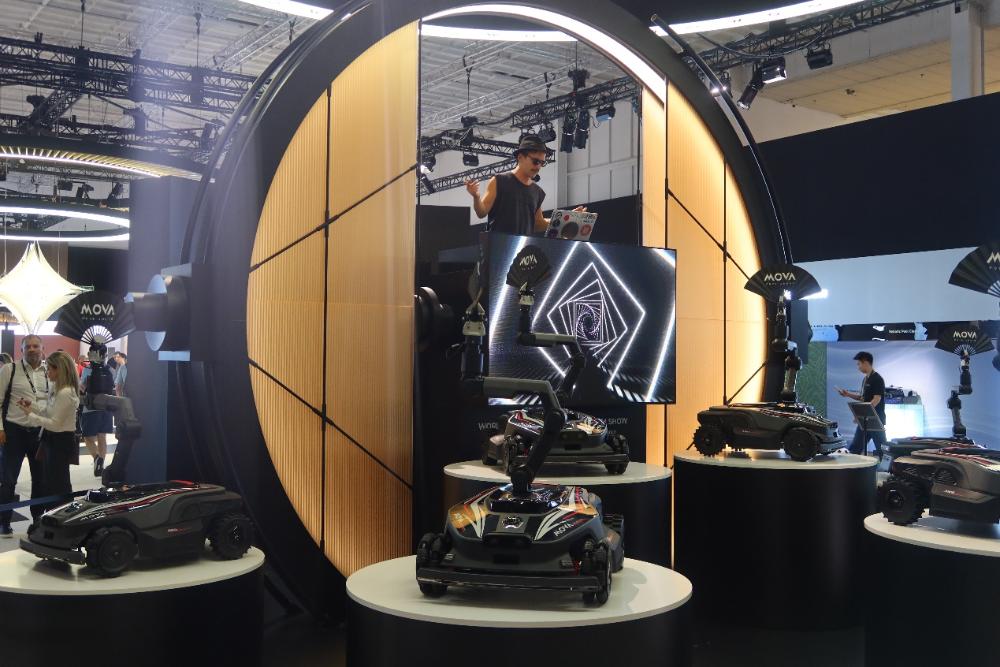
MOVA Lawn Mowing Robot
Even an office chair can make you feel the "dimensionality reduction strike".
Qingxian, a domestic ergonomic chair brand, brought the "Holographic Follow-up System", which integrates the engineering logic of electric drive, electronic control and power management into the chair, and the seat ventilation system can automatically start and stop according to the user standing up or sitting down.
This is something that European and American brands have never thought of.
Now when you open various reviews of ergonomic chairs, almost all content creators will express a point of view:
The Herman Miller, Steelcase products you bought for thousands or even tens of thousands of yuan in the past can be discarded now.
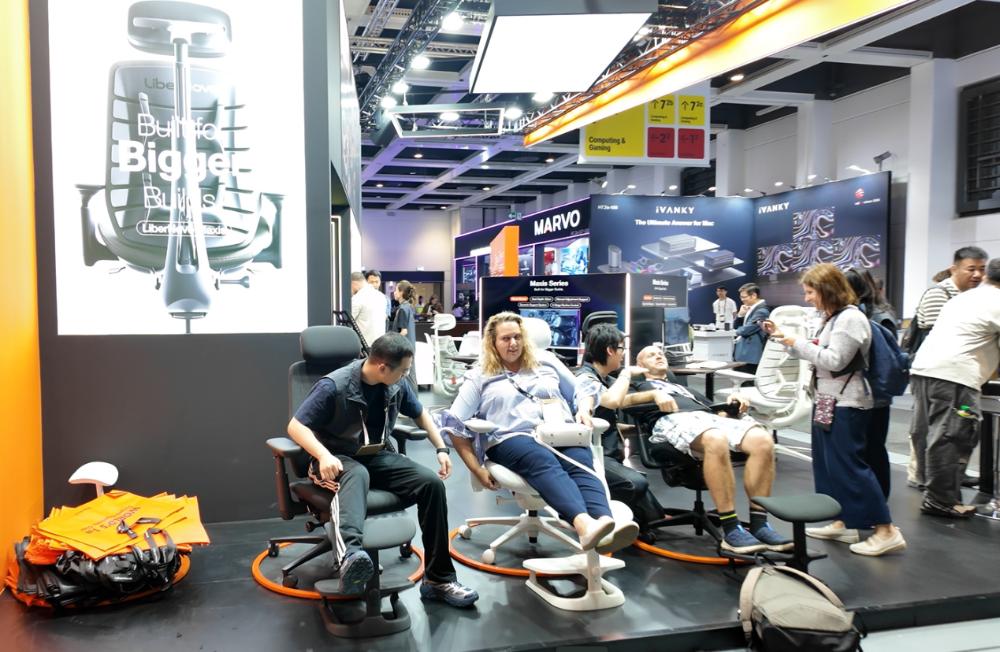
Qingxian Ergonomic Chair
The Upgrading of China's Industrial Chain
Chinese people's occupation of IFA does not rely on quantity or marketing, but on real product strength.
Moreover, these Chinese brands on the front stage are just the tip of the iceberg. What supports them to stand on the stage is a fully iterated supply chain system.
Zhongshan and Shenzhen have formed a two-hour industrial circle of "R&D + Manufacturing", supporting the large-scale production capacity of action cameras, lamps and small home appliances.
For the panoramic cameras seen on DJI and Insta360's booths, the lenses are from Zhongshan, the PCBs are from Shenzhen, the shell molds are made in Dongguan, and the final assembly is completed in Bao'an.
More than 7 out of every 10 action cameras sold in the world come from this industrial corridor.
Behind the home appliance industrial chain are Hefei and Qingdao.
1 out of every 4 refrigerators in the world is produced in Hefei and its surrounding areas; the output of washing machines also accounts for a quarter of the national total. All the core components required for a refrigerator can be gathered to fill a truck without leaving Hefei.
Qingdao is the "veteran powerhouse" of white goods. The three giants Haier, Hisense and Aucma lead the industry. Haier has won 17 consecutive global championships in the retail volume of large home appliance brands, and Hisense TV's shipment volume has always ranked among the top two in the world. The scale of Qingdao's smart home appliance industry has exceeded 300 billion yuan.
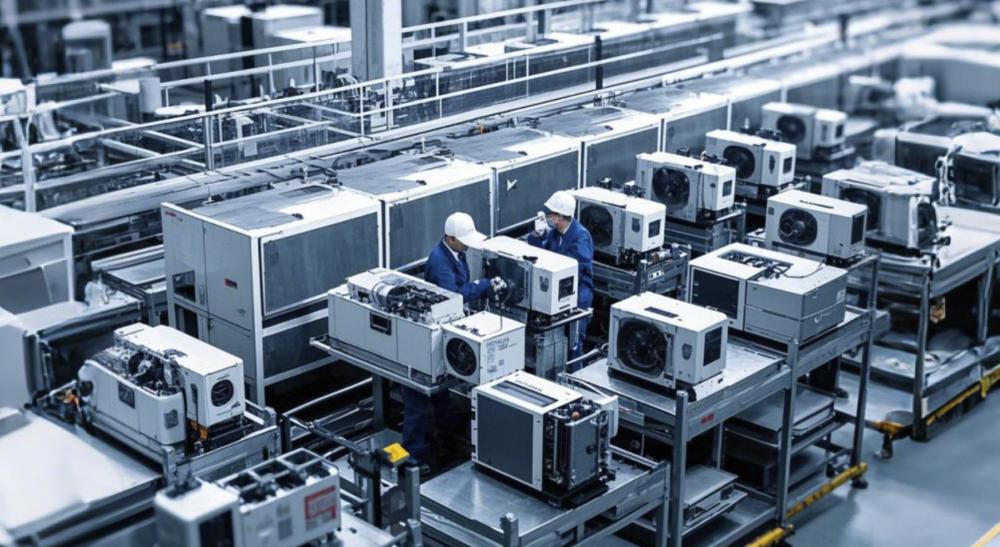
Suzhou, specifically Kunshan, controls a quarter of the world's notebook computer market.
1 out of every 3 notebook computers in the world rolls off the production line in Kunshan. Foundry giants such as Compal, Wistron and Quanta have deployed heavy forces in Kunshan and Suzhou Industrial Park, and all components of a notebook computer, including the casing, keyboard, battery and memory module, can be gathered within a half-hour drive.
What are the benefits of these industrial belts? The most critical one is efficiency.
In the past, an international top digital brand might take 18 months to launch a new product from design to mass production, because its supply chain is scattered in more than a dozen countries around the world, and any change in any link requires re-coordination.
But in China, it may only take two weeks.
This is why even if the United States and Europe continue to promote "supply chain de-Sinification", the global consumer electronics industry still cannot do without China.
Because China has this flexible manufacturing capability of "multi-variety, small-batch, rapid iteration". Even though Vietnam and India are undertaking some complete machine assembly, a large number of PCBs, batteries, screens and modules they need still have to be imported from China.
Now the electronic factories in Southeast Asia are more like the "overseas workshops" of China's supply chain. This systematic advantage cannot be simply summarized by "low cost".
The Battle for Technological Cognition
During the days at IFA, I often had a trance feeling.
Fifteen years ago, Chinese enterprises came to Berlin to "see the world". Ten years ago, Chinese enterprises came to Berlin to "receive orders". But today, Chinese enterprises come to Berlin to "show their strength".
Many foreign enterprises' booths have very few visitors left.
TCL directly named the exhibition hall, Hisense took home multiple product awards, and Dreame booked three pavilions at once -- this kind of grand presence is rarely seen among local European brands.
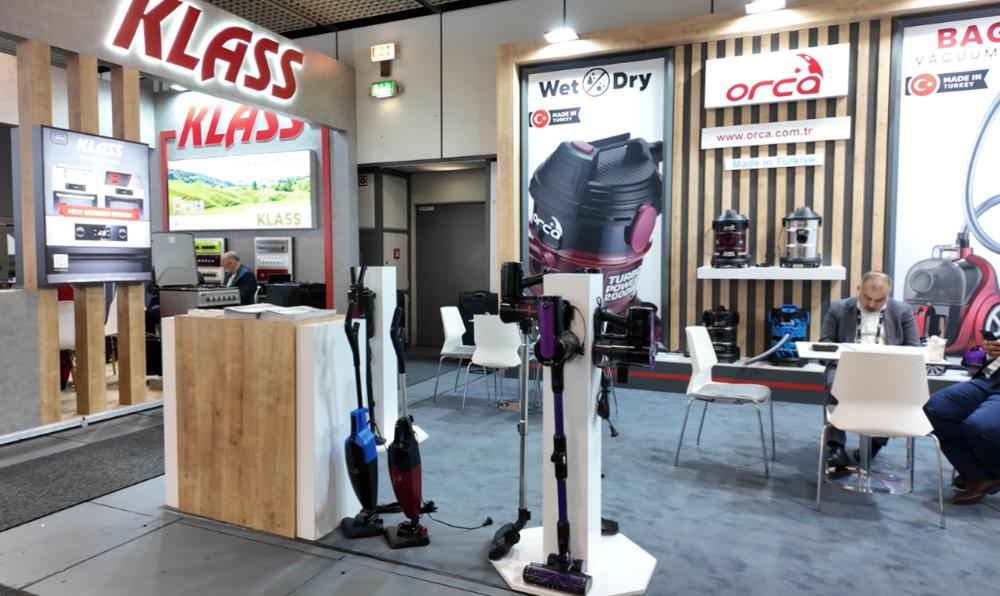
Some foreign brand booths have very few visitors
Take the currently most popular RGB-Mini LED display as an example, which is the most cutting-edge track in the display technology field.
In this track, Sony's booth only has one electronic billboard with no exhibits open to the public; Samsung's booth is extremely small.
On the contrary, Hisense launched the world's first mass-produced RGB-Mini LED TV, winning multiple IFA product awards in a row; TCL directly named a super-large exhibition hall, and its X11L flagship TV equipped with the world's first SQD-Mini LED display technology achieves 100% BT.2020 global high color gamut.
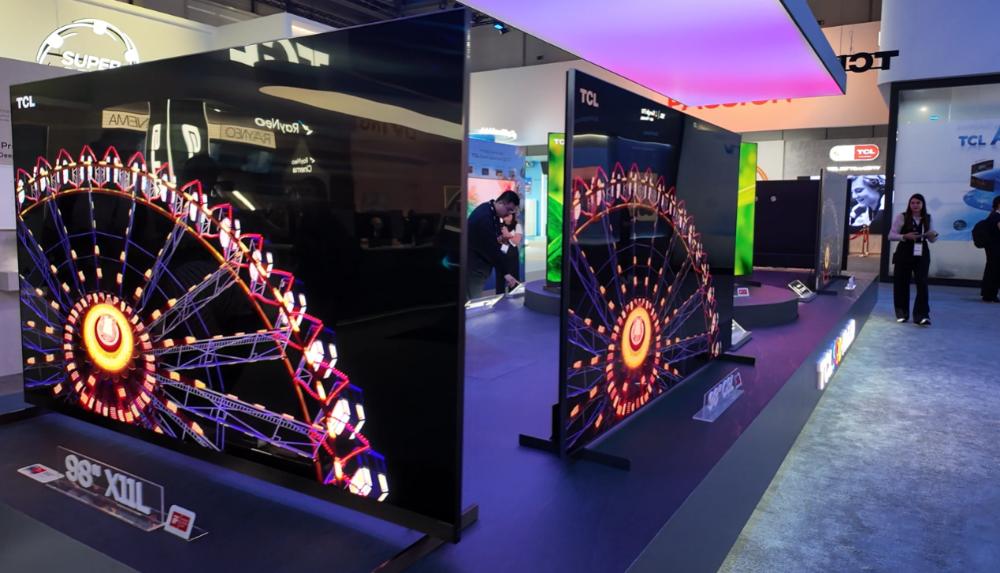
TCL X11L
Thunderbird Innovation brought the world's first Dolby Vision certified AR glasses with a super large 59° field of view. In the first half of 2026, Thunderbird's AR glasses ranked first in global market share.
Sony tried to develop this product but failed, and Apple attempted it very early, but its commercialization performance was a total failure.
In the past, when people mentioned high-end home appliances, many would blurt out Siemens, Sony and Samsung. But today, foreign visitors line up in front of Chinese brand booths, and the light in their eyes is completely different from before.
There are