Customizing skins, going live, raising desktop pets, is AI-driven office work beginning to compete fiercely for emotional value?
With the official launch of Doubao Work at the end of August, the three-player pattern of China's AI office track has been fully established. Tencent WorkBuddy, Alibaba Qianwen Office and ByteDance Doubao Work have all been fully deployed, kicking off full-scale head-on competition around the desktop productivity entry point.
As AI office products are rapidly moving towards mass adoption, the user base has expanded from tech enthusiasts to a broader group of office workers. The simple competition over functional features has gradually entered a homogenization stage, and the dimensions of competition have accordingly extended outward.
Apart from core office capabilities, soft indicators such as user experience and emotional value have become new battlefields. When it comes to specific product and operation practices, the most intuitive manifestation is that a trend of entertainment and gamification is emerging across the track — players are no longer only focusing on "making AI work more efficiently", but also starting to figure out "how to make users enjoy using the products more".
From customized skins and IP co-branding to live co-creation and virtual desktop pets, the entertainment gameplay accumulated by the internet industry over years is being massively transplanted into AI office products. The three players are competing for "emotional value" almost at the same time, but they have chosen completely different entry paths.
Tencent directly reuses the proven skin operation and IP co-branding methodologies developed in the QQ and gaming era in the office scenario; Qianwen Office maintains a restrained and lightweight design on the product side, and instead uses playful prank gameplay on the marketing side to break through the circle; Doubao Work continues Feishu's style, using scenario-based live streams to guide users to unlock more practical features.
It seems that all of them are just "adding some fun" to office tools, but behind this are the completely different resource endowments and growth logics of each player.
01
Bringing the Skin Economy and IP Co-branding
to the AI Workstation
The first to put entertainment-oriented operations on the table is WorkBuddy. Recently, users have noticed that WorkBuddy has launched a batch of official themes. People familiar with Tencent can tell at a glance that these are all mature gameplay that have been used in QQ and the gaming industry for more than a decade. In the past, they were Qzone backgrounds and game skins, and now they are "changing a color to keep working".
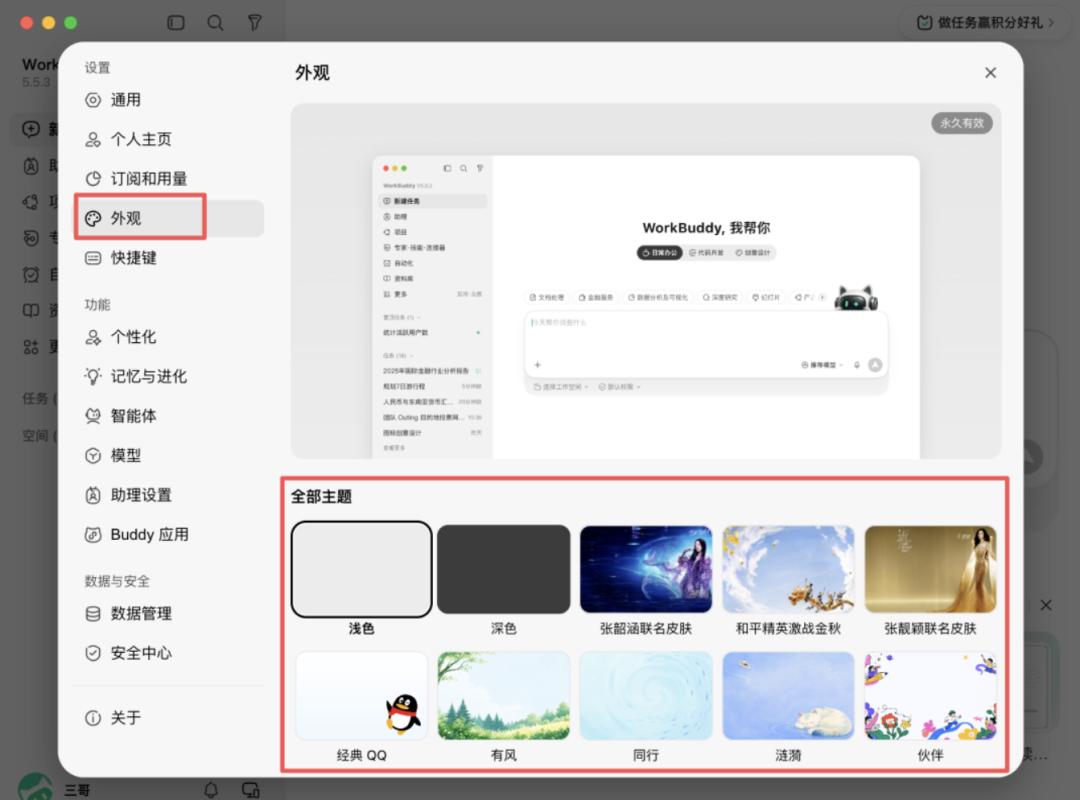
The origin of this wave of updates actually comes from spontaneous user demands. Back when Codex desktop Agent was popular, many tutorials and tools for modifying interfaces and changing backgrounds appeared in tech communities. Users were willing to spend time tweaking the settings just to make the workstation they stare at for eight hours a day more to their liking. After WorkBuddy was launched, similar third-party beautification tools also emerged one after another, proving that this is not a niche hobby for geeks.
Tencent did not ignore this folk gameplay, but instead incorporated it directly into official features. In version 5.5.3, the appearance system was officially launched, with the first 10 themes accurately covering different groups: co-branded collections with stars like Jane Zhang and Angela Zhang target pan-entertainment users, the Game for Peace co-branded version targets game players, and the classic QQ image plays the nostalgia card. The operation style is also the familiar Tencent style: co-branded themes are released for a limited time, some co-branded versions are linked to product points, users can get rewards for using them, and gamified incentives guide users to try new features.
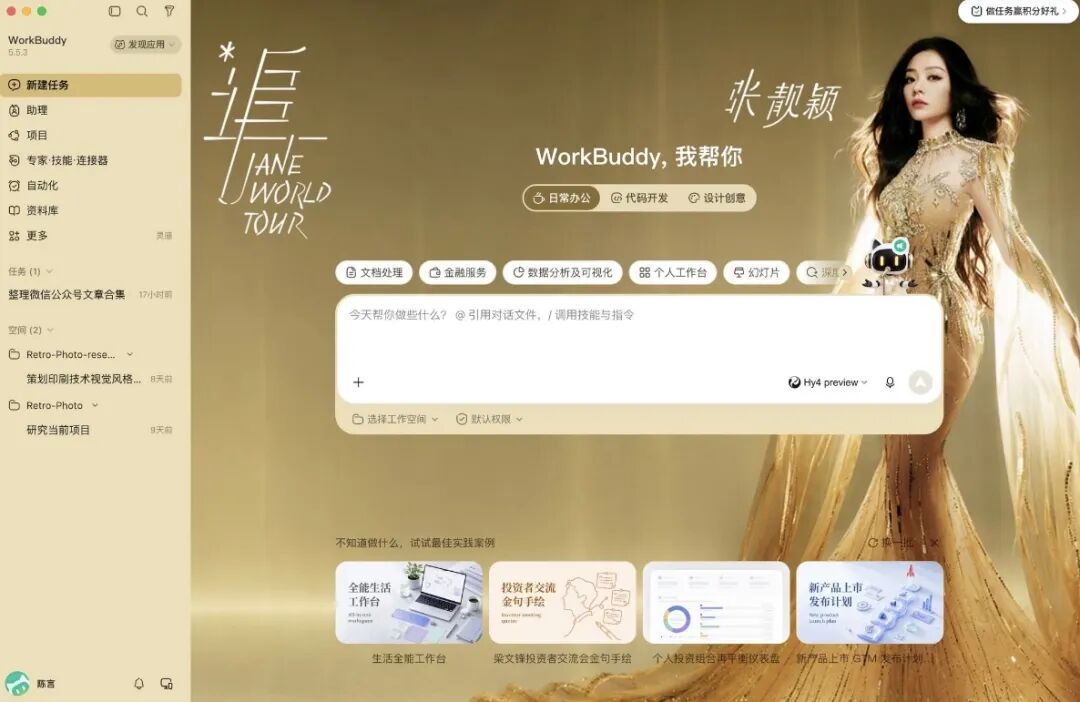
Changing skins is essentially changing the visual atmosphere of the workstation, but WorkBuddy obviously has bigger plans. In the skill store, a series of content collaborations with QQ Music, Kugou Music and other platforms have been launched one after another. Whether it is customizing playlists based on listening history or recommending BGM according to self-study scenarios, it adds a little more atmosphere and a sense of companionship to the focused time of office workers and students from the auditory level.
The collaboration with the podcast platform Xiaoyuzhou follows the same logic, targeting fragmented office intervals such as commuting and lunch breaks. The AI will recommend podcast programs based on topics users follow, so users do not need to pick carefully, and can listen to valuable content during the gaps when they are on the way to work or taking a break from work.
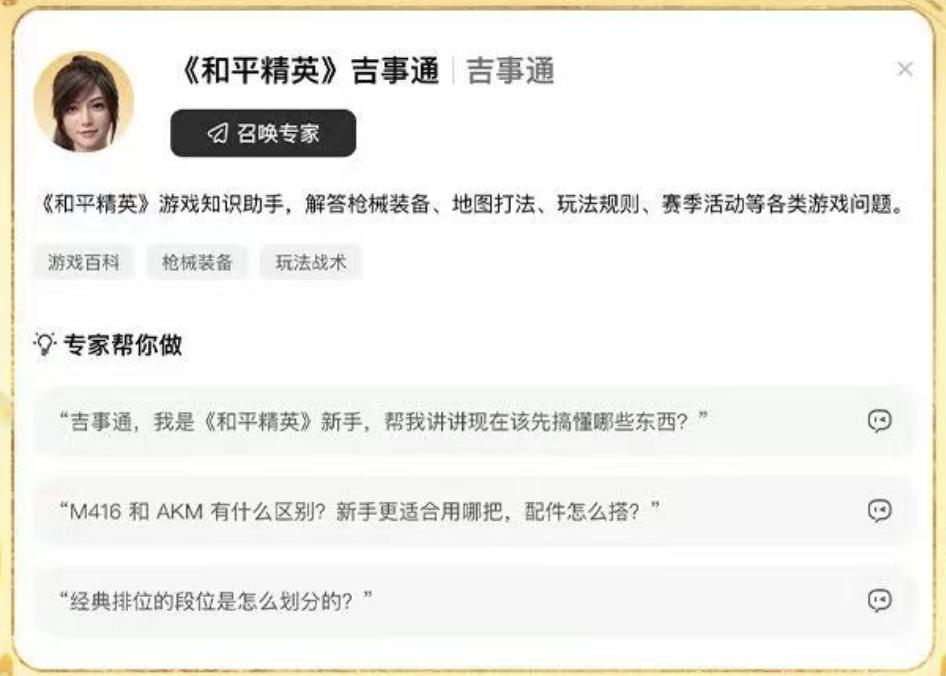
Even the Game for Peace collaboration, which seems to be the most visually oriented, is far more than just changing a background image, but a complete IP collaboration system covering skins, virtual avatars and functional services.
On the visual level, the two sides have launched the exclusive "Golden Autumn Showdown" theme skin, directly bringing the dragon-riding scene from the game into the background of the WorkBuddy interface; at the same time, a customized "Game for Peace Meow" Buddy cat costume is launched, replacing the original desktop virtual image with the game's same-style helmet and tactical suit, which users can unlock by completing exclusive tasks in the growth plan.
What is more noteworthy is the deep collaboration at the functional level: the first exclusive AI expert for Game for Peace, "Ji Shi Tong", has been launched in WorkBuddy, which is equivalent to embedding the game knowledge assistant directly into the office desktop.
Overall, this is more like Tencent moving its years of accumulated content operation ideas into the AI office scenario as a complete set. The investment is not heavy, but it is a proven mature gameplay for improving product opening frequency, usage duration and user favorability.
02
From Cute Interaction to Workplace Talk Show
Injecting Emotional Value into Products
Different from Tencent's operation idea from visual skins to content collaborations, Qianwen Office and Doubao Work are both injecting emotional value into their products, but their paths are very different. Some quietly add details to the product, some boldly play tricks on marketing, and the essence is to choose the most suitable gameplay for themselves based on their own positioning.
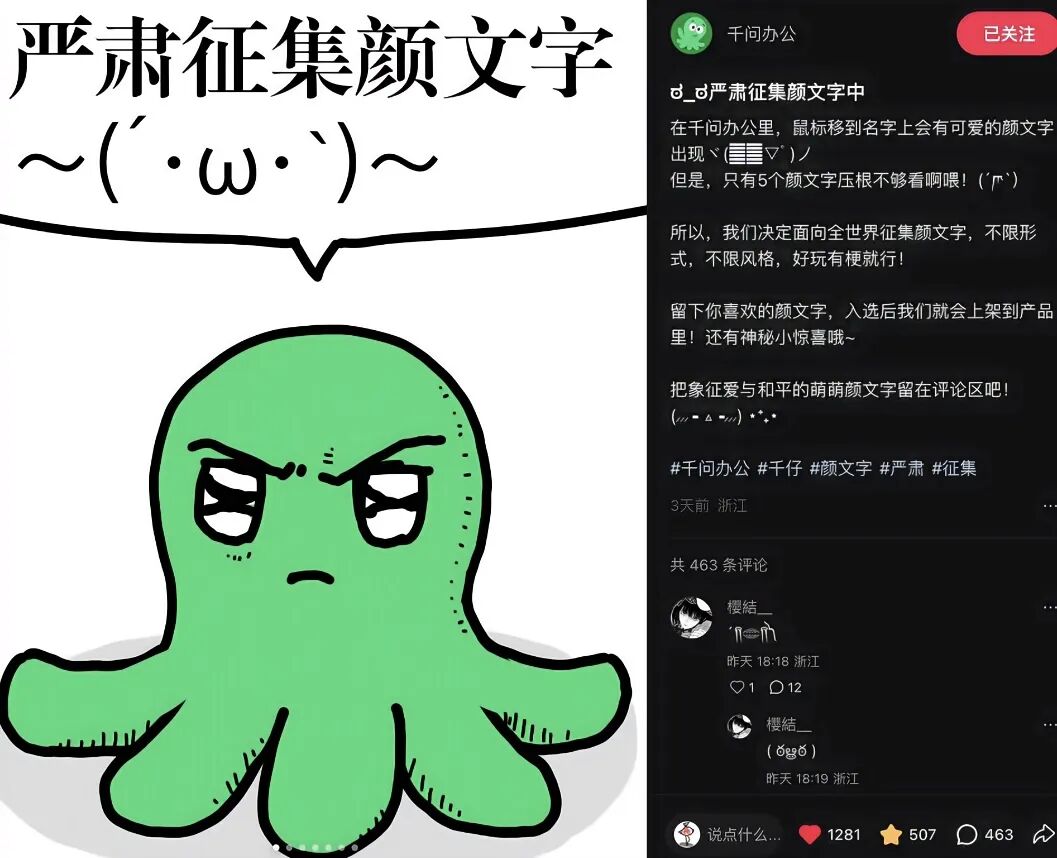
Qianwen Office follows a restrained, lightweight personalization route. It does not start with the entire visual system, but hides the sense of relaxation quietly in interaction details: when the mouse hovers over the name, random kaomoji will pop up to convey emotions with soft and cute symbols; the client icon customization function is launched, supporting switching different styles of the octopus IP, giving users the initiative of personalization. The official also launched a kaomoji collection campaign, inviting users to jointly build the brand personality in a UGC way.
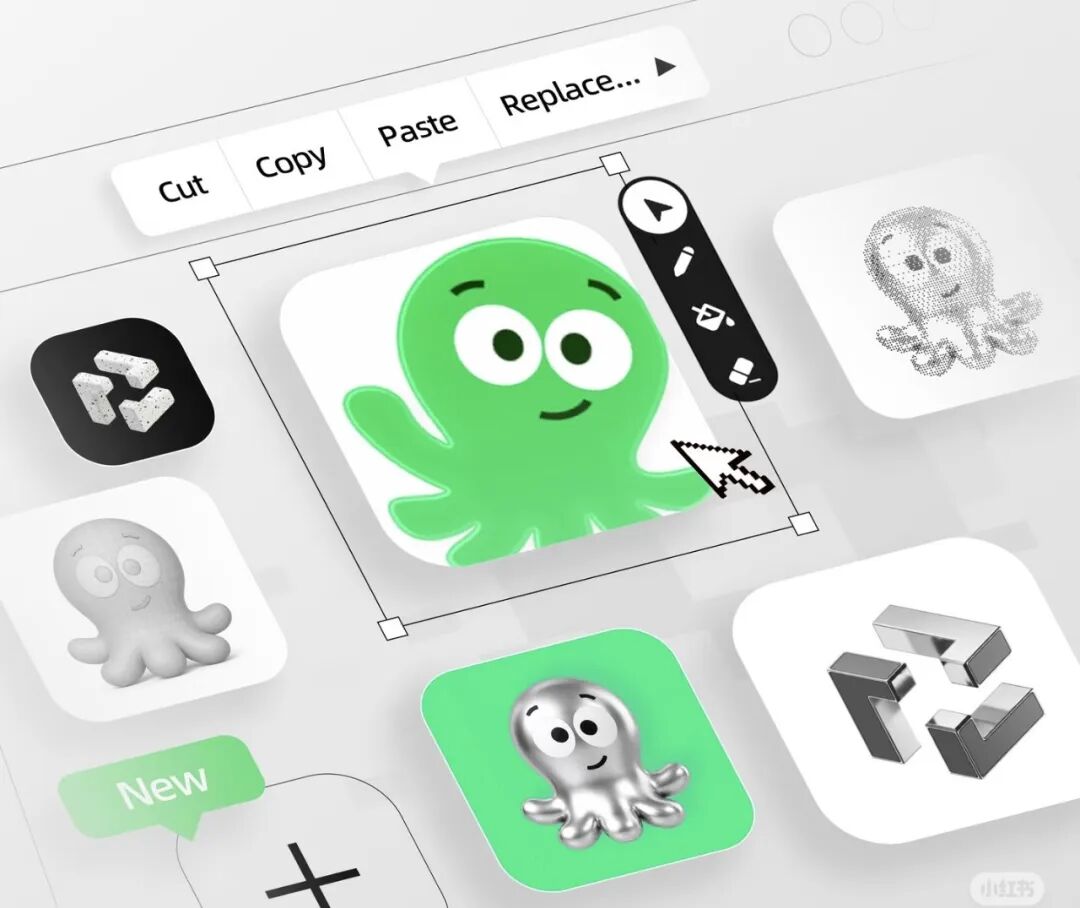
These designs are very lightweight, and they will only appear when actively triggered, never interrupting the work rhythm. The reason is very simple: the core customers of Qianwen Office are enterprises, and the product tone tends to be professional and rigorous. Excessive visualization and fun-oriented design will instead consume the trust of B-end customers. Using small details to supplement emotional value without breaking the professional positioning is a more secure choice.
Doubao Work chose to make a breakthrough in marketing, using scenario-based, entertaining live streams to guide users to unlock new gameplay.
In the September school season, Doubao Work teamed up with Feishu to launch the "Everyone Can Be a Master with Doubao" AI Live Week, which lasted for four consecutive days, covering four themes: PPT production, data analysis, skill development, and web application building. On one hand, product managers and professional designers came to the live stream to break down practical operations, and on the other hand, cross-border guests such as Zhao Xiaohui were invited to the scene, directly turning the technical live stream into a workplace talk show.
As soon as Zhao Xiaohui appeared on the scene, she accurately poked at the daily troubles of office workers. From the self-deprecation of "I have quite a lot of connections with PPT, but they are mostly frustrations, no romance at all" to the soul-searching question of "we already have Word, why do we need to make another PPT", every sentence speaks the true voice of office workers.
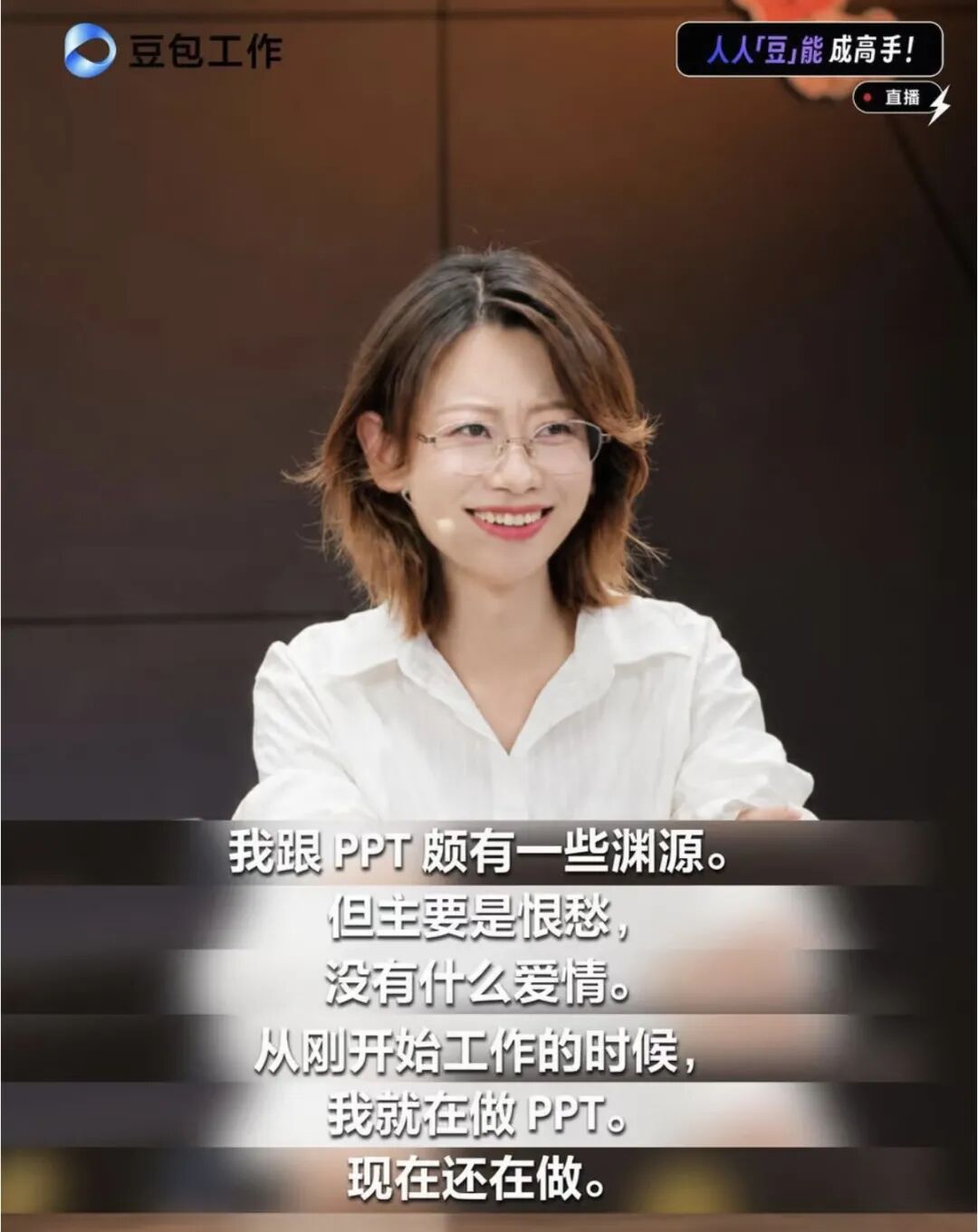
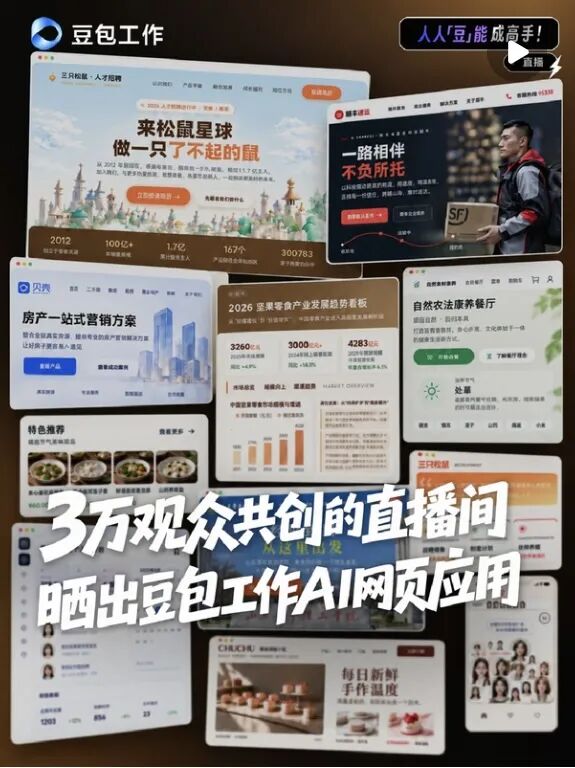
The live stream is not just a one-way presentation of "the host speaks and the audience watches". The live room opened an interactive channel for shared Feishu documents. After the audience followed the steps to operate synchronously, they could post the web works they generated in the comment area, and the host opened them on the spot, showing the web pages that everyone reproduced with the same Skill in real time in the live room, turning the one-way function explanation into a co-creation event for all users to participate in.
This gameplay is not unprecedented. At the beginning of this year, Feishu's "Shrimp Playing Conference" has verified the feasibility of entertainment-oriented marketing — at that time, the topic of "raising lobsters" became popular from the tech circle to the general public. Feishu subsequently held a series of live streams, with the lineup of "talk show performers + tech KOLs + product managers". Li Dan and Hu Lan were responsible for creating memes and a sense of contrast, using daily expressions to break down Agent tuning into gameplay that ordinary people can understand. The entire live stream had both high communication reach and professionalism, becoming a model for office AI marketing.
For Doubao Work, following this gameplay fits its own genes perfectly. Doubao's large model first achieved national-level breakout success relying on Douyin's UGC secondary creation and topic communication, and live streams are naturally suitable for short video secondary editing: wonderful operation clips and guests' meme moments can all be cut into short videos to spread on Douyin, continuing to leverage UGC to drive traffic.
More importantly, this idea of "putting entertainment on the communication side and keeping professionalism in the product" can just balance the entertainment attribute of Doubao's main brand and the professional positioning of Doubao Work. It attracts new users with a relaxed form and retains users with solid functions, without worrying about weakening users' perception of the productivity tool.
03
From Profession Blind Boxes to Virtual Desktop Pets
Turning AI Office into Nurturing and Companion Experience
If skins, kaomoji and live streams are all adding extra points to the experience, then the nurturing and companion gameplay is building deeper user stickiness — turning cold tools into virtual characters that can be collected, interacted with, and "work" with users.
There are currently two types of such gameplay: one is the collection album gameplay, which turns Agents into collectible and nurtureable character cards; the other is desktop pets, which materializes Agents into physical images that can walk on the desktop and interact with users. The underlying logic of the two is the same: using the sense of companionship and the desire to collect, to change the relationship between users and products from "only open when you need to use it" to "want to open it even when you are free".
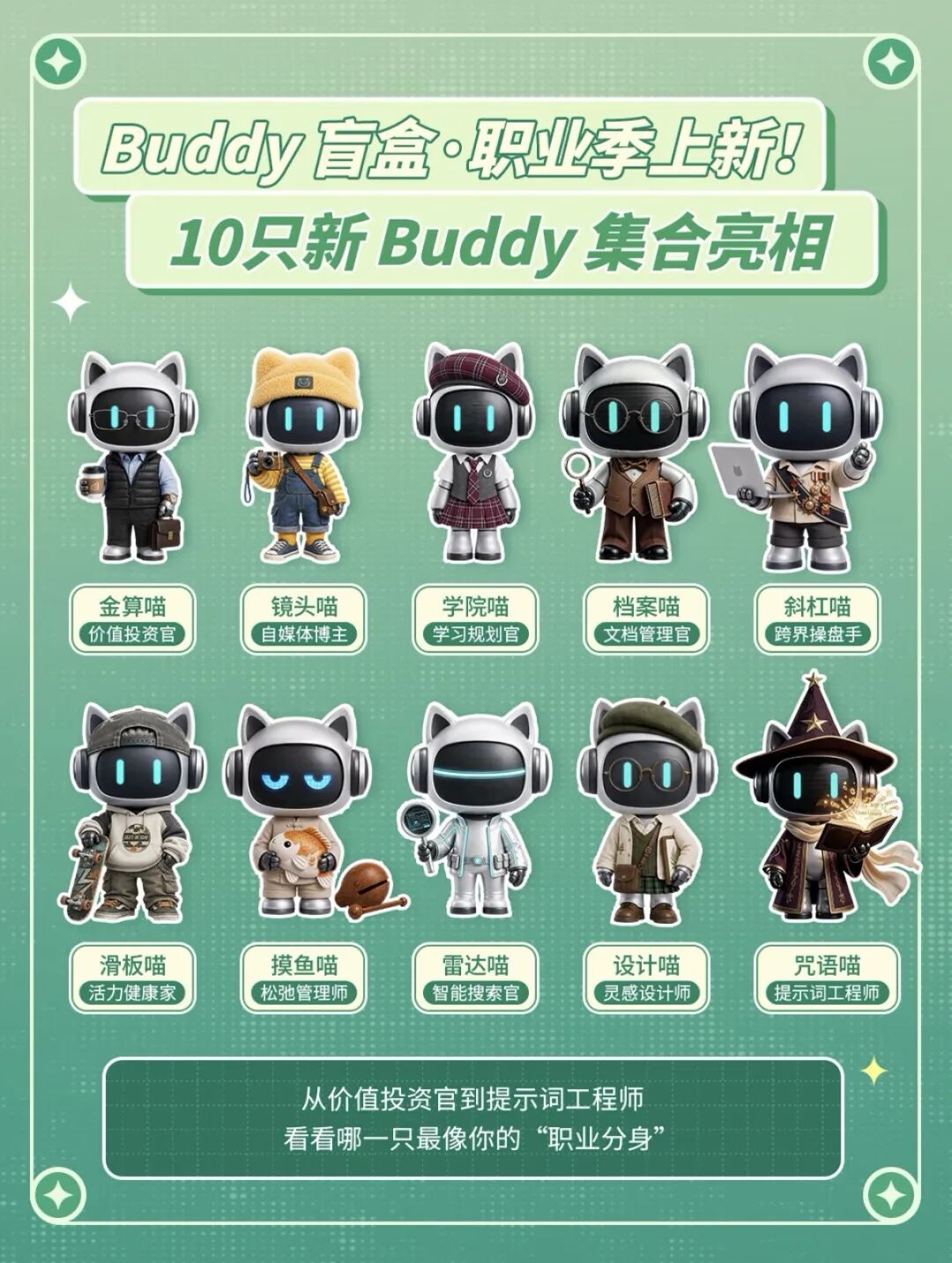
WorkBuddy was the first to bring the collection album gameplay to AI office. The official launched "Growth Plan" allows users to accumulate energy through daily tasks, open blind boxes, and draw Buddy characters with different skill attributes. After collecting all of them, users can view the collection progress in the album. Recently, new images with professional themes have also been launched. This mechanism has been ridiculed by many users as "a remake of QQ Pet", which hits the collection hobby of young users and is also an important way to increase usage duration.
Desktop pets are another extension, and it is a trend that became popular from the bottom up: starting with related skills of Codex, users can upload a photo and give a few instructions to generate an animated character that walks and interacts on the desktop. After this trend spread to China, several products have handed in completely different answers.
WorkBuddy's choice is very interesting: the collection album is developed by the official team, but the desktop pet has no official feature so far, and it is all played by the community. Folk tutorials call WorkBuddy's local execution capability, connect to open-source material libraries, and install desktop characters that change with task status for Agents; skin changing tools and enhancement plugins are also explored by the same group of developers, gradually forming a spontaneously growing developer ecosystem. In other words, the official has voluntarily chosen to leave the stage for creativity and gameplay to the community.
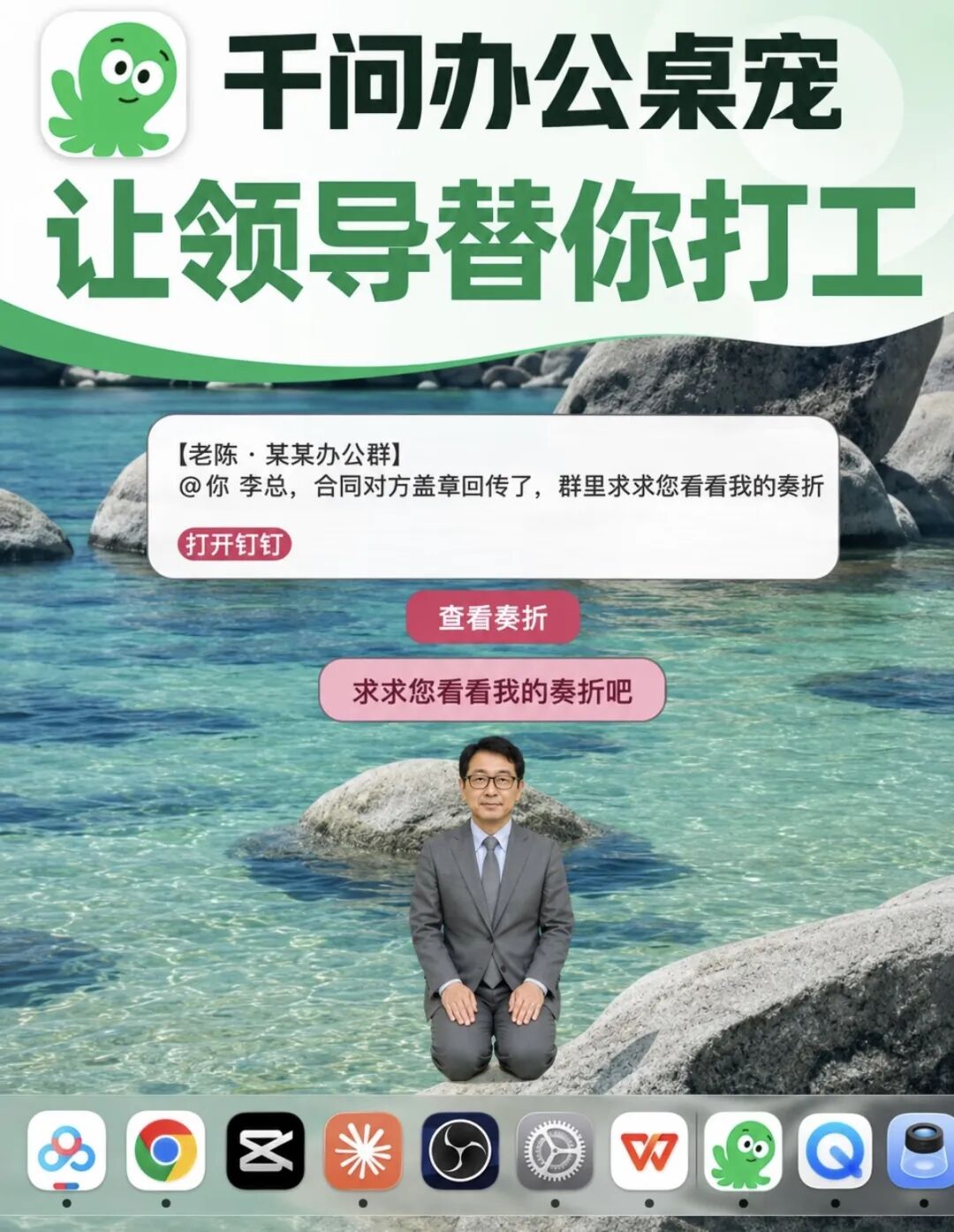
Qianwen Office's idea is more straightforward: making desktop pets a marketing hook. The series of content "making your boss a desktop pet" spread on social platforms — uploading a photo to generate a Q-version image, and even supporting prank decompression with message reminders — judging from the unified topic tags and communication rhythm, it is more like official-led KOL promotion rather than pure spontaneous user behavior.
This forms a contrast with Qianwen's product strategy: restrained inside the product, bold outside in marketing. The essence is to separate "restrained product experience" and "bold customer acquisition gameplay", use content with strong contrast and good communication to grab attention, attract users first, and then retain them with product capabilities.
