Why are the internal brand conversions of international hotel groups getting increasingly upscale?
Entering the stock era, the hotel industry has focused more on the dimensionality reduction transformation of high-end old properties: converting high-star hotels to mid-to-high-end ones to cut costs and adapt to the consumer market.
However, Hotel Management Finance has noticed that many old domestic hotels under international hotel groups have unexpectedly started to upgrade their brands when rebranding.
For example, Four Points by Sheraton Sanya is about to be rebranded to Sheraton; many other DoubleTree by Hilton hotels have also been upgraded to the Hilton brand.
This seems somewhat illogical. How can an old hotel be promoted to a higher brand tier? Besides, behind this "abnormal" move, there are several issues worthy of attention:
What are the reasons for international brands to upgrade through internal rebranding? What kind of games are being played between Chinese and foreign hotel groups in the domestic market? What choices should investors make?
01
Established International Chain Hotels Are Quietly Upgrading to Higher Tiers
Hotel Management Finance learned from the front desk of Four Points by Sheraton Sanya that some floors and rooms of the hotel are under renovation, and it will later be rebranded to the Sheraton brand.
The staff did not give a specific rebranding date, but confirmed the fact of this wave of upward rebranding within the Marriott system.
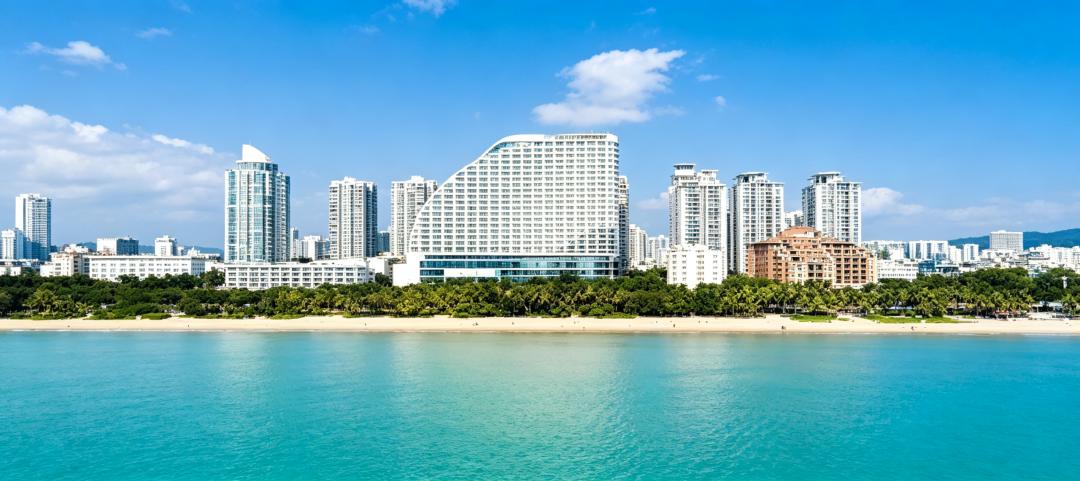
Four Points by Sheraton Sanya Source: Marriott official website
Four Points by Sheraton Sanya opened in 2012, when Marriott was expanding its presence in the Chinese market.
Judging by the current standards of Four Points by Sheraton, the configuration of Four Points by Sheraton Sanya is indeed very high:
It has a fitness center and tennis court, with its landscape swimming pool open all year round; it also has a 120-square-meter parent-child playground, multiple conference halls and multi-function rooms, as well as a very grand banquet hall; there are also Chinese restaurant, 100 Sky Bar, buffet restaurant and lobby lounge, etc.
In fact, almost all Four Points by Sheraton that entered the Chinese market in the early stage have raised their configurations for localization, even though these hardware configurations do not fully match the normal product version of Four Points by Sheraton in the international market.
This situation also exists in other international hotel brands.
Take DoubleTree by Hilton for example. In the international market, the executive lounge is not a standard feature of this brand. However, almost all the early DoubleTree projects in China have this facility.
Some existing DoubleTree by Hilton hotels have been directly rebranded to the Hilton brand after renovation and upgrading. The same applies to Baiyue DoubleTree by Hilton Chengdu Longquanyi and DoubleTree by Hilton Suzhou Wuzhong.
According to incomplete statistics from Hotel Management Finance, most cases of upward rebranding and upgrading within international hotel groups are concentrated in the above-mentioned projects.
In the context of China's hotel stock renovation market, this "counter-trend" upgrading action within the same system is not in line with the norm.
But this needs to be combined with the specific historical background.
After China's hotel supply became highly saturated, many hotel investors and owners began to calculate their budgets carefully, becoming more rational and restrained in investment, especially for the select-service hotel brands under international hotel groups.
We can get a glimpse of this from the latest opened Four Points by Sheraton project.
The Four Points by Sheraton Guangzhou Huangpu, which opened in September 2026, has no swimming pool, only one restaurant, and a very limited number of conference rooms.
Marriott International Hotel Development mentioned in a 2022 tweet that "the brand new design template launched by Four Points by Sheraton aims to improve cost efficiency and streamline the development process."
In 2023, Four Points by Sheraton launched a brand new F&B concept "The Bistro", which integrates the traditional lobby lounge and all-day dining restaurant to create a one-stop complex space for "eating, drinking, playing, working and socializing".
Similarly, the core selling point of the "Dacheng Version" launched by DoubleTree by Hilton is to pursue "cost leadership".
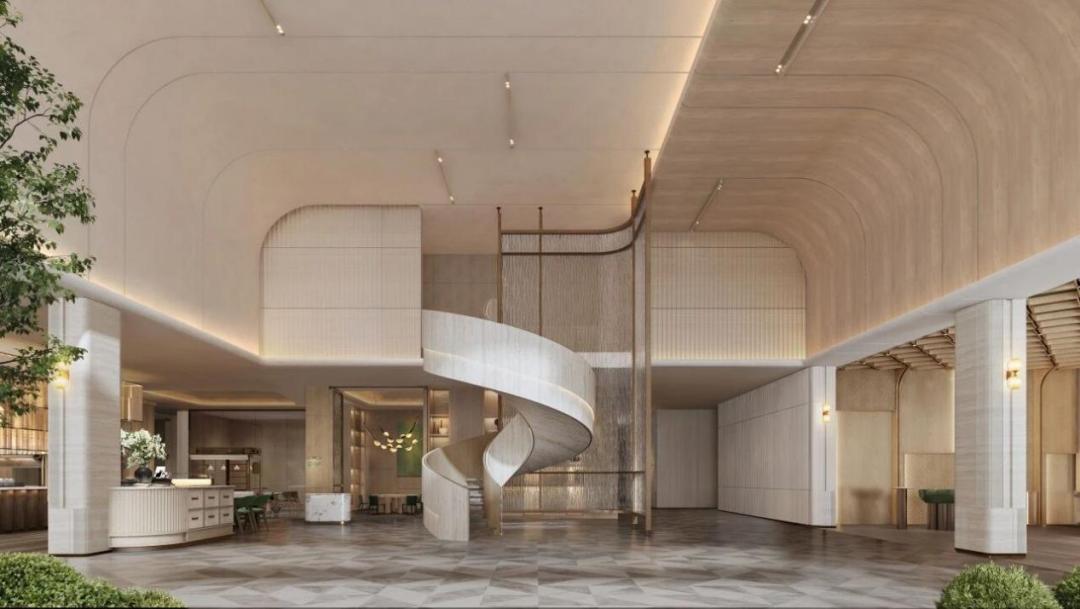
Rendering of the lobby of the "Dacheng Version" of DoubleTree by Hilton
The core areas of the hotel, such as the lobby, reception area, lounge and guest rooms, can be flexibly selected by the owners according to the actual situation like investment scale. At least, the executive lounge configuration hardly appears in new projects.
There are voices in the industry saying that brands such as Four Points by Sheraton and DoubleTree by Hilton are now returning to rationality.
This is an inevitable choice in pursuit of space efficiency. But behind these statements, it actually points to one fact: the new versions and newly opened hotels have reduced hardware configurations in public areas and other spaces.
In any case, the change in the construction standards of the same brand has led to the emergence of products with different standards, different versions and even different specifications in the market.
To a certain extent, this is unfair to investors of the old version who have made larger investments.
Both bearing the brand logos of Four Points by Sheraton and DoubleTree by Hilton, the newly opened projects have less hardware investment and lower operation and maintenance costs;
The old properties that invested heavily in the early years have to bear higher energy consumption, maintenance and labor costs, but there is no gap between the brand's pricing ceiling and the level of membership benefits.
Under the same brand label, old projects with high investment are in a passive position in market competition, which is also the biggest pain point in the hearts of old owners.
There is currently no sign that international hotel groups such as Marriott and Hilton will systematically promote the "collective upward" rebranding of old-version hotels. But Hotel Management Finance believes that the above cases have already released relevant signals.
02
A Compromise Solution for Multi-Party Game?
In the view of Hotel Management Finance, this "unconventional move" of upward rebranding of old hotels is one of the coping strategies for international groups to sort out products of old and new versions.
However, we still need to see the differences between different brands.
At least for the Four Points by Sheraton Sanya project, some users have questioned that many of its hardware facilities cannot meet the standards of Sheraton.
There are even voices claiming that the group is lowering the standards of full-service hotel brands to cater to more old and dilapidated property projects within its system.
This is because most of the stock hotel rebranding in China has chosen to "change its banner".
The blue paper Stock Era: Hotels Empowering the Value Reconstruction of Property Assets shows that the tracking data of the past three years further indicates that nearly 90% of the about 200 renovation and transformation projects every year have completed brand conversion simultaneously.
At present, the difficulty of newly signing high-quality properties continues to rise, and it has become a common risk for old stock owners to terminate contracts and switch to other hotel management groups.
This also means that on the one hand, international hotel groups need to develop more stock renovation projects, and on the other hand, they must be alert to their existing projects being "stolen" by other brands.
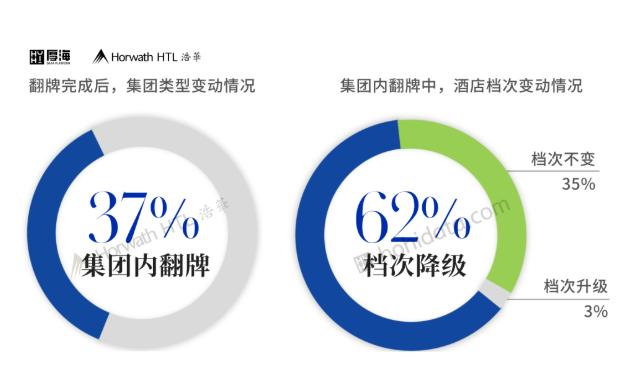
Source: Houhai
Therefore, allowing old projects to upgrade within the system can not only retain management contracts and maintain cooperative relationships with stock investors, but also resolve the problem of chaotic brand positioning left by the over-standard localization in the early years.
For property owners who own old but high-configured properties, upward rebranding is a compromise solution given by international hotel groups — after the brand level is raised, the room rate ceiling and the level of membership system privileges are simultaneously improved, to hedge the cost disadvantage of old properties.
However, we need to see rationally that most projects only carry out partial renovation, and will not demolish and reconstruct the building itself.
After the brand name is upgraded to a higher tier, the inherent conditions of the property itself, such as building age, guest room pattern, floor height and pipelines, can hardly be completely changed through renovation. Many hotels only replace the finishings, furniture and soft furnishings, and the inherent shortcomings of the building still exist.
When consumers book and check in according to the brand expectations of Sheraton and Hilton, once the actual hardware experience fails to meet their psychological expectations, they will have a strong sense of gap.
This hidden risk cannot be underestimated either.
The core barrier of a brand comes from unified and stable hardware and service standards. If more and more old properties with inherent age-related hard defects are promoted to the high-end brand sequence only through partial renovation, it is equivalent to relaxing the access threshold of high-end brands in disguise.
Once the handling of individual cases evolves into a normalized method, it will slowly dilute the product power and market reputation accumulated by high-end brands for many years in the long run.
It should be noted that this move within international hotel groups is not consistent with the overall trend of China's domestic stock renovation market.
On the contrary, many old landmark buildings and old hotels in Chinese cities have more pragmatically chosen mid-to-high-end and mid-range brands during renovation and transformation.
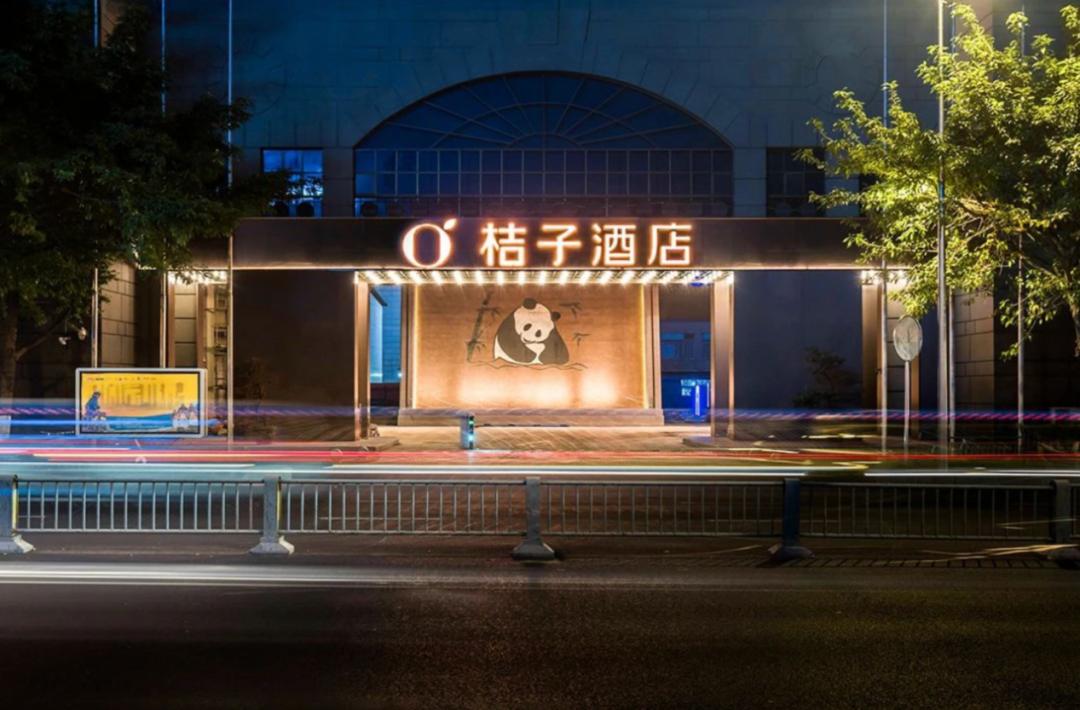
Orange Hotel converted from Chengdu Galaxy Dynasty Hotel Source: Huazhu Mini Franchise
For example, Shunde New World Hotel, which carries the urban memory of Shunde people, has introduced Orange Crystal after upgrading and transformation; Galaxy Dynasty Hotel, the former landmark hotel in Chengdu, has also signed the Orange Hotel brand after renovation.
Most of these properties have given up the aura of high-star ratings, no longer pursuing the title of international high-end brands, and chosen to sink into the mass consumption track.
It is not difficult to see that the investment decisions of these old hotel owners pay more attention to the return of actual cash flow. In addition, mid-range and mid-to-high-end are the mainstream of current supply, and the rebranding results have been verified many times.
Quite interestingly, most of the domestic old landmark properties that choose to rebrand downward are not bound by long-term management contracts of a single international group, and can freely choose outside the original brand matrix.
03
Scrambling for Stock Customers
On the one hand, international groups are upgrading their brands internally, on the other hand, local old landmark hotels are actively choosing mid-to-high-end brands downward.
The two completely different transformation paths have highly unified underlying logic: in the stock era, owners make rational choices after recalculating the input-output accounts.
The blue paper Stock Era: Hotels Empowering the Value Reconstruction of Property Assets shows that by the end of 2025, there are about 19 million stock guest rooms in China's hotel market. In the next three years, 732,000 guest rooms with a room age of more than 15 years will enter the renovation and transformation cycle intensively, and the scale of the stock transformation market has already exceeded 100 billion yuan.
From the perspective of investors, in the view of Hotel Management Finance, "which brand to hang" is not the most important thing, the key is the operating revenue after rebranding.
For upward internal rebranding, owners hope to open the price ceiling with a higher brand to make up for the disadvantages brought by the competition between new and old versions of the same brand;
For downward compatible rebranding, it is a pragmatic choice to break away from the high-end brand system. Local old properties give up the brand aura, prioritize renovation costs and real market demand, choose the mid-range model verified by the market, in exchange for more stable operating cash flow.
Hotel Management Finance believes that the conflict between the internal moves of international hotel groups and the choices of some old domestic hotels and properties has precisely become the most obvious footnote to the continuous prosperity of stock renovation in China's hotel industry.
After all, only by grasping stock customers and stock projects can hotel groups continue to maintain their leading position in the next stage.
This article is from the WeChat official account "Hotel Management Finance", written by Lao Dian, and published with authorization from 36Kr.