Has the track become the decisive factor in the sponsorship solicitation for summer variety shows?
The 2026 summer sponsorship market should make the industry see clearly that the commercial ceiling of variety shows depends on the adaptation value of the content itself. Whether the content can fit brand marketing demands, bring real user value, and stably avoid content risks is far more important than short-lived trending search popularity.
The overall content performance of this summer's variety show market is not significantly different from that of last summer, but in terms of sponsorship, the market conditions of the two years are completely different.
In previous years, as long as a variety show could gain social popularity and audience discussion, it could basically get good brand sponsorship, and the commercial gap between different tracks was relatively limited. However, this summer, brands' investment mentality and selection criteria have changed significantly. They no longer only pursue the traffic volume of programs, but pay more attention to whether the program content matches their own products and can bring practical marketing value. The content attribute of the track itself is becoming the core factor affecting the sponsorship performance of variety shows.
1
The biggest change in this summer's variety show market is neither a cooling nor a warming of sponsorship, but that the selection criteria for brand investment have become more pragmatic.
In the past, when brands invested in variety shows, they prioritized play volume, trending search volume and discussion volume, and many niche programs could gain sponsorship dividends by relying on their popularity. But this year, brands' budget allocation is more restrained, and they no longer pay for invalid popularity.
Specifically, programs that come with real consumption scenarios, have natural ad placements and can help brands achieve conversion are the first choice for brands to increase investment. Mature leading tracks with wide audience coverage, stable and safe content and almost no public opinion risks are the targets for brands to continue their investment stably. Content that only has topic popularity, lacks landing scenarios and is prone to public opinion disputes is the category where brands gradually cut budgets.
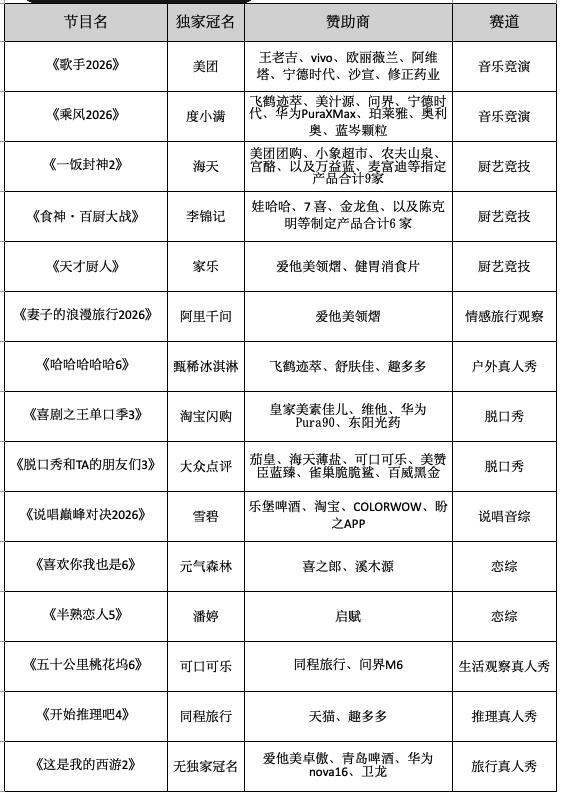
This preference directly leads to obvious stratification in the commercial performance of this summer's variety shows. For the same batch of summer variety shows, the unified logic of "high popularity means good sponsorship" no longer applies. Different tracks have presented completely different commercial trends, making this year's sponsorship market break away from the relatively fixed rules of the past.
2
Combined with the actual sponsorship situation of leading summer variety shows in the past two years, the changes in the performance of different tracks directly reflect the real current investment mentality of brands.
As the traditional basic market of the industry, music competition variety shows have the most stable performance. *Singer 2026* and *Sisters Who Make Waves 2026* are on a par with last year, with no obvious fluctuations in the number of cooperating brands and business levels. The core reason why such programs can maintain stable sponsorship all year round is not that their content popularity is exceptionally outstanding, but that they are sufficiently reliable. They cover audiences of all ages, focus on stage competitions, have almost no public opinion disputes, and meet the brand demands of most categories. In 2026 when brands are generally cautious about budgets, music variety shows are the most risk-free choice, firmly holding the bottom line of the industry's sponsorship market.
The biggest commercial surprise this summer comes from cooking variety shows, which is also the only niche track across the network that has achieved counter-trend growth in sponsorship. Last year, cooking variety shows were still in the trial stage. Each program such as *One Meal to Be a God* and *God of Chef · Hundred Chefs Battle* had about 6 cooperating brands, with cooperation forms focusing on basic exposure and almost no in-depth linkage. This year, the number of cooperating brands for *One Meal to Be a God 2* has expanded to 9, and the renewal rate of old customers has increased significantly. The core brand of *God of Chef · Hundred Chefs Battle* has been upgraded from joint sponsorship to exclusive title sponsorship. The new IP *Genius Chef* locked in exclusive title sponsorship and supporting cooperation before its broadcast, breaking the inherent situation that new variety shows face difficulties in attracting sponsorship.
The core reason why cooking variety shows stand out against the trend is that they hit the most rigid marketing pain point of current brands. The core links of the programs, including cooking, ingredient preparation and tasting, are naturally compatible with brands of food ingredients, kitchen utensils, condiments and instant retail. Product placements are integrated into the competition process, bringing a relatively natural viewing experience. The seasonings used by the contestants can naturally exert a potential influence on the audience, which is why many brands favor cooking variety shows.
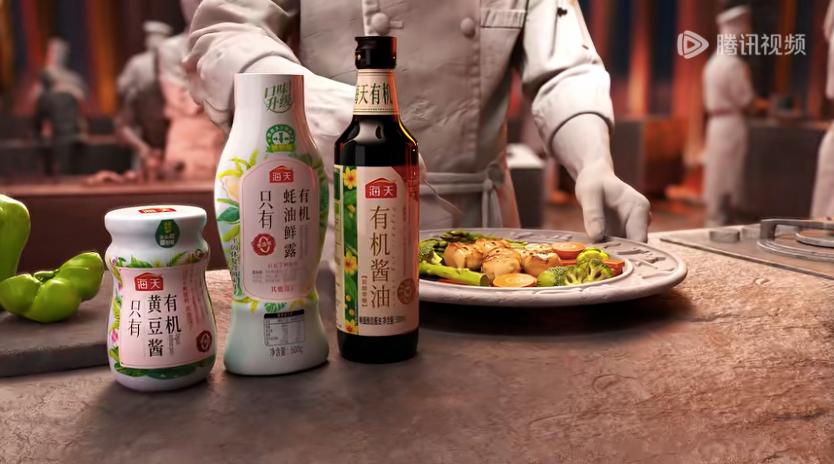
Of course, while the variety show producers are happy, the audience is annoyed. There are a large number of notes on Xiaohongshu complaining about the excessive advertisements in *Hundred Chefs Battle*, and the overall reputation of cooking variety shows this year is not as good as last year. As a steadily growing new track, cooking variety shows should now think about how to better use program content to achieve "painless" placement, so as to ensure a balance between high-quality content and good placement effects.
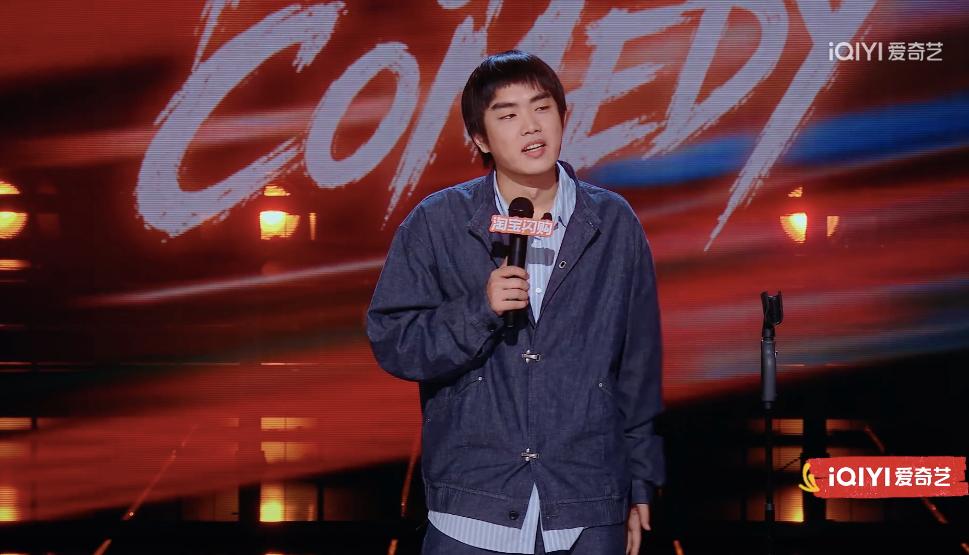
Compared with the impressive growth of cooking variety shows, the talk show track remains relatively stable. The overall sponsorship scale of *Talk Show and Their Friends 3* and *Stand-up Comedy Season of the Comedy King 3* is basically the same as last year, only some small secondary brands are streamlined, and core high-quality partners are retained.
The advantages of talk shows lie in relaxed content, flexible placement, young and accurate audience, almost no public opinion risks, and they are suitable for youth-oriented brands such as emerging consumer brands, internet brands and beverage brands. Although they cannot achieve large-scale consumer conversion, they have formed a stable commercial model relying on the ability to create online stars and derivative income from offline tours, which is the healthiest survival form of mid-tier variety shows.
Established long-running variety shows such as reasoning variety shows and outdoor group living variety shows have shown a steady and contracting trend this year. Compared with 2025, most programs have cut scattered small-value cooperations, and only retained a few leading brands for in-depth cooperation. Supported by basic life scenarios, such programs have a not-bad sponsorship base, but their content modes have not changed for many years, leading to obvious audience aesthetic fatigue, and it is difficult for them to create new popularity growth. Brands no longer adopt extensive investment strategies, but choose high-quality in-depth cooperation. The overall number of sponsorships has declined slightly, but the quality of cooperation has improved.
The track of romance variety shows and emotional observation shows presents the most prominent contrast this year, showing a certain degree of disconnection between popularity and commercial performance. Last year, leading romance variety shows had very impressive sponsorship performance. Each program could attract about 8 brands, with cross-category big names gathered and a complete business structure. However, this year, the sponsorship scale of programs such as *Love in the 30s 5* and *Hello, My Mr. Right 6* has shrunk significantly. In the whole track, only *Hello, My Mr. Right 6* completed the full pre-sponsorship before its broadcast. Mass-category brands that entered the market in previous years, such as automobile and home furnishing brands, have withdrawn significantly, leaving only a small number of niche brands such as cosmetics and low-alcohol beverage brands.
This year, these programs can still stably generate social topics and have good popularity in the variety show market, but the emotional track has no implementable consumption scenarios, can only achieve brand exposure, and cannot help brands achieve actual conversion. At the same time, emotional disputes and viewpoint conflicts among guests can easily lead to public opinion risks.
At the moment when brands are pursuing stability and practical results, the input-output ratio of such tracks continues to decline. At present, romance variety shows are also gradually adjusting their value logic, no longer relying on traditional advertising sponsorship, but realizing value balance through niche cooperation, membership income and amateur IP derivatives.
3
From the overall changes in summer sponsorship over the past two years, the industry has not entered a downward winter, but just bid farewell to the extensive dividend period of "traffic is omnipotent" in the past.
The 2026 summer sponsorship market should make the industry see clearly that the commercial ceiling of variety shows depends on the adaptation value of the content itself. Whether the content can fit brand marketing demands, bring real user value, and stably avoid content risks is far more important than short-lived trending search popularity.
This also provides a certain reference value for the subsequent content creation and brand investment of the industry. The content mode that simply piles up popularity and creates topics will have a lower and lower commercial ceiling, and niche innovative content with both viewability and commercial adaptation scenarios will become the future growth direction.
In the future, the commercial competition in the variety show market will no longer be a competition for traffic, but a competition for content value and track adaptability. In this pragmatic trend, it is hoped that the variety show market will move towards a healthier and more creative future.
This article is from the WeChat official account "Read Yu" (ID: yiqiduyu), Author: Suanxiang Zhezhejiao, published with authorization from 36Kr.