The 45.3% European tariff is compelling the new energy industry to advance localization of its overseas operations by leaps and bounds.
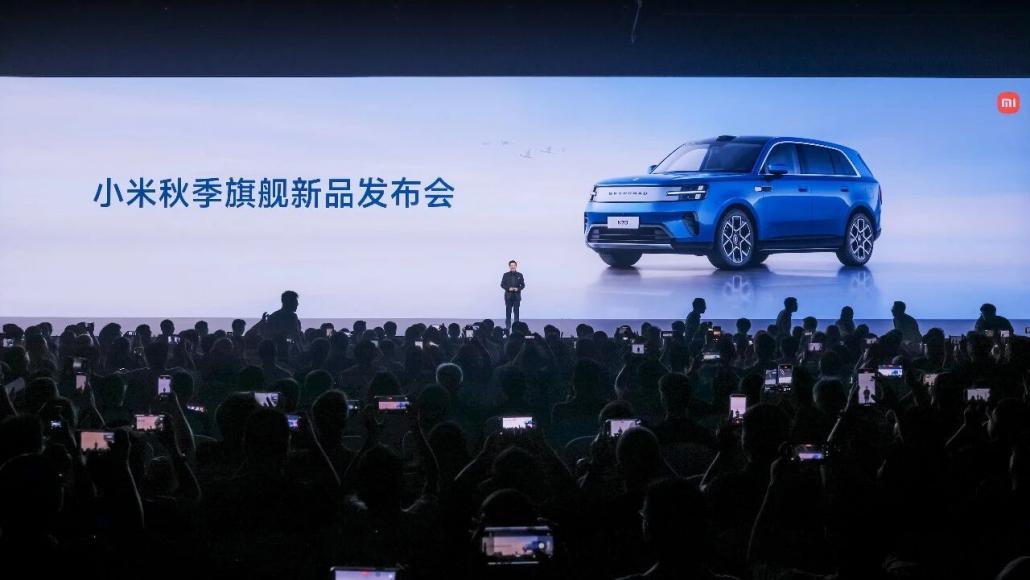
7:00 PM, September 7, 2026, Beijing. Lei Jun stepped onto the stage of the product launch event and announced the official launch of Xiaomi's first extended-range SUV Pengcheng N70/N90: the starting price is 209,900 yuan, 30,000 yuan lower than the pre-sale price two months ago, directly targeting the long-established family SUV stronghold of Li Auto and AITO. To achieve this milestone, Xiaomi has been conducting R&D for three and a half years; the day before the launch event, Lei Jun changed his WeChat profile picture for pre-heating, and posted seven words: "Extended-range vehicles have huge potential."
Almost in the same week, in Europe 10,000 kilometers away, another competition entered the countdown phase.
In Figueruelas, Zaragoza, Spain, the production line reserved for Leapmotor is undergoing final debugging. This plant, which was put into operation in 1982, has produced more than 10 million Opel Corsa units in total; one month later, the first new energy vehicle bearing the logo of a Chinese brand but manufactured locally in Europe will roll off the production line here.
1,500 kilometers away in Wolfsburg, another negotiation is still ongoing. XPeng is in talks with the Volkswagen Group to acquire a production line — not purchasing technical authorization, not OEM production, but directly buying the fixed assets of the German automotive industry. And in Szeged, Hungary, BYD's first full-vehicle plant in Europe with an investment of 4 billion euros will start construction in the fourth quarter.
The three events point to the same fact. The first half of Chinese automakers' overseas expansion, which shipped vehicles to Europe on ro-ro ships for sale, is coming to an end; the second half will see them take over factories, workers and trade unions in Europe.
Only by combining the two scenes in Beijing and Europe can we get the full picture of China's new energy vehicles in 2026. Domestically, prices are cut to the bone, while overseas, factories are built in other countries' territories; they are scrambling for market share in the stock market on one hand, and gaining local legal status in the incremental market on the other.
But the market environment of the second half is completely different from that of the first half.
01
The domestic battle has reached the 200,000-yuan price segment
1. Xiaomi breaks the deadlock, the battle for the extended-range SUV stronghold kicks off
Pengcheng is Xiaomi's second product sequence following the SU7 and YU7, and also Xiaomi's first attempt at extended-range vehicles.
The N70 is 4960mm in length, benchmarked against the Li Auto L6 and AITO M7; the N90 is 5285mm in length, with a 2+2+3 seven-seat layout, at the same level as the Li Auto L9 and AITO M9, but priced at a significantly lower position. Its product strength is fully stacked around family scenarios, with a maximum CLTC comprehensive range of 1705 kilometers, a minimum fuel consumption of 5.7 liters with depleted battery, front seats that can rotate 180 degrees to face the second row, and lidar equipped for all trims.
(Image source: Lei Jun)
Market popularity has confirmed Lei Jun's judgment. During the pre-sale period, foot traffic in some stores increased by 300%, and most orders came from family users aged 30 to 43, with very low overlap with the customer groups of SU7 and YU7. On September 7, Xiaomi Auto officially announced that its cumulative delivery volume has exceeded 800,000 units. Xiaomi only used more than two years to grow from 0 to 800,000 deliveries.
However, behind the impressive numbers is a tight target line. From January to August this year, Xiaomi's cumulative delivery volume was about 246,000 units, with a completion rate of only 44.7% for the annual target of 550,000 units. It needs to deliver an average of 76,000 units per month in the remaining four months.
Therefore, Pengcheng is not an optional addition, but the second battle that Xiaomi must win.
2. Incremental market hits the ceiling, street-fighting competition begins
Xiaomi has actually entered a shrinking track. In the first half of 2026, sales of extended-range vehicles declined year-on-year. It bets that family SUVs still account for 30% of the market share, and that "large-battery extended-range technology" can redefine the product category.
This is a typical stock market competition strategy. Every additional unit sold is snatched from the plate of competitors.
Frankly speaking, the entire industry is in this state at present. 2026 is the first year when the purchase tax is changed from full exemption to half collection. Data shows that sales of new energy vehicles priced below 80,000 yuan dropped by 47.8% year-on-year; the number of passenger vehicle enterprises with recorded sales has shrunk from more than 80 in 2020 to 42; and the industry inventory stands at 3.57 million units, at a historically high level.
Now that the automaker "best at creating traffic" has also started close combat, it indicates that it is very difficult to gain more chips at the domestic gaming table.
Overseas expansion has changed from an optional choice to a mandatory answer.
02
Tariffs are not walls, but faucets
1. Record-breaking exports, the priced entry point
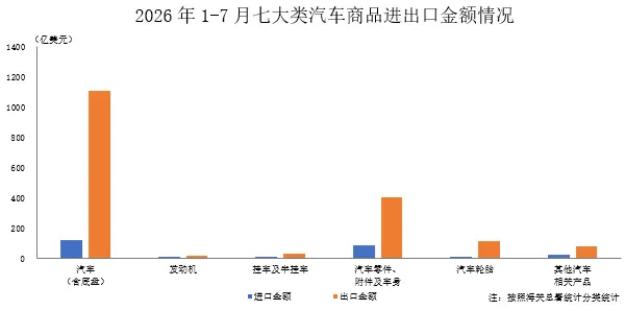
Let's first look at a set of seemingly contradictory data. According to statistics from the China Association of Automobile Manufacturers, China's auto exports exceeded 5 million units in the first half of 2026, a year-on-year increase of 65.3%. Exports in June alone reached 1.037 million units, exceeding 1 million units for the first time in history; from January to July, exports of new energy vehicles reached 2.909 million units, a year-on-year increase of 1.2 times, accounting for more than half of the total export volume for two consecutive months. The market expects that the annual export volume is expected to hit 10 million units.
(Image source: China Association of Automobile Manufacturers Data)
The more impressive the export figures are, the more it indicates that the pure export model is approaching its upper limit.
Because the EU's countermeasures have taken shape this year, and the five-year anti-subsidy tariff on Chinese electric vehicles has entered the implementation period. The rates are 17.0% for BYD, 18.8% for Geely, and 35.3% for SAIC. Combined with the 10% basic tariff, the maximum comprehensive tax rate reaches 45.3%. In response, China and the EU reached a new consensus in January, replacing tariffs with price undertakings. Enterprises can be exempted from anti-subsidy tariffs as long as they commit to a minimum selling price, accept annual sales quotas, and include their European investment plans in the assessment. In February, the CUPRA Tavascan produced by Volkswagen Anhui became the first approved model, that is, a European electric vehicle manufactured in China, which was the first to obtain the exemption.
The logic behind this is: the EU does not intend to close the door to opening up, but to transform the door into a finely adjustable faucet.
However, the three valves of price, quantity and investment are all in the hands of the other party.
2. Detoured paths and tightened subsidies all point to localization
Faced with the manipulated policies, the first reaction of Chinese automakers is to switch tracks. In 2025, China's exports of hybrid vehicles to Europe surged by 155%, far exceeding the 12% growth rate of pure electric vehicles. SAIC MG's hybrid family sales reached 137,000 units. But since January 2026, the European Commission has confirmed on multiple occasions that it is discussing extending the anti-subsidy tariff to hybrid models.
The subsidy side is also tightening its standards. Germany has allocated 3 billion euros to support about 800,000 new energy vehicles, and France has raised the "ecological subsidy" for electric vehicles to a maximum of 5,700 euros, on the premise that only vehicles manufactured in Europe and equipped with batteries produced locally in Europe can get the full amount of subsidies.
Tariffs block the path of trade, and subsidies only illuminate the path of local production.
When the policies in both import and export directions point to the same coordinate, localized production has changed from an optional item to a "mandatory item".
03
Three ways to "gain local citizenship": borrowing factories, buying production lines, and building new plants
1. Leapmotor borrows existing capacity, XPeng buys production lines
Faced with this situation, Leapmotor chose the lightest approach.
Instead of building a new factory, it directly uses Stellantis's existing production capacity. The B10 model is scheduled to be put into production in Zaragoza in October 2026, with a localization rate of 60%. Battery packs are assembled in an old warehouse in Mayenne, Spain, chassis components are supplied by a joint venture between China's Tuopu Group and Spain's Fag Ederlan, and seats and trims are handed over to European suppliers.
XPeng chose the most direct approach, negotiating with Volkswagen to acquire a production line.
But there are differences between the two sides: the production line that Volkswagen wants to sell is designed for the fuel vehicle era, and is not suitable for producing new energy vehicles. The acquirer needs to invest a lot of money in transformation. One party is eager to sell, the other is cautious to buy, and the mentality at the negotiation table is itself a reflection of the industry ecosystem.
Leapmotor and XPeng are not the only ones in the queue.
In July, Ford and Geely reached an agreement to establish a joint venture in Valencia, Spain, and Geely's two new energy vehicles will roll off the production line in 2028; Nissan and Chery are discussing OEM production at the Sunderland plant in the UK; SAIC confirmed that its first European plant will be located in Spain. Behind this is the overcapacity of the European automotive industry. From 2020 to 2025, the capacity utilization rate of major European automakers dropped from nearly 80% to 68%. The consulting firm AlixPartners estimates that there is about 2.5 million units of idle annual production capacity across Europe.
On one side, there is production capacity but no sales volume; on the other side, there is sales volume but no production capacity. This localization process comes at just the right time.
A deeper change lies in the technology flow. Li Tengfei, CFO of Leapmotor, revealed that Stellantis is evaluating the adoption of Leapmotor's pure electric platform technology for entry-level electric vehicles priced between 150,000 and 200,000 euros under the Fiat, Opel and Peugeot brands, and the negotiation has entered an in-depth stage. If implemented, this will be the first time for Chinese automakers to export complete vehicle platform technology to European giants in reverse.
The script of "exchanging market for technology" 40 years ago has now been reversed.
2. BYD builds new plants, Chery revives old factories
In addition to the lightweight localization strategies of Leapmotor and XPeng, BYD and Chery have chosen heavy asset investment.
BYD chooses to build its own plants. The Szeged plant is the largest single manufacturing investment of Chinese automakers in the EU. The plant covers an area of about 3 million square meters, with an annual production capacity of 150,000 units in the first phase and 300,000 units in the long term. It started trial production in January this year, and the first three models to roll off the production line are Dolphin Surf, Atto 2 and Atto 3. The localization of new energy vehicles is not simply for policy compliance, and localization has deepened into operational details. According to people close to the internal team, 70% of the 960 employees in the plant are local Hungarians, 150 European suppliers have entered the certification process, the local parts procurement proportion will reach 50% next year, and the plant is expected to create more than 10,000 jobs. BYD has also signed a talent training agreement with the University of Szeged and sponsored the Hungarian national football team.
Different from BYD's self-construction strategy, Chery chooses to "revive" old plants.
Chery forms a joint venture with the parent company of Spanish brand Ebro to restart the Barcelona plant that Nissan shut down in 2021. It plans to produce Chery Omoda and Ebro brand models at the same time, creating 1,250 local jobs, with a planned production capacity of 50,000 units in 2027 and 150,000 units in 2029.
It is worth noting the change of rhythm. Chinese automakers, known for their efficient domestic plant construction, have collectively begun to actively delay their progress in Europe. BYD's production launch time is about one year later than the original plan, the Turkey plant project is suspended, and Chery's mass production node has also been postponed many times. In this regard, Leapmotor admitted that the local parts procurement cost is significantly higher than that in China, and the improvement of gross profit from local production is limited at present.
At present, it can be seen that when entering the deep water zone, in Europe, land, environmental protection, trade unions and communities all take more time to deal with than the production line itself.
But the returns are equally clear. In the first half of 2026, the share of fuel vehicles in Europe fell below 30% for the first time, and the combined share of pure electric and plug-in hybrid vehicles reached 30.5%, surpassing that of fuel vehicles. In June, pure electric vehicle sales surged by 51% year-on-year, and their share exceeded that of gasoline vehicles for the first time; five major Chinese automakers registered nearly 800,000 vehicles in Europe in the first half of the year, selling 172,000 units in June alone, 13,000 units more than all Japanese brands combined.
The door is opening, but the rules for entering the door have changed.
04
40 years later, the roles are reversed
1. From "In China, For China" to "In Europe, For Europe"
In the 1980s, Volkswagen entered China with the Santana, and used the joint venture model to gain 40 years of market dividends. "In China, For China" has become the standard slogan of multinational automakers.
40 years later, this set of slogans appeared intact in the press conferences of Chinese automakers. Yin Tongyue, Chairman of Chery, summarized the strategy as "In somewhere, For somewhere, Be somewhere", and required Chinese automakers going overseas to "become local corporate citizens". Zhang Shuo, Chief Representative of the European Automobile Manufacturers Association's Beijing Office, put it more bluntly: it is best to prepare a mature benefit sharing plan before going overseas, "you can't make people feel that you just make profits and leave".
The market vote has already taken place. In April this year, the sales share of Chinese brands in the European electric vehicle market exceeded 15% for the first time, the plug-in hybrid share was close to 29%, and the overall share in the automotive market approached 10%.
In 2021, this figure was only 2.1%.