Backed by BYD and CATL, CopperBull Technology is making its second attempt at IPO, and the AI boom can hardly resolve its predicament of weak self-sustainability.
On August 31, 2026, Jiangxi Copperbo Technology Co., Ltd. (hereinafter referred to as "Copperbo Technology") submitted its listing application to the Hong Kong Stock Exchange for the second time.
This is the second sprint for public listing of the world's 10th largest electrolytic copper foil producer this year — its first submission on January 28 became invalid 6 months later.
In fact, Copperbo Technology's financial data is remarkably impressive: its revenue reached 3.403 billion yuan in the first half of 2026, up 88.8% year on year; its net profit hit 165 million yuan, surging 1141.9% year on year. Backed by two giants CATL and BYD, the company is further endowed with strong industry halo.
However, Copperbo Technology's IPO journey from the A-share market to the Hong Kong stock market has been quite tortuous. In 2021 and 2023, the company successively signed A-share ChiNext market counseling agreements with Haitong Securities and Sinolink Securities and submitted filings; in May 2024, it decided to shift its listing target to the Hong Kong stock market; in July 2026, its first version of Hong Kong stock prospectus expired.
Behind this "never stop until getting listed" stance lies an enterprise in the rapid expansion stage that has an urgent demand for capital.
Continuous net outflow of operating cash flow, over 50% revenue reliance on a single customer, and steadily declining R&D intensity — how can Copperbo Technology's IPO story continue?
1
Performance hits record high, why is cash still bleeding?
The actual controllers of Copperbo Technology are two brothers, 44-year-old Li Xianyang and 36-year-old Li Siyang, who jointly hold 71.1% of the company's shares.
The Li brothers once served as chairman consecutively at Jinguang High-Tech, a company focused on lithium-ion battery materials. In 2016, they founded Copperbo Technology in Fuzhou, Jiangxi Province, providing electrolytic copper foil solutions, with two core businesses: lithium battery copper foil and electronic circuit copper foil.
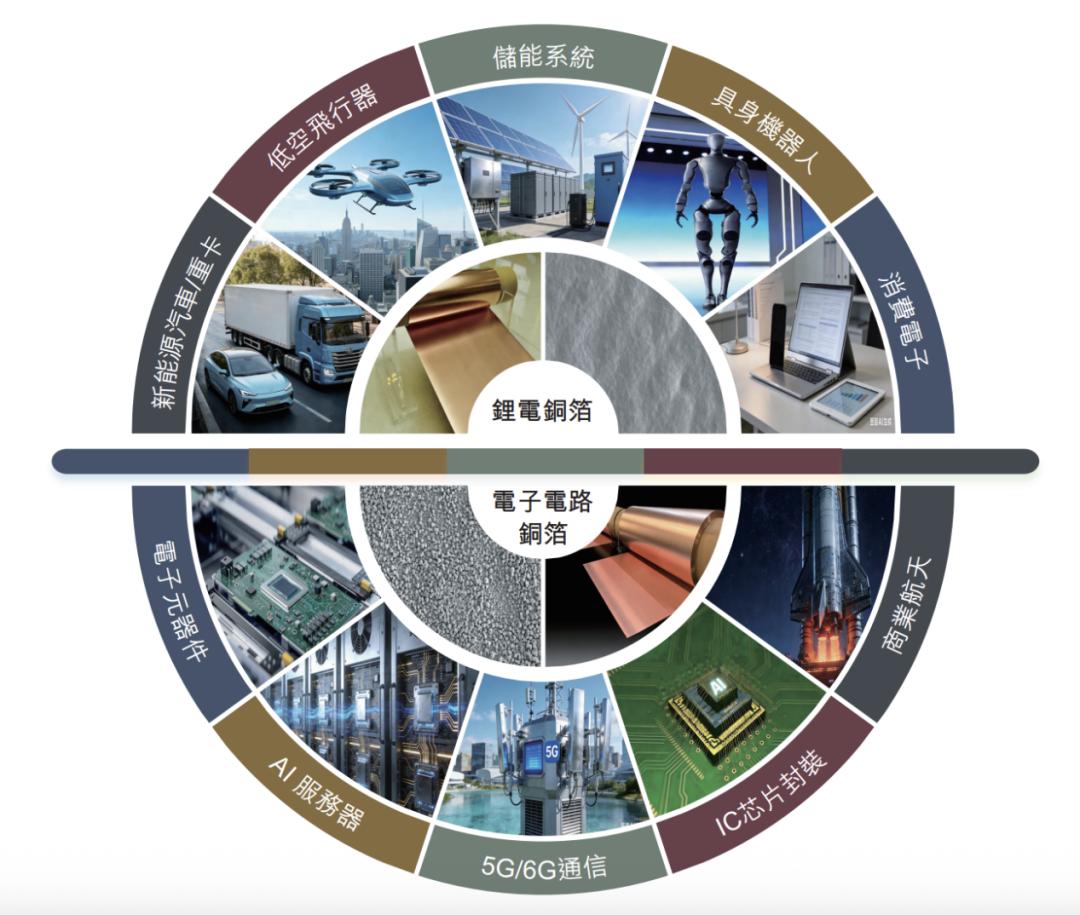
Figure / Prospectus
At that time, the new energy vehicle industry was in the ascendant. As a key component of the negative electrode material for power batteries, lithium battery copper foil saw its demand inflection point emerge with clear prospects. However, the market for electronic circuit copper foil was gradually turning cold: the growth of consumer electronics end products was weak, low-end products fell into a brutal price war in the red ocean, and high-end high-frequency high-speed copper foil was still firmly controlled by Japanese enterprises.
The two tracks, one hot and one cold, present clear opportunities and challenges. After ten years of entrepreneurship, Copperbo Technology has established a certain position in the industry.
Data from Frost & Sullivan shows that in terms of 2025 sales volume, Copperbo Technology has ranked as the world's 10th largest electrolytic copper foil producer with a market share of about 2.3%; it ranks third in China's high-performance lithium battery copper foil track, with a market share of 12.0%.
In terms of performance, Copperbo Technology's revenue reached 3.163 billion yuan, 3.212 billion yuan, 4.212 billion yuan and 3.403 billion yuan respectively from 2023 to the first half of 2026, showing continuous growth.
The net profit trend shows a V-shaped rebound: the net profit in 2023 was 63.057 million yuan, but in 2024, due to overcapacity in the industry, the net profit plummeted 67.4% year on year to 20.58 million yuan, and rebounded to 93.834 million yuan in 2025.
The performance growth in the first half of 2026 is particularly prominent: revenue increased 88.8% year on year to 3.403 billion yuan, and net profit increased 1141.9% year on year to 165 million yuan.
At the same time, the gross profit margin also recovered, rebounding from the low point of 3.1% in 2024 to 8.1% in the first half of 2026.

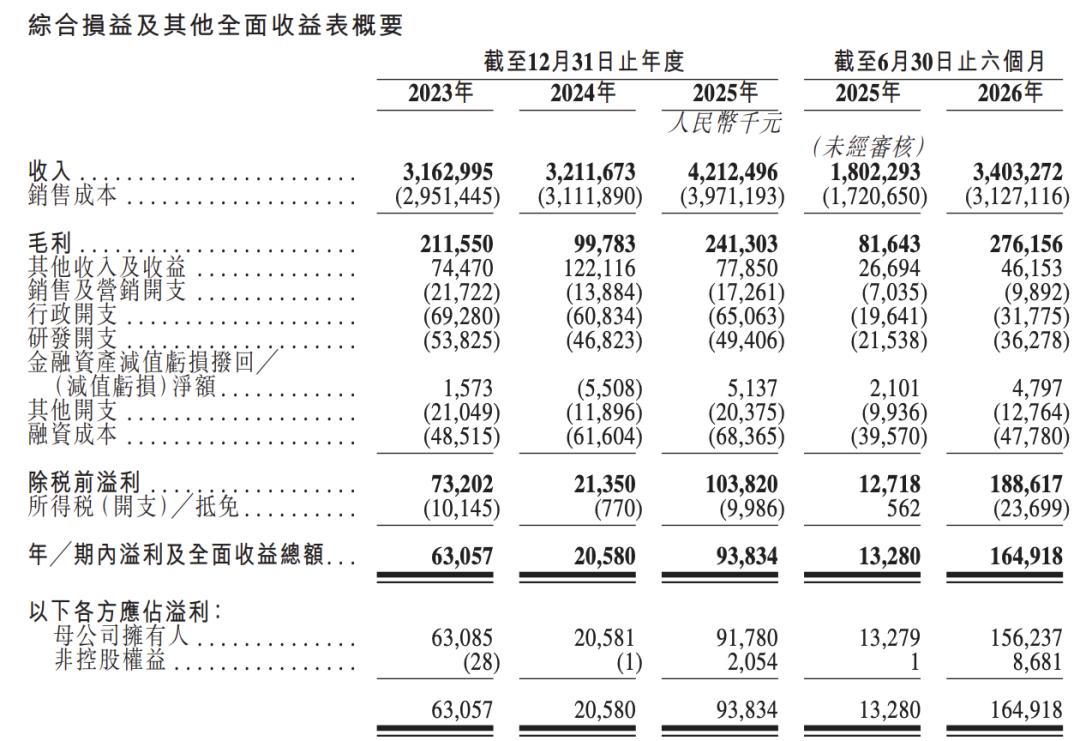
Figure / Prospectus
However, there is an insurmountable gap between the figures on the income statement and the cash flow statement.
In 2024, the company's net operating cash outflow reached 715 million yuan; it continued to outflow 416 million yuan in 2025; it further expanded to 935 million yuan in the first half of 2026, with a cumulative net outflow of more than 2 billion yuan in two and a half years.
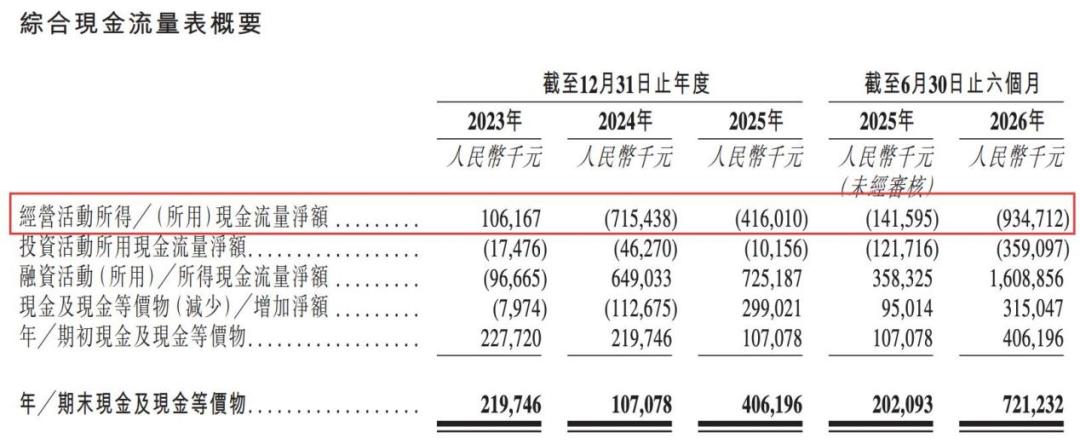
Figure / Prospectus
The root cause of the "paper wealth" lies in the unique settlement mismatch of the electrolytic copper foil industry: "pay cash for copper, collect payment via bills".
The main raw material of Copperbo Technology is copper. From 2023 to the first half of 2026, raw material costs accounted for 82.8%, 84.8%, 86.8% and 88.4% of the total sales cost in the same period respectively, which is real money that needs to be paid in the production and procurement link.
When selling to downstream power battery customers, a large proportion of payment is recovered in the form of bank acceptance bills. By the end of the mid-2026 period, the company's bank acceptance bills had reached 597 million yuan.
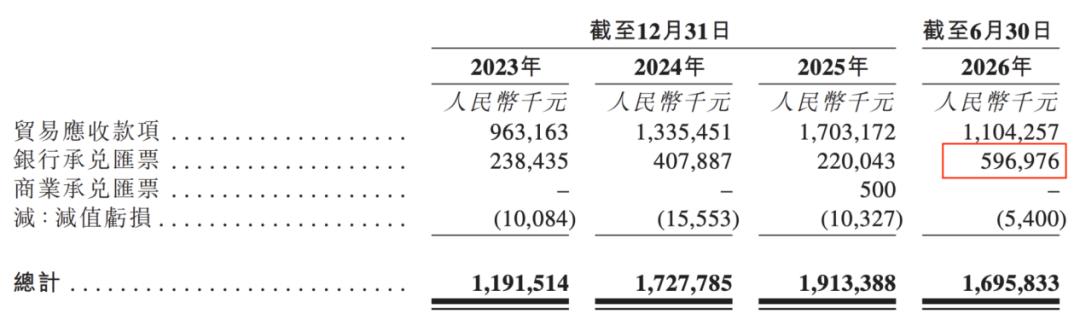
Figure / Prospectus
The high level of receivables and bills occupies a large amount of working capital. Coupled with the capital expenditure brought by continuous capacity expansion, the company can only rely on financing to maintain turnover.
Data shows that the company's asset-liability ratio has gradually climbed from 60.5% in 2023 to 71.3% in the first half of 2026, and debt pressure continues to rise.
Continuous net outflow of operating cash flow and rising asset-liability ratio have become unavoidable propositions for Copperbo Technology.
2
Backed by BYD and CATL, the risk of major customer reliance is hard to solve
In the capital story of Copperbo Technology, the figures of BYD and CATL are particularly prominent.
In 2022, the industrial funds under BYD and CATL completed their equity investment in Copperbo Technology.
The two lithium battery giants are not only product purchasers, but also shareholders of the company, opening up huge imagination space for industrial synergy.
But on the other side of the coin, deeply binding with giants brings extremely high customer concentration risks.
From 2023 to the first half of 2026, the revenue proportion from the top five customers of Copperbo Technology reached as high as 85.8%, 87.3%, 83.1% and 82.4% respectively.
Among them, the revenue proportion from the largest customer A reached 48.5%, 62.2%, 58.8% and 54.9% respectively. After 2024, more than half of the revenue came from a single major customer.
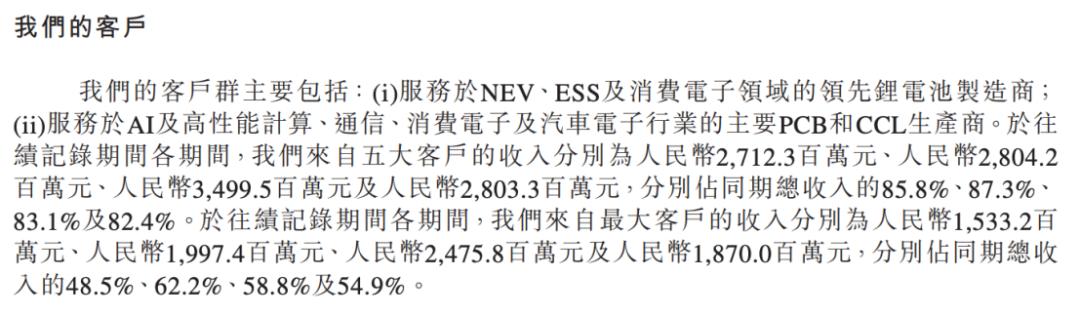
According to Frost & Sullivan data, customer A has been ranked among the world's largest lithium battery producers for many consecutive years — its identity is not difficult to confirm, it is CATL, the indirect shareholder of Copperbo Technology.
This largest customer has the dual identities of the largest revenue source and indirect shareholder. The nesting of transaction relationship and equity relationship puts Copperbo Technology in a passive position in bargaining power, payment recovery cycle and pricing power.
The root cause is that the industry where Copperbo Technology is located generally adopts the pricing mode of "copper price + processing fee". Copper price fluctuations can basically be transmitted to downstream, and the only variable that can affect the company's profit is the processing fee, whose pricing power is in the hands of downstream major customers.
For example, when the industry was in oversupply in 2024, the processing fee of Copperbo Technology was greatly reduced, and the gross profit margin of lithium battery copper foil plummeted from 8.0% in 2023 to 3.8% in 2024, directly dragging the overall gross profit margin down to 3.1%.
The rebound of gross profit margin since 2025 is more due to the recovery of industry prosperity and the increase in the proportion of high-performance products, which has little to do with the company's own pricing ability.
Even in the performance outbreak period in the first half of 2026, the net profit margin of Copperbo Technology was only 4.8%. Considering that Copperbo Technology is in the new energy track and backed by two giants, such a net profit margin level is far from generous.
In addition, the second business, electronic circuit copper foil, also confirms the company's high dependence on downstream cycles.
From 2023 to 2024, the PCB (printed circuit board) industry was in a downturn, and this business segment fell directly into losses. The company could only maintain basic production capacity to retain customer relationships, and could not rely on scale to dilute manufacturing costs.
Until the outbreak of the AI computing power industry chain, the profit of the electronic circuit copper foil segment achieved a substantial recovery in the first half of 2026, and the second growth curve still fluctuates with the cold and heat of the external industry.

Figure / Sheying.com, under VRF agreement (AI digital content)
Beneath the halo of giant endorsement, Copperbo Technology is more like a "high-end foundry" — it has orders and production capacity, but no pricing power, nor sufficient profit moat.
While the two industrial shareholders bring order and capital support, they also lay hidden operational risks: if the expansion of the battery industry slows down in the future, customers will support their own copper foil production capacity internally, or divert orders to other copper foil suppliers, Copperbo Technology's revenue and profit may face new tests again.
3
The AI tuyere has arrived, can "distant water" quench "current thirst"?
In the past ten years of rapid development of the industry, the electronic circuit copper foil market has turned from cold to hot due to the emergence of the AI wave.
According to the calculation (forecast value) of Soochow Securities research report, the global demand for high-end copper foil dedicated to AI servers will reach 24,000 tons in 2026, up 260% year on year, and is expected to increase to 50,000 tons in 2027.
With the iteration of AI servers from H100 to GB200 and Rubin platforms, the jump in signal rate drives the copper foil technology route to upgrade step by step from RTF (reverse treated copper foil) to HVLP (super low profile copper foil) 1/2, and then to HVLP3/4, and the number of PCB layers also increases from 20 to more than 40. The copper foil consumption per high-end AI server has risen accordingly — GB200 requires about 12kg, and GB300 further increases to 30kg.
As the domestic substitution ushers in a clear window period, HVLP copper foil has much higher processing fee and gross profit margin than lithium battery copper foil, which is the most important second growth curve for copper foil enterprises to break through the low gross profit dilemma.
Copperbo Technology also said that in view of the rising trend and strong demand of downstream industries (such as AI and high-performance computing power), the group is strategically focusing on the electronic circuit copper foil product business, which is expected to become a key growth driver for the group in the future.
Despite the broad prospects of the track, Copperbo Technology faces three practical challenges before it can share the copper foil dividend brought by AI, which are difficult to easily overcome in the short term.
First, the industry competition has opened the gap. Defu Technology's HVLP4 has been supplied in small batches and is promoting customer introduction of HVLP5; Tongguan Copper Foil has also achieved full mass production of HVLP1-HVLP4, indirectly supplying AI server manufacturers.
Copperbo Technology's HVLP1 products were commercialized in 2023, and HVLP2 and HVLP3 samples were completed in October 2025 and January 2026 respectively.
HVLP4, which adapts to higher computing power requirements, is still in the sample stage, and the core production line has not been put into operation.