10,000 industrial robots: Raised 1 billion yuan in financing
Another large-scale financing deal has arrived in the robotics industry.
Guangdong Tianji Intelligent System Co., Ltd. recently announced the completion of its RMB 1 billion Series B and Series B+ financing, with a post-money valuation of nearly RMB 10 billion. The round was jointly led by GL Ventures and Meituan Strategic Investment, with participation from institutions including Tencent, Gaorong Ventures, Lightspeed China Partners, and GGV Capital.
What Tianji Intelligent develops is not a single type of robot. Its product portfolio covers collaborative robots, horizontal articulated robots, vertical articulated robots and humanoid robots. It also independently develops the Fusion control system, and has built underlying capabilities such as force-controlled dual arms and joint torque sensing.
To put it simply, it aims to sell not only the "body" of robots, but also their "nervous system and brain".
Therefore, the truly notable part of this RMB 1 billion financing is not just how much Tianji Intelligent's valuation has risen, but a more practical fact:
Where will the funds be allocated after they are received? Who can turn this round of production expansion into their own revenue alongside the company?
What is most worth studying in the current robotics industry is no longer "who can still secure financing", but "who has already started to make profits".
An order of 10,000 units sounds impressive, but profitability still needs to be calculated carefully
The most eye-catching part of Tianji Intelligent at present is its order book.
Information from the company cited by multiple media outlets shows that in 2025, Tianji Intelligent delivered more than 2,000 force-controlled humanoid dual-arm robots in around 4 months. In the first quarter of 2026, the company had on-hand orders exceeding 10,000 units, with clients covering 45 full-stack humanoid robot manufacturers and embodied intelligence enterprises worldwide.
10,000 units sounds like the project has moved from the "lab stage" to mass production. However, orders are also the most likely part to create illusions in the robotics industry.
This is because there are four completely different metrics: orders, delivery, revenue, and profit.
A client signing an order for 10,000 units does not mean the full 10,000 units will eventually be delivered; delivery does not mean payment will be collected immediately; and revenue recognition does not guarantee final profitability.
Robotics, in particular, is an industry that relies heavily on on-site delivery services.
Assuming a client purchases 100 units, but each unit requires software modification, parameter adjustment, re-commissioning, and even on-site resident engineers, the more units sold, the higher the labor cost may become.
Therefore, what ultimately determines whether a robotics company can make profits is not just sales volume, but the degree of product standardization.
If a type of robot can be mass-produced and replicated like automobiles, with basically the same process for producing 100 units today and 1,000 units tomorrow, the larger the scale, the lower the cost.
But if each client corresponds to a new custom project, the robotics company may eventually turn into a "high-tech engineering firm" with large revenue, a huge workforce, but very thin profit margins.
This is also the most important test for Tianji Intelligent going forward: among the 10,000 units in the order book, how many are replicable standard products? How much profit can be retained after each unit is delivered?
Raising RMB 1 billion in financing only gives the company ammunition. Whether it can turn this ammunition into profit is the real capability that matters.
01
Some full-stack robot manufacturers have already made profits
Over the past few years, the robotics industry has been best at talking about financing and technology, but worst at answering questions about profitability. Now a group of truly profitable companies have finally emerged.
Unitree Robotics is a typical example. In 2025, Unitree recorded revenue of about RMB 16.99 billion, with net profit attributable to shareholders of about RMB 2.78 billion; its net profit in 2024 was less than RMB 1 billion, and it was still in a loss-making state in 2023. This means that full-stack robot manufacturing itself is not a business that naturally loses money.
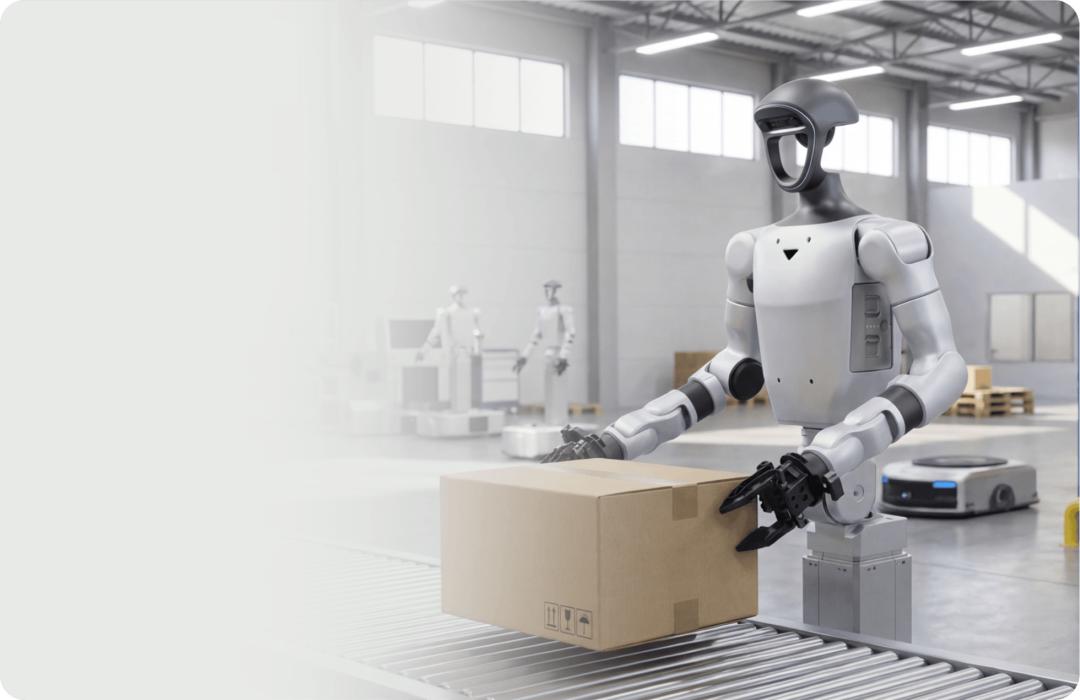
The robotics industry is moving from a stage of showcasing robots' running and jumping capabilities to a stage of competing for scaled sales and profitability.
With standardized products, expanded scale, and controlled costs, full-stack robot manufacturers can also make profits. On the other hand, some companies have higher revenue but larger losses. For example, UBTECH recorded revenue of about RMB 2 billion in 2025, of which revenue from full-size embodied intelligent humanoid robots exceeded RMB 800 million, but it still posted a loss of nearly RMB 800 million for the whole year.
This set of figures is very telling: one company generated RMB 17 billion in revenue with nearly RMB 3 billion in profit, while the other posted RMB 20 billion in revenue with a loss of nearly RMB 800 million.
Therefore, when evaluating robotics companies, we can no longer only look at "how many units they sold". What really matters is: with each additional unit sold, does the profit increase, or does the loss also expand?
If selling one robot requires a large team of engineers to provide long-term follow-up services, this business is difficult to operate with high efficiency. If robots become increasingly standardized and delivery costs keep decreasing, then scale will truly deliver value.
This is why the real watershed for the robotics industry in the future may not be "whose robot runs the fastest", but who will first turn robots into mass-producible, replicable commodities.
Being able to do somersaults only helps a robot go viral. Maintaining a stable gross margin is what gets a company onto the profit statement.
02
Companies "selling shovels" have more stable profitability
Compared with full-stack robot manufacturers, the profit logic for upstream component suppliers is much simpler.
If you take apart a robot, it is essentially a long procurement list: motors, reducers, encoders, torque sensors, controllers, drivers, bearings, cables, and structural parts.
As long as robot manufacturers expand their production capacity, upstream suppliers need to deliver corresponding components. This is why there is a very practical opportunity in the robotics industry: don't rush to dig for gold yourself, first see if you can sell shovels to gold diggers. Inovance Technology is a good example.
It is not a pure robotics company, but it has long been engaged in the R&D and production of core industrial automation components such as servos, controllers, and drive systems. In 2025, the company's revenue exceeded RMB 45 billion, with net profit attributable to shareholders exceeding RMB 5 billion.
Of course, not all of this RMB 5 billion profit can be attributed to the robotics sector, but it at least proves that the "nerves and muscles" of robots are already a mature and profitable business. Reductor Intelligent Drive recorded revenue of about RMB 646 million in 2025, with net profit attributable to shareholders of about RMB 105 million, among which the revenue from harmonic reducers saw a year-on-year growth of nearly 60%.
The biggest advantage of these companies is that they do not need to bet on which player will eventually become the No.1 in the robotics industry.
They can sell their products when Unitree expands production, and they can also sell products when Tianji Intelligent expands production. If 10 more full-stack robot manufacturers emerge in the future, they will gain 10 more batches of potential clients.
What is even more valuable are the components that are very difficult to replace once they enter the supply chain, such as high-precision torque sensors, encoders, reducers, and joint modules.
The reason is simple: changing a supplier is not as easy as replacing a screw. It may mean re-testing, re-calibrating, and re-certifying the product. Once the certification is passed, a single order may turn into a multi-year long-term business.
Therefore, behind Tianji Intelligent's "10,000-unit order book", a more noteworthy question is: who are its suppliers? If a supplier used to deliver 1,000 sets a year, and will deliver 10,000 sets a year in the future, its performance elasticity may be more direct than that of full-stack robot manufacturers.
03
Profit Logic: Help Clients Cut Down Labor Costs
A business that is more profitable than manufacturing robots: helping clients reduce their headcount
There is another easily overlooked business in the robotics industry: system integration.
Factory owners don't really care how many degrees of freedom a robot has, nor do they care if it can dance. What they really care about is: how much money can I save in a year after purchasing it?
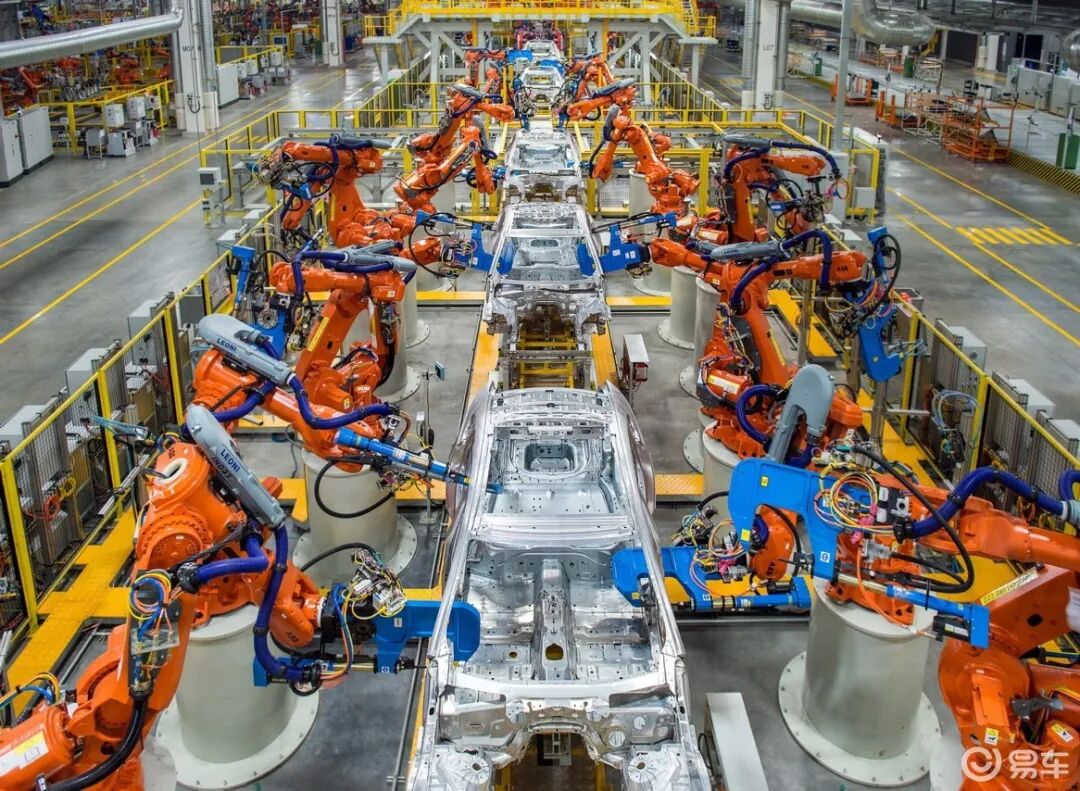
For factory owners, degrees of freedom and algorithmic jargon are far less important than one single metric: how many years will it take for this set of equipment to pay back its cost?
Assuming that a certain process in a factory requires 6 workers, and the comprehensive cost for each worker is RMB 100,000 per year, the total annual cost is RMB 600,000. Now if a robot system worth RMB 1 million is deployed to reduce the number of workers from 6 to 2, the factory can save RMB 400,000 a year, and the investment can be recovered in about two and a half years.
Only at this point will the factory owner be willing to pay. Therefore, what clients are actually buying is not the robot itself, but the ROI (Return on Investment).
After robots are deployed in factories, additional costs will be incurred for fixtures, vision systems, software adaptation, production line transformation, safety systems, commissioning, training, and after-sales services. Each of these links can generate revenue.
This is why for ordinary entrepreneurs, doing robot integration is sometimes much more practical than manufacturing full-stack robots. You don't need to raise RMB 1 billion in financing, nor do you need to develop a humanoid robot from scratch.
You only need to have deep expertise in one specific industry. If you know the 3C industry well, focus on assembly and inspection; if you know logistics well, focus on handling; if you know the food industry well, focus on sorting and packaging; if you know automotive components well, focus on welding and loading/unloading.
In the end, you only need to answer one question for your client: "How much money can this solution save you in a year?" If you can clearly calculate this figure, making profits will be much easier than talking about "large embodied intelligence models".
04
The real big profits may come after the 10,000-unit milestone
There is another key phrase in Tianji Intelligent's this round of financing: large-scale mass production. This phrase is even more worth paying attention to than "humanoid robot".
When you only make 10 robots, engineers can debug each unit one by one. When you make 100 units, you can still rely on manpower to get the work done. But when you actually reach the 10,000-unit milestone, the entire operation logic will change completely.
Assuming one robot has 20 key joints, 10,000 units will mean 200,000 joints in total. If each robot takes 2 hours to test, that will add up to 20,000 hours of testing time. If 1% of the products need rework, that will be 100 units that need to be disassembled and inspected again.
At this stage, the real headache for full-stack robot manufacturers is no longer "whether the robot can stand up", but how to manufacture 10,000 units cheaply, stably and efficiently.
As a result, new profit opportunities emerge. Automatic test equipment, sensor calibration, quality tracking software, robot MES systems, life testing, fault diagnosis, and automated production lines will all start to see market demand.
There is also overseas service business. Tianji Intelligent has explicitly proposed to build a global sales network. When robots are sold to Europe, Southeast Asia and the Middle East, the business does not end with delivery. It also requires installation, training, maintenance, spare parts warehouses and local on-site engineers.
Equipment may only be sold once, but after-sales services can generate revenue for 5 or even 10 years. This type of business is not as glamorous, but it is likely to be more stable.
So looking back at this RMB 1 billion financing, the really interesting part is not that Tianji Intelligent has RMB 1 billion more in its account.
It is that this RMB 1 billion will flow out layer by layer: full-stack manufacturers get financing, upstream suppliers get orders, system integrators get projects, testing service providers get funds for production expansion, and overseas service providers get after-sales revenue.
What is really worth paying attention to in the robotics industry is no longer the financing ranking, but the profitability ranking.
Evaluating an opportunity does not have to be complicated. Just ask three questions: Why does the client have to pay you? Can you get paid repeatedly for this business? If robot production volume increases 10 times, can your revenue also increase accordingly? If you can answer these three questions well, you have a real viable robotics business.
Raising RMB 1 billion in financing only proves that there is still abundant capital in this industry.
Whoever can keep the money flowing into their own accounts continuously will be the one who truly benefits from this round of robotics industry boom.
This article is from the WeChat Official Account "Pencil News" (ID: pencilnews), written by Xi Wen, edited by Zou Wei, and authorized for release by 36Kr.