When all AI deployments are shifting to the cloud, Anker has moved its computing power back in-house.
In the AI industry of 2026, there is a mainstream trend: computing power is concentrated in the cloud, models are getting larger, and end devices are only responsible for access. However, at this year's IFA, a product made the opposite choice — moving computing power and data back to users' homes, which sparked widespread discussions.
When AI shifts from a selling point to infrastructure, almost every exhibitor is talking about AI. The question worth asking is no longer who uses AI, but where AI is deployed. On September 3, the day before the official opening of IFA, Anker held a global media conference at its booth. In addition to announcing brand unification and integrating the company's multi-brand matrix (Anker, Anker SOLIX, eufy, eufyMake, soundcore) under the single brand Anker, it also showcased more than a dozen new products in one go, covering smart home, balcony energy storage, personal audio, wellness, mobile charging and many other fields.
The first product unveiled at the conference, MindBase, is defined by Anker as a "home AI data hub": it integrates three core capabilities — whole-home interconnection, local intelligence and storage memory, and actively schedules whole-home devices through multiple scenario-specific AI agents to realize a self-operating smart home. Its core selling point goes against the industry's common intuition: computing power stays local, and data is not uploaded to the cloud.
Why would a company whose revenue mainly comes from overseas and relies on hardware shipments choose to move part of its computing power to users' homes at a time when generative AI capabilities are accelerating to concentrate in the cloud? This is not only a technical route choice at the product level, but also a judgment on the business model.
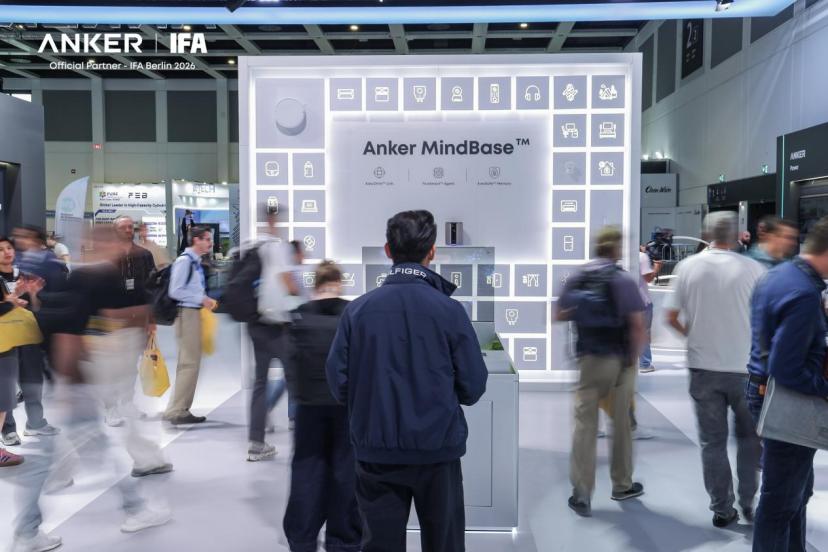
Home AI data hub MindBase
1. Keeping computing power at home: The three core calculations behind MindBase
First, let's clarify what MindBase is. It is equipped with a 6 TOPS NPU, a built-in 20 TOPS Anker eufy AI Core computing power card that supports computing power expansion. In addition, it is configured with two external drive bays, supporting a maximum of 48TB NAS storage. At the press conference, Anker gave an easy-to-remember metaphor: there are already "eyes" (cameras and sensors), "ears" (audio devices), "hands and feet" (energy storage and cleaning robots) in the home, and what is missing is a brain that can think and remember.
The metaphor is easy to remember, but it does not explain the business logic. To understand this decision, we need to calculate three key accounts.
The first account: cost structure.
For companies focusing on hardware sales, revenue and gross profit are mainly realized in the equipment sales link. However, if high-frequency AI inference is deployed in the cloud for a long time, the costs of computing power, bandwidth and storage will continue to occur with user usage, and rise with the expansion of device scale and calling frequency. For a hardware company with annual shipments measured in tens of millions, this is a long-term operating cost that will continue to accumulate.
The local computing power solution is to sink this cost into the BOM at one time. The hardware cost increases, but it is measurable, priceable, and easier to be fully covered at one time during product sales. Its essence is to use relatively certain hardware costs to replace cloud costs that change with the growth of user scale.
The second account: storage.
With two external drive bays and support for up to 48TB local storage, MindBase targets the long-term accumulated data demand of home security and imaging devices. In the current industry, cloud storage subscription is a common model: hardware is responsible for customer acquisition, and continuous subscriptions generate subsequent service revenue. By taking local storage as a core selling point, MindBase means that Anker does not put subscription revenue at the core of this product's narrative, but prioritizes data autonomy and long-term usage cost, forming a product difference from the cloud subscription model through local NAS and local AI processing.
This is a trade-off.
In other words, Anker voluntarily gives up an existing recurring revenue curve, in exchange for a clear differentiation point in the customer acquisition link. It uses certain revenue to bet on uncertain conversion rate.
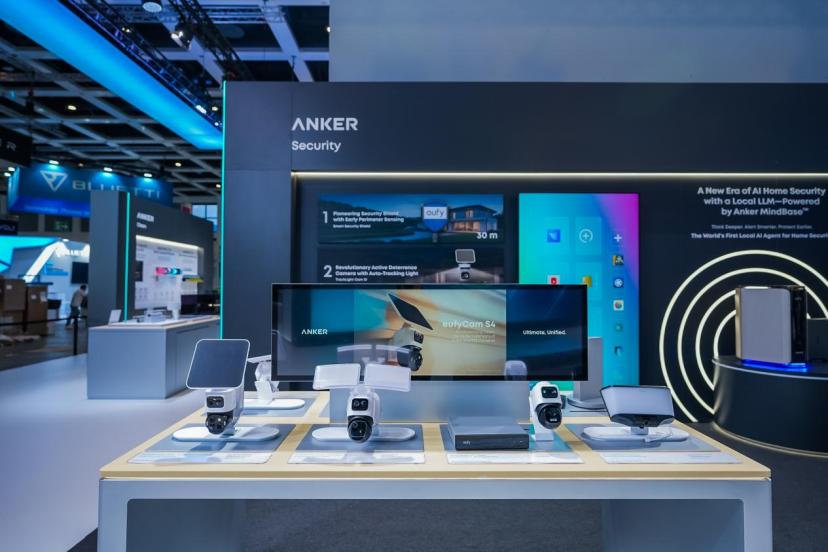
Anker security products
The third account: privacy.
Anker's revenue in the first half of 2026 reached 16.605 billion RMB, a year-on-year increase of 29.05%. Among this, revenue from the European region was 4.432 billion RMB, accounting for 26.69% of the total revenue, with a year-on-year growth of 29.34%. Europe contributes more than a quarter of its total revenue, and it is exactly the market with the highest sensitivity to home data and the strictest regulation in the world. When selling cameras, doorbells and recording devices in such a market, "where data is stored" is not a small line of text in the manual, but a factor that determines whether the product can enter the homes of users with high privacy demands.
The value of the local route is that it turns a problem that requires continuous explanation and management into a non-existent problem. For Anker, this is not only a technical architecture choice, but also a product expression for major mature markets such as Europe.
MindBase represents Anker's local AI path in the home scenario: it organizes security, energy, cleaning, audio and video devices through local computing power, storage and cross-device scheduling. What it aims to solve is not whether a single hardware is smart enough, but whether all devices in the whole home can work collaboratively.
To realize the home local AI system, it is not as simple as adding an algorithm function to the product. It requires the joint cooperation of chips, algorithms, product definition and multi-category implementation, as well as a sufficiently long investment cycle and cash flow bearing capacity. Enterprises cannot deploy end-side AI as they wish, which requires strong R&D capabilities, a sufficiently wide product line to amortize costs, and cash flow to support upfront investment.
2. The real proposition of the hub: Selling a box, or selling a connection relationship
To understand why MindBase appears at this point in time, we need to look back at Anker's growth path first.
Anker started its business with charging products in 2011, adopting the "shallow sea" strategy: it did not step into the hundred-billion "deep sea" crowded by giants, but focused on individual consumer electronics niche markets. Over the past 15 years, it has formed a pattern of five brands, each focusing on charging, energy storage, smart home, smart audio and creative tools. Different brands have accumulated product capabilities, technical experience and user recognition in their respective categories. This strategy has helped Anker expand its business to more than 180 countries and regions, serving over 200 million users. However, it faces a practical challenge: a user who is familiar with Anker's charging products may not naturally regard eufy's security or soundcore's audio products as a continuous experience provided by the same company. Cross-category repurchase often requires re-establishing awareness and trust.
The significance of hub products never lies in how many units they can sell. Its value is to turn discrete SKUs into a system with topological relationships: once the hub is installed, the decision-making cost for users to buy the second and third devices will drop significantly, because the new device is connected to an already operating system, not another independent App. LTV will increase, and customer acquisition cost will be shared by subsequent devices. This is the only reason why the hub is worth building, and it is also the criterion to judge whether it is successful.
From this perspective, brand unification is not a simple upgrade of marketing strategy. Devices need to form synergy at the technical level to provide a consistent and coherent user experience, while the brand provides a clearer unified entry on the other side. Jia Jingdong, CMO of Anker Innovations, said at the press conference that in the era when categories were independent of each other, it was reasonable to build category brands, but that era has passed. Translated into business language: a more unified brand architecture is the premise of Anker's ecological strategy.
But there is a question that must be answered: where is the moat?
MindBase is not closed. In addition to seamlessly connecting all Anker products, it can also be compatible with devices of other brands through Matter, and supports mainstream platforms such as HomeKit, Alexa, and Google Assistant. Since the connection layer is open and accessible to everyone, where does the moat come from?
The answer is: general protocols solve the problem of "connection"; but the fact that devices can be connected does not mean they can work collaboratively, let alone realize intelligence.
Protocols such as Matter mainly solve device discovery, access, status synchronization and basic control. When the camera identifies a stranger, or the system judges that all family members have left home, which devices should be scheduled, in what priority, and whether manual confirmation is required, these require perception, reasoning and task orchestration capabilities on top of the connection protocol.
Anker's approach is to disassemble the perception and control capabilities of various devices into independent, reusable, remotely callable atomic services, gather all perceived information to the local AI hub, complete AI reasoning and decision-making with the help of context provided by massive storage, and finally execute through multi-device collaboration via a distributed scheduling mechanism.
One scenario is enough to illustrate the difference. When MindBase's security agent determines that all family members have left home, it will not only enable the security guard mode, but also notify the sweeping robot to start cleaning, and synchronously switch the energy manager to power storage mode. General protocols can turn on these three devices respectively, but they cannot make the three devices collaborate around the single judgment of "leaving home".
Therefore, the moat does not lie in "whether more devices can be accessed", but in whether the capabilities of devices in different categories such as security, energy, cleaning, audio and video can be integrated more deeply, and more reliable cross-device decisions can be made locally. The breadth of hardware categories, local AI capabilities, device installed base and long-term stability jointly determine the upper limit of this capability.
There is another easily overlooked point: the hub is an asset that can appreciate in value. At present, MindBase is equipped with two agents for security and NAS storage. Anker says more agents for energy, cleaning and other functions will be added later. If these new AI scenario capabilities can be continuously deployed to already sold hardware, the use value of the same hub will increase with the addition of agents. This compound interest structure does not exist in the logic of individual products.
In the final analysis, openness and compatibility determine how many families MindBase can enter, while the breadth and collaboration depth of self-owned devices determine how much it can achieve after entering.
3. From home hub to ecological globalization
For many global-oriented Chinese brands, the marginal efficiency of the hit product strategy is declining. The traffic cost of cross-border e-commerce platforms continues to rise, and most consumer electronics niche markets are becoming increasingly crowded.
Ecological globalization is different. User assets can be reused across categories. For a user who has already entered the system, the customer acquisition cost of each subsequent purchase is declining. But the threshold is also much higher, which requires longer-term user relationships, stronger localized service capabilities, and a technical base that can connect multiple categories. This is a necessary capability upgrade that Chinese export companies starting from hardware sales must complete.
In addition to brand unification and the release of the MindBase home hub, there are more signs at this year's IFA showing that this is exactly Anker's next step.
First, the company's technical base is expanding outward.
Anker's extension of the co-developed integrated computing and storage AI audio chip Thus from headphones to OTC hearing aids is a typical example. WHO data shows that 430 million people with hearing loss around the world need rehabilitation treatment, most of whom have not received effective intervention. One of the reasons is that hearing aids have long been trapped in the prescription channel, with high prices and high access thresholds. The powerful AI computing power of the Thus chip can accurately pick up the voice of the speaker directly ahead from noisy background, thus helping people with hearing loss improve their quality of life.
From a business perspective, this is not a random patchwork of categories, but a new market found for a technical capability whose R&D cost has already been amortized: the marginal R&D cost is very low, while the target market is brand new. Anker's sleep products follow the same logic: the new flagship sleep headphone Sleep A40 Pro dynamically adjusts sleep-aid audio content based on real-time neural relaxation data, and the bedside SleepLab Pro uses 60GHz millimeter wave radar to achieve non-inductive monitoring, which can also provide users with personalized sleep aid solutions through real-time data monitoring. Anker summarizes this line as the "perception-intervention-verification" closed loop. Moving from monitoring to intervention means shifting from the data business to the effect-oriented business.
Second, the construction of diversified user touchpoints.
Anker established its first European office in Munich in 2020. At this IFA, it announced the opening of its first directly-operated store in Germany, and stores in more markets are already under planning. The diversification of channels will increase the cost structure through self-operated retail, but it is an inevitable requirement of the ecological model. The value of multi-category collaboration can only be understood after being experienced, and user experience is exactly the advantage of offline touchpoints.
Ecological globalization does not mean Anker's product portfolio has changed, but the way the company interacts with users has changed. IFA itself is part of this logic: making its debut at the world's top consumer electronics exhibition with a unified brand identity for the first time is the external release moment of this strategy.
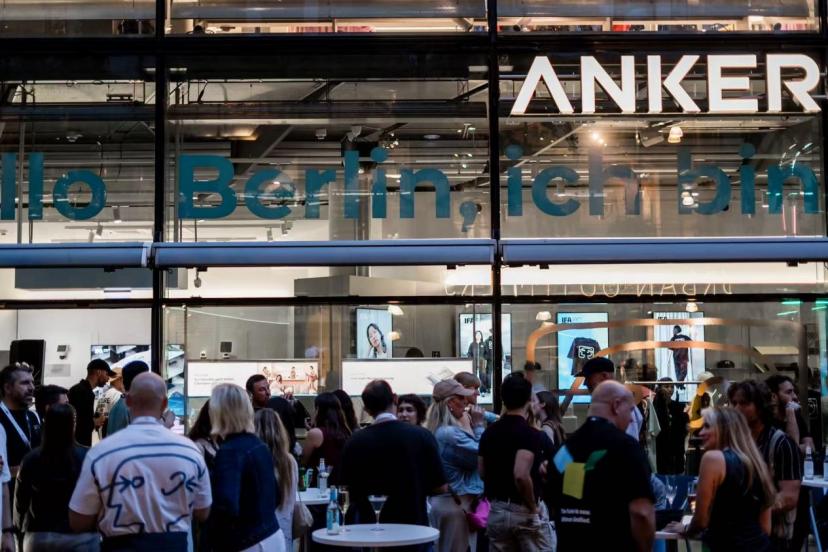
Anker's directly-operated store in Germany
Answers to be given by time
Anker's growth in the past 15 years is built on its ability to continuously enter niche categories: starting from charging products, it has gradually expanded to energy storage, smart home, audio, creative tools and other fields. The multi-brand strategy allows it to reach different groups of people with clearer category positioning, and helps it lay a foundation in multiple consumer electronics markets.
However, as cross-border e-commerce traffic costs rise and competition in niche categories intensifies, the model of relying only on adding new categories to obtain new revenue will face increasing costs in customer acquisition, brand building and channel investment. More importantly, if individual products are independent of each other, enterprises need to re-establish user awareness and usage habits every time they enter a new scenario.
This is exactly where the value of ecology lies. It is not just putting more products into the same product catalog, but trying to form a continuous relationship between users, devices and services across different categories: when users buy the second and third devices, they are accessing an existing experience, not another independent brand, App or service system.
The threshold of this path is also higher. It requires a cross-category technical base, long-term user relationships, localized service capabilities, and a collaborative experience that consumers can truly feel. Making its debut with a unified brand at IFA and launching hub products such as MindBase are all moves for Anker to move towards "scenario collaboration"; the first directly-operated store in Germany provides an offline display and verification space for this collaboration.
Anker's transformation has not yet reached the verification stage. Brand unification cannot be achieved in one day, and it may take years for the ecosystem to be gradually deployed into users' homes. Betting on end-side AI, using part of the cloud solution's advantages in cost elasticity and model iteration in exchange for local advantages in privacy and cost structure, it will take several years to see the final result.
Before that, there are four indicators that can better explain the situation than any narrative:
First, the installed volume of MindBase, which determines whether the home hub logic has a sufficient user base. Second, the number of connected devices per household and cross-category usage, which determines whether the so-called collaboration is a real experience or just a narrative. Third, the revenue and user awareness changes of non-charging categories, which can reflect whether Anker is breaking through the single label of "charging brand". Fourth, the launch rhythm and actual usage