After the implementation of the new existing home sales policy, new changes have taken place in land auctions and land supply in typical cities.
On August 28, after the new existing home policy was implemented, the entire market was waiting for an answer: what kind of changes will take place in the land market?
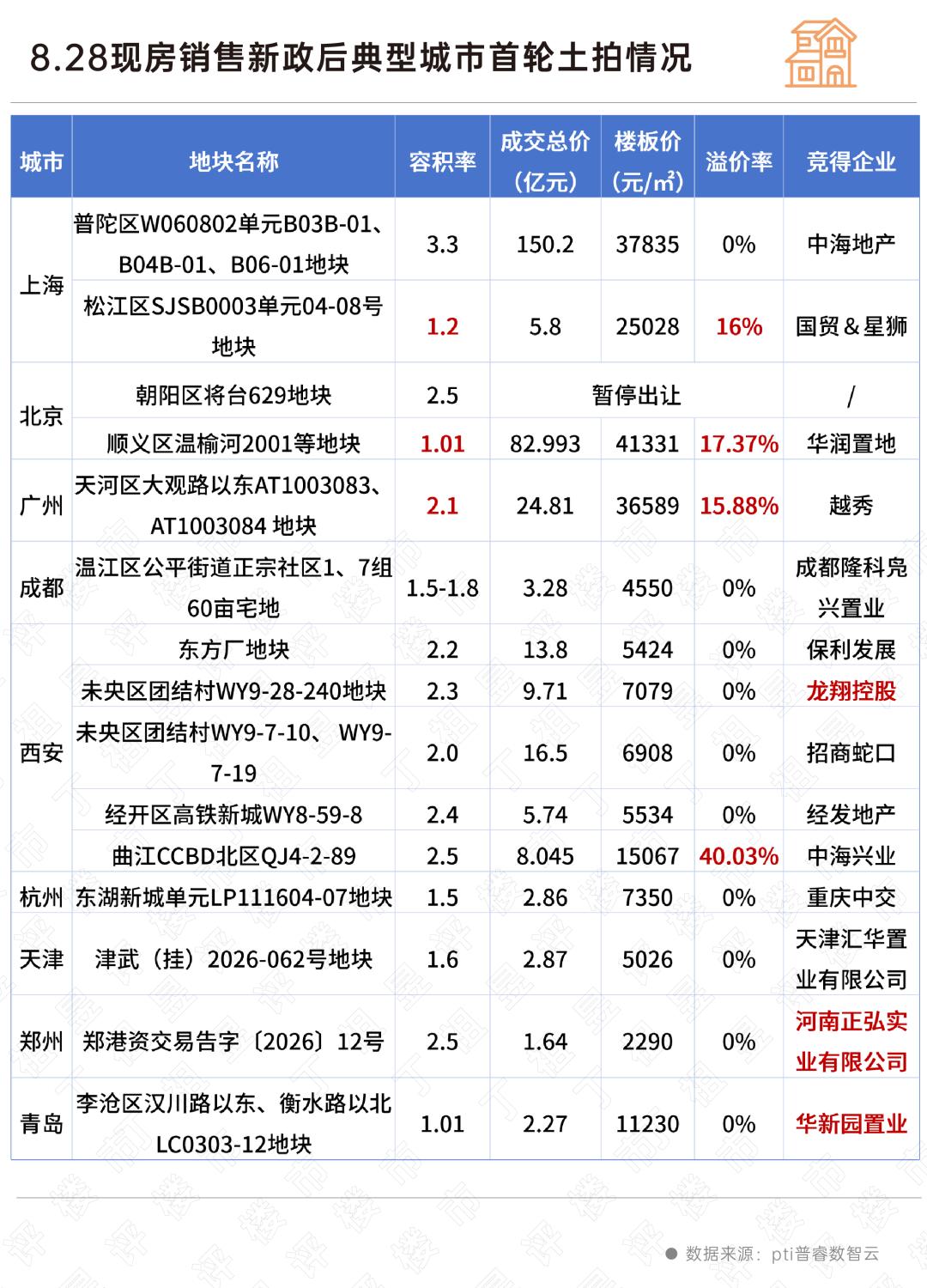
The first land auction after the new policy provides a key observation window for the market. Over the past week, a number of key cities including Shanghai, Beijing, Guangzhou, Xi'an, Chengdu and Hangzhou have completed their first trial land auctions after the new policy in a concentrated manner.
With the detailed rules yet to be released in most cities and real estate enterprises taking a wait-and-see and cautious attitude towards investment, the lands that are still traded at high premiums and the cities where they are located represent the choices made by real estate enterprises with real money.
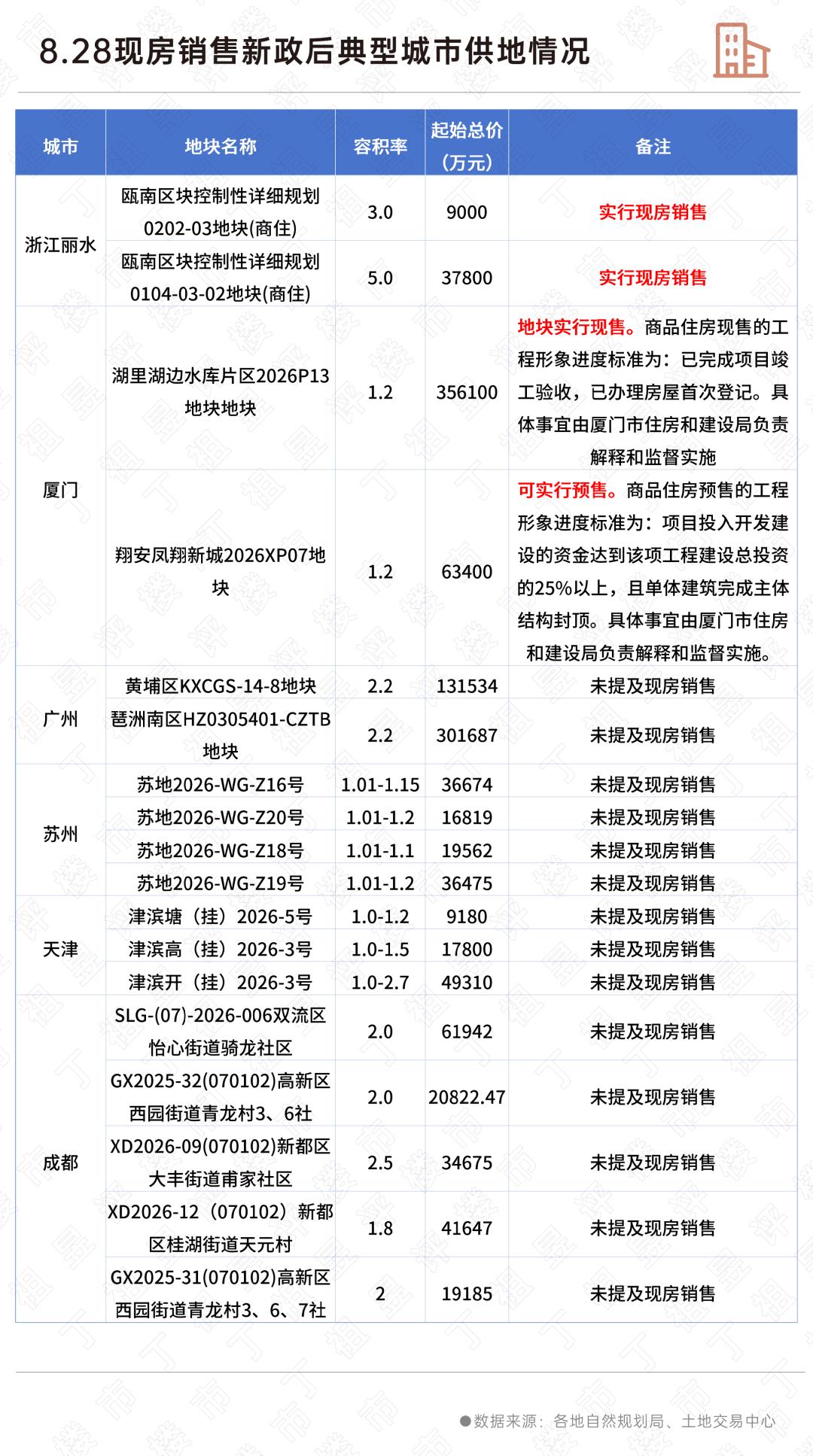
Meanwhile, we have sorted out the land supply list of typical cities since the implementation of the new policy. Xiamen and Lishui have taken the lead in implementing the existing home sales requirements, while most other cities have not clarified existing home sales in their latest land supply, and instead imposed constraints on the land purchase funds of real estate enterprises.
Under the new policy, the pace of land acquisition by real estate enterprises will slow down further, but the overall strategy of focusing investment on first-tier and high-energy-level second-tier cities remains unchanged.
01
After the New Policy
Subtle Changes Emerge in the First Land Auction Across Regions
Let's first look at Shanghai, the vane city.
On August 31, two residential plots in the 8th batch of Shanghai were successfully transferred, presenting a completely different market performance.
The 10-billion-yuan "land king" plot in Zhenru, Putuo was won by China Overseas Land & Investment at the reserve price. A subtle change is that this plot attracted many real estate enterprises including China Overseas, China Resources, Jinmao and Shanghai Construction City to participate when it was promoted at the beginning of the year, but only China Overseas signed up for the formal transfer. The main reason is that this plot has a large scale, long development cycle and high requirements for capital strength. Under the new policy expectation of "prioritizing existing home sales and extending the capital return cycle", only central SOEs with strong capital strength are capable of acquiring land.
As for whether the plot will implement existing home sales, the Shanghai branch of China Overseas also said that it is not yet clear, and it needs to wait for the implementation rules of Shanghai to be released.
While the low-density residential plot in Sijing, Songjiang attracted 4 real estate enterprises to bid, and was finally won by the consortium of Guomao and Frasers Property after 29 rounds of bidding, with a premium rate of 16.41%. Low-density residential plots are more favored by real estate enterprises.
Turning to Beijing, the first land auction after the new policy even witnessed a historically rare scene.
For the 629 plot in Jiangtai, Chaoyang, under the circumstance that three enterprises including China Overseas, China Resources Land, Jianzhidi & Swire Properties Consortium have signed up and some enterprises have already received the bidding number, the on-site bidding was directly suspended. The Beijing Municipal Commission of Planning and Natural Resources gave the reason that the plot will further optimize the transfer conditions in accordance with the relevant provisions on existing home sales.
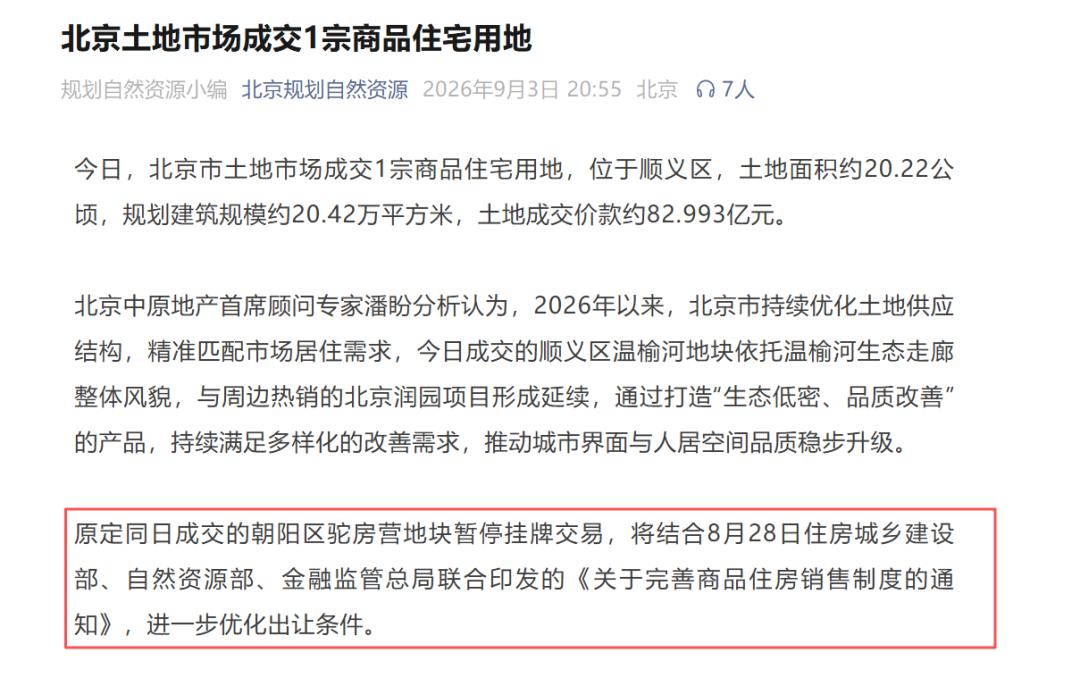
This plot is a complex plot integrating "residence + stadium", which has a high development threshold itself. Meanwhile, the total starting price is 7.521 billion yuan. After the release of the existing home sales policy, the development cost of real estate enterprises has further increased. The choice to suspend the transfer this time means that the land price and land transfer conditions need to be re-matched with the cost logic of the existing home era, and it is very likely that the conditions will be optimized, the land price will be lowered and the plot will be put on the market again later.
The first land auction in Guangzhou reflects the restraint and conservatism of real estate enterprises in bidding.
On September 4, the former Guangdong TV station plot was transferred, attracting a total of 4 real estate enterprises including Poly Development, Yuexiu, Zhushi and Tianhe High-tech to participate. It was finally traded at a premium of 16%, but the overall bidding process was relatively restrained and conservative. Among the 18 rounds of bidding by the 4 enterprises, Poly only bid twice, and did not bid again after the 10th round with a premium of 8%, leaving only Yuexiu Property and Pearl River Enterprise to bid alternately.
According to the analysis of the Guangzhou-Foshan region by Puru Data Intelligence, as a land plot listed before the new policy, the transfer conditions of this plot do not stipulate existing home sales, so pre-sales are implemented. According to the new regulations, the project can be pre-sold after the main structure is capped, which is at least 12 months earlier than existing home sales. However, the purchase loan for pre-sale will still be issued after the completion and filing, and the loan issuance node is not much different from the existing sales node, so real estate enterprises still need to balance the economic account.
The market in other cities is more rational. For the first round of land auctions in Chengdu, Qingdao, Hangzhou, Tianjin and Zhengzhou, most plots were traded at reserve price, and state-owned capital supporting the market has become the norm.
Only the residential plot in the North Zone of Xi'an Qujiang CCBD showed extremely high popularity, with a premium of 40% for a single plot, and was finally won by China Overseas. The core reason is that the core residential plots in Qujiang are scarce and out of supply, and the plot planning conditions were earlier than the implementation of the new policy, creating a natural time window, and the scarcity of high-quality assets outweighed the policy uncertainty.
It is also worth mentioning that private enterprises also appeared in the first land auction after the new policy. For example, Longxiang Holdings in Xi'an and Huaxinyuan Real Estate in Qingdao, the investments of these real estate enterprises are mainly focused on low-total-price, low-density residential plots.
02
Local Existing Home Sales Policy Is Not "One-Size-Fits-All"
Most Cities Choose a "Soft Landing" Approach
From the perspective of the land supply side, the implementation pace of existing home sales in most cities is still relatively moderate. On the one hand, local policies are still being further refined; on the other hand, the implementation of existing home sales is not one-size-fits-all, and more cities will choose a "soft landing" in the short term.
We have sorted out 18 newly launched residential plots in cities including Chengdu, Suzhou, Tianjin, Guangzhou, Xiamen and Lishui of Zhejiang, among which 3 plots have clear requirements for existing home sales, accounting for 16.7%. There are 2 plots in Lishui, Zhejiang, and 1 plot in Huli, Xiamen.
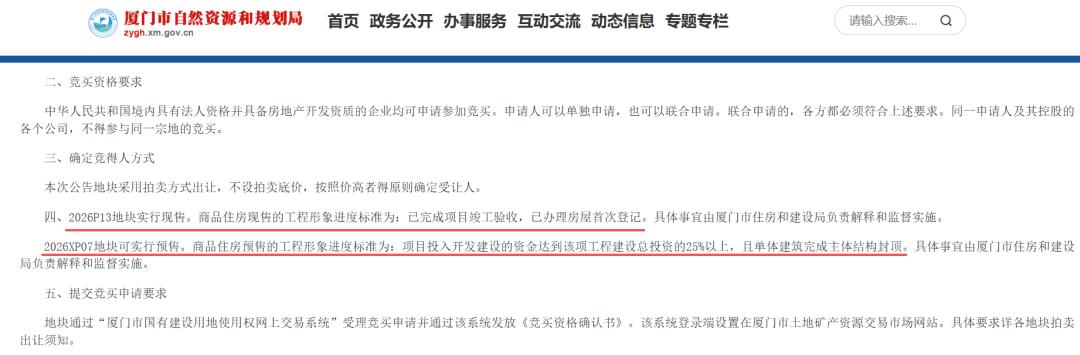
Xiamen took the lead in launching the first existing home sales transaction in Fujian after the new existing home sales policy. In the land auction transfer announcement released on September 3, it is clarified that Plot 2026P13 needs to implement existing home sales, while another Plot 2026XP07 can implement pre-sales. The pre-sales project has specific constraints: the funds invested in the development and construction of the project reach more than 25% of the total investment of the project, and the main structure of the single building is capped. This differentiated path of "implementing policies according to plots" is very likely to be the realistic choice for most cities in the future.
In addition to the above 3 residential plots, most residential plots in other cities do not explicitly mention existing home sales in the transfer announcements, and more of them put forward clear requirements on the funds of real estate enterprises.
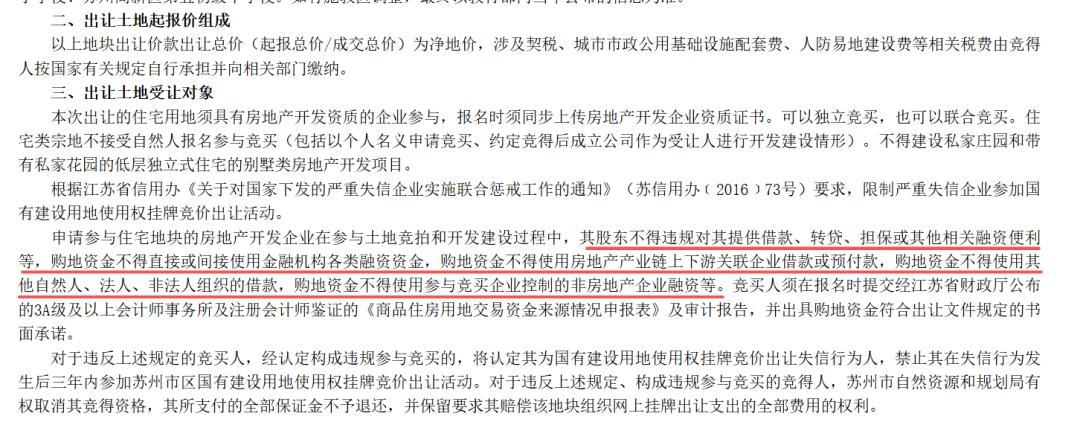
For example, Suzhou clarifies that the shareholders of the real estate enterprises participating in the bidding shall not illegally borrow, guarantee or re-lend funds, and the land purchase funds shall not use various financing from financial institutions, related loans from upstream and downstream parties, funds from natural persons or external legal persons, and even financing of non-real estate enterprises under their control is prohibited. From the perspective of the plots themselves, most of the 4 residential plots launched by Suzhou are low-density residential plots, and the starting prices are lower than those of the traded plots in the same block to control the land cost and ease the capital pressure of real estate enterprises.
Guangzhou has taken another path. The two residential plots launched after the new policy, namely Plot HZ0305401-CZTB in the South Zone of Pazhou and Plot KXCGS-14-8 in Huangpu District, do not explicitly mention existing home sales. However, on August 28, Guangzhou's existing home sales model has been implemented synchronously and kicked off, and the first pilot plot for existing home sales in Nansha Wanqingsha was successfully traded at the reserve price.
It can be seen that under the background of the introduction of the national new existing home sales policy, Guangzhou has adopted more of a "soft landing" strategy, with pilot projects taking the lead and rolling out gradually.
At present, most cities are consistent with Guangzhou's "soft landing" approach, and the supporting detailed rules in various places still need to be further clarified.
For real estate enterprises, requirements such as prioritizing existing home sales and raising the threshold for pre-sales will extend the development and capital return cycle, and the capital occupation time and financial cost of projects will rise significantly. The overall land acquisition logic will be adjusted. First of all, the investment pace will slow down, which is reflected in the data that in the first week after the release of the existing home sales policy (August 31 - September 6), the land transaction area in key cities fell from a high level, down 36% month-on-month. Under the circumstance that detailed rules have not been implemented in various places, the pace of land acquisition by real estate enterprises may further slow down in the short term.
Conclusion
Judging from the performance of the first land auctions in key cities, the investment and land acquisition decisions of real estate enterprises have become more conservative and refined.
First, in the future, the investment layout of real estate enterprises will be further concentrated in the core blocks of first-tier cities and strong second-tier cities. For example, China Resources Land clearly stated at the mid-term performance meeting that the requirements of the new policy optimize land supply, and high-energy-level cities in the first and second tiers will benefit earlier and faster. In the future, remote suburban areas and third- and fourth-tier cities with net population outflow will gradually be excluded from the land acquisition list of real estate enterprises.
Second, product preference turns to low-density residential plots. The reason is that even for existing home sales, the construction period of low-density multi-story products is generally controllable, and some real estate enterprises can already complete the roughcast completion and filing of small high-rise and multi-story products within 12-18 months, which has relatively small impact on sales and capital return.
Third, the profit threshold has been raised, and cooperative land acquisition has become the norm. The capital cost of independent land acquisition by a single subject has risen and the cycle has been extended. In the future, project cooperation and consortium land acquisition will become a more common choice.
Fourth, high-premium plots may be greatly reduced, and land prices will enter a stable operation state. Under the multiple factors of the policy supporting the market, local governments actively controlling land prices, and real estate enterprises bidding cautiously, stabilizing land prices and stabilizing expectations will become the long-term main theme.
This article is from the WeChat official account "Ding Zuyu Comments on Real Estate Market", written by the Editorial Department, and authorized for release by 36Kr.