How has Netflix transformed sports content?
A sports path that is completely different from ESPN and Amazon.
"Ever since *Drive to Survive* was launched, Netflix has played a key role in the development of F1."
After announcing earlier this year that it would swap part of its exclusive F1 copyright with Netflix, Eddy Cue, Senior Vice President of Apple TV, commented on the value of this cooperation. He was referring to the Netflix sports documentary *Drive to Survive*, which has successfully expanded F1's influence in North America; and after the eighth season of the series aired, Netflix is finally about to enter the field of F1 live broadcasting.
F1 is a footnote to Netflix's strategic shift in sports.
In recent years, Netflix has been unwilling to just act as a pan-entertainment amplifier for sports events, and has begun to frequently enter the field of live sports broadcasting. Back to Christmas 2024, the NFL Christmas Day Game was broadcast live on Netflix for the first time, and Beyoncé's halftime show attracted 27 million concurrent viewers at its peak. Netflix redefined the logic of sports live broadcasting by amplifying the influence of this "global entertainment event".
Around that time, Netflix also broadcast the match between internet-famous boxer Jake Paul and 58-year-old boxing champion Mike Tyson, attracting about 108 million global viewers, making it the most-watched sports event in streaming history.
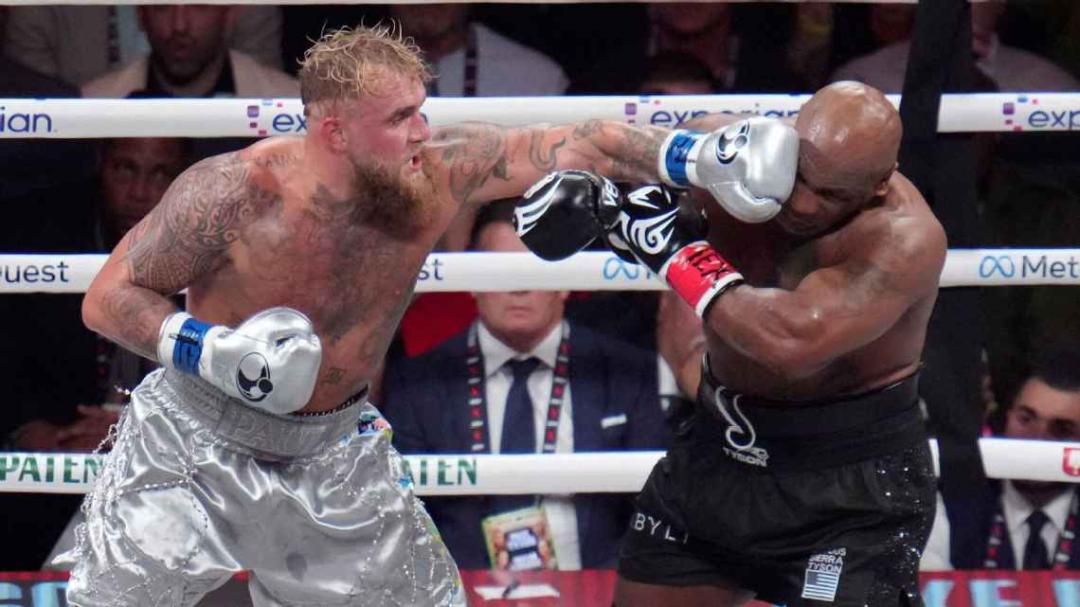
The showdown between Jake Paul and Mike Tyson
Ted Sarandos, co-CEO of Netflix, explained this: The company adopts an "event strategy rather than a sports strategy", aiming to host "big events that can trigger global discussions" instead of bidding for the copyright of full-season leagues.
Scholars Daniel Dayan and Elihu Katz once put forward the concept of "media events", referring to "the festive viewing of television, that is, those historical events broadcast live on television that make people across the country and even the world hold their breath and stop to watch". Netflix's strategy is an extension of this concept in the streaming era: select topical live sports events, and achieve festive viewing for global audiences through pan-entertainment packaging and global distribution.
This is also interpreted by the media as an "anti-ESPN" sports strategy. Live events are the lifeblood of ESPN, so it spends a large amount of its budget on purchasing the broadcast rights for the full season. Netflix goes the opposite way, focusing on buying a single topical "event". If it loses the NFL broadcast rights, ESPN's position in the field of sports entertainment will be greatly reduced, but Netflix's stock price will not plummet just because it loses two Christmas Day games.
Netflix once transformed the episode update logic of TV stations by releasing full seasons of shows at one go. Now it returns to the field of live sports broadcasting, where traditional TV excels, trying to re-define "live sports events" with global distribution, algorithm recommendation and pan-entertainment narrative.
01
"Netflix-ify" sports events: turn broadcasts into events
Before entering the live broadcast field, Netflix has tried to inject the gene of entertainment narrative into pan-sports content. Brandon Riegg, Netflix's Vice President of Nonfiction and Sports, once defined sports content as "the ultimate soap opera". The documentary *Drive to Survive* focuses on enhancing the drama of characters and behind-the-scenes conflicts, rather than focusing on the competition technology itself.
Later, Netflix continued the entertainment narrative in live sports events.
In November 2023, Netflix launched its first live sports event, the all-star golf tournament Netflix Cup, with participants from its documentaries *Drive to Survive* and *Full Swing*. A year later, Netflix broadcast the century battle between Paul and Tyson, announcing that the peak number of global users watching the match reached 65 million, successfully turning the live broadcast into a global event. The media commented that the influence of this match "surpassed the sport itself".
At the end of 2024, Netflix announced that it had purchased the copyright of NFL Christmas Day Games for three years, and began to get involved in the live broadcast of top North American leagues. Co-CEO Greg Peters made it clear that Netflix does not regard the NFL as a series of competitions running through the whole season, but as event-based content designed to attract wide audience interest during the holiday period.
This is a deconstruction of the traditional logic of sports copyright: breaking the long season into isolated holiday events and purchasing the Christmas viewing scenario among them.
Different from directly selecting participants for boxing and golf competitions before, traditional sports competitions have strong inertia, so how to package them into events has become a new topic. Peters put forward the concept of "Netflix-ify", hoping to use Netflix's unique entertainment genes and operation methods to transform sports live broadcasts.
The "Netflix-ify" concept was finally implemented in the live broadcast of the Christmas Day Game.
The first stage is publicity. Offline, the first Netflix airship flew over seven cities that have or are adjacent to NFL teams in one month, and the platform also deployed hot cocoa food trucks at competitions in multiple cities. Online, Netflix mobilized its stars: the leading actors of *Cobra Kai* and *Back in Action* filmed promotional advertisements for the game respectively, and Netflix also built momentum for Beyoncé's halftime show on social media.
The live broadcast itself was packaged as an entertaining star performance. In 2024, Beyoncé's halftime show instantly attracted 27 million viewers, and its attention even overshadowed the game itself. North American observers called it the "Beyoncé Effect". In 2025, the halftime show invited artists such as Snoop Dogg, and the halftime show further evolved into a holiday party, enhancing the experience of "watching the game is more about watching the show".
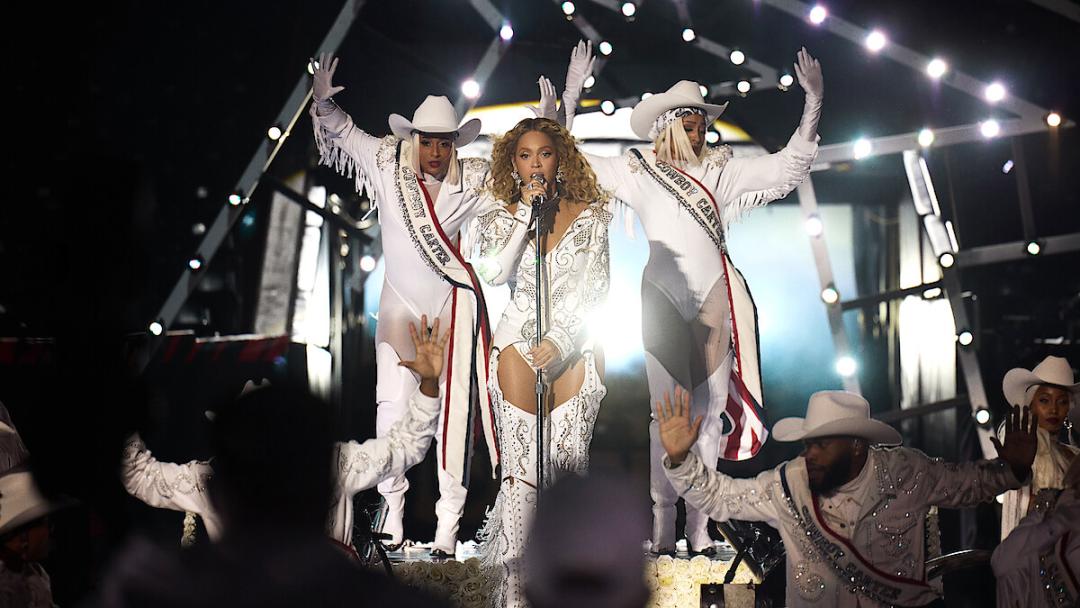
Beyoncé's halftime show in 2024 Source: Netflix
In the live broadcast link of the event, Netflix adopted the "CBS production, Netflix distribution" model: it directly used the CBS broadcast team, and focused on packaging and distribution by itself. During the previous boxing match, thousands of users complained about picture stuttering on social media. The more lightweight live broadcast model allows Netflix to leverage its strengths and avoid its weaknesses.
But in the end, "re-distributing" sports events is Netflix's core value.
Compared with traditional TV networks, Netflix has more than 300 million global subscribers, and what the NFL values is also its ability to push American football to the world. The 2024 Christmas NFL game finally covered 218 countries and regions.
This forms an important part of Netflix's event strategy. Although the NFL is the top league in North America, its overseas influence has long been inferior to the NBA. When it is incorporated into Netflix's global distribution system, a holiday game gains the possibility of becoming a "global event".
At this point, Netflix's "event strategy" forms a closed loop: before the game, it builds momentum to upgrade the game into a "can't-miss grand ceremony"; during the game, it uses star performances to create a "spectacle of collective viewing", and completes attention operation through film and television linkage and global distribution. The traffic reaches its peak during the game, and the aura effect of stars and Netflix's own entertainment content system jointly extend the influence cycle before and after this peak.
In this process, Netflix is more like a creator of festive atmosphere for live sports events, and its event strategy is far from subverting the live sports broadcast model. The media also believes that Netflix is not trying to completely reinvent the NFL, but adding its own packaging on the traditional production system.
This model is being systematically replicated, and is facing criticism for excessive entertainment. In 2025, Netflix reached a three-year global copyright agreement with MLB to broadcast key games each season. After the first MLB live broadcast ended, Netflix was criticized for paying too much attention to performance. Some sports hosts believe that entertainment is certainly important, but it should not overshadow the wonderful scenes of the game itself.
02
Netflix needs sports events: the era of synchronized advertising
When Brandon Riegg joined Netflix from NBC in 2016, he strongly pushed Netflix to enter the field of live sports broadcasting, but was strongly opposed by many senior executives. The reason was that investing huge sums of money to obtain full-season live broadcast rights did not make economic sense for a platform with subscription and on-demand as its core.
Co-CEO Sarandos set the tone for Netflix's sports strategy in an interview in 2022: "We are not anti-sports, we just focus on profits."
Before the whole year of 2024, Netflix's core business demand was subscription growth, and its focus was on movies, series and variety shows.
Even for sports business, Netflix adopted the way of producing a large number of high-quality documentaries, among which *Drive to Survive* has been contributing important revenue since it was broadcast in 2019. According to Parrot Analytics' calculation, this program brought the platform more than 290 million US dollars in global streaming revenue between 2020 and 2024.
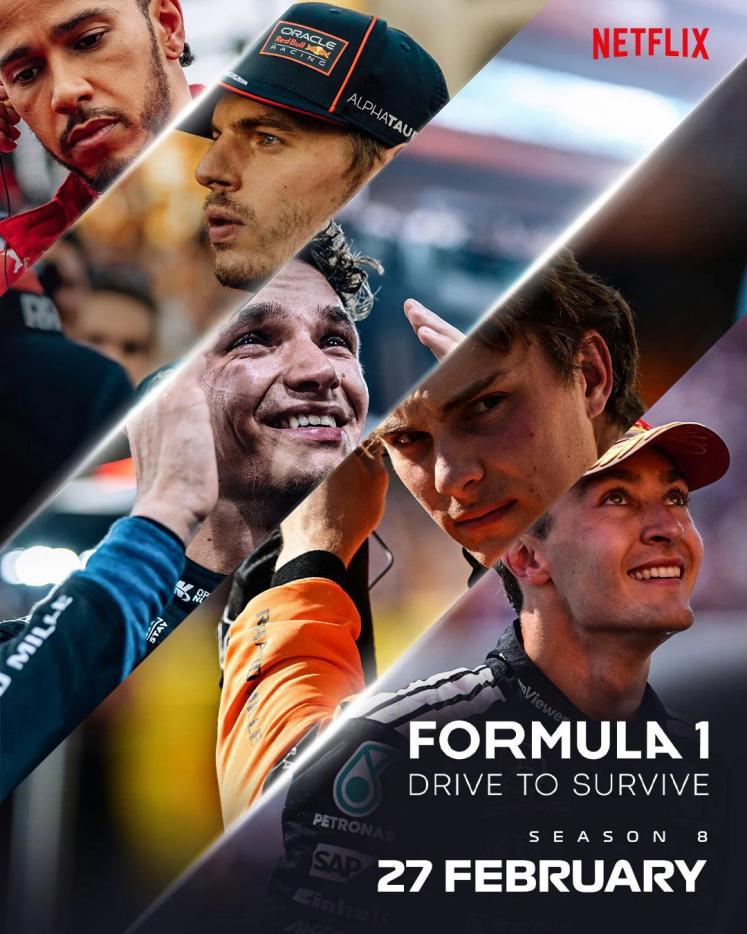
The eighth season of *Drive to Survive* was launched on Netflix on February 27, 2026
The turning point came in 2022, when Netflix released its worst financial report in ten years, and its user scale declined for the first time. The crisis forced it to break the no-advertising principle it had adhered to for many years, and launch subscription packages with ads. But Netflix was relatively conservative in the advertising business, and did not announce that it would allow brands to sponsor live events and sports events until the next year. It was the Netflix Cup golf tournament that implemented this scenario.
Sports live broadcasting and advertising business started almost at the same time. Netflix also admitted that entering the field of live sports broadcasting is precisely to drive advertising sales at specific points in time.
Different from the domestic market, sports events occupy a core position in the North American entertainment ecosystem. In terms of TV ratings, the NFL is leading by a large margin. During the 2025 season, its games took 89 of the top 100 TV ratings spots. This determines the commercial value of sports events, especially the advertising effect carried by the live broadcast model. According to eMarketer data, a 30-second ad during NBC's Sunday Night Football charges more than 1 million US dollars, which is the most expensive advertising spot among the TV channels tracked in 2024.
The synchronicity of live sports events has become a scarce resource in the fragmented era, gathering scattered attention again at specific moments. This is the underlying logic for Netflix to break through its advertising business with live sports broadcasts. In 2024 and 2025, the advertising spots for Netflix's NFL Christmas Day Games were all sold out in advance.
The idea of event marketing also serves the advertising orientation. Sports event advertisements on specific festivals often have higher user engagement. EDO data shows that the total interaction volume of advertisements placed during Netflix's Christmas NFL games is 1.5 times the average level of regular season games. Kevin Krim, President and CEO of EDO, believes that Beyoncé also has an aura effect on advertising interactions.
However, the strong combination of events and advertising has also brought criticism. In the live broadcast of the MLB opening game in 2025, a large number of commercial placements were boycotted, and many audiences reported that the advertising placements were not natural enough and the transitions were not smooth enough.
Of course, user growth is also an important dimension. Sports events have obvious effect on attracting new users. The Tyson boxing match brought more than 1.4 million new users to Netflix within three days after the match. The Tyson boxing match and the first live NFL Christmas game helped Netflix add 18.9 million new subscribers in the fourth quarter of 2024, making it the largest single-quarter user growth in its history.
Alicia Reese, Senior Vice President of Wedbush Securities, believes that the key to the growth of Netflix's user engagement this year is the better-than-expected performance of live sports broadcasts. Although the content expenditure of live sports broadcasts only accounts for 5% of the total expenditure, and the viewing duration only accounts for 1%, 6 of the 10 peak days for new member registrations in the past came from live sports events.
However, not holding the season copyright for a long time means that the users are temporary audiences attracted by the event. Therefore, Netflix's live sports broadcasts try to embed the events into its content ecosystem, attracting users to stay on the platform to watch other content, so as to achieve the growth of total users and viewing duration.
In Netflix's live sports broadcasts, film and television content and sports IP are in a mutually beneficial relationship. During the NFL Christmas Day Game, Netflix added self-produced drama stars to the broadcast lineup, and the 2024 live advertising spots were used to warm up for the second season of *Squid Game*. The event itself is not only content, but also a promotion channel for other content.
In this cycle, sports events are embedded into the content ecosystem, and the content ecosystem creates live events, which ultimately points to the expansion of Netflix's content library and user base.
03
Netflix in the process of North American sports
After the 2024 NFL Christmas Day Game, North American sports media figure Daniel Roberts believes that Netflix's successful distribution of NFL games is a turning point in the history of the development of sports live broadcast copyright.
Just a few months ago, Mark Lazarus, Chairman of NBCUniversal, said when talking about the influx of streaming media into the sports field that he was not worried: "They do not have the coverage we get through TV and streaming." The success of the Christmas Day Game proved Netflix's ability to cover sports audiences in North America and around the world.
Compared with the traditional covered audiences of TV stations, North American sports events are actively embracing streaming media and the young audiences behind them. On Prime Video, the audience of NFL Thursday Night Football is 7 years younger than the TV audience, and the NBA audience is 9 years younger. A joint report released by InterDigital and Parks Associates further shows that 40% of sports fans in North America now only watch sports events on streaming services.
What new media brings to sports events is not a simple increment of users, but a younger transformation with internet thinking.
F1 has long been acclimatized in the United States. In 2018, its average viewership per game on ESPN was only about 550,000 viewers. After that, a series of new media operations expanded the audience of this event, especially the young people. Liberty Media Group lifted social media restrictions, allowing teams and drivers to talk directly with fans. In 2021, the total number of F1 fans on major global social media platforms increased by 40%.
*Drive to Survive* completed the popularization of the event for North American audiences. Nielsen research shows that 34% of the audience became new F1 fans after watching *Drive to Survive*. By 2022, F1's average viewership per game on ESPN had climbed to an average of 1.3 million.
The deep involvement of streaming media in sports events has also made the North American sports copyright market more fragmented.
Top leagues still give core season copyrights to traditional TV networks and large streaming media, but they often split incremental copyrights such as Christmas Day Games, opening nights, and skill competitions to introduce new buyers, raise