How should Chinese companies present themselves at international exhibitions?
For Chinese consumer electronics and home appliance enterprises, international exhibitions remain a necessary rite of passage. But the way to go through this rite should not be to tiptoe to perform maturity, but to sincerely present their own growth trajectory.
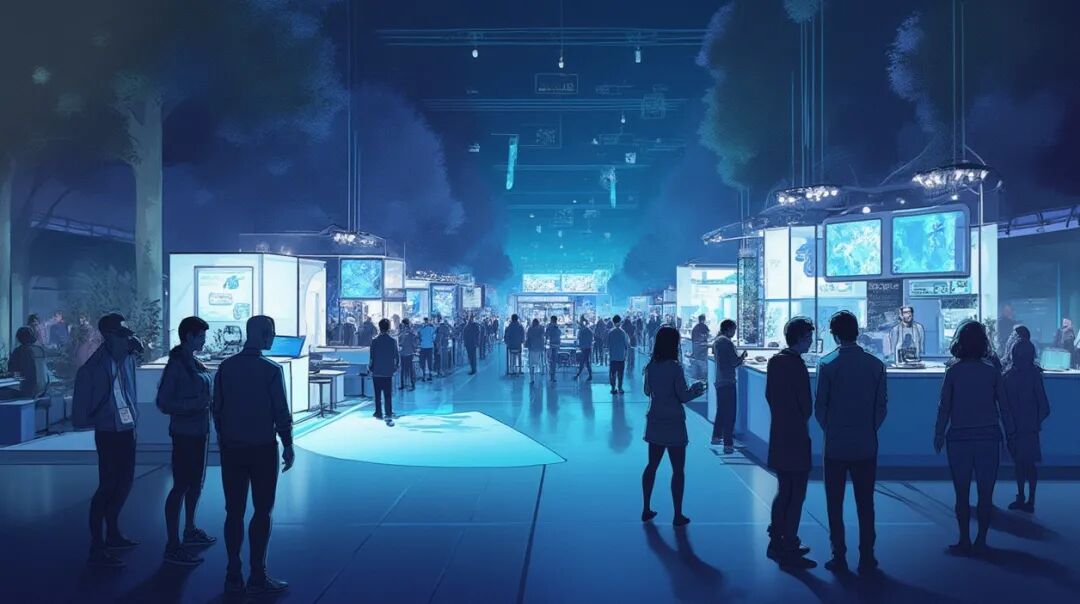
Recently, the IFA exhibition in Germany is in full swing. In fact, this century-old exhibition once went through a period of downturn. However, the boom of artificial intelligence, together with the participation of Chinese brands, has reignited its popularity.
Looking back, every January, a familiar scenario unfolds on schedule in the CES exhibition halls in Las Vegas.
In front of the booth of a southern Chinese robot vacuum company, blond "actors" are demonstrating products to onlookers in fluent English; the booth of a Shenzhen-based imaging and photography equipment company is set up like a Hollywood film set, with every gimbal held by a professional photographer, and the lens is not aimed at the product, but at the amazed expressions of passers-by; a Qingdao home appliance company simply moved a whole "smart kitchen" to the middle of the desert, with refrigerators, ovens and dishwashers arranged in a row, as if declaring to the whole world: the future has arrived.
However, after the exhibition ends, the products of these Chinese enterprises that have been widely noticed at European and American exhibitions are mostly sold to Southeast Asia, the Middle East, Latin America and Africa. It is still difficult to find their presence on the shelves of mainstream European and American markets.
This is no secret, it is an industry paradox that has lasted for many years.
The "performance economy" of exhibitions
To understand the way Chinese enterprises participate in international exhibitions, we must first understand the nature of international exhibitions themselves.
CES and IFA have never been pure trading markets. They are the fashion week of the technology industry and the attention arena for industrial capital. Here, participation in the exhibition itself is a form of content production. A brand releases the "world's first AI refrigerator" at CES, and this news can complete fission dissemination through domestic technology media, self-media and social media within 48 hours, reaching far more domestic consumers than the number of users it can actually cover overseas.
This is the first layer of logic of the "blossom outside the wall gives fragrance inside the wall": overseas exhibitions are becoming marketing events targeting the domestic market.
A Qingdao home appliance company is well aware of this logic. The area of their booth at IFA has expanded year by year, from an initial standard booth to now occupying the most prominent position in the entire exhibition hall. During each IFA, their domestic public relations team will prepare press release templates one month in advance. As soon as the opening bell of the exhibition rings, headlines such as "Brand X Shines in Europe" and "Intelligent Manufacturing of China Conquers the World" will sweep across the Chinese internet. As for whether European consumers are really queuing up to buy their products in MediaMarkt (Europe's largest consumer electronics retailer), that becomes a secondary issue.
A southern Chinese robot vacuum company has demonstrated another approach. Their products have reached the ceiling of fierce competition in the domestic market, and they urgently need a new narrative to support their valuation and stock price. Their appearance at CES is essentially a roadshow for investors and the capital market. When they released a "new generation of robot vacuums equipped with large models" in Las Vegas, the real audience was not in the exhibition hall, but in the exchanges in Shenzhen and Hong Kong. The spotlight of the exhibition has become the story material for earnings calls.
The logic of a Shenzhen-based imaging and photography equipment company is different. They produce professional imaging equipment, and their user groups are Vloggers and content creators around the world. For them, CES and NAB (National Association of Broadcasters Show in the US) are events that they must attend, not because they can sell a large number of gimbals on site, but because top creators on YouTube select products at these exhibitions. If their products do not appear in the creators' videos, it is equivalent to "social death" in the professional community.
Three approaches, three sets of logic, but they share one thing in common: the value of exhibition participation itself has exceeded the value of sales behavior.
The "market time difference" between Asia, Africa, Latin America and Europe, the United States
Then why are the products of these enterprises that are highly praised at European and American exhibitions mainly flowing to the markets in Asia, Africa and Latin America?
The answer lies in an overlooked logic of the industrial chain: exhibitions are a display of brand power, but brand power does not equal channel power.
The mainstream consumer electronics market in Europe and the United States is a highly solidified system. Taking the United States as an example, the shelves of mainstream channel providers such as Best Buy, Costco and Target are extremely valuable. For a new brand to enter, it needs not only product strength, but also years of channel negotiation, after-sales service system construction, localization compliance and brand awareness accumulation. The reason why Apple and Tesla insist on holding their own conferences is precisely that they do not need channel providers to endorse them - they are the channels themselves.
Most Chinese consumer electronics enterprises have not yet completed the transformation from "product companies" to "channel companies". What they show at CES is the most cutting-edge technical concept, but in the actual sales in the European and American markets, they face three dilemmas: channel blockade, low brand awareness and lack of after-sales system.
In contrast, the markets in Asia, Africa and Latin America present a completely different picture. The channels in these markets are more scattered, the penetration rate of e-commerce is rising rapidly, and consumers are far more sensitive to "cost-effectiveness" than obsessed with "brand history". The brand momentum accumulated by Chinese enterprises at European and American exhibitions has been efficiently converted in the markets of Asia, Africa and Latin America through cross-border e-commerce and overseas distributor networks.
This is not a failure, it is a pragmatic "market time difference" strategy: set up the flag in Europe and the United States, and harvest in Asia, Africa and Latin America.
However, the problem is that this strategy is hitting a ceiling. When more and more Chinese enterprises pour into the markets of Asia, Africa and Latin America, price wars are inevitable; and when they want to truly enter the mainstream European and American markets, they find that the years of exposure they have accumulated at exhibitions have not won them the admission ticket from channel providers.
The "anti-exhibition" logic of Apple and Tesla
To answer the question of "what kind of attitude should we take to participate in exhibitions", we must first understand the logic of those "non-participants".
Apple has hardly participated in any third-party consumer electronics exhibitions since the 1980s. Their launch events are carefully choreographed religious ceremonies, from the design of the invitation letter to every animation on the Keynote page, which all reinforce one message: Apple does not need to borrow other people's stages.
The same is true for Tesla. When Musk released Cybercab on a Hollywood film set, he chose a narrative space completely controlled by himself. There are no booths of competitors next door to interfere, no media distracted by countless press releases in the exhibition hall, and the eyes of the whole world belong to Tesla only in that one or two hours.
What is the core of this "anti-exhibition" logic?
It is channel control and narrative dominance.
Apple and Tesla have established direct-to-consumer channels (Apple Store, Tesla official website and direct stores), so they do not need to reach channel providers or consumers through exhibitions. More importantly, their brand momentum is strong enough that the noisy environment of any third-party exhibition may dilute the efficiency of their information transmission.
But this does not mean that all enterprises should follow the example of Apple and Tesla. In fact, for most Chinese consumer electronics enterprises, it is unrealistic to completely abandon exhibitions at this stage. They still need exhibitions to contact overseas media, find distributors and understand the dynamics of competing products. The problem is that the way of participating in exhibitions needs to be upgraded.
From "showing face" to "taking root": the evolution of exhibition participation approaches
The participation of Chinese enterprises in international exhibitions is undergoing evolution from version 1.0 to 3.0.
The 1.0 stage is the "face-showing mode". Rent a booth, place several prototype products, publish several press releases, and tell the domestic market and investors "I'm here". This is the standard action of most Chinese enterprises in the past decade. This mode has fallen into severe involution today - the number of Chinese enterprises at CES is so large that overseas media have begun to use "Chinese Pavilion" to tease some exhibition hall areas.
The 2.0 stage is the "transaction mode". Some enterprises have begun to realize that exhibitions cannot only focus on brand display, but must bring actual sales leads. They set up special B2B negotiation areas at exhibitions, invite purchasing managers from Amazon and Walmart to hold closed-door meetings, and sign distribution agreements with overseas distributors. A Shenzhen-based imaging and photography equipment company is a typical representative of this mode - in their exhibition team, the number of sales personnel has exceeded that of marketing and public relations personnel.
The 2.5 stage is the "content mode". With the rise of TikTok, YouTube Shorts and Instagram Reels, some enterprises have begun to treat exhibitions as film sets for content production. They no longer pursue the number of press releases, but a viral video. A southern Chinese robot vacuum company once planned a "cleaning competition between robots and real people" during CES. The video got tens of millions of views on TikTok, and the direct e-commerce conversion it brought far exceeded that of traditional media reports.
But these are still not enough. What really needs to be reached is the 3.0 stage "root-taking mode".
The 3.0 approach: make the exhibition an "admission ceremony" rather than a "performance stage"
What is the "root-taking mode"?
It does not mean spending more money to build a more luxurious booth at the exhibition, but embedding exhibition participation into a more complete overseas market entry strategy.
A Qingdao home appliance company has begun to try a new strategy in recent years: three months before the opening of IFA, they will launch a small local product experience event in Germany, inviting local KOLs, home decoration designers and channel providers to try out the products in advance. The booth during IFA is no longer the "first debut", but a "results display". The clever part of this strategy is that when the media at IFA flock to their booth, they find that some real users on German local social media have already shared their usage experiences - which is more convincing than any public relations press release.
A Shenzhen-based imaging and photography equipment company did a "counter-intuitive" thing at the exhibition: they set up a "fault display area" at the NAB booth, actively showing the failure cases of products in extreme environments, and explaining on site how engineers iterate to solve the problems. This "imperfect honesty" has won the trust of professional users - because real creators know that no equipment is perfect, and what matters is the attitude of the brand in the face of problems.
A southern Chinese robot vacuum company is trying to transform CES from a "release venue" to a "co-creation venue". At the exhibition, they no longer only release new products, but invite overseas users to vote for the concept of the next generation of products, and even open part of the R&D decision-making power to the core user community. This sense of participation is helping them transform from "a brand from China" to "a brand belonging to users".
These cases point to the same direction: a truly effective way to participate in exhibitions is not to show "how strong I am", but to show "how much I want to stay".
Exhibitions are a mirror
Back to the original question: do Chinese enterprises participate in overseas exhibitions just to seek recognition at home after gaining exposure abroad?
It used to be, but it should not be anymore.
The value of CES and IFA never lies in the flow of people at the booths in those few days, but in the fact that they force enterprises to answer a fundamental question: are your products really ready to face the global market?
When an enterprise's products are mainly sold to Asia, Africa and Latin America, but it displays the most expensive flagship products at European and American exhibitions, this mirror reflects the split of its strategy. When an enterprise's new product launch only goes viral on domestic social media, but is not reported by any mainstream overseas technology media, this mirror reflects the hollowness of its narrative.
The reason why Apple and Tesla choose to hold their own launch events is not that they are arrogant, but that they have already passed the "rite of passage" of exhibitions. Their products, channels and brands are strong enough that they do not need to borrow any external stage to prove themselves.
For Chinese consumer electronics and home appliance enterprises, international exhibitions remain a necessary rite of passage. But the way to go through this rite should not be to tiptoe to perform maturity, but to sincerely present their own growth trajectory - including those unsolved pain points, those under-construction channels, and those voices that truly listen to overseas users.
After all, under the dazzling lights of Las Vegas, what touches people the most is never the perfect performance, but the sincerity of a brand that truly wants to "enter the market".
Blossoming outside the wall is never as good as taking root in the market. And the exhibition should be the starting point of taking root, not the end point of performance.
This article is from the WeChat official account "Kaisen Observation", written by Kaisen, and is released with authorization from 36Kr.