The "wild mountain trend" is popping up everywhere.
01
Identical Business Format and Convergent Naming
Restaurants Are All Transforming to the "Wild Mountain Aesthetic"
Recently, the editor of Canyin Neican wandered around Changsha MixC and noticed a very interesting phenomenon.
On a certain floor of the mall, more than half a dozen "wild mountain style" restaurants including Huqia, Need, Yeguo, and Mabu Canteen are clustered together, and there is also a newly opened o'eat on the first floor.
All these stores adopt uniform black store signs and white logos. In addition to the minimalist design, a large number of green plants are added both inside and outside the stores to highlight the "wild mountain and nature" vibe. Even on weekdays, there are still long queues at the entrance.
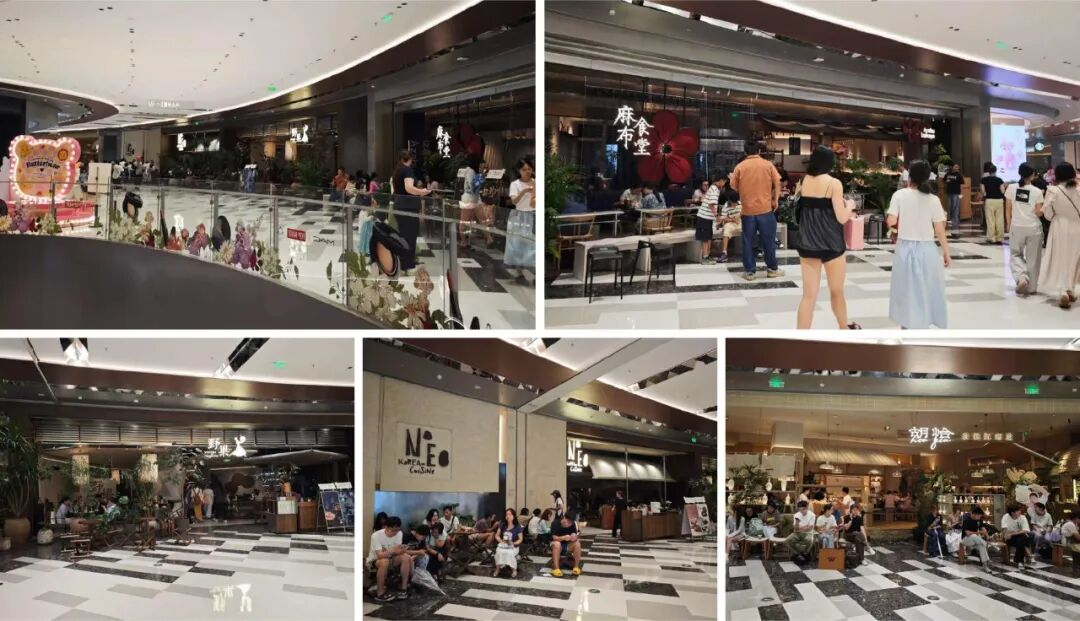
This is not an isolated case. In fact, from shopping malls to street sides, the "wild mountain" element has become a direction that the entire catering industry is collectively betting on.
Douyin Lifestyle data shows that in the first half of 2025, the order volume of "wild mountain and nature" themed restaurants increased by 102% year on year, and the payment GMV of restaurants themed with "forest, courtyard, green plants" increased by 86% year on year. In the same period, the number of relevant merchants increased by 47.2%, and the interaction rate of content with "wild mountain scene" is 2.3 times that of ordinary catering content.
Driven by the popularity, all categories are beginning to move closer to the wild mountain style.
Hot pot track remains the main battlefield of the wild mountain style. Sanchushan, founded in 2021, has now deployed 51 stores in cities including Beijing, Shanghai, Guangzhou and Shenzhen, and recently launched the counter-service mode to refine the wild mountain aesthetic; Yunshanji, founded in the same period, has 122 operating stores, and Shanhuanhuan, founded in 2023, has opened 180 stores, showing an extremely rapid development momentum.
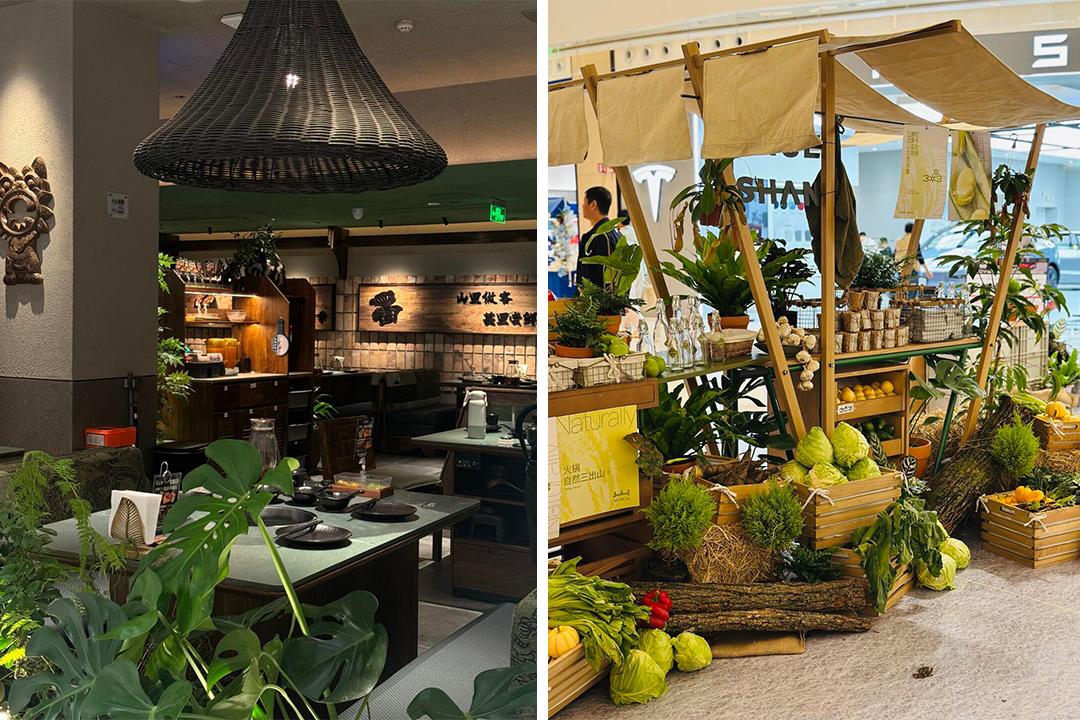
Local cuisines that have become popular in recent years are also beginning to "evolve" towards the wild mountain style. For the Yunnan-Guizhou cuisine category alone, from the naming perspective, various names with "up the mountain, down the mountain, in the mountain, out of the mountain", "plum fruit, wild fruit, Anna fruit" emerge in endlessly; Jiangxi cuisine quickly follows suit, and the popularity of brands such as Xiaoxiangxi, Yeshantong and Huqia continues to rise.
At the same time, once niche local cuisines such as Ningbo cuisine and Guangxi cuisine have all put on the "wild mountain" coat. Even Northeast Chinese cuisine and Xinjiang cuisine, which are far from the "wild mountain" concept in the public's traditional impression, have begun to lay palm leaves, dead wood and ferns in their stores. What's more, some stores directly use large hand-held bouquets as the core decoration, so that customers see flowers first and then the menu when entering the door.
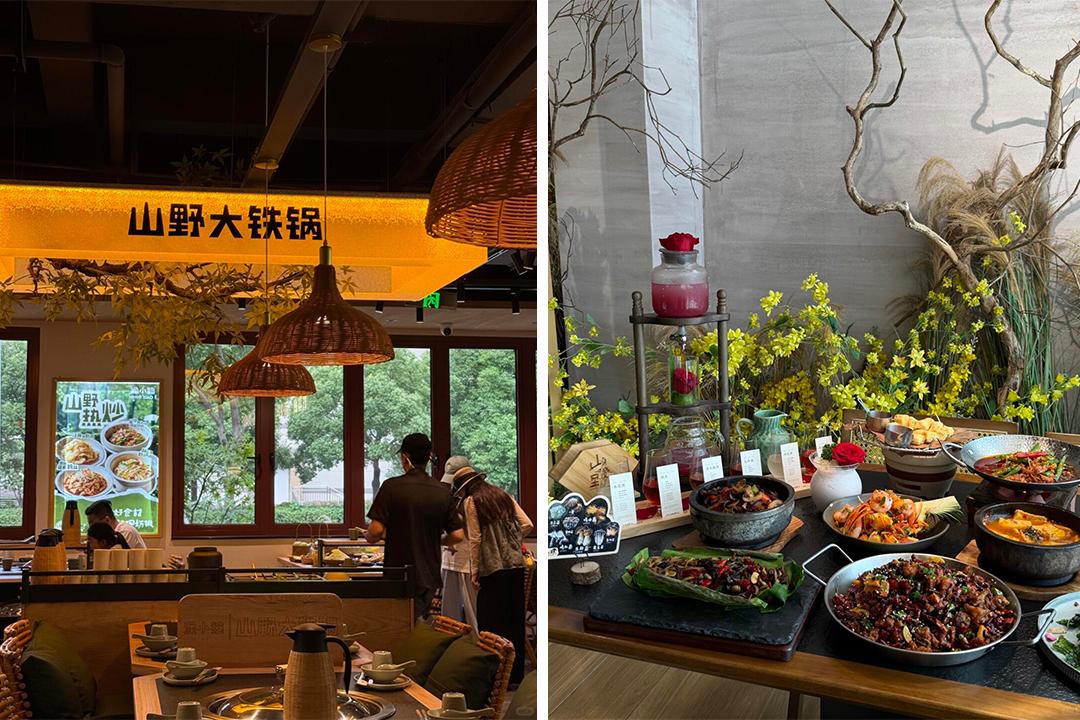
Not only full-service and fast-food restaurants, coffee shops are also rising with the "wild mountain style". For example, LENTO LOOM, a newly opened coffee roastery factory store in Qingpu District, Shanghai, covers an area of 1600 ㎡, with a large number of green plants added to the store, just like a coffee shop set up in a botanical garden.
Not only new brands are chasing this trend, old brands are also reshaping their image and moving towards the wild mountain style collectively.
Warehouse No.3 in Shanghai, which initially focused on futuristic space and cyberpunk style, has now added a large number of plants to its space, half sci-fi and half natural, which can be regarded as the aesthetic integration of two eras. The new catering brand of Zhu Guangyu, Monong Guibei Mountain Yellow Skin Grilled Fish, not only sets up the counter-service mode of direct open-fire grilling, but also fills the whole space with rockery, bamboo weaving and fresh flower landscapes.
02
Wild Mountain Style
Why Has It Become the New Aesthetic Standard for Restaurants?
The starting point of this trend can be traced back to around 2024.
At that time, a number of "wild mountain hot pot" restaurants known for their "atmosphere" brought the "wild mountain style" to urban dining tables. Brands used niche vegetables from Yunnan and Guizhou in their dishes, put forward the "wild mountain and nature" label in marketing, and added ethnic symbols such as rattan weaving and batik to the space.
At that time, the wild mountain style still carried the scarcity of regional culture. Consumers ate Yunnan mushrooms and Guizhou sour soup, and sat in a restaurant full of green plants by the way. It was an extension of local flavors and a low-cost alternative for urban people to travel far away.
But now, two or three years later, the wild mountain style has evolved from the "faraway place" for a few people to the "standard configuration" of the entire industry. This kind of imitation has also slipped from style reference to mass replication.
Why are almost all categories chasing the same trend?
First, consumers' ordering logic has changed, and things that are "real and natural" are more touching.
Against the backdrop of tightening consumption, customers are increasingly wary of "exquisite catering" packaged by marketing. Ingredients and installations such as wild fruits and coarse pottery naturally have a sense of "nature".
When customers see them while waiting for their meals, they will automatically imagine "fresh ingredients just picked in the deep mountains". For brands, even without words, this is a silent story and a value endorsement.
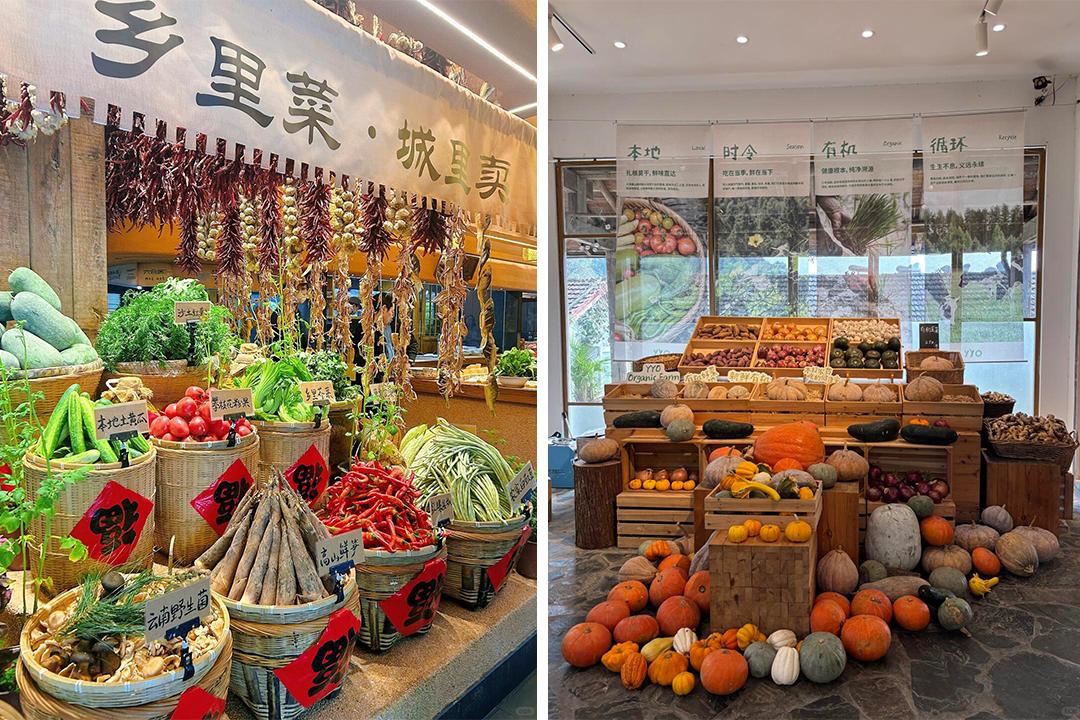
Second, the filter of "poetry and faraway places" brought by the wild mountain style can meet the urgent emotional value needs of young people nowadays.
In recent years, under the pressure of fast-paced life, more and more young people have begun to "choose to go up the mountain between going to work and striving for progress", hoping to get a more relaxed free space. Compared with high-cost activities such as camping and hiking, wild mountain style restaurants compress "faraway places" into nearby consumption scenarios, providing more accessible choices for consumers who pursue wild mountain nature.
At the same time, wild mountain elements with inherent atmosphere filters, such as wooden huts, stone stoves and green plants, are natural communication materials with inherent check-in attributes, which are more suitable for the current traffic market.
Up to now, the play volume of #WildMountainHotPot on Douyin has reached 300 million times, and the play volume of #WildMountainBazhang has also reached 230 million times; on Xiaohongshu, #WildMountainManager has 94.26 million views, and #WildMountainStyle has nearly 10 million views.
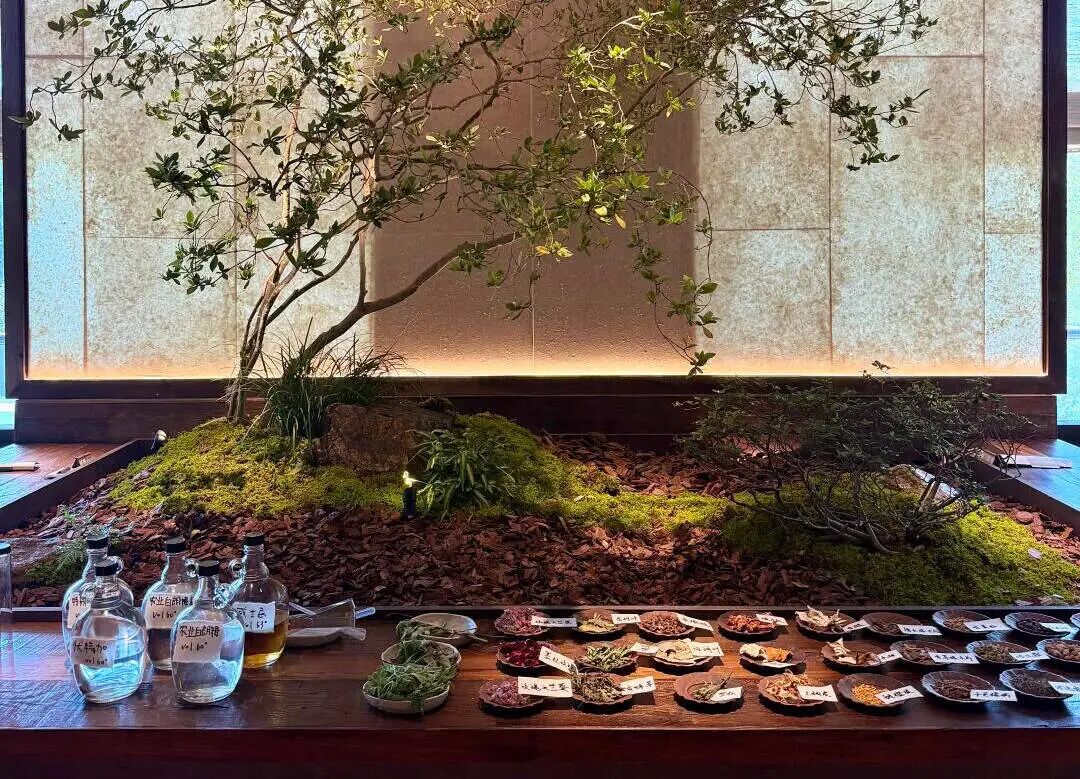
Third, the convergence of industry aesthetics and herd behavior further accelerates the homogenization of the wild mountain style.
When the first batch of restaurants have run through the business model and reaped dividends, latecomers will follow up quickly, which has long been the default development path of the catering industry. The wild mountain style is no exception.
A catering owner admitted: "Compared with exploring the unknown on my own, it is less risky to cross the river by feeling the stones. To implement a business model that has been proven feasible means a more mature supply chain and higher cost performance." As a result, the wild mountain style has degenerated from a style choice to a safety strategy.
03
Collective Mediocrity
Means Collective Failure
However, when the wild mountain style changes from a differentiation point to an admission ticket, its advantages are greatly reduced.
"Scattered Light", a practitioner in the plant landscaping industry, has personally experienced this "carnival". He said that since 2025, the demand for "plants + restaurants" has surged. On the one hand, it benefits from the prevalence of local cuisines such as Yunnan-Guizhou-Sichuan and Jiangxi cuisines, on the other hand, consumers' requirements for atmosphere are constantly increasing. "Without changing the hard and soft decorations, plants are the lowest-cost and most efficient solution."
He also emphasized that it is not easy to make plant landscaping outstanding. "First, you need to consider whether it matches your store. Not all online pictures look good when copied; second, you need to consider how large an area to arrange. More plants do not mean better results. After all, restaurants do not sell plants, so there is no need to go all out for everything, and the later maintenance is also very troublesome."
He said: "I think the truly outstanding effect comes from either a single exquisite plant landscape or a large-scale full coverage, which requires considerable investment. The effect is completely proportional to the investment."
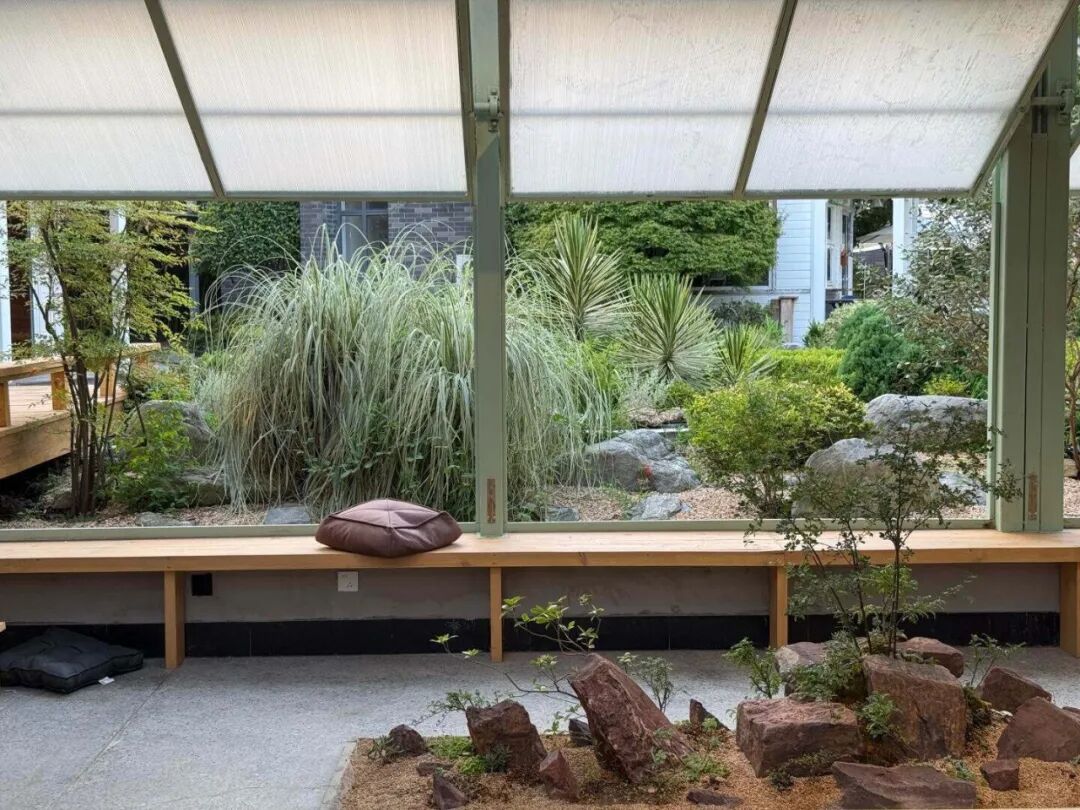
But the problem is that the wild mountain style can spread rapidly precisely because it seems "low-cost"; when everyone enters the market in a "low-cost" way, it quickly becomes mediocre. And those merchants who want to stand out have to increase capital investment.
For catering owners, under the three mountains of rent, labor and raw materials, every extra investment is lengthening the payback period. Once the store's popularity fades and repurchase rate declines, those expensive green plant landscapes may instead become the pushers of cash flow breakdown.
Gou Ge, a second-hand catering equipment recycler, also confirmed this point from his personal experience. "We received few wild mountain style restaurants last year, but the number has increased significantly this year," he said, "but the total number is not too large."
Gou Ge said, "These closed wild mountain style restaurants are mainly located in first-tier and second-tier cities, with a relatively larger number in Beijing, Hangzhou and Shanghai. Their business was okay at the beginning, but the continuous repurchase was limited. The whole cycle from opening to closing is basically less than one year."
As for the green plant decorations in the stores, "they are usually sold on site, and those that can't be sold are just left behind and thrown away." Those expensive fine-leaf olive trees, jaboticaba trees and palm leaves have no recycling value after the stores close down.
This leads to a question worth asking: when the wild mountain style changes from a differentiation strategy of a few brands to the "safe choice" of most brands, how much real differentiation can it bring?
04
What Restaurants Need Is More Than the Wild Mountain Style
The wild mountain style itself is not wrong. Elements such as green plants, logs and natural light can indeed improve the comfort of the space and achieve higher communication efficiency on social media. However, historical experience tells us that when everyone in an industry chooses "safety", the danger comes precisely from "safety" itself.
Apart from following the trend, what else can we do? The editor of Canyin Neican believes that at least three directions are worth thinking about.
First, create differentiation with products. In the final analysis, the ultimate goal of a restaurant is to sell food, and the space is only an added bonus. If the dishes themselves are not memorable, no matter how beautiful the space is, it cannot retain repeat customers. For restaurants, delicious food itself is the best moat.
Second, build connections with services. When customers walk into a wild mountain style restaurant, if the only thing the brand can do is "let them take photos and leave", it is essentially using the scene to meet visual needs, rather than using services to respond to emotional needs. Thoughtful reminders and sincere interactions can often bring higher repurchase rates and better reputation to restaurants.
Third, tell stories with real content. The reason why the wild mountain style is touching is that it arouses people's yearning for nature and reality, but most of the trend-following brands only copy the visual symbols of wild mountains, lacking their own stories. The founder's original aspiration and insistence on ingredients, these non-replicable contents are the cornerstone of building long-term relationships with consumers.
After all, when consumers walk into a restaurant, what they ultimately want to get is a memorable experience. In this experience, the environment is just the background, and the food is the protagonist.
If brands only bet on "creating scenes", the so-called "wild mountain style" will eventually be just a gust of wind, leaving nothing behind after it blows over.
This article is from WeChat official account "Catering Enterprise Owner Internal Reference", author: Neican Jun, published with authorization from 36Kr.