The next expense-cutting target for the middle class: super cost-effective water substitutes
"I crave a little sweetness on the tongue, yet I hate gaining weight deep down." For office workers who sit at their desks all day and the overwhelmed lower-middle class, plain water, though healthy, can no longer sustain their workday energy.
At the end of 2023, the term "water alternative" emerged out of nowhere. From sugar-free tea to traditional Chinese wellness drinks, to vitamin water, electrolyte water and more. With a pop of color and a dash of flavor, all these products have become the top picks for the "crispy generation" to reward and pamper themselves.
Riding this wave of dividends, some water brands have grown from a "small scale of several hundred million yuan" to a "behemoth worth tens of billions yuan" in just a few years. But problems have also emerged.
Driven by lucrative profits, the "super water alternative" track is now as crowded as a sardine can. Meanwhile, the younger generation has become increasingly cautious with their spending. As a result, the water alternatives that used to be priced at 5-7 yuan are now dropping to nearly the 2-3 yuan price range of Nongfu Spring, becoming the next target of frugality for the middle class.
"Super Water Alternatives" Have Seen Several Rounds of Leading Players
In 2011, Zhong Shanshan from Nongfu Spring launched "Oriental Leaf" to the market, an innovative product he developed after drawing inspiration from the Japanese market: tea with no added sweetness.
Unexpectedly, Oriental Leaf embarked on a rough 7-year journey right after its launch. It received neither critical acclaim nor commercial success, and was once rated by netizens as "one of the five least tasty beverages in China".
The reason is obvious if you look at the "superstars" of those years. Back then, in addition to the popular sweet "Shen Jiayi" (a beloved iconic youth character), sweet iced black tea was all the rage.
"Tea drinks are supposed to taste sweet", this was the unchallenged "political correctness" for the young generation of that era. It is said that over the 7 years, the "bitter-tasting" Oriental Leaf lost 500 million yuan.
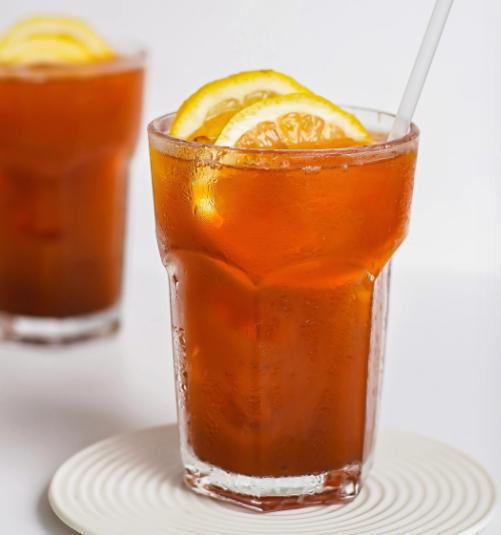
Figure | The sweet flavor of iced black tea is said to be influenced by Hong Kong-style iced lemon tea and sweet tea from the southern United States in its early development
The turning point came in 2018. Overnight, "sugar control for weight loss" became a widespread trend. The "bitterness" of Oriental Leaf that was once rejected by consumers turned into a highly praised merit. Some consumers even endowed it with an elegant description, calling it "unobtrusive company", meaning its flavor is light and mild, never overpowering.
Today, Oriental Leaf has made a dramatic comeback. Market estimates suggest that generating an annual revenue of over 10 billion yuan is no longer a challenge for the brand.
Oriental Leaf is a leading player in the sugar-free tea segment, while the red bean and coix seed water and Alien electrolyte water launched by Genki Forest are the rising stars in the functional water alternative category.
Red bean and coix seed water falls under the "traditional Chinese wellness drink" category. This is a track that would be dismissed by the older generation as unnecessary — it is as plain as the corn porridge northerners make for breakfast, or the mung bean porridge cooked by southerners, offering quiet, unassuming comfort as ubiquitous as air.
But once labeled with the claim of "dispelling dampness and supporting wellness", the new generation of the "crispy generation" seemed to grasp a lifeline, pouring all their self-compassion and care for themselves into a single bottle of the drink.
Red bean and coix seed water also rode this trend to skyrocketing growth. Its annual revenue exceeded 1 billion yuan long ago, with an industry market share of over 50%.
As for electrolyte water, with the core selling point of "professional electrolyte replenishment", it first became the go-to "recovery buddy" for people after workouts. Later, office workers who rush for seats on the subway every day also recognized its benefits, and started bringing it to the subway and office buildings. As soon as they feel slightly worn out by their bosses, they will chug a bottle of electrolyte water to recharge themselves.
Today, electrolyte water has long expanded from sports venues to offices, hospitals, and even street stores, becoming an extremely common "daily drinking water" in people's lives.
The water alternative that debuted slightly later than electrolyte water is vitamin water. Drink some vitamin B water when staying up late, and take some vitamin C water when the seasons change, to boost immunity. Since 2025, brands including Master Kong and Liziyuan have launched various vitamin water products one after another.
In fact, this track is not new at all. It first appeared on supermarket shelves 20 years ago, but back then the concept was too ahead of its time, and most consumers regarded vitamin water as a "waste of money for useless gimmicks", while today public acceptance has risen significantly.
Drinking trends, just like fashion, run in cycles.
Qualifications to Become a "Super Water Alternative"
Don't assume the term "water alternative" is an imported concept. On the contrary, it is a completely home-grown "made-in-China" term, essentially a marketing concept — all beverages that can replace plain water can be called "water alternatives", no matter they are positioned for good taste or functional benefits.
Overseas, the more precise term is "Functional Water", which has clear targeted use cases, such as specific functions for immune support, energy replenishment, post-workout recovery, and mood improvement.
Compared with overseas markets, the Chinese market places more emphasis on "daily consumption by specific consumer groups in everyday scenarios".
It is never easy to become a "super water alternative". To earn the "super" title, the product needs to meet the common demands of the largest possible consumer group in the market.
A senior product manager in the beverage industry told Muhe Business and Finance that a "super water alternative" generally needs to meet the following conditions:
First of all, it must "taste good". This does not mean you can just add some sweeteners and get away with it. On the contrary, it should be like water infused with natural fruit flavors, refreshing and smooth, leaving no sour or sticky aftertaste in the mouth.
Currently, the most widely accepted flavors in the market are mainly lemon, grapefruit, white peach, etc., whose taste consumers can easily recognize at a glance. Even for electrolyte water, its flavor innovation can hardly break away from these core popular flavor categories.
Secondly, the formula should be "minimalist", and the nutritional benefits must be "perceivable". For water products today, "0 sugar, 0 fat, 0 calories", or a total calorie count lower than that of an apple (about 80 kcal) has become the standard configuration.
If the calorie count exceeds this level, consumers will only buy the product once. Only by minimizing the burden on the human body can consumers keep repurchasing, and the market scale can grow larger.
Nutritional benefits are the "plus points" for a water alternative. For example, electrolyte water is perceived as a product for "replenishing water". Vitamin water is for supplementing vitamins. Sugar-free tea helps cut greasiness, and red bean and coix seed water is positioned to "dispels dampness".
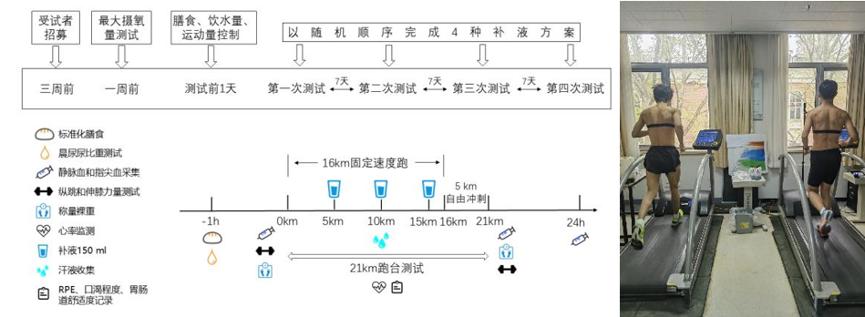
Figure | Some electrolyte water manufacturers have cooperated with the sports nutrition team of Beijing Sport University, and carried out human efficacy tests on all three of their product lines: 0-sugar version, low-sugar version, and professional version. The tests cover scenarios including different exercise types (endurance exercise, interval exercise, high-temperature environment simulation, etc.), measuring indicators such as human body water loss, rehydration efficiency, and electrolyte balance status.
Thirdly, the product design and overall vibe must have "social currency value". It should not only show the consumer's pursuit of health concepts, but also present a sense of aesthetic taste from the bottle design to the font selection.
Last but not least, the price must be "affordable for daily consumption". Currently, the retail price of most water alternatives stays in the 5-8 yuan range, slightly higher than 3-yuan Nongfu Spring, but much cheaper than 10-25 yuan freshly brewed tea drinks, making them suitable for multiple repeat purchases on a daily basis.
Only in this way can a "water alternative" go viral across the whole internet and become a national popular beverage.
In the current market, behind many star "water alternative" products, there are far more failed products. For example, products like terahertz water and magnetized water that emerged a few years ago were directly classified by the market as "money-wasting gimmicks".
Another example is the "Whole Ginseng" ginseng water that appeared earlier, priced as high as 19.9 yuan, which soon faded out of the market and ended up in the "water alternative graveyard". In addition, some "artificial fruit tea" products such as peach oolong tea and lychee black tea directly competed against popular sugar-free tea products, going against consumer demands.
It is clear that creating a "water alternative" is not difficult, but creating a popular, commercially successful "water alternative" is extremely challenging.
The Middle Class Has Also Started to Become Frugal on Water Alternatives
Over the past few years, some "super water alternatives" have reaped huge profits. For example, Oriental Leaf has become a 10-billion-yuan-level blockbuster product. Genki Forest's well-received traditional Chinese wellness water and Alien electrolyte water have also grown into popular products with annual revenue of over 1 billion yuan.
Driven by lucrative profits, more and more players have poured into these tracks, and a "price war" has already broken out.
Take electrolyte water as an example. International giants Coca-Cola and PepsiCo have both launched related electrolyte products. PepsiCo has even launched an innovative "sparkling electrolyte water" product.
Domestic brands ranging from Nongfu Spring, Dongpeng Special Drink, to Wanglaoji have all launched their own branded electrolyte water products. New cross-industry players have also joined the market: Mengniu launched "milk calcium electrolyte water", highlighting the dual concepts of "rehydration + calcium supplementation". Liziyuan's electrolyte water claims to add "glucosamine", exploring niche scenarios such as joint care.
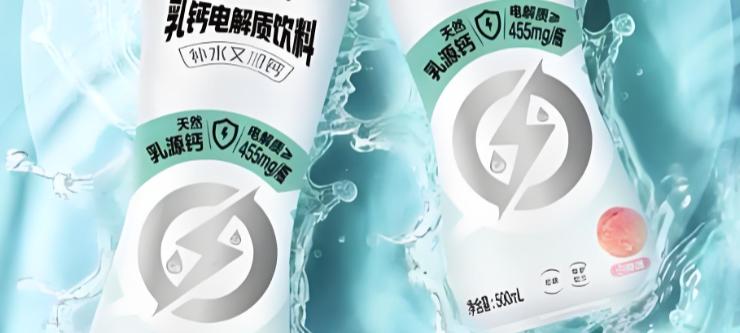
Figure | In the fiercely creative market, even milk calcium electrolyte water has made its debut
As the number of players increases, prices have dropped accordingly.
In March this year, Nongfu Spring launched an electrolyte water under its core brand, with a terminal price of about 3.67 yuan per 550ml bottle. This is 1-2 yuan lower than the mainstream 5-7 yuan price range of similar products in the market at that time.
Baopower, the electrolyte water brand under Panpan Food, sells its 750ml large-capacity product online for only 3 yuan per bottle. Even Genki Forest's leading "Alien" brand could not sit still, and launched an affordable product named "Super Water" priced at about 2.64 yuan per bottle, pushing the price down further.
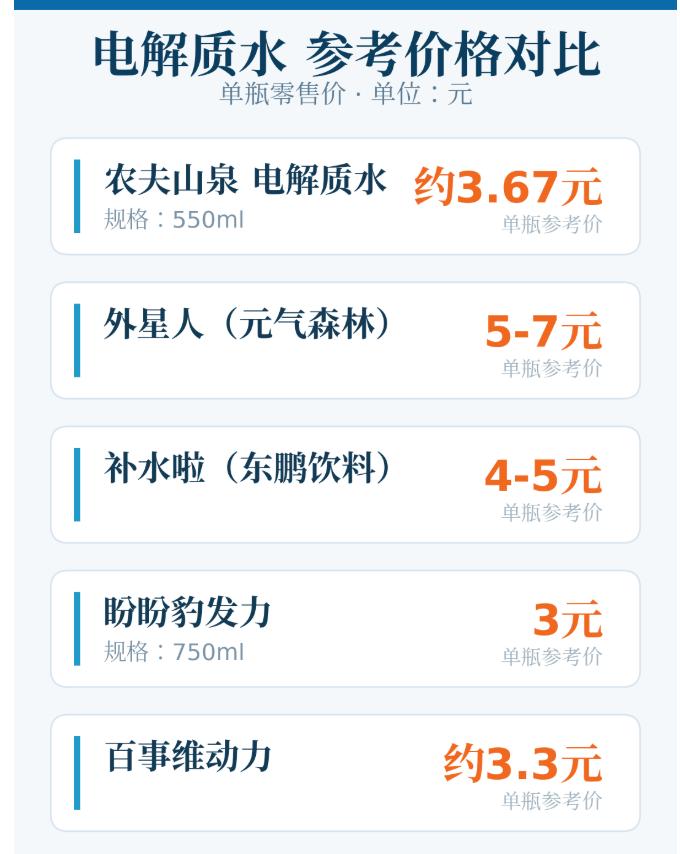
This "price war" has also broken out in the sugar-free tea segment. In 2024, the discounted unit price of many mainstream products in the sugar-free tea market dropped to the 3-4 yuan range.
As for traditional Chinese wellness drinks, whose original market price was mostly in the 4-6 yuan range, a downward price trend has emerged as more new players enter the market.
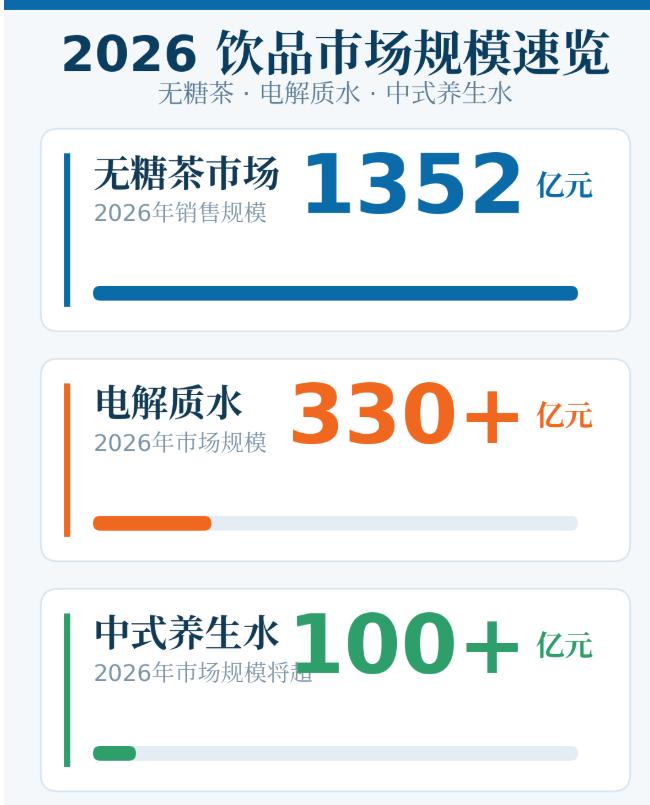
At present, the consumption scale of each sub-segment in the water alternative market is as follows:
The sugar-free tea market will hit a sales volume of 1.352 trillion yuan in 2026. The electrolyte water market exceeds 33 billion yuan. The traditional Chinese wellness drink market will exceed 10 billion yuan.
The knockout round for players in the track has already begun. But brands and products with unique features still have the opportunity to stand out from the competition.
Industry insiders say that the "water alternative" market is moving from the 1.0 era of "chaotic concept competition" to the 2.0 era of "refined operation". The future winners are likely to be the brands that can accurately grasp consumers' demands for "health, good taste, and functional benefits", and integrate their products into specific daily life scenarios.
This article is from the WeChat official account"Muhe Business and Finance", author: Gong Zheng, editor: Yang Jing, published by 36Kr with authorization.