The big-spending foreigners are queuing up to check into Chinese hospitals.
01
A couple of days ago, Lao Lu, who has been engaged in inbound tourism for many years, suddenly sent me a message, saying that he has been researching the business of foreigners coming to China for medical treatment recently.
I was quite curious, wondering that this business has been popular for more than a year, why did he, who is always quick-witted, only think of it now?
Lao Lu smiled and said it's not late at all. Recently, he has contacted several international medical centers in Beijing, gradually figured out the rules of this business, and plans to focus on the inbound medical service for high-net-worth foreign clients.
According to Lao Lu's observation, some patients in Europe, America and other regions mainly rely on the free public medical system, but the waiting queue is often extremely long. If their condition cannot afford the wait, patients with the ability to pay will consider going overseas to purchase faster treatment opportunities at their own expense.
There are also some foreigners who have purchased global high-end medical insurance. Even if they need to bear part of the cost themselves, the treatment price in China is usually much more affordable than that in Europe and the United States.
Both groups are potential clients of Lao Lu.
In his vision, the ideal scenario is that foreign patients sign to leave the hospital after treatment, and the expenses are settled between the hospital and the insurance company. In that case, the international medical centers in Beijing and Shanghai are the most ideal choices.
Coincidentally, last night, my old classmate Ms. Tan, who has been living in Christchurch, New Zealand for many years, sent me a private message asking which hospitals in China can provide CAR-T therapy for foreign patients now.
The reason is that her father has been diagnosed with cancer and her family is looking for new treatment options. When I asked her where she knew that such therapy is available in China, she immediately sent me a foreign media report.
Following the report, I learned about the 25-year-old New Zealand patient Michael Walters' experience of seeking medical treatment in China, which has inspired many cancer patients in that country.
According to The Wall Street Journal, last year, shortly after Michael graduated from university and started his first full-time job, he was diagnosed with non-Hodgkin's lymphoma, a type of blood cancer.
After several rounds of chemotherapy, radiotherapy and immunotherapy in Auckland, Michael's condition did not improve. Later, he compared treatment plans in the United States, India and Australia, and only one hospital in Melbourne was willing to provide CAR-T therapy at a cost of as high as 600,000 US dollars.
That sum of money is far beyond the affordability of his family.
At the end of June this year, with most of the funds raised through an online crowdfunding campaign launched by his friends, Michael flew to Shanghai for the first time. A high-end private hospital there offered a price less than half of the quote from Australia.
In mid-August, he got the result that the lymphoma in his body had been completely relieved. During the treatment, Michael spent his 25th birthday in the ward, and the hospital staff sent him a cake. He began to plan to return to Auckland for his next birthday, hoping that by then he only needed to worry about his work, girlfriend and trivial matters in life.
Apart from Shanghai, stories of foreigners seeking cross-border medical treatment at high costs keep emerging.
In January this year, Yicai Global reported that Kevin, a Chinese doctor who has been practicing in Canada for 20 years, once took his 10-year-old daughter with a pancreatic tumor to Ruijin Hospital Affiliated to Shanghai Jiao Tong University School of Medicine, and completed a robot-assisted spleen-preserving surgery at his own expense for about 160,000 RMB.
According to Shanghai Observer, 3-year-old Brazilian girl Zara had traveled to many countries for medical treatment before, and almost all the suggestions she got were amputation. In August last year, Shanghai Ninth People's Hospital completed an 8-hour microsurgical reconstruction for her, and after the operation, she was finally able to wear two shoes of the same size.

Public data shows that in 2025, public hospitals in Shanghai served 73,200 foreign patients. In the same period, the outpatient volume of foreign patients in Guangzhou reached 168,000 person-times, the number of inpatients exceeded 15,000 person-times, and the revenue from related medical services reached 2.28 billion RMB.
Lao Lu has not received such clients yet, but when the first batch of foreigners have already queued up to enter Chinese hospitals with budgets of hundreds of thousands or even millions of RMB, he believes that the high-end inbound medical care industry in China has just emerged.
02
Why are domestic hospitals able to receive these anxious foreign patients who are willing to spend huge sums of money?
In fact, whether the money can flow into Chinese hospitals ultimately depends on whether the hospitals have the therapies that foreign patients urgently need.
Similar to Michael, in recent days, the experience of another New Zealand patient Josh Bronkhorst has also given many overseas cancer patients who are looking for new therapies new hope.
Josh is 59 years old and the CEO of a financial services company. After being diagnosed last December, he received four months of chemotherapy and immunotherapy, but the tumor was still growing. Local doctors judged that the success rate of continuing chemotherapy was only 15%.
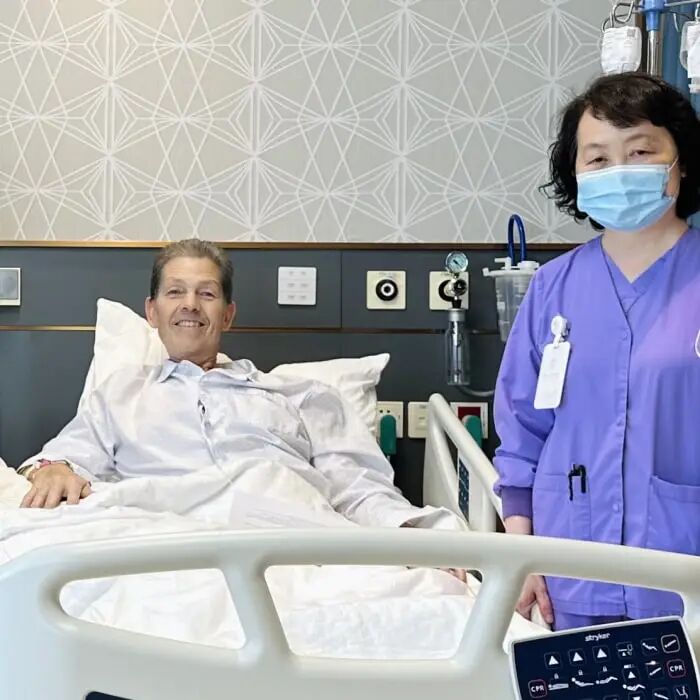
Josh received CAR-T therapy for gastric cancer at Shanghai Jiahui International Hospital
Coincidentally, in June this year, China approved the world's first CAR-T therapy for solid tumors. Josh soon flew to Shanghai and became one of the first foreign patients to receive the treatment after the approval. Ten days after the cell transfusion, his malignant ascites began to subside, and the doctor then removed the peritoneal drainage tube.
Josh's trip to China is attributed to the rapid maturity of China's CAR-T industry in recent years.
CAR-T was first pioneered in the United States, but China has now approved 9 products, the largest number in the world. Dr. Sattva S. Ahmad, director of the CAR-T program at MD Anderson Cancer Center in the United States, once commented that China has industrialized this treatment method.
The change brought about by industrialization is that more domestic hospitals can access the products, and the waiting time for patients to prepare the cells has also been shortened.
Since CAR-T needs to be produced individually based on the immune cells of each patient, laboratories around Shanghai can complete the preparation in a relatively short time, so hospitals can arrange the transfusion faster.
The treatment price has also shown a huge gap with the expansion of scale.
At present, the cost of CAR-T treatment in China is about 150,000 to 230,000 US dollars, while that in the United States reaches 550,000 to 850,000 US dollars. For ordinary families, the price in China is still close to an astronomical figure, but for wealthy patients who are already prepared to seek medical treatment across borders, the saved cost may be millions of RMB.
Domestic hospitals thus have a rare pricing space. Even if they charge much higher fees than ordinary outpatient services, the final bill may still be lower than similar treatments in Europe and the United States.
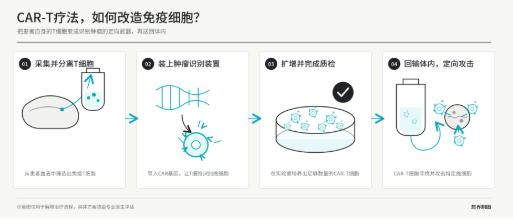
However, high-end international hospitals still need to improve their capabilities beyond drugs.
Taking CAR-T as an example, it may cause severe inflammatory reactions, and patients sometimes need to be admitted to the intensive care unit. Complications involving the heart or nervous system also require other specialists to intervene in time.
At the same time, the hospitals that foreign patients are looking for must review English medical records in advance, organize remote consultations, and quickly complete examinations after the patients arrive.
High-net-worth patients are not equal to commercial insurance clients. Many foreigners who come to China specifically for treatment still need to pay at their own expense. Even if they hold international medical insurance, they still need to confirm whether the policy covers China and the corresponding therapy, and obtain authorization from the insurance company in advance.
Such a complex high-end inbound medical service makes the business model envisioned by Lao Lu seem highly profitable.
Inbound tourism enterprises can assist in translating medical records before patients depart, coordinate remote consultations, and then provide accommodation, accompanying diagnosis and rehabilitation services after patients arrive. Lao Lu admitted that the market is large enough, but some peers have already started to enter this business, so he has accelerated his layout recently.
After all, hospitals sell treatment opportunities, and what travel agencies can do is to bring overseas patients to the opportunities safely.
03
When foreign patients who are willing to spend the most money start to enter Chinese hospitals, it inevitably raises some questions.
What domestic patients are most concerned about is that if foreigners are willing to pay higher fees, will they be able to see experts faster and get the originally scarce hospital beds?
In this regard, Lao Lu said frankly based on his preliminary research that from the perspective of Shanghai private hospitals favored by foreigners such as SinoUnited Health and Jiahui, which are mainly built with social capital, foreign patients use the diagnosis and treatment resources allocated by the hospitals themselves, and there is almost no direct conflict with the public medical system.
The situation of the international departments of public hospitals is relatively more complicated. The international departments usually have independent consultation areas and wards, and the fees are adjusted by the market. However, the experts still need to be dispatched from the whole hospital's schedule, and some equipment is also shared within the hospital.
However, the regulator has drawn a clear boundary. The National Healthcare Security Administration stipulates that the fees for medical service items that are priced through market adjustment in public medical institutions shall not exceed 10% of the total medical services in principle. Foreign patients who come to China specifically for medical treatment usually pay at their own expense and will not use the domestic basic medical insurance fund.
From another perspective, the high fees paid by foreign patients can not only become incremental revenue outside the domestic basic medical insurance, but also help relevant departments accumulate experience by treating complex cases.
Another impact of the high-end medical revenue brought by foreign patients is that if domestic hospitals continue to invest in equipment, talents and add new beds, the expanded medical supply may also benefit domestic patients.
With so many benefits, policies have begun to favor this business.
In March this year, nine departments including the Ministry of Commerce proposed to expand inbound health consumption and build international medical tourism brands, and also included Chinese medical services in the national tourism image. Shanghai has previously clearly encouraged travel agencies to design high-end medical products and cooperate with hospitals and insurance institutions.
However, the opening of the policy access does not mean that travel agencies can start selling as long as they get the list of hospitals.
Lao Lu also admitted that traditional Chinese medicine experience can be easily included in tourism products, but in the field of cancer and major surgeries, whether a patient can receive treatment can only be decided by the hospital based on the medical records. Travel agencies can only be responsible for pre-trip consultation and services such as flight ticket and hotel arrangement, pick-up and accompanying diagnosis before hospitalization.
In short, the customer source is only the front end. Whether the hospital is willing to receive the patient determines whether the order can be established. After the patient returns overseas after treatment, the follow-up review and complication management will span multiple countries, and the takeoff of the plane does not mean the end of the service.
If the patient's condition recurs, it is difficult to clarify the responsibilities between the hospital, the pharmaceutical company and the intermediary through ordinary tourism contracts, and deviations in language translation may also lead to cross-border medical disputes.
The high unit price makes Lao Lu very tempted, but the responsibility behind inbound medical care is far heavier than organizing foreign tourists to visit scenic spots.
Behind the flow of millions of foreign patients' life-saving money to China, whether we can undertake this business steadily tests far more than just hospitals.
This article is from the WeChat official account "Lvjie", author: theodore Xishao, published with authorization from 36Kr.