Is the Robotaxi that Tesla is eyeing a good business? Let's check the financial reports of WeRide and Pony.ai to find out.
Beijing Time September 7, as Tesla officially announced the large-scale commercial deployment of Cybercab, a heavyweight player has entered the global Robotaxi track.
What is the Robotaxi business really like? Globally, WeRide and Pony.ai, which are dual-listed on the US stock market and Hong Kong stock market, have published relatively detailed Robotaxi operation data.
Waymo was spun off from Google as early as 2016, and Baidu Apollo, although independently accounted for, still belongs to Baidu. Neither of the two companies has released detailed Robotaxi operation data.
Let's take a look at the H1 2026 financial reports released by WeRide and Pony.ai in August to see whether Robotaxi is a good business.
[In terms of the statistical caliber of financial reports, Pony.ai discloses Robotaxi data relatively separately, while WeRide includes the Robotaxi business in the L4-level business (in WeRide's statistical caliber, it includes the service and vehicle sales revenue of Robotaxi, Robobus, Robovan, Robosweaper)]
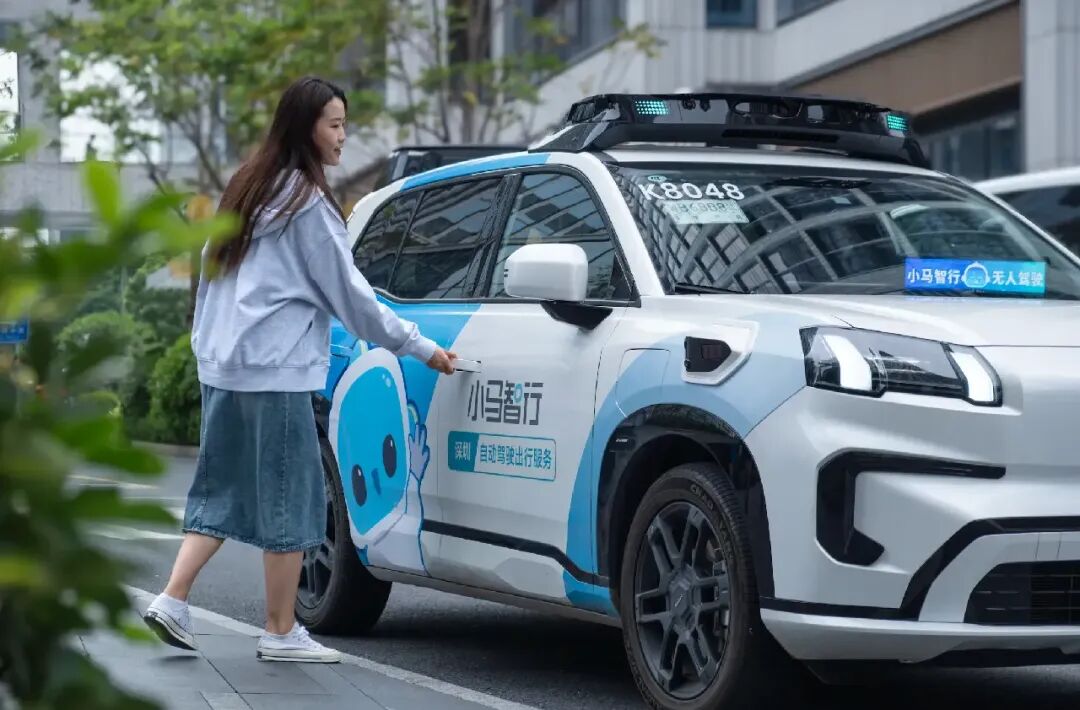
Since Pony.ai clearly disclosed Robotaxi-related financial data in its H1 2026 financial report, let's first look at the Robotaxi business performance of Pony.ai:
1. Robotaxi fleet size: 1975 units;
2. The number of registered users of Pony.ai in China has exceeded 1.5 million;
3. The revenue of Robotaxi-related business in H1 2026 (specifically "autonomous driving mobility service revenue" in the financial report, which is a very clear expression) is 20.64 million US dollars, accounting for 29.3% of the total revenue, with a year-on-year increase of 534.0% compared with 3.26 million US dollars in H1 2025. The reason is the expansion of the fleet size and the increase of per-vehicle revenue;
Note: Pony.ai's Robotaxi-related business revenue includes pure operation and service revenue (including platform cooperation share). Because Pony.ai's Robotaxi directly faces passengers through its own APP, mini-programs and other methods, and also serves more passengers through cooperation with mobility platforms, the latter needs to share revenue with the mobility platforms.
In the financial report, Pony.ai mentioned that "the growth of passenger fare revenue is particularly significant, with the year-on-year growth rate further accelerating from 456.5% in Q1 2026 to 849.3% in Q2 2026. However, Pony.ai did not give specific data. (I really look forward to seeing the specific situation of passenger fare revenue and unit revenue in the next financial report) but stated that the number of paid orders continued to grow, and the average weekly number of paid orders in May 2026 increased by more than 100% compared with that in January 2026.
Previously, Pony.ai publicly disclosed that in Shenzhen in February 2026, the average daily net revenue per vehicle of Pony.ai was 338 yuan, with 23 orders per day (the peak value during the Spring Festival was 26 orders). The so-called net revenue refers to the removal of the whole chain costs such as depreciation, charging, maintenance, insurance and remote assistance. According to the 7th generation model of Pony.ai, which costs 270,000 yuan and is depreciated over 6 years, the average daily vehicle depreciation cost is 105 yuan, plus energy consumption of 60 yuan, maintenance of 40-50 yuan, insurance and remote/ground support allocation of about 30 yuan. Pony.ai said that the urban-level UE has turned positive. However, these data are not shown in the financial report. The statement of Pony.ai in the financial report is that it achieved urban-level per-vehicle profitability in Guangzhou in November 2025 and in Shenzhen in February 2026.
Then let's look at WeRide, which uniformly lists the service and vehicle sales revenue of Robotaxi, Robobus, Robovan, and Robosweaper as L4-level business revenue, distinguishing it from other businesses (mainly L2, L3, etc.). This also shows the core business characteristics of WeRide. In addition to L4, it is also making efforts in commercialization on L2 and L3.
WeRide did not announce the specific revenue of Robotaxi, but announced the order situation of its L4-level autonomous taxi business in China in the financial report. WeRide said in the financial report that in Q2 2026, the average daily number of orders per vehicle exceeded 21, a month-on-month increase of 24%. In Q2 2026, the number of registered users of WeRide's autonomous taxi business increased by 35% month-on-month (but the specific number of users was not announced), and the ride-hailing revenue in the quarter increased by about 140% month-on-month (the specific revenue situation was also not announced).

In fact, these are the two relatively clear financial report statements of Robotaxi operation situation around the world at present. However, there are still many details that cannot be split and discussed in depth one by one. After all, it is still in the initial stage, and the scale is relatively small, making it difficult to allocate costs such as R&D, depreciation and management. The operation scale in each city is still relatively limited, which is mainly restricted by the requirements of regulations and government management.
What can be confirmed is that Robotaxi is definitely a business with scale effect. Pony.ai said that it achieved urban-level per-vehicle profitability in Guangzhou and Shenzhen in November 2025 and February 2026 respectively. The R&D investment should not be allocated in this case. After all, Pony.ai's R&D investment in H1 2026 reached 104 million US dollars. If it is allocated to the current operating fleet size, the account will not add up. In addition, there are overall management expenses and so on.
Whether it is WeRide or Pony.ai, there is more than one model of Robotaxi currently in operation, which is also the cost disadvantage of these two companies compared with Tesla. In fact, Waymo and Baidu Apollo also have too many Robotaxi models. Moreover, these Robotaxi participants are currently facing the cost pressure of expanding to multiple cities or even multiple countries.
In contrast, the single model of Tesla Robotaxi has obvious cost advantages in maintenance. In addition, Tesla's R&D expenses can also be shared with the current million-level sales volume, which is also one of the major advantages.
However, Tesla also has to face the problems of single city scale, maintenance and operation costs. A small scale will lead to excessively high depreciation and operation amortization, while a large scale will lead to increased difficulty in maintenance and operation. All these require continuous running-in to find the optimal solution.
Let's all guess, when will which company release a complete and detailed financial report data of Robotaxi?
This article is from the WeChat Official Account "Chezhi" (ID: invehc), the author is Michael Yuan, and it is published by 36Kr with authorization.