Survey on the Academic Lineage of Embodied Intelligence in China: Professor Li Zexiang is Building a Robot Legion
Series Preface: China's embodied intelligence startup circle is a legendary community jointly created by professors, academicians and their students. This series includes 6 chapters, which deconstruct the kinship, geographical connection and capital network of this circle by different factions. In the second chapter, we will look at a 30-year-old sect that has long practiced the "master mentoring apprentice" model — Li Zexiang and his robot army that grew up from Songshan Lake.
In December 2025, two companies incubated by the same professor went public on the Hong Kong Stock Exchange one after another.
One is CIDI, the first commercial vehicle autonomous driving company listed in the Hong Kong stock market; the other is Wootek Robotics, "the world's first listed AI embodied home robotics enterprise", with a market value of nearly 18 billion Hong Kong dollars on its first trading day.
This professor is Li Zexiang.
Looking back to the past: in August 2023, Googol Technology was listed on the ChiNext Market; looking forward to the future: in June 2026, Benmo Dynamics passed the hearing of the Hong Kong Stock Exchange; in addition, Hai Robotics has submitted its listing application, and Narwal Robotics is sprinting for Pre-IPO stage.
All these companies are closely related to Li Zexiang.
A university professor has "produced" a complete IPO assembly line in 30 years, with more than 280 companies incubated in his system in total, and the total valuation exceeding 500 billion yuan. How did this system take shape?
The answer dates back to a laboratory in Clear Water Bay, Hong Kong in 1992. To understand these 30 years, we must first clarify a major background: Li Zexiang has never left his post nor retired since he joined the Hong Kong University of Science and Technology in 1992.
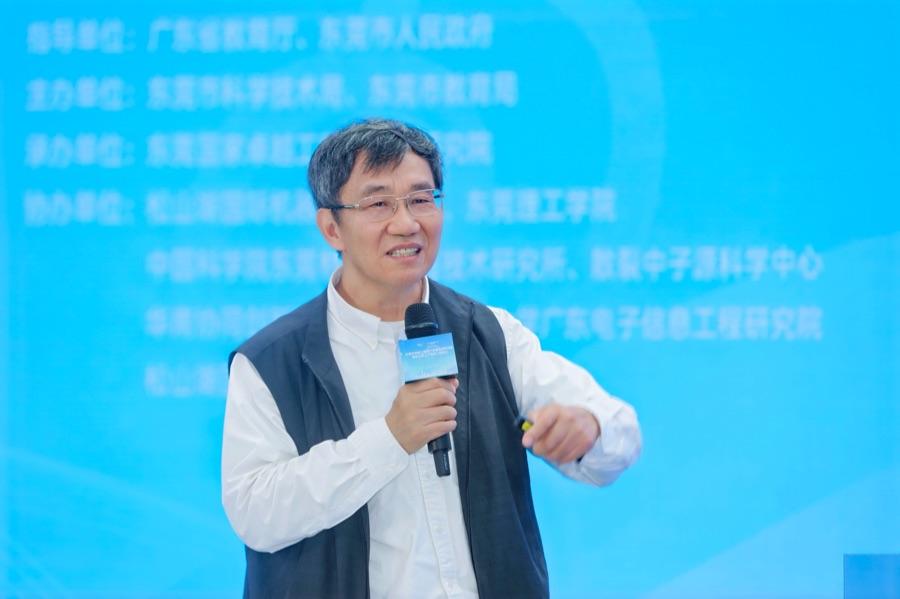
His 30 years of experience is divided into two phases: the HKUST period (1992—2014) and the Songshan Lake period (2014 to present). The two sets of operation methods are in the same line.
I. The Seed in Clear Water Bay: The HKUST Period (1992—2014)
In 1978, 17-year-old Li Zexiang, a young man from Lanshan, Yongzhou, Hunan Province, was admitted to Central South University of Technology with the top score in the county. The next year, China and the United States established diplomatic relations, and Alcoa left scholarship quotas during its visit to China. As one of the first group of Chinese government-sponsored undergraduate international students, he went to the United States to study at Carnegie Mellon University for his bachelor's degree, then obtained his master's and doctoral degrees at the University of California, Berkeley, later did postdoctoral research at the Massachusetts Institute of Technology, and got a faculty position at New York University.
If the story stopped here, there would be one more standard overseas Chinese professor in the world.
But in 1992, 31-year-old Li Zexiang made a decision that confused his colleagues: he gave up the faculty position at New York University and returned to Hong Kong, joining the Hong Kong University of Science and Technology, which was established only one year earlier, to teach in the Department of Electronic and Computer Engineering.
What he brought back was a teaching method that was considered very alternative at that time.
The Department of Electrical and Electronic Engineering of HKUST gave him a laboratory numbered 3126 — he gave this number a formulaic meaning: "3 teachers lead 12 students to make a prototype in 6 days." The Automation Technology Center (ATC) has since become the place with the strongest hands-on ability at HKUST.
The rule of 3126 is: teachers do not do projects for students, but are only responsible for finding real problems, resources and funds. Students need to turn ideas into runnable prototypes within a few days. This "student-led, teacher-assisted" model was later brought by Li Zexiang into almost every company he participated in.
The companies incubated by Li Zexiang in this period have extremely pure kinship — they are either founded by his colleagues or his own students.
The first company was co-founded with his colleagues.
In 1999, he persuaded seven or eight HKUST colleagues to go to Shenzhen to found Googol Technology, which develops motion controllers — the underlying "nerves" of industrial robots and CNC machine tools.
This is the first company in China that owns motion controllers with completely independent intellectual property rights, and later ranked first in the domestic motion controller market for many consecutive years.
Note his identity at this time: Li Zexiang was still a professor at HKUST — HKUST allowed professors to engage in industrialization work for one day a week, plus weekends, he could squeeze out three days a week. He later said in his autobiography that in those years, he went to Shenzhen to work on weekends and had to "write self-criticism" after returning to the university.
In August 2023, Googol Technology was listed on the ChiNext Market, known as the "first stock of motion control". Up to now, Li Zexiang is still the chairman of Googol Technology.
Googol Technology proved that "professor entrepreneurship" is feasible, but what really made Li Zexiang figure out "how education should be carried out" was a student named Wang Tao.
Around 2003, Wang Tao studied in the Department of Electronic Engineering at HKUST.
His graduation project was the flight control of remote-controlled helicopters. At the defense scene, the helicopter fell from mid-air, the demonstration failed, and he only got a C grade. But Li Zexiang remembered this student from the Robocon Robot Contest: around 2005, the HKUST team led by Wang Tao won the Hong Kong championship of Robocon and the third place of the international competition.
Li Zexiang exceptionally admitted Wang Tao as a postgraduate student.
In 2006, Wang Tao, together with several partners, founded DJI in a warehouse of less than 20 square meters in Chegongmiao, Shenzhen. The Sunshine Golf Building is right above the warehouse, and restaurants and machining factories are downstairs. Li Zexiang later recalled: "In the early days, when Wang Tao came to Shenzhen to make prototypes, the machining factory was next to the restaurant, and the sample was ready after dinner; it would take at least a week to finish in Hong Kong, and at least a month in the United States."
DJI almost went bankrupt once in the early stage: after the first mature product XP3.1 came out in 2008, the three founders except Wang Tao left one after another, and there was no money left in the company's account.
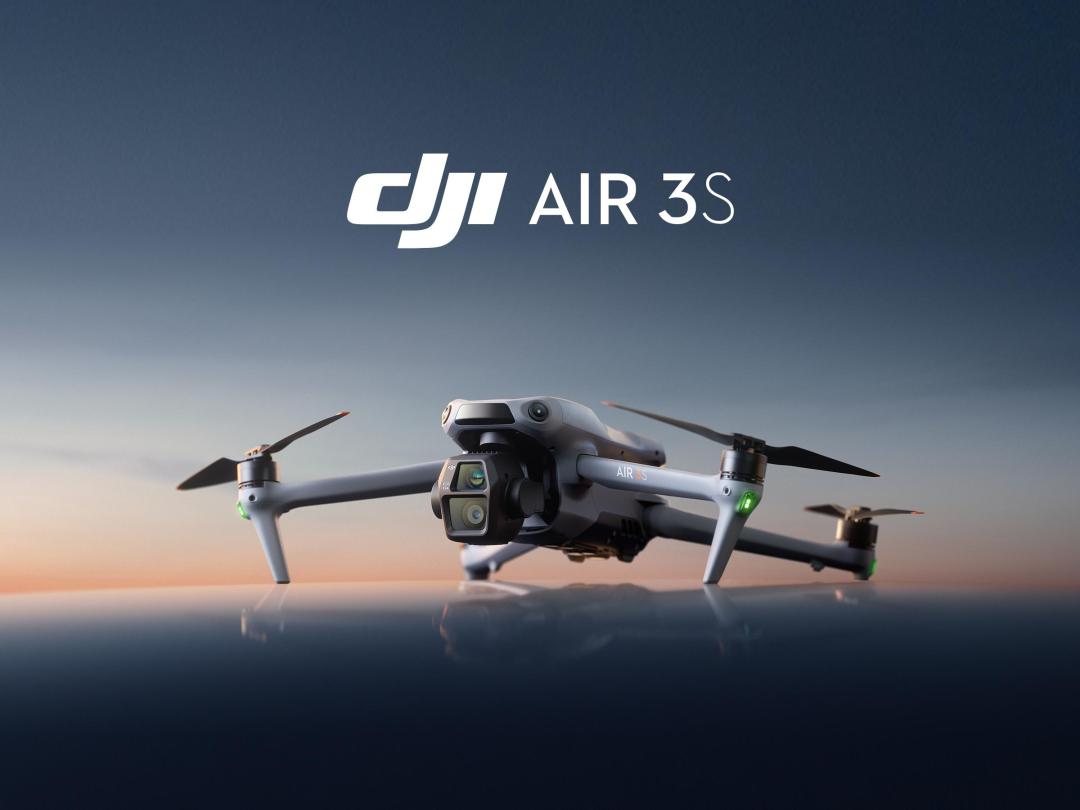
Li Zexiang invested money, and then recruited the first batch of postgraduate students from the education reform class of Harbin Institute of Technology Shenzhen Graduate School (co-founded by him and the school in 2004, which trained more than 300 people in six years) to replenish the team. This group of people later supported the middle management of DJI. From 2012 to 2013, the "Phantom" aerial photography all-in-one machine exploded in the global market; in 2013, Li Zexiang went to Silicon Valley to invite Moritz from HSG to Shenzhen, and HSG invested tens of millions of dollars.
Since then, DJI hardly needed external financing — it was a cash cow itself.
In 2019, at the ICRA award ceremony in Montreal, Li Zexiang and Wang Tao jointly won the IEEE Robotics and Automation Award.
After DJI became the overlord of the global consumer drone market, Li Zexiang stepped back from the front line. He once explained: "The main thing is to help them cultivate and find talents. The specific operation of the company has always been managed by them themselves."
The path of leading students to start a business did not always go smoothly.
In the early days, he led 8 students to partner to make LED wire bonders. The product was so popular that "some farmers came to pick up the equipment with a sack of cash". But in the end, the 8 founders quarreled for a month and the company went bankrupt. Birde, a company he co-founded with students from the education reform class of HIT Shenzhen Graduate School, also failed to survive.
The two failures made him convinced that entrepreneurship education must start from undergraduate stage, and team cooperation must be taught — "it's like walking on a dark road, one person will feel scared, but when several people walk together, and you give them a flashlight and a stick to fend off dogs, they can go further."
At the end of the HKUST period, there were two "connecting" companies.
In 2011, his doctoral student Shi Jinbo founded QJQ Robotics in Songshan Lake, focusing on domestic high-end industrial robots. The company's name is taken from the mathematical concept "Lie Group" (a continuous symmetry group named after the Norwegian mathematician Sophus Lie), which is the mathematical basis for describing the motion configuration of robots.
In 2012, Tao Shizheng, the captain of the HKUST robot team he once led, started to develop electric outboards on the HKUST campus and founded ePropulsion.
The founders of these two companies are standard "1.0 lineage" — from the competition circle and trained within the master-apprentice system. But they were founded directly in Songshan Lake, becoming the bridge connecting the two periods.
The 22 years from 1992 to 2014 is called the "HKUST period", and its model can be summarized as 1.0: Driven by teacher-student relationship, incubated by a single laboratory.
These companies grew out of the projects and graduation designs of the 3126 laboratory: Googol Technology was founded by colleagues, while DJI, QJQ and ePropulsion were founded by students. More than 100 students graduated from the 3126 laboratory, and over one third of them embarked on the road of entrepreneurship.
However, this model has a natural upper limit: one laboratory can only accommodate more than a dozen students at a time; the maximum radius for him to find students is only the Robocon competition field.
II. Songshan Lake Assembly Line: The Base Comes First, Then the Teacher-Student Relationship (2014 to Present)
In 2014, Li Zexiang put forward an idea to the Dongguan municipal government: to build a robotics industrial base in Songshan Lake. The government provided land and funds, but the operation followed the enterprise-oriented path. Li Zexiang, together with two old partners — Gao Bingqiang, former dean of the School of Engineering of HKUST (a senior scholar in the field of integrated circuits, later an independent director of Montage Technology) and Gan Jie, a finance professor from Cheung Kong Graduate School of Business — sold part of their DJI shares as start-up capital, and the XbotPark Songshan Lake International Robotics Industry Base was officially launched.
The park of the base is directly opposite Huawei's Songshan Lake base. Covering an area of more than 60,000 square meters with a building area of 110,000 square meters, it has classrooms, laboratories, shared factories, dormitories, canteens, libraries, stadiums, and even child care centers. It is more like a miniature university than an industrial park.
The incubation in the HKUST period relied on "teacher-student bond" — he only invested in the people he had taught; the incubation in the Songshan Lake period relied on the platform — the base opened its door to all young people "with bright eyes".
This is exactly the biggest difference between the two periods: 1.0 is driven by teacher-student relationship, while 2.0 is driven by platform plus fund. The base comes first, then the teacher-student relationship; everyone who enters the base, no matter where they come from, calls him "Teacher Li".
Itjuzi once summarized the complete closed loop of Li Zexiang's system: Discover talents through competitions — cultivate talents in the laboratory — incubate projects in the base — the fund invests the first sum of money — complete mass production with the Pearl River Delta supply chain — VC takes over for follow-up financing — exit through the capital market.
The assembly line is built, where does the "raw material" come from? The partnership cases in the Songshan Lake period are more illustrative than each other.
The first company to settle in the base is ePropulsion — incubated by HKUST and grew up in the base. The management committee specially built a wharf for testing boats by the lake for it. This is the physical relocation from 1.0 to 2.0.
The first talent introduced from outside is Zhang Junbin from Narwal — this path is the most extreme, and it best reflects the openness of 2.0. In 2015, a 25-year-old young man from Chaoshan submitted a resume to Li Zexiang's official WeChat account.
He graduated from the School of Mechanical Engineering of Huazhong University of Science and Technology for his bachelor's degree, and from the University of Michigan-Shanghai Jiao Tong University Joint Institute for his master's degree. He has been playing with robots since he was a child, and won the gold medal of the International Youth Robotics Olympiad in 2006. Note that he is not a "disciple of Li" in any sense. Li Zexiang invited him to dinner, and said to him after the chat: Come to Songshan Lake, the base is not yet built, but you can come first. Later, Zhang Junbin tried to develop a golf ball picking robot and a blind navigation device in the base, both of which failed, until his father complained at a family gathering that "bending over to mop the floor is too tiring". He began to try to develop a floor sweeping robot.
In October 2016, Narwal was registered and established at No.1 Headquarters of Songshan Lake. Zhang Junbin later said: "When I came here with only a backpack, Teacher Li was willing to support me and invest in me round after round."
Chen Yuqi from Hai Robotics is of the second background: overseas returnee. Born in Wuhu, Anhui in 1989, he got a first-class honors bachelor's degree in Electronic Engineering from the Hong Kong Polytechnic University, and a master's degree in robotics from ETH Zurich. His graduation project was exactly the bin handling robot.
In December 2016, he and two alumni founded Hai Robotics in Shenzhen. He studied at Hong Kong Polytechnic University and ETH, and was not Li Zexiang's student. But in many public materials, Li Zexiang's identity in the Hai Robotics team is "mentor and chief consultant". This is the normal state of 2.0: The teacher-student relationship in the base is established on the day when people enter the base.
Wootek Robotics is of the third background: actively seeking to be included in the system. Li Zhichen and Pan Yang, the founders of Wootek, are alumni of Harbin Institute of Technology. They started their business in Shenzhen in 2015 and developed the "finger robot" SwitchBot Bot attached to the switch — a small device weighing 35 grams with an average price of 126 yuan. The team spent three months to control the pressing error within 0.1 mm.
In 2018, the company hit a bottleneck: the success of crowdfunding failed to translate into stable revenue, and financing failed repeatedly. Li Zhichen made a key decision: to actively bring the project into the XbotPark incubation system in Songshan Lake.
In December 2018, funds including XBOTPARK completed the Pre-A round of investment. Li Zexiang later explained why he took over the project: the team's technical tenacity, coupled with the pragmatic route — "actively avoid the conceptual bubble of humanoid robots, and focus on distributed and scenario-based products."
Li Zexiang once calculated an account for the 1.0 stage of the base (2014—2020): 80% of the 60 entrepreneurial teams survived, and the unicorn and