An "AI Monkey" from Hunan TV has caused a 13.3 billion yuan stir.
"After Journey to the West" has been broadcast on Hunan TV's prime time for a week, and the stock price of Mango Excellent Media has surged by about 50%. Both the capital market and the film and television industry are betting on a possibility, to see if AI can rewrite the cost structure and make content costs no longer rigid.
01
A one-week surge of 13.3 billion yuan
"The 'Monkey' is coming, and the capital market is more excited than the audience."
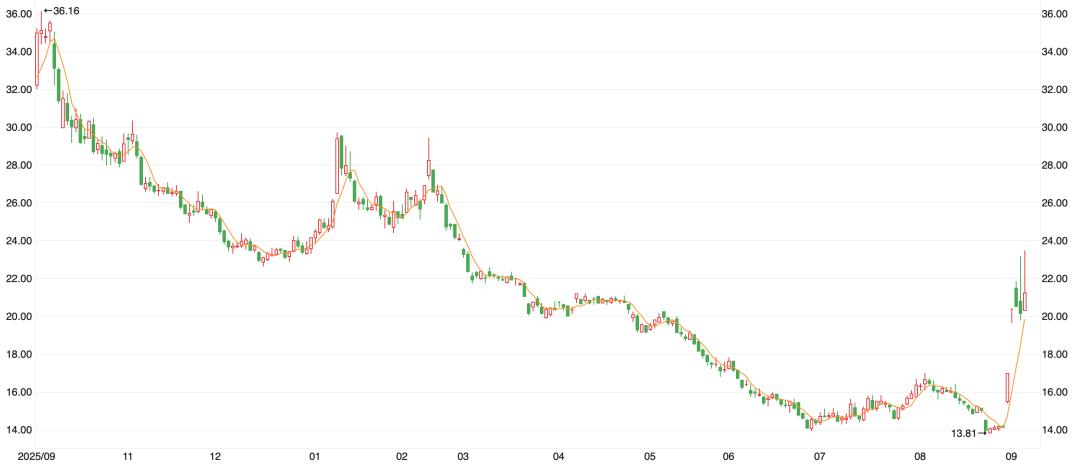
On August 31 and September 1, Mango Excellent Media under Hunan Broadcasting System hit the 20% daily limit for two consecutive trading days, driving the whole media sector to rally. As of the close on September 4, the stock price of Mango Excellent Media closed at 21.25 yuan per share, up 5.46% on the day, with a cumulative increase of 50.18% in the past 5 trading days. The company's market value surged by about 13.284 billion yuan, forcibly drawing a sharp upward curve on the K-line trend that had been in continuous sluggish decline and showed obvious downward momentum.
The catalyst for the stock price carnival is a monkey, to be precise, a long AI drama with a monkey as the protagonist. Starting from August 31, *After Journey to the West*, which is billed as "China's first AI long drama premiered on a satellite TV", was broadcast on both Hunan TV prime time and Mango TV. Produced by Mango TV, all the characters, movements, scenes and magic props in the whole drama are generated by AI.
Choosing IP related to *Journey to the West* is a smart choice in itself. Relying on the natural cognitive dividend of the national-level myth, the audience can have basic cognition of the character relationships and world view in the drama without too much explanation, which can easily arouse market attention. At the same time, with the introduction of the "21 Radio and Television Regulations" last year, the 30-episode drama can be "produced, reviewed and broadcast at the same time", which also leaves enough space for subsequent content adjustment.
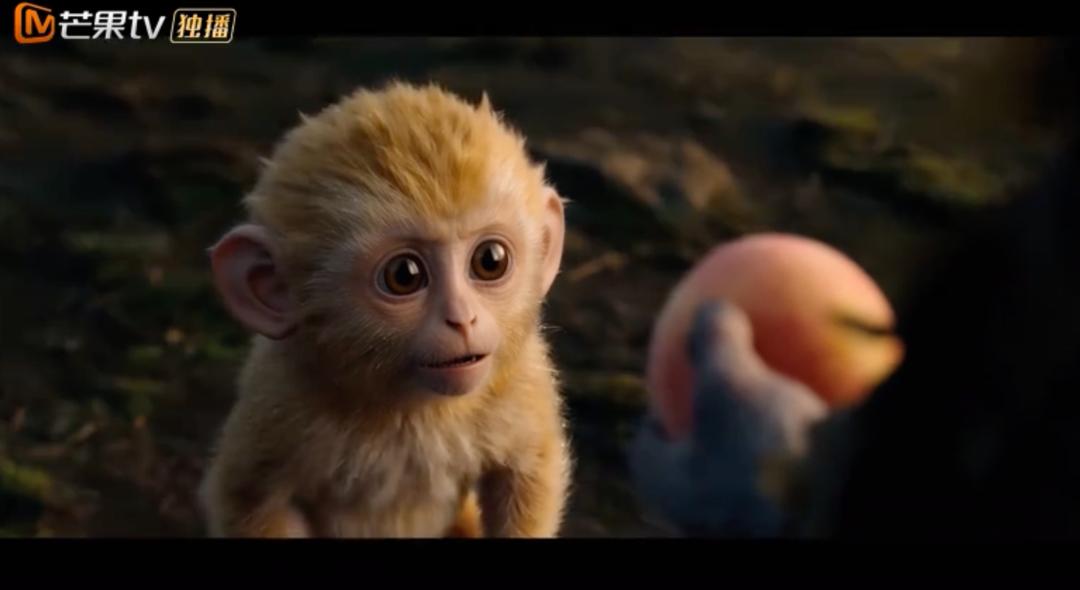
Before the 40-minute-per-episode long AI drama *After Journey to the West* was broadcast, in July this year, the AI drama *The Tale of Peach Blossom Pool* landed on the evening slot of Anhui TV, taking the lead in claiming the title of "the first AI drama broadcast on a satellite TV". This 20-episode, 10-minute-per-episode drama with intangible cultural heritage theme was once teased for lacking "human touch" due to stiff close-up shots of characters and similar-looking supporting roles.
If *The Tale of Peach Blossom Pool* is a trial run for satellite TV in the field of short and medium-length AI dramas, then *After Journey to the West* entering Hunan TV's prime time is the first major test for AI technology to face the mainstream long-form video audience directly.
Elements such as AI dramas, satellite TV broadcast, and simultaneous production and broadcast are not new when viewed separately, but when they collide together, coupled with the statement that "the cost is only a fraction of that of similar S-level live-action dramas", a strong industrial chemical reaction is generated.
In the imagination of the capital market, with AI, the production cycle is shortened, the cost is reduced, and adjustments can be made in time according to audience feedback. This means that platforms no longer need to "burn money to take chances" as before. At the same time, different from the previous 10-minute medium-length dramas, *After Journey to the West* is a standard long drama with 40-minute episodes broadcast on satellite TV prime time, which is also a centralized inspection of AI long-form video technology. Taking a step further, if the above attempt is successful, a large number of backlogged online novels and classic film and television IPs will also have the possibility of low-cost renovation.
02
Divided public praise
While the capital market is reveling, the public praise of *After Journey to the West* among the audience shows a sense of division.
On social media platforms, most people who think this drama is good are attracted by its pictures and visual effects; when it comes to plot and narration, there are mostly complaints, with audiences thinking the plot is verbose, self-indulgent and slow-paced, "the same surprised emotion is repeatedly expressed with four or five shots", "even 2x playback speed is too slow", and some people even bluntly say that this drama "is not made for human beings in terms of aesthetics, but for capital".
This divided reputation is reflected in the viewership data. According to Coolyun Data, the premiere audience rating of *After Journey to the West* was 0.2942%, ranking second among all satellite TV prime time programs; in the following two days, the audience rating declined slightly, and its ranking dropped to sixth.
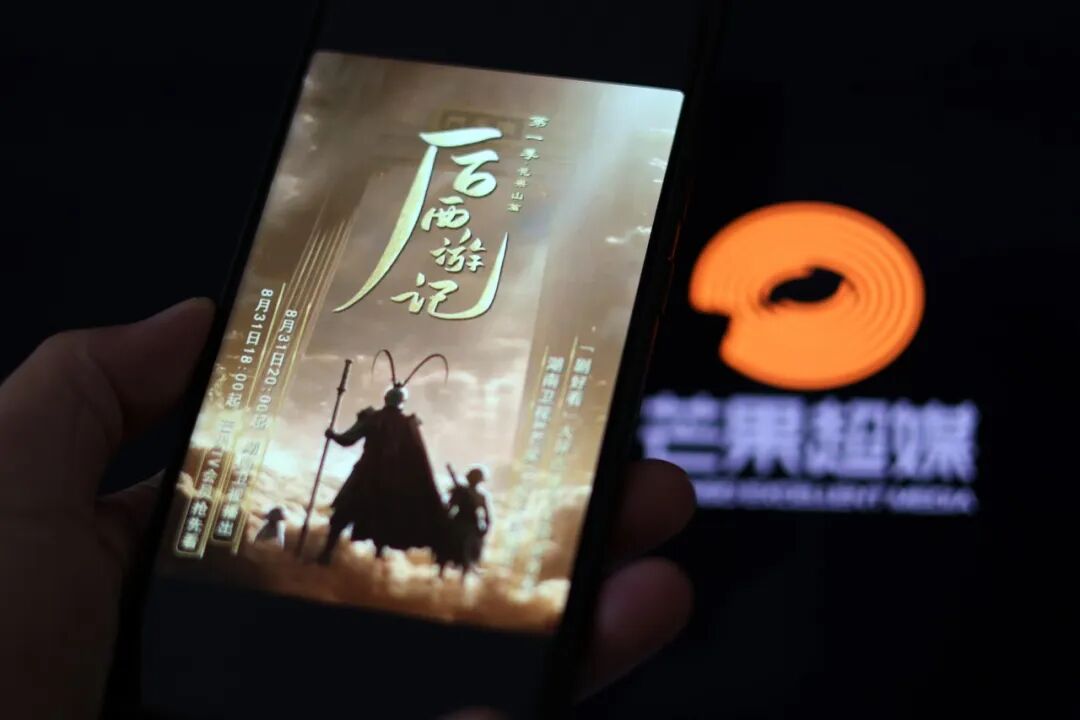
In fact, *After Journey to the West* has a story prototype. It is adapted from a myth novel of the same name written in the late Ming and early Qing dynasties, and is one of the three major sequels to *Journey to the West*. On social media platforms, many enthusiasts of *Journey to the West* say that among the three sequels, *After Journey to the West* has the highest evaluation, because it "not only continues the story of fighting monsters and upgrading, but also has its own philosophical thinking".
The general outline of the story is that the Tang Monk and his party retrieved the true scriptures back then, but in the process of spreading for hundreds of years, the true scriptures were misinterpreted, and later even became a tool for deception; so the "second generation of the Journey to the West" gathered again, and Tang Banji, Sun Xiaosheng, Zhu Yijie and Sha Mi embarked on the westward journey to retrieve the true interpretation of the scriptures and break the illusions in the world.
The original work has speculative and satirical content, but during the production process, the long AI drama *After Journey to the West* abandoned the core of the original work and turned it into a traditional "growth and transformation" story. The reason is that compared with presenting the core connotation, the primary task of *After Journey to the West* may be to run through the industrialized sample of long AI dramas. The sharp criticism in the original work has become a sacrifice to make concessions for technology implementation.
To a certain extent, this is also a common problem of many current AI-generated contents: they can make exquisite sets and special effects, but it is difficult to handle the complex micro-expressions of characters and narrative subtexts in the drama. In order to adapt to the technical shortcomings of AI, the script has to compromise with mediocre shallow stories.
03
Betting on AI is betting on a possibility
Behind the skyrocketing stock price, Mango Excellent Media recently disclosed an unsatisfactory semi-annual report.
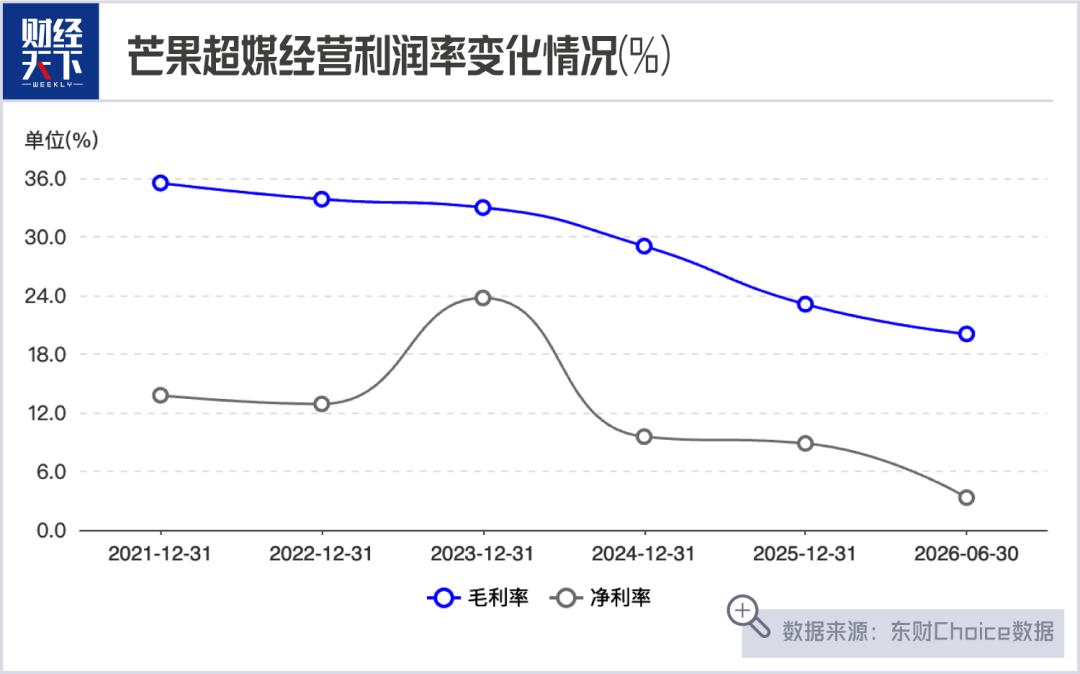
In the first half of 2026, Mango Excellent Media achieved a revenue of 6.194 billion yuan, a year-on-year increase of 3.86%, but the attributable net profit in the same period was only 202 million yuan, down 73.58% year-on-year. Breaking down the data, in the second quarter, its attributable net profit was only 2 million yuan, down 99.4% year-on-year, and the non-recurring profit and loss deducted net profit directly turned from profit to loss. The reasons are that on the one hand, the high content cost has dragged down the gross profit margin; on the other hand, membership revenue has plummeted.
This is also a common problem in the entire industry. Content is the foundation for retaining users, and platforms dare not easily reduce investment, but high investment does not equal high return. The industry has long been trapped in the contradiction between cost and revenue.
From this perspective, Mango Excellent Media and even the entire industry are heavily betting on AI, betting on a possibility to see if AI can rewrite the cost structure and make content costs no longer rigid.
According to Mango Excellent Media, the total cost of *After Journey to the West* is only a fraction of that of similar S-level live-action dramas; for the 30-episode drama with 40-minute per episode, the time from planning to launch is 70% shorter than that of traditional 3D animation. In addition, *After Journey to the West* has accumulated 109 character assets and 143 scene assets, which can be reused in the development of the subsequent 25 episodes and the second season. With the iteration of technology, the cost advantage will become more and more obvious.
But it is too early to conclude that "AI can solve the profitability problem".
First of all, the cost is being transferred. AI can save the cost of actor remuneration, scene construction and post-production special effects, but computing power consumption, model invocation, manual tuning and content review will form new expenses. At present, no company has disclosed the complete full-cycle cost account of AI dramas. In its 2026 semi-annual report, Mango Excellent Media only stated that the Mango Lingchuang platform can "effectively shorten the production cycle and reduce production costs", but did not disclose how much money can be saved specifically.
Secondly, AI has not opened up new business models, and still follows the traditional frameworks of advertising, membership and copyright. The core profit point of long dramas lies in brand sponsorship and placement, but without the traffic attraction and fan stickiness of real-life stars, it cannot drive the base of brand investment. For *After Journey to the West*, Mango only has one monetization method: "pay for VIP to watch in advance", with no advertising investment promotion, revenue-sharing data, or renewal retention.
Looking at it over a longer period of time, although everyone is still discussing technological iteration at the moment, a consensus in the film and television industry is that when the AI label gradually changes from the biggest selling point to a neutral item, the audience's evaluation dimensions will return to the work itself.
After all, from the audience's point of view, they will not automatically raise or lower the evaluation standards just because a drama uses AI. The core of the audience's judgment on the work still falls on the most simple content fundamentals such as plot logic, character shaping and emotional resonance.
This article is from the WeChat Official Account "Finance World WEEKLY", written by Lin Mu, authorized for release by 36Kr.