iFLYTEK is shifting gears amid a transition gap where the new is not yet ready to replace the old.
Iflytek, which accidentally went viral due to a romantic scandal, does not actually worry about public opinion, but about profitability.
Recently, Iflytek released its 2026 semi-annual report. In the first half of the year, it achieved revenue of 11.623 billion yuan, a year-on-year increase of 6.52%, while its profit side was under pressure. The attributable net loss was 204 million yuan, narrowing the loss by 14.68% compared with the same period last year; the non-recurring profit and loss net loss reached 637 million yuan, further expanding compared with the loss of 364 million yuan in the same period last year.
This means that for Iflytek, which is undergoing business transition, the actual profitability of its main business has not improved, but continued to deteriorate instead.
The market is not satisfied with this report card. The value of its AI business has not entered the realization period, and the public reputation of Iflytek is highly polarized.
Excluding policy subsidies and the aura of technological narratives, the R&D input-output ratio and commercialization progress of Iflytek have also become the focus of discussion and questioning among investors.
1
Long Waiting for the Profitability Period
In fact, this semi-annual report of Iflytek, which shows nominal loss narrowing but actual deterioration, did not happen suddenly. The operating pressure had been fully evident as early as the first quarter of this year.
According to the Q1 financial report, Iflytek's attributable net profit turned negative again, with a loss of 170 million yuan; the non-recurring profit and loss net loss was 430 million yuan, plummeting 88.58% year-on-year. In addition, the net cash flow from its operating activities was -1.069 billion yuan. Against the backdrop of revenue growth, the "blood-generating" capacity of its main business was obviously insufficient. *Can AI Not Make Iflytek Take Off?*
The operating downturn continued in Q2. The attributable net loss narrowed by 25.31% year-on-year, but the non-recurring profit and loss net loss increased by 52.01% year-on-year, with the loss amount expanding to 207 million yuan. The huge difference between the two figures mainly comes from 433 million yuan of non-recurring gains and losses, which surged more than 2 times year-on-year, and is the core factor supporting the superficial loss narrowing.
Looking through the income statements of recent years, Iflytek has long been criticized for its excessively high proportion of government subsidies, and the situation of "beautifying" profits with government subsidies has not improved so far.
In 2022, the government subsidies included in the current profit and loss of Iflytek were 473 million yuan, which rose to 636 million yuan in 2025. The proportion of these subsidies in the attributable net profit of the corresponding period in the four years was 84.31%, 61.49%, 74.82% and 75% respectively. In the first half of 2026, the government subsidies included in the current profit and loss reached 306 million yuan.
In other words, in those years when Iflytek made profits, it did not rely on its core business, but more on government support.
Iflytek explained the losses in its financial report as a short-term increase in expenses, which were mainly invested in the R&D of the new version of Spark large model, the promotion of new products such as AI learning machines and AI glasses, and the expansion of overseas business, claiming that these investments will gradually be converted into revenue and profits later.
The company spent 2.285 billion yuan on sales expenses in the first half of this year, a year-on-year increase of 9.52%; the promotion expenses for intelligent marking machines, image cloud, AI glasses and overseas business exceeded 100 million yuan.
At the semi-annual performance briefing, Jiang Tao, the Secretary of the Board of Iflytek, also made a rare positive response. He said that Iflytek is currently in an investment period, which has dragged down profits in the short term, but in the long run, it is preparing for future growth.
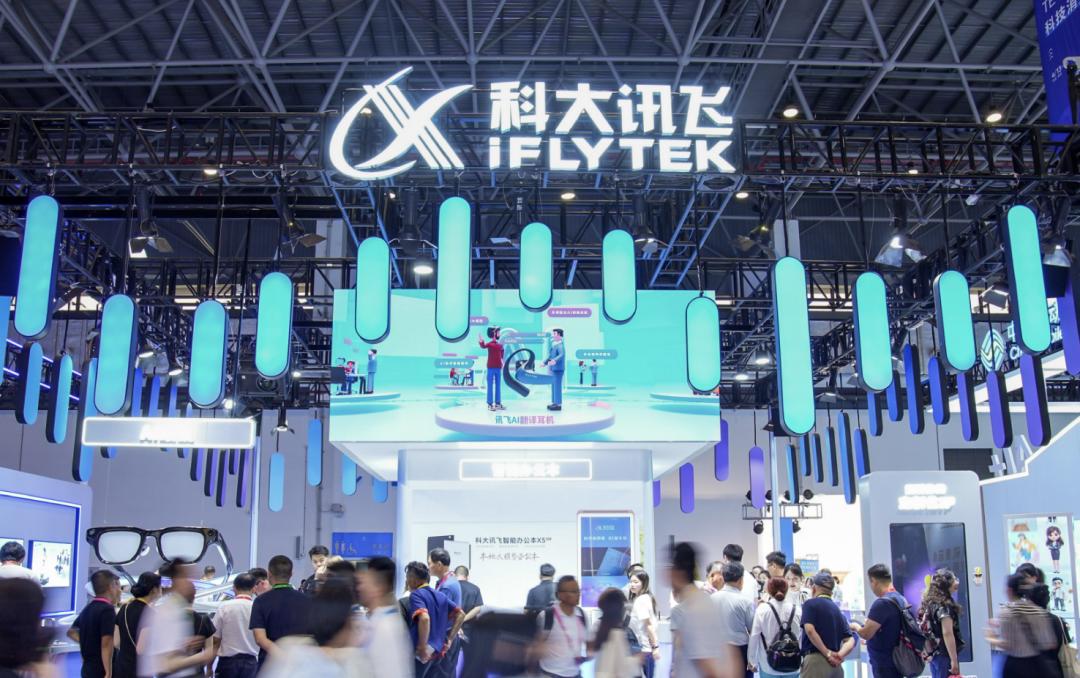
In addition to the high sales expenses, the other major expenditure on the input side is the regular high R&D expenses.
From 2022 to 2025, the company's R&D expenses were 3.111 billion yuan, 3.481 billion yuan, 3.892 billion yuan and 4.439 billion yuan respectively, rising steadily. In the first half of 2026, R&D investment reached 3.007 billion yuan, a year-on-year increase of 25.73%, growing at a rate nearly four times that of revenue, with the R&D expense ratio as high as 25.87%. The main driving force for the growth of R&D investment is the rising cost of computing power and the iteration of large models.
The management revealed that the R&D investment in the second half of the year is expected to be slightly more than twice that of the first half, which means that Iflytek's annual R&D expenses may exceed 7 billion yuan, profits may be further compressed, and profitability pressure will further increase.
For a long time, the capitalization ratio of Iflytek's R&D expenses has remained at about 30%-40%. This operation eases the pressure on the profit side on paper, and can beautify the profit data in the short term. In essence, it is "eating up tomorrow's food today". The capitalized R&D investment needs to be amortized in the next few years. If the relevant projects fail to achieve the expected commercial returns, not only will the amortization continue to drag down profits, but asset impairment also needs to be accrued.
The situation changed in 2026. The focus of R&D investment shifted to more research-stage expenditures such as continuous iteration of large models, computing power procurement, and Agent technology exploration. More of these expenditures are directly expensed into the current profit and loss without capitalization treatment, and the capitalization ratio of R&D expenses dropped to about 15%, which directly increased the pressure on current profits.
High R&D investment is Iflytek's long-term strategy. While worthy of recognition, it has also accumulated solid technical barriers for the company.
In the first half of this year, Iflytek successively released the Spark X2 large model, X2-Flash, and the multimodal large model X2-VL. Wu Xiaoru, President of Iflytek, revealed that the company will launch a new generation of main general large model based on fully domestic computing power at this year's Global 1024 Developer Festival. The new model will focus on improving code capabilities and Token cost performance, reaching the domestic first-tier level as a whole; among the general large models trained with fully domestic computing power, all indicators will continue to maintain the leading position in China.
2
Hidden Financial Risks
If the profitability dilemma on the income statement is the most intuitive source of anxiety for the capital market about Iflytek, then a series of deep-seated financial risks are hidden in the balance sheet. Among them, the continuously rising accounts receivable and the continuously lengthening payment collection cycle are one of the most severe operational risks the company is currently facing.
On the expenditure side, the sum of Iflytek's four period expenses including sales, management, R&D and financial expenses reached 5.603 billion yuan, resulting in a net outflow of 945 million yuan from operating activities in the first half of the year. To replenish liquidity for its computing power platform and daily turnover, Iflytek completed a private placement in April this year, raising a net amount of 3.981 billion yuan at a price of 44.33 yuan per share.
The cash flow still cannot turn positive for a long time, and one of the reasons is that a large amount of revenue is stranded in accounts receivable.
As of June 30, 2026, the net amount of accounts receivable of Iflytek reached 21.757 billion yuan, nearly 1.9 times the revenue of the first half of the year, almost approaching its total revenue of the whole previous year. This figure was 5.768 billion yuan at the end of 2020.
What is more worthy of vigilance than the expanding scale of accounts receivable is the continuous deterioration of its aging structure.
Among the 21.757 billion yuan of accounts receivable, 10.748 billion yuan has an aging period of more than 1 year, accounting for 49.4%, of which 3.089 billion yuan has an aging period of more than 3 years. For this reason, in the first half of 2026, the bad debt reserve for Iflytek's accounts receivable has reached as high as 4.511 billion yuan, with a provision ratio of more than 20%.
During the same period, the company's monetary funds continued to shrink, and it faced rapidly rising short-term debt pressure.
As of the end of June 2026, the balance of Iflytek's monetary funds was 3.864 billion yuan, but in the same period, the company's short-term loans reached about 2.715 billion yuan, and the non-current liabilities due within one year reached 2.961 billion yuan.
The sum of short-term loans and non-current liabilities due within one year alone is as high as about 5.676 billion yuan; superimposed on the negative net operating cash flow of 945 million yuan in the first half of the year, the company's capital chain is under pressure, with the asset-liability ratio as high as 53.37% and weak solvency. During the reporting period, the accounts receivable turnover rate was 0.69, and the inventory turnover rate was 2.01, which means the company is in urgent need of "payment collection" to replenish liquidity.
3
Business Transition with a Gap Between Old and New Growth Drivers
Breaking down Iflytek's revenue structure, we can find that it is undergoing a historic transformation.
In 2025, Iflytek put forward the business strategy of "strengthening the C-end, deepening the B-end, and selecting high-quality G-end projects", actively abandoning projects with high customization, low gross profit margin and high payment collection pressure in its business composition, trying to concentrate its business focus on areas with higher returns.
Judging from the operating performance in the past six months, the revenue of smart education, which has long occupied the largest business sector, reached 3.49 billion yuan in the first half of 2026, a year-on-year decrease of 1.16%; the open platform business surpassed smart education for the first time, jumping to the company's largest business sector, with revenue reaching 3.705 billion yuan in the first half of the year, a year-on-year increase of 36.01%.
This shows that Iflytek's growth focus is changing: In the past, Iflytek relied more on mature businesses such as smart education, but now it is shifting to AI businesses such as open platforms, and the transformation is in a gap period of "no follow-up for the receding old businesses".
In the first half of the year, Iflytek's G-end revenue decreased by 2.65% year-on-year, and the business contraction rate far exceeded expectations. Among them, the revenue of smart city information engineering decreased by 34.99% year-on-year. In addition, the revenue of enterprise AI solutions plummeted by 48.62% year-on-year. Both are typical "customized project-based" models, and are also the key areas of strategic divestment, forming a clear revenue gap.
The old growth engine, smart education, has steadily ranked as the company's largest revenue sector for many consecutive years. Its revenue in the first half of the year was 3.49 billion yuan, a slight year-on-year decrease of 1.16%. Fortunately, its gross profit margin remained at a high level of 51.72%.
It is worth mentioning that the acceptance of G-end business projects such as smart education and smart cities is concentrated in the second half of the year, and the first half of the year is mainly for investment and project delivery, which is also one of the reasons for the consecutive losses in the semi-annual reports.
The smart hardware sector used to be the growth driver for the C-end in the past, with the main product being AI learning machines. Data from Luo Tu Technology shows that competition in the learning machine industry is becoming increasingly fierce, with intensified involution and slowing growth. In the first half of 2026, the total omni-channel sales volume was 2.287 million units, a year-on-year decrease of 14.2%, and the sales amount was 7.72 billion yuan, a year-on-year decrease of 10.2%. 79.4% of the sales share was divided by four players: Zuoyebang, Xueersi, Iflytek and Xiaoyuan.
Superimposed on the rising prices and periodic shortage of upstream chips and storage, the sales volume of Iflytek's AI learning machines failed to meet expectations. The revenue of smart hardware in the first half of the year was 732 million yuan, a sharp year-on-year decrease of 15.96%, and the product quality and service capabilities are also being tested.

The new growth engine is the AI open platform business with faster growth.
In the first half of this year, the revenue of AI open platform business was 3.705 billion yuan, a sharp year-on-year increase of 36.01%, accounting for 31.87% of the total revenue. Among them, the revenue from large model API and MaaS services increased by about 70% year-on-year, which is the main driving force for growth.
Behind the high growth rate is the high investment in computing power costs. The cost of large model inference computing power and cloud resources accounts for more than 60% of revenue, and the scale effect has not yet appeared, so the actual profit quality is weaker than that of traditional project business. Although the gross profit margin has improved, it is only 20.21%, less than half of that of the education business.
As for smart healthcare and smart vehicles, their revenues were 438 million yuan and 481 million yuan respectively, with impressive growth rates, but their combined proportion is less than 8% at present, which cannot fill the profit gap of the overall business in the short term.
Combining the rising and falling trends of Iflytek's old and new engines:
The pace of contraction of old businesses is faster than the pace of expansion of new businesses, leading to a stall in the shift of growth momentum; old businesses contribute gross profits while new businesses erode profits, directly leading to the paradox that "the more revenue grows, the more pressure profits face"; the transformation of business model also brings a gap in the cash flow model, and the cash flow pressure during the transformation period increases significantly.
It is a good thing to exchange short-term slowdown in revenue growth and profit pressure for a healthier long-term business structure and a more sustainable growth model. The key is when to complete the transition and get out of the gap between old and new businesses.
The next three signals deserve close attention: the gross profit margin of the AI open platform rises above 30%, the revenue of emerging sectors such as smart healthcare and smart vehicles forms a new growth curve, the operating cash flow turns positive, and the operational cash flow model is fully verified.
Iflytek still has to go through a period of pain for this underlying reconstruction of its growth paradigm.
This article is from the WeChat official account "Benyuan Finance", the author is Li Youshan, and it is published with authorization from 36Kr.