Sports brands bid farewell to the era of high growth.
The sportswear brands that have been sprinting at full speed all this time will eventually have to pause to catch their breath.
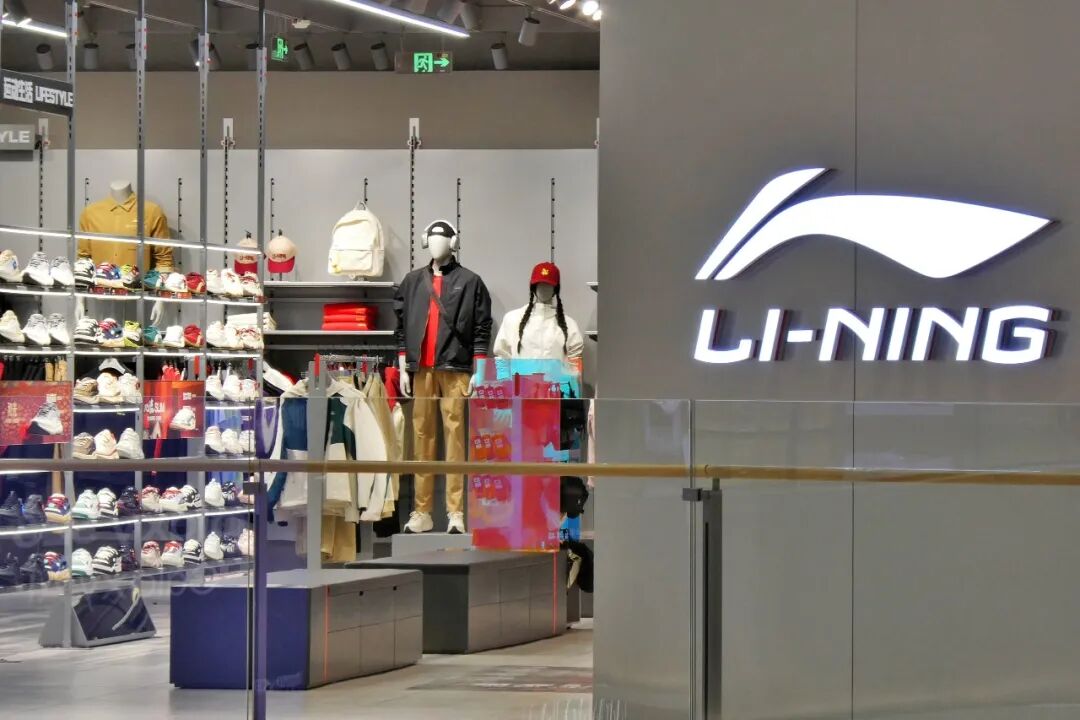
At the end of August, the four leading local sportswear brands released their half-year financial reports. All of them have stepped on the brakes. In the first half of this year, in terms of revenue alone, Anta Sports recorded 435.1 billion RMB, representing a year-on-year increase of 12.9%, while the growth rate of its core Anta brand hit 4.8%, the lowest level since the company went public; Li-Ning posted 152.4 billion RMB in revenue, up 2.8% year on year, with low single-digit decline in retail flow in the second quarter, which was also the first drop after Li-Ning returned to the growth track; Xtep International reported revenue of 67.95 billion RMB, down 0.6% year on year, marking the first decline in its half-year report for many years; and 361°, the brand with the highest growth rate, reached 61.6 billion RMB in revenue, though its 8% increase was still lower than that in previous years.
The double-digit or even doubling growth that Chinese leading sportswear brands used to enjoy is now a thing of the past. This fully indicates that the overall market is entering a new stage.
01
Financial Reports That Are No Longer Showing Crazy Growth
Let's first go through the four financial reports briefly.
Anta's 435 billion RMB revenue and 12.9% year-on-year growth exceeded expectations and looked quite decent, but the growth anxiety of its core Anta brand has not been eased. As the top player among domestic sportswear brands, the core Anta brand only saw a 4.8% growth rate, its operating margin dropped from 23.3% to 22.5%, and the operating profit grew by 1.2%. The proportion of the core brand in the group's total revenue fell from 44% to 40.8%. What really drove the overall performance were outdoor brands such as Descente and Kolon Sport, which generated revenue of 106.91 billion RMB, up 44.2%, and contributed roughly two-thirds of the group's new revenue. Among its 94.87 billion RMB net profit, there was a one-off gain of around 15.49 billion RMB brought by the placement of Amer Sports. After excluding this part, many brokerages predict that Anta's full-year adjusted profit growth rate may fall to the single-digit range.
In contrast to Anta's performance where growth came from its non-core segments, Li-Ning has adopted a defensive posture. Li-Ning recorded 152.4 billion RMB in revenue, up 2.8% year on year, and its net profit reached 18.2 billion RMB, up 4.5%. But Qian Wei, Co-Chief Executive Officer of Li-Ning, stated frankly at the performance meeting, "We think the performance in Q1 was relatively good, but the performance in Q2 was far below expectations". He also noted that both offline customer flow and discounts are under pressure, revealing that the market still faced challenging trends in July and August, and the company held a "relatively cautious and serious attitude" towards the second half of the year, adding that "the core of the second half of the year is to control risks, and we will not abandon the pursuit of operating quality for the sake of pure scale growth". Zhao Dongsheng, Vice President and Chief Financial Officer of the company, said at the performance meeting that the full-year revenue target has been lowered from high single-digit growth to low single-digit growth.
Xtep, which ranks third, reported 67.95 billion RMB in revenue, down 0.6%, and its net profit dropped 10.5%. The revenue of Xtep's core brand fell by 2.2%, its gross margin rose from 45.5% to 46.4%, but expenses eroded its profit, leading the operating margin to decline from 19.1% to 17.1%. The professional sports segment where Saucony is located generated 8.75 billion RMB in revenue, with a growth rate of 11.4%. Facing the complex retail environment, Xtep has lowered its 2026 full-year sales guidance to a low single-digit decline.
The most understated 361° has maintained its catching-up momentum, posting 61.6 billion RMB in revenue, up 8%, and a net profit of 9.26 billion RMB, also up 8%. Not chasing high-end positioning, 361° focuses firmly on the mass market, while its brand-new 361° Super Stores are still continuously opening new locations. Against the backdrop of widespread pressure across the industry, 361° has secured its basic market in second- and third-tier cities with its full product line and cost-effective offerings. However, it also has to face the overall market situation, and its growth has returned to the single-digit range.

02
The "Threefold Pressure" Hanging Over the Industry
In the first half of the year, the total retail sales of sports and entertainment goods nationwide fell by 2.4% year on year, and the growth rate of total retail sales of consumer goods was only 1.3%. The overall market is shrinking, the number of consumers is decreasing, while the number of competitors fighting for market share is growing and becoming increasingly fierce.
The first pressure faced by domestic brands comes from the deeper discounting of international brands.
Nike is a typical example. The three iconic series AJ1, Air Force 1 and Dunk, which consumers once had to queue up and draw lots to buy, are now sold at 30% to 50% off in outlet stores. Nike's revenue in the Greater China region has declined year on year for eight consecutive quarters. According to its 2026 fiscal year (June 1, 2025 to May 31, 2026) full-year revenue released on July 1, the figure reached 58.47 billion US dollars, down 11%. Although Nike's CFO clearly stated at the performance meeting that "China is shifting to full-price sales", the brand has tried to exchange prices for market share for a long time in the past to clear inventory and maintain sales flow.
Adidas, Puma and New Balance are also increasing their discount efforts. There used to be a clear gap between the price range of these international brands and that of domestic brands, but this gap has been disappearing in recent years. If you often visit the sports sections of various shopping malls, you will find that the discounted products of Nike and Adidas used to be in a different price range from the core products of domestic brands, but now their price ranges are completely overlapping. Even the high-end lines of some domestic brands are priced almost the same as international brands.
The second pressure comes from the fast, precise and aggressive "copycat" brands.
On the sports floor of the Link Square Mall in the Beijing Sub-Center, a store named "DVON" is running promotions in the name of an "international brand". The dim "DV" and highlighted "ON" on its storefront once almost made me, a veteran with years of experience in sportswear brand management, mistake it for the fast-growing On running brand. Taking a closer look inside, their price tags are set almost the same as On's, but the actual selling price is only one-tenth of the genuine product. The outdoor jackets in the adjacent "Batagonia" store have almost identical color schemes and styles to Patagonia's products.
A well-known veteran runner called me excitedly, saying that big-name sports goods at the B1 atrium of R&F Plaza in Beijing's CBD are being sold at crazy discounts, and the business is extremely hot. He even bought full sets of gear for his whole family, and enthusiastically suggested that I go there to stock up on goods, or even set up a pop-up store in the mall, claiming that "you will definitely make a lot of money". I was reluctant to expose on the spot that most of these low-priced brands are counterfeit, so I just kindly reminded him to check the hangtags carefully and confirm whether the English brand names on the products match the genuine brands.
These two shopping malls are not isolated cases. A large number of counterfeit brands have sprung up in first-tier cities such as Beijing and Tianjin in the past six months. The brand "SKON" has appeared on the B1 floor of Beijing's Hopson Mall, alongside "Coutleubia" that imitates Columbia and "THE cuxth FOSN" that imitates The North Face.
These counterfeit brands do not sign long-term leases, and their contract periods are usually only three to six months. They enter the malls in the form of pop-up stores, paying higher rents than regular tenants, and the malls accept them all under the pressure of unoccupied store spaces. In the past year, they have rapidly occupied prime locations in shopping malls in first- and second-tier cities — atriums, escalator entrances, and metro-connected floors, harvesting consumers who want to buy international brands but have limited budgets.
Do not underestimate these brands. Their profit margins are astonishingly low, so although the unit price per customer is not high, the total transaction amount per customer is not small. The monthly sales of a single counterfeit brand store can even exceed that of the adjacent genuine brand stores, and is far higher than that of leading domestic brands. What they are eating away at is exactly the basic market that domestic brands have built over the years.
At the same time, genuine domestic brands are also increasing their own discount efforts. Anta, Li-Ning and Xtep have expanded their super outlet stores and online promotions in recent years, and new products may enter outlet stores as early as three months after their launch. Their sales flow has barely maintained, but the gross margin is under continuous pressure.
With the three forces piling up, the price system of domestic brands is being squeezed in all directions.
03
Danger Signals
The change in Saucony's growth rate is probably the most noteworthy signal in this half-year reporting season. From 2021 to 2023, Xtep's professional sports segment grew from 200 million RMB to 796 million RMB, nearly doubling for two consecutive years, which reflected the explosive power of the "professional running shoes" niche track in those years. Then in 2024 and 2025, the steep upward growth curve gradually flattened, remaining above 30% last year, but the growth rate dropped to 11.4% in the first half of 2026.
The basketball category in the past can be used as a reference. For example, Nike, which once had a near-monopoly position in China's basketball shoe market, is losing its basic market. Data from Euromonitor shows that Nike's overall market share in China's sportswear and footwear market dropped from 18.1% in 2021 to around 14.6% in 2025. As one of its former pillar businesses, statistics from Guosen Securities based on e-commerce data from Tmall, JD and Douyin show that Nike's online revenue from basketball shoes declined by 37% year on year in the fourth quarter of last year.
These two seemingly unrelated categories — one the core territory of an international giant, the other a new growth point for domestic brands — are facing the same dilemma: demand has stabilized, supply is overcapacity, and competition is intensifying.
The running track is visibly crowded. Anta and Li-Ning have both increased their investment in professional running in recent years. Li-Ning's running category has surpassed basketball to become its largest category, and many local start-up brands have focused specifically on the running track. More international brands take running as their core business: in addition to new players such as HOKA and On, the traditional four major running shoe brands are all striving to penetrate the core runner community, and Adidas' investment and recovery in the running segment is particularly prominent. There is also a phenomenon that all brands are launching carbon-plate running shoes, but consumers cannot tell the difference between different brands and their product quality at all.
The deeper problem is that when a niche track turns from a blue ocean to a red ocean, the earliest brands that entered the market are often the first to feel the chill. What Saucony is facing is not that it did something wrong, but that the total supply of the entire market has far exceeded the increment of demand.
This is a reminder for all brands: no niche track can maintain high growth forever.
The next track that will be fully saturated is very likely the outdoor sector. Amer Group's 2026 Q2 financial report shows that the mountain outdoor apparel and equipment segment with Salomon as its core generated 569 million US dollars in revenue, up 37.4% year on year, with a growth rate higher than that of the outdoor functional apparel segment where Arc'teryx is located. Salomon achieved double-digit growth in the Chinese market, and plans to add 45 net new stores within the year, focusing on high-end shopping malls. The combined revenue of "all other brands" under Anta, including Descente and Kolon Sport, still increased by 44.2%, but in terms of retail flow, its growth rate has slowed down compared to the past two years.
When a track is being laid out by all competing brands, it is only a matter of time before it shifts from "high prosperity" to "high competition". The running track is like this, and the outdoor track is following the same path.
Many people in the industry have reached a consensus: in the first half of 2026, the industry has shifted from incremental competition to stock game, and the era of universal growth in terminal retail flow is over. The management of sportswear brands must have realized this even earlier.
04
Paths to Return to the Fast Growth Track
It is not hard to see that the growth that used to be driven by national trend collaborations, store expansion and marketing festivals must now give way to more solid capabilities.
Four paths are being verified in the market.
Path 1: Multi-brand matrix, with extremely high entry barriers. Anta is the only enterprise that has succeeded in this path so far. When its core brand and FILA are growing at single-digit rates, brands such as Descente and Kolon Sport can still fill the gap with double-digit growth. Ding Shizhong, Chairman of Anta Sports, stated in the "Chairman's Message" of the half-year report: "The important responsibility of the group is not to require every brand to pursue the fastest growth at every stage, but to respect the development law of each brand." But the premise of multi-brand operation is sufficient cash flow and management capabilities. Anta plans to acquire approximately 29% of Puma's equity in the first half of the year with a transaction consideration of 1.5 billion euros, and its M&A territory is expanding. But for most brands, blindly replicating the multi-brand strategy will only dilute resources, and there have been few successful cases in recent years. There are also skeptical voices arguing that continuous acquisitions will distract the company from the operation of its core brand.
Path 2: Shift from channel expansion to store efficiency-driven growth. Leading brands have reached a consensus: the number of stores is no longer a growth indicator, and single-store output is the core. In the first half of this year, the number of Anta brand stores (including adult and children's stores) decreased by 173 net, and the number of FILA stores also decreased by 86. At the same time, the combined proportion of DTC and e-commerce business in Anta's core brand has risen to 76.9% in the first half of this year from 73.5% last year, with the focus shifting to refined operation. Bi Mingwei, CFO of Anta Group, said at the performance meeting that the group strictly controls store opening quality and guides store opening work from top to bottom. The e-commerce business of many brands has shown faster growth, which means that when offline customer flow continues to be under pressure, online channels and single-store efficiency have become the most certain source of growth.
<