80 million pet owners have witnessed the "pet economy" go from wild frenzy to collapse.
"The most counter-cyclical industry in this era has been blacklisted by capital." After observing the pet industry for a decade, Alan found that the tide has turned.
Last year, Hou Yi, founder of Freshippo, made a high-profile foray into fresh pet food with a 178 million yuan target. However, all 18 of its physical stores were shut down after just 9 months of operation, with each store losing over 200,000 yuan on average per month. The seasoned retail veteran reflected afterwards: "Our original idea was far too naive."
Yichong Technology, once regarded as a "benchmark for vertical e-commerce platforms", has established partnerships with more than 1,300 pet industry brands and over 30,000 pet stores, and was once "chased for investment" by numerous institutions. Now its founding team has been listed on the dishonest debtors list.
Other once-high-profile players including pet service provider "Pets Home", Asia's largest pet store "Super Pet Home" and internet-famous brand "Bucatstate" have now fallen from capital's "darlings" to "abandoned children". The financing of the entire industry has not just shrunk, but almost dried up.
"Even leading pet food enterprises cannot escape this predicament," Alan said. Companies such as Zhong Chong, Guaibao and Pidi are seeing their revenues rising while their profits keep sliding, trapped in the dilemma of "the more they sell, the less they earn", and the share prices of some firms have almost halved within the year.
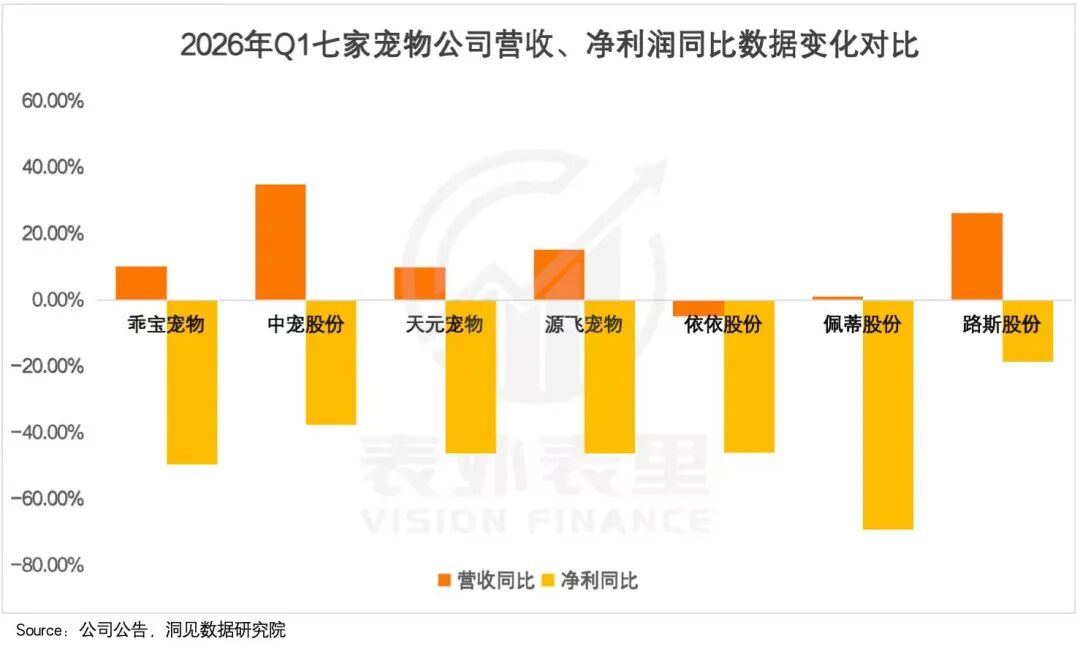
Pets are still here, and the demand still exists. There are 126 million pet dogs and cats in China, generating at least 3 trillion yuan in annual consumption, which is equivalent to "6 infant formula markets". As people pay more and more attention to their pets as "emotional family members", the average annual consumption per pet is still on the rise.
What on earth has made this most certain track suddenly full of uncertainties?
1
New Packaging, Cat Litter Priced at Dozens of Yuan Sold for Over 100 Yuan
How to build a leading cat food brand with an annual sales volume of 1 billion yuan?
Four or five years ago, Li Xin's answer was simple: replace iron cans with aluminum foil bags, turn snack cat strips into staple cat strips, upgrade the packaging to a more premium look, and adjust the palatability to a level that over 98% of cats love. A 10-person startup could quickly push its sales to the top of e-commerce platforms with these minor differentiated adjustments.
"Making money was way too easy back then," Li Xin described the market pattern at that time as "blooming with a hundred flowers", where every niche category had well-performing companies with distinctive products, and almost no one was engaged in vicious price competition.
Liu, a salesperson working in pet supplies, put it more bluntly: back then "you could see growth even with your eyes closed", because all pet owners were like "give me whatever you have, I'm afraid I can't get what I want".
Outside observers often attributed this to supply shortages caused by the pandemic, but Liu knew clearly that the truth was far more complicated.
Take cat litter as an example. At that time, there were no more than a handful of factories in China that could stably produce qualified tofu cat litter without quality issues, and most of their production capacity was monopolized by the pet brand N1, which meant cat owners often could not buy the product, and even if they did, they usually had to pay a high price.
During this period, short videos about pets also began to spread like wildfire, the "three red lines" for the real estate sector and the "double reduction" policy for the K12 education industry began to show their impacts. The post-95s generation who just entered the workforce became the first group of young people to feel the economic chill, and many of them joined the pet-raising community amid the loneliness of lockdowns and following trends.
"The number of pet cats exploded, surpassing the number of dogs at one go," Liu recalled. Even young people earning 3,000 to 4,000 yuan a month were willing to spend a quarter of their income on their pets, just wanting to "give the fur baby the best".
This fully exposed the "barren supply" in the pet supplies sector. In Liu's words, "As long as the product works passably, even cat litter that usually sells for only a dozen yuan can be sold for over 100 yuan."
The same goes for other niche tracks such as cat food, freeze-dried snacks and pet toys. Domestic cat food brands like Zhong Chong and Guaibao had low R&D investment and unsophisticated overall supply chain, leading to persistently low product repurchase rates. As late as 2021, overseas OEM revenue still accounted for 75% to 85% of their total revenue.
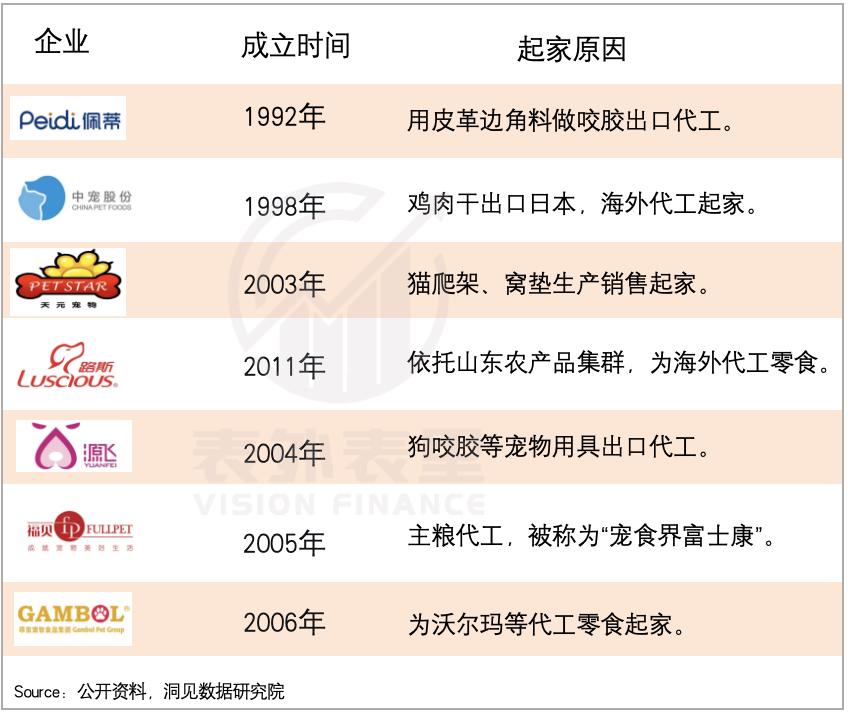
In a market full of gaps everywhere, you didn't need to create anything new to earn huge profits easily.
Li Xin noticed that every time they launched a new product, within less than three months, 10 copies with 1:1 identical outer packaging would appear on the market, with exactly the same marketing concepts.
His company's products clearly mark raw material suppliers, ingredient lists, product limitations, and even have four-sided floor plans of the production equipment. Other brands only have a few vague descriptions, but "cut the price in half, and the sales will rise visibly".
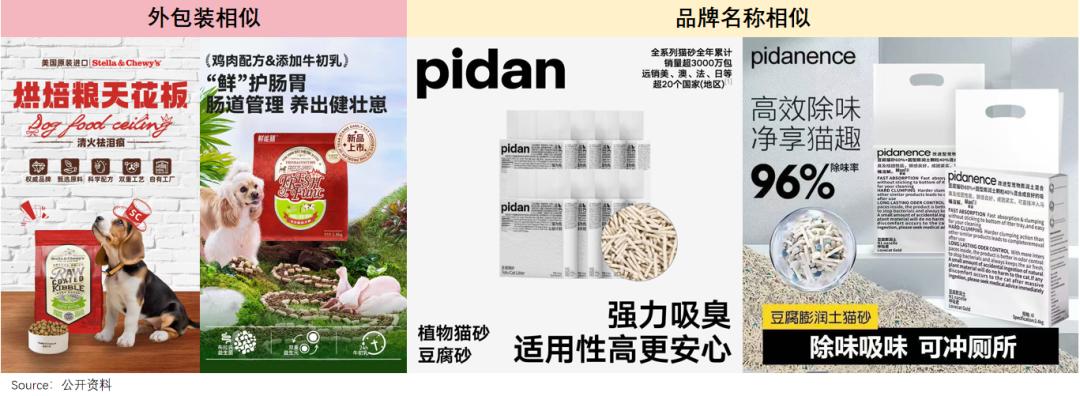
The barriers to entry in the pet industry are extremely low, Li Xin said helplessly: "You can start a business with 50,000 yuan, or 500,000 yuan, and the products made with 50,000 yuan and 100,000 yuan may even have the same quality."
According to Alan, there is an unspoken secret in the pet industry: 80% of the domestic pet food that consumers have bought may come from the same production line. The second- and third-tier dog food brands with well-known names on the market, and even the basic products of some first-tier brands, have almost the same formula, the only difference is "how well the story on the packaging is told".
Once you launch a hit product, your competitors can quickly replicate it by taking the sample to the same OEM, change a slogan of "health" to block your premium positioning, then cut the price by a discount to directly take away 80% of the mass market.
"What's more tricky is that the whole industry has to pay for the negative consequences of homogeneous vicious competition," Alan said.
2
Pet Owners Fall Into Traps Everywhere, Pet Companies See Revenue Rise But No Profit Growth
After switching to a new cat food, Linzi's cat almost lost its life.
When the cat food her cat usually ate became hard to buy, she decided to switch to a domestic brand with similar formula, which was advertised as "high protein and good for the stomach", but her cat vomited after eating it. Then a friend recommended an imported top brand with "amino acid formula", the cat still vomited. Not giving up, she tried another product claimed to be "nutritionally comprehensive and highly palatable", but the cat vomited even more severely.
After going through all these attempts, she finally chose a bag of cat food with ordinary formula that only meets the basic food and clothing needs. Surprisingly, the kitten did not vomit after eating it this time.
At this moment, Linzi was confused: what on earth counts as good cat food?
Alan cannot give a perfect answer to this question. But he is sure that pets cannot speak, and many popular concepts in the industry are essentially "pseudo-demands" created artificially and impossible to verify.
"The pet industry is a sector where emotional demands are excessively amplified. People need food to survive, that's a rigid demand. But pets eating fresh pet food is all about the love owners have for them. Love is priceless, so you can set any price for it," he pointed out the truth. But the essence of business is not "love", but "repeat transactions".
When pet owners find that the cat nest advertised as the best hiding place for cats is actually less practical than an express box; the cat teaser stick priced at 70 yuan is no more fun than a 0.7 yuan one; and the "nutritious and healthy" baked pet food does not have a higher production temperature than extruded pet food, even the chicken powder in it may be "meat and bone meal" ground from frozen chicken or even chicken frames, they will wake up from the marketing hype.
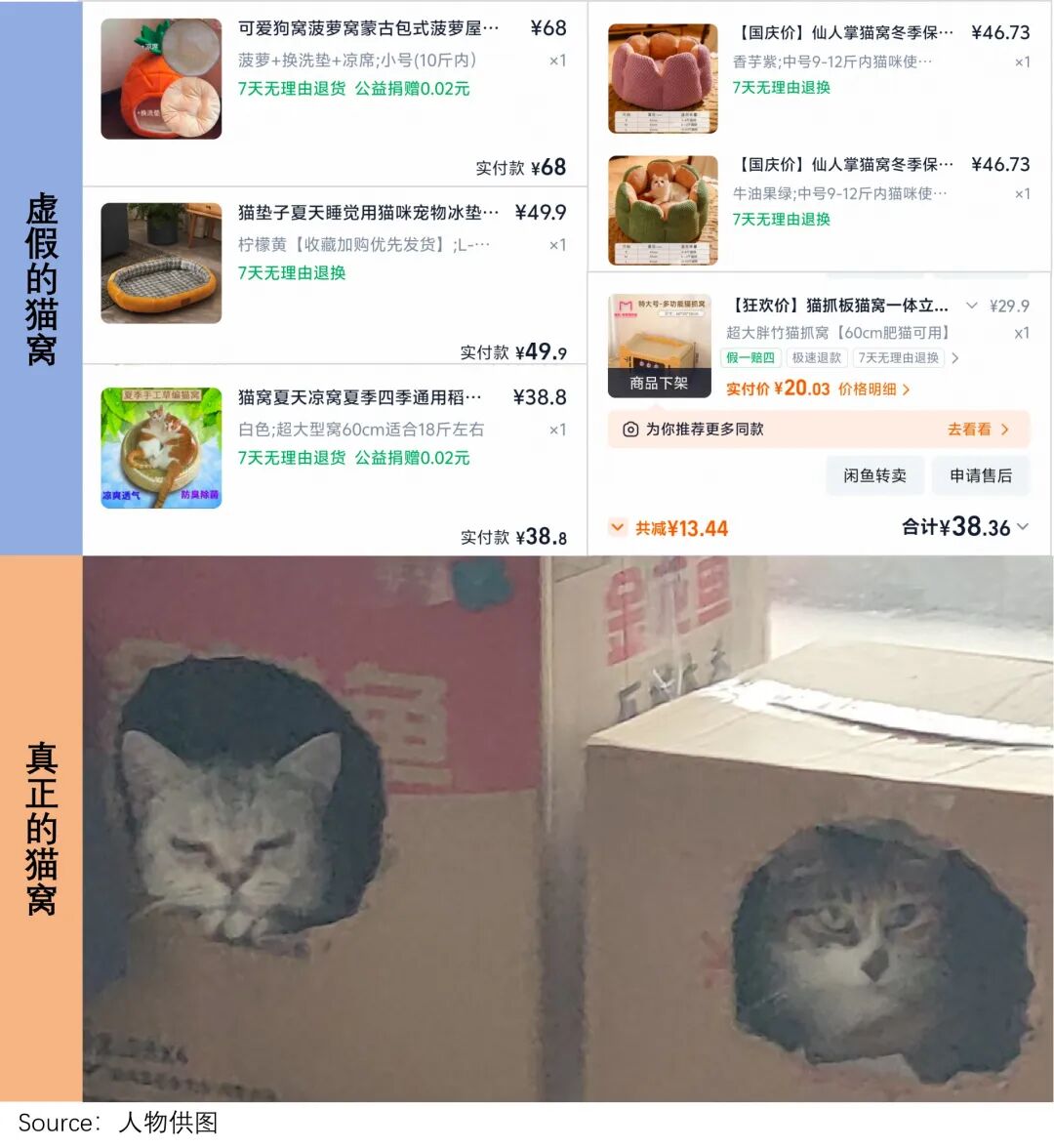
To make matters worse, the stories made up by merchants for premium pricing are breaking down, while the number of practitioners who want to take money out of pet owners' pockets is only increasing.
In 2025 alone, more than 1.5 million new pet-related enterprises were registered nationwide, a year-on-year increase of 36%, which is 20 times faster than the birth rate of dogs and cats.
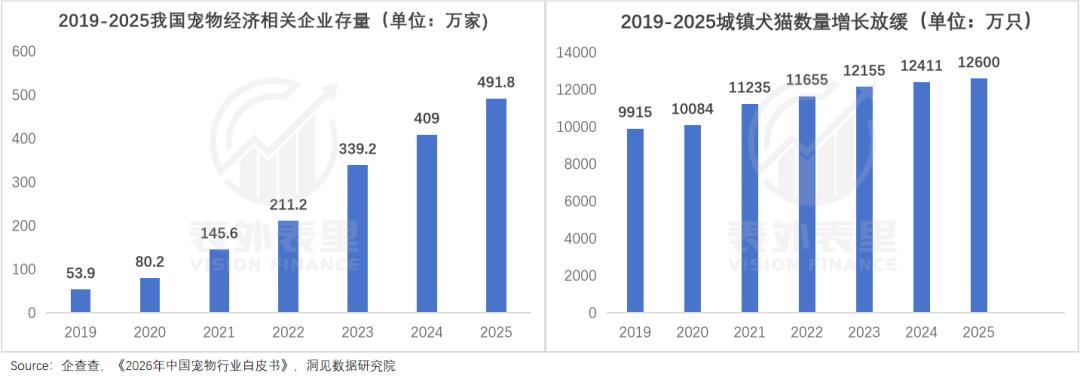
Leading brands are also squeezing downwards to grab market share. The competitors of Li Xin's company have changed from "players with the same scale of hundreds of millions yuan" to "listed companies with a scale of tens of billions yuan", and the living space of mid-tier brands has been sharply compressed.
To survive, merchants have begun to spend more money on buying traffic and doing marketing. Two years ago, the average customer acquisition cost in the industry was less than 100 yuan, but this year it has soared to 200 to 300 yuan. "For the same 50 million yuan of cat food sales, marketing expenses have skyrocketed from hundreds of thousands yuan in the past to millions or even tens of millions yuan," Li Xin said.
Both he and his boss know clearly that the key to breaking the deadlock is to develop better products. Previously, the company would spend half a year or even longer polishing products. As competition becomes fiercer, the R&D cycle has been compressed to three months, but the effect is still negligible.
"Spending 1 million yuan on R&D, you never know when you can get the money back; spending 1 million yuan on traffic investment, you can at least generate 3 to 5 million yuan in sales," he said helplessly. Now even leading brands are unwilling to invest in R&D. Some aggressive brands even pour 80% of their budget into live streaming sales and KOL marketing, and are reluctant to invest in supply chain quality control and raw material traceability.
This kind of eagerness for quick success directly leads to the collapse of the price system: a mainstream pet food priced at more than 100 yuan is forced down to 60 yuan under platform promotions and channel subsidies. Brands are losing money just to gain popularity, and it is almost impossible for them to restore the normal daily price afterwards.
In addition, the rising prices of raw materials such as meat and grains in the past year have further squeezed profits, so these enterprises have naturally collectively entered the difficult mode of "revenue growth without profit growth".
Of course, not all players in the pet industry are failing, but the era when you could make money easily just by creating a random brand is completely over.
3
The Pet Industry Is Not Failing, It's Just That Easy Money Is Gone
Everyone says it's hard to make money from pets now, but Lyu Jie, who is engaged in high-end dog breeding, is getting better and better in his business.
In his kennel, a nearly 10,000-yuan West Highland White Terrier puppy has just been sold. The buyer drove all the way from the neighboring city, took a full day off, just to see and pick up the dog on site. Some customers even paid a 2,000-yuan deposit happily for a puppy they liked, and waited patiently for a long time.
What's more, he has got many repeat customers and new customers introduced by old ones. For every buyer, he will give sincere advice: you must have time to walk the dog before you raise it, most pet supplements are a waste of money, buy the right cat food not the expensive one... "The demand for pet raising will never disappear. If you treat customers sincerely and don't always think about making quick money by cutting leeks, you can always run a good business," Lyu Jie summed up the secret of his success.
But Linzi, a post-95s girl who has witnessed the changes of pet raising concepts in recent years, thinks Lyu Jie just picked the track with "high average unit price".
Seven years ago, she raised a silver gradient cat. Back then when she posted the cat on Moments, the comment section was full of messages like "I'm so jealous" and "You actually have a cat". The first thing she did after work every day was to pet the cat, take nice photos and post them on Moments to show off her fur baby.
Now the price of purebred cats and dogs has dropped to a few hundred yuan, and free pet adoption is everywhere. "Silver gradient cats are even seen wandering on the street," she sighed. Raising pets is no longer a show-off "social currency", only "raising pets that cost tens of thousands yuan" is. The last time Linzi posted her cat on Moments was two years ago, and now her posts are all about traveling and going to concerts.
"When I just graduated, work was very depressing, and raising a cat was my only emotional outlet. Of course I was willing to spend all my money on the cat. Now there are more ways to get happiness, which dilutes the strong dependence of 'I can't live without it'," Linzi emphasized that she does not love her cat any less, but the threshold and composition of "emotional value" have been rewritten, and pets are more and more like familiar family members.
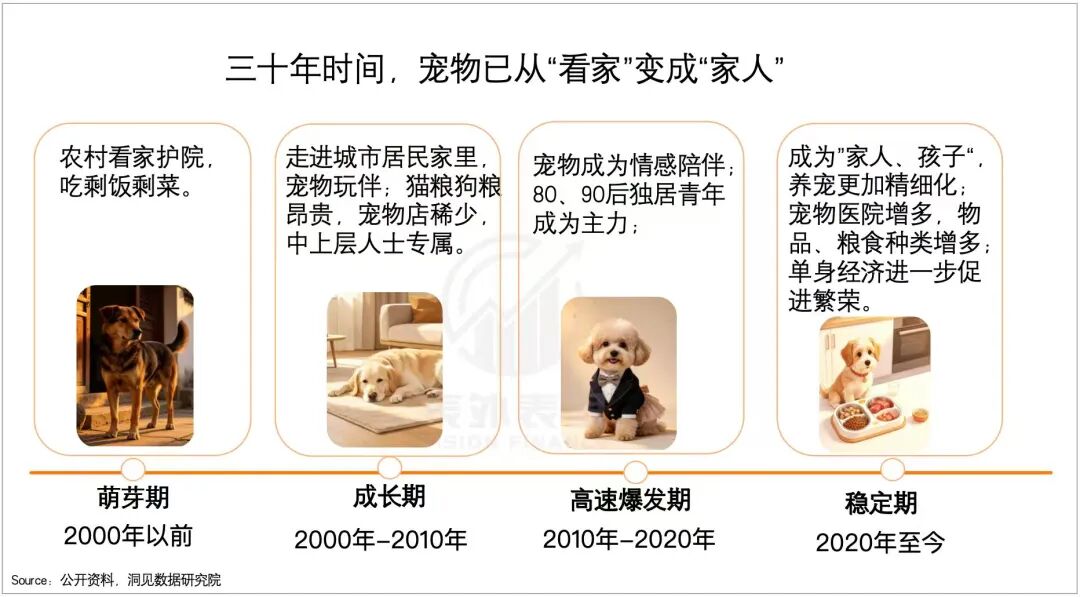
After stepping into so many traps, she has also got rid of the blind faith in all kinds of conceptual products. Compared with when she first raised a cat, her salary has doubled, but she used to spend 500 to 600 yuan a month on one cat, now she only spends 500 to 600 yuan a month