Are the people who need physical exercise the most actually backstabbed by smartwatches?
Just imagine: if you feel you are a little overweight or in a "sub-healthy" state, make up your mind to exercise regularly for a period of time to lose weight quickly, and purchase a smart watch to monitor your daily activity level, then set a daily exercise target for yourself according to the algorithm's recommendations.
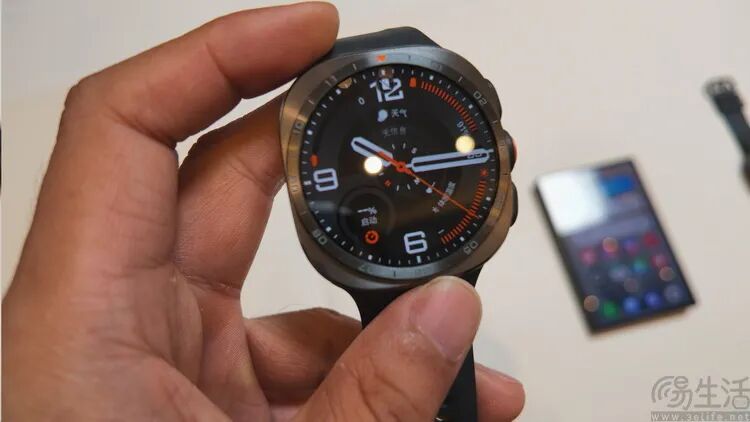
After you strictly follow the suggestions given by the smart watch (and its supporting app) and exercise conscientiously for a period of time, you may find that you do not get the expected health improvement as you assumed.
Why is that? Did you slack off during exercise, or fail to control your diet? That could be the case, but there is another possibility: the smart watch you wear may not be able to measure the real "exercise consumption" accurately from the very beginning, and it has been reporting overestimated data all the time. When you think you have been working out very hard, you actually have not reached the corresponding consumption level at all.
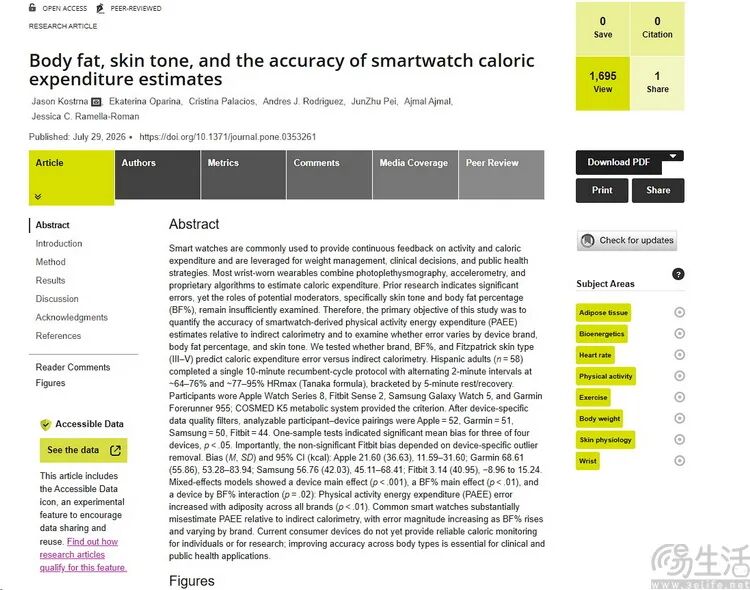
Recently, a research report on the monitoring accuracy of smart watches was published in the journal *PLOS ONE*. The researchers measured the calorie consumption error values of multiple smart watches when performing given running tasks, and found that all the tested devices showed an "overestimation" situation, with a deviation of about 15%-25%.
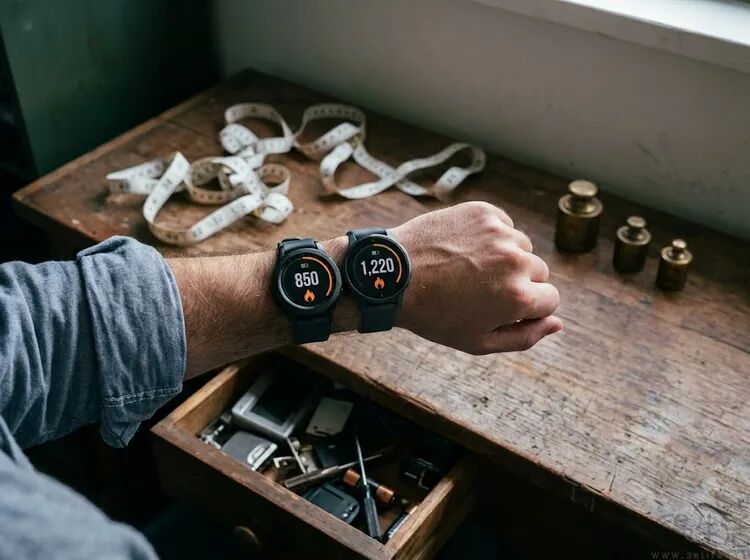
In other words, these smart watches will all report higher exercise consumption than the actual value. If users make exercise plans based on the data they provide, the calories they actually burn will be about 20% less than they think, which will affect the final fat loss or fitness effect.
Then why does this happen? Do smart watch manufacturers deliberately "please" users and exaggerate users' effort levels in the algorithm?
According to this research report, that is not the case. The real problem may lie in the design mechanism of the algorithm.
Relevant reports show that researchers found that when the user's body fat rate rises, the error degree of smart watches "exaggerating" the exercise effect will increase. This is very easy to understand in physiology, because people with high body fat rate tend to have a higher heart rate than healthy people, and the higher heart rate will mislead the monitoring device, making it think that the user is more tired and exercises more "assiduously" than they actually are.
But from the perspective of users, we can also question the relevant manufacturers in turn: why can't they design algorithms for users with high body fat rates?
It has to be said that this may be the most critical part of the whole incident.

If manufacturers want to ensure that exercise data is more accurate for all people, what should they do? For example, smart watches may inform users in advance that to ensure the accuracy of exercise monitoring data, users must truthfully input their real age, height, weight, chest circumference, waist circumference, hip circumference, bone age and body fat rate. If users try to avoid this step, or input inaccurate relevant data, the resulting data deviation "should be the responsibility of the users themselves".
Although this logic holds true, on the one hand, not everyone has the conditions to measure their detailed health data at any time, because this at least requires buying a relatively expensive body fat scale or going to the hospital for special tests, which will bring extra costs.
On the other hand, exercise monitoring devices can neither explicitly warn users that "if you falsify the data, we will not be responsible for the results", nor design the exercise monitoring function to be "unavailable as long as complete physical data is not input".
Therefore, between ensuring smooth functional experience and absolutely accurate measurement data, almost all manufacturers can only choose the former. Since manufacturers cannot require users to voluntarily admit that they are "overweight", there is naturally no need to specially design versions for such users in the relevant exercise monitoring algorithm design.
As a result, the exercise monitoring algorithms running in almost all smart watches are almost always designed based on "healthy people", or even "people who work out for a long time". Therefore, even if users actively input their body fat rate, admit that they are overweight and are more likely to have tachycardia during use, relevant manufacturers may not revise the algorithm accordingly.
In terms of the final result, it has become a situation that "users who need exercise the most cannot reach the corresponding consumption level at all on their smart watches, and are more likely to see inflated and inaccurate data". Although this seems absurd, we cannot easily accuse manufacturers of being perfunctory, because the final design is highly consistent with human nature, and it may also be the helpless "optimal solution" after weighing all factors.
This article is from the WeChat official account "3eLife" (ID: IT-3eLife), author: San Yijun, published with authorization from 36Kr.