300 million "special forces" post-2000s are fiercely striking back at the "scenic area price assassins"
For office workers, the National Day holiday is the only thing that keeps them going in the second half of the year. But before the holiday even arrives, their wallets are already targeted by all kinds of "price gougers".
As soon as September starts, air tickets and hotels across the country are gearing up for a retaliatory price hike.
At a hotel in Shantou, Guangdong, the price of a guest room that usually costs 280 yuan per night has skyrocketed to 5800 yuan per night during the National Day holiday, an increase of more than 20 times.
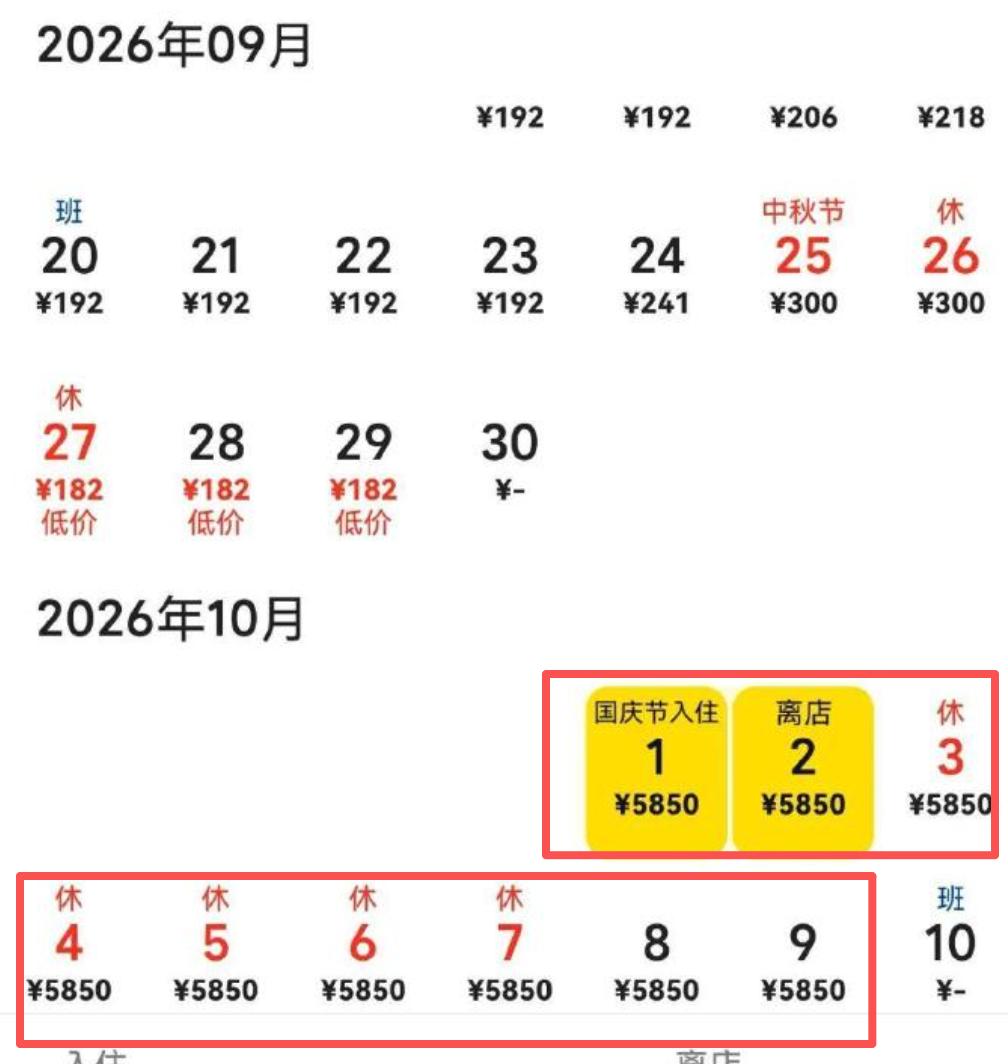
Although this hotel has been removed from platforms for rectification, many other hotels have still raised their prices by more than 30%. Consumers complain about being ripped off, but in the end they still grit their teeth and pay the bill.
However, young people are increasingly intolerant of another rip-off business: tour guides.
Some time ago, the hashtag "The tour guide industry is dying" became a trending search. Many tour guides came forward to share their real experiences: they wake up earlier than chickens, sleep later than dogs, it is getting harder to get tour groups, and it is more and more difficult to make money.
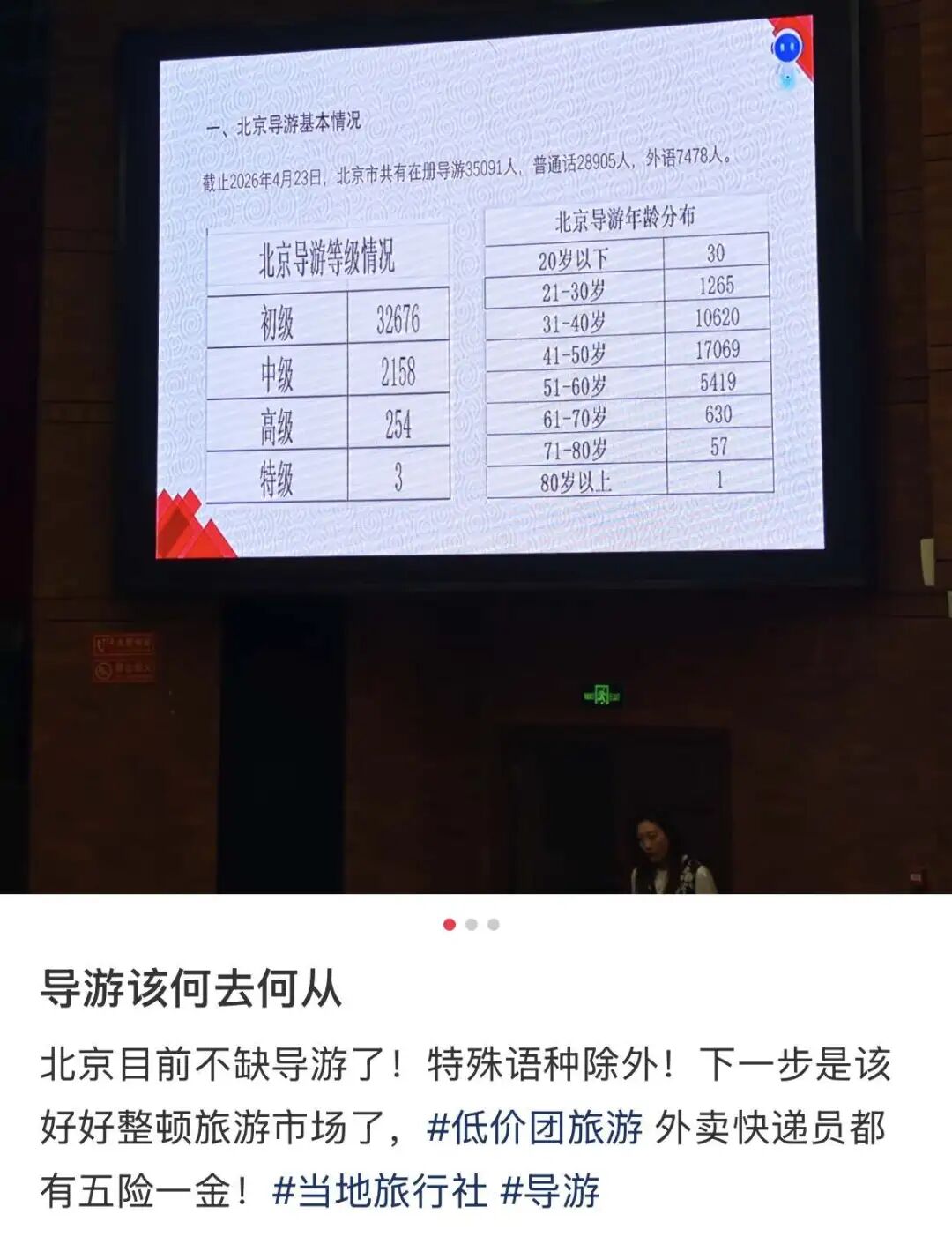
Just a few years ago, as soon as the peak tourist season arrived, travel agencies would scramble to hire tour guides, and experienced tour guides were extremely sought-after in the market.
However, this year, the trend has changed so rapidly that many people are completely caught off guard. There are very few job postings for tour guides from travel agencies. Even if tour group assignment notices are occasionally released, they are snatched up in a few minutes, with reduced salaries and doubled working hours.
Some practitioners said that they used to earn 3000 yuan a day during the peak tourist season a few years ago, but now their daily salary has shrunk to only 400 yuan, and they have to work non-stop for 12 hours a day.

There are far more tour guides than available jobs, most of them have to take multiple roles at the same time, and the golden age of "earning thousands of yuan a day with easy fun" is gone forever.
According to data from the Ministry of Culture and Tourism, the number of domestic tourist trips in 2025 reached 6.522 billion, a year-on-year increase of 16.2%.
There are more and more tourists, but it is getting harder and harder for tour guides to make money.
As of August 2024, there are about 650,000 valid tour guide certificate holders across China, but only 107,000 of them have signed labor contracts with travel agencies, which is equivalent to about one-sixth of all certified tour guides.
More surveys show that the average income of ordinary tour guides is about 3000-4000 yuan, which may even drop further in the off-season.
Why has the once easy-money career of tour guides suddenly lost its livelihood?
01
Young people no longer pay for tour guides who rip off customers
From a highly sought-after career to a low-paying job that people abandon to switch to other industries, this industry has only experienced a short three years.
In 2023, domestic tourism was extremely hot, and even a real-life "talent scramble" broke out in Beijing.
A survey conducted by Beijing Business Daily at that time found that in just half a month, the daily salary of local tour guides in Beijing soared from 600 yuan to 1600 yuan, and there was still a severe shortage of available tour guides.
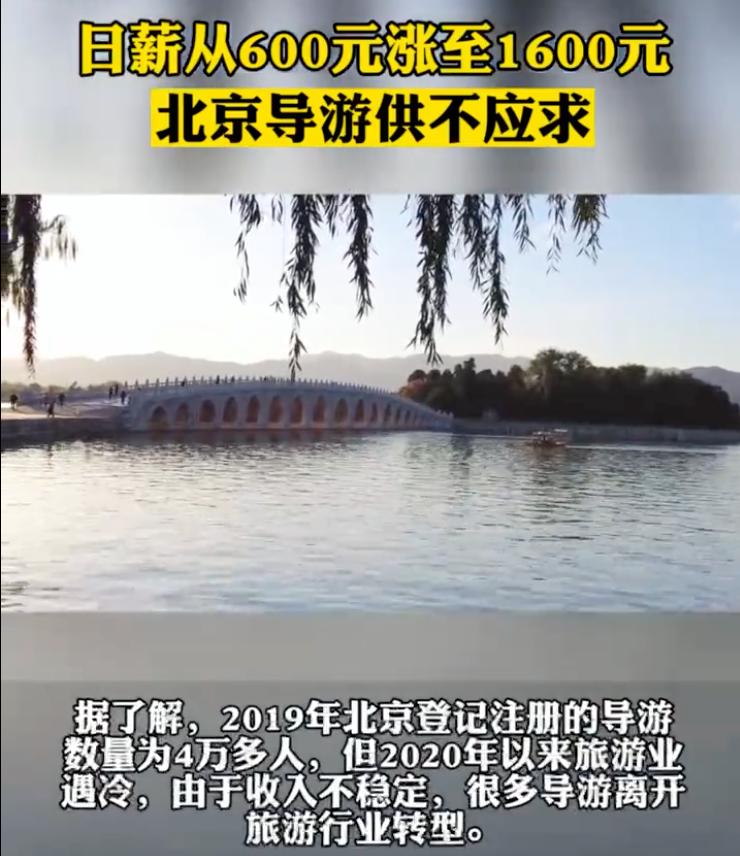
At that time, tour guides could make money almost effortlessly.
Since many practitioners had switched to selling houses, delivering food, or doing live streaming in previous years, the sudden warming of the tourism market made many of them return to their old jobs.
The number of applicants for the tour guide qualification examination that year even hit a record high. The number of applicants in Fujian soared by 152%, and some provinces and cities even offered millions of annual salaries to recruit tour guides.

It sounds very promising, but unfortunately, this short-term bonus came quickly and went even faster.
Just one year later, in 2024, the daily salary of Beijing tour guides dropped from the peak of 1600 yuan to 800 yuan, and then plummeted straight to 300-400 yuan per day now.
From "severe shortage of tour guides" to "severe shortage of tour positions", the tour guide industry has experienced a real roller coaster ride.
An even bigger blow came later. With the popularity of "special forces-style travel" and "citywalk" all over the internet, many young people have completely abandoned group tours, making the tour guide industry a dispensable option.
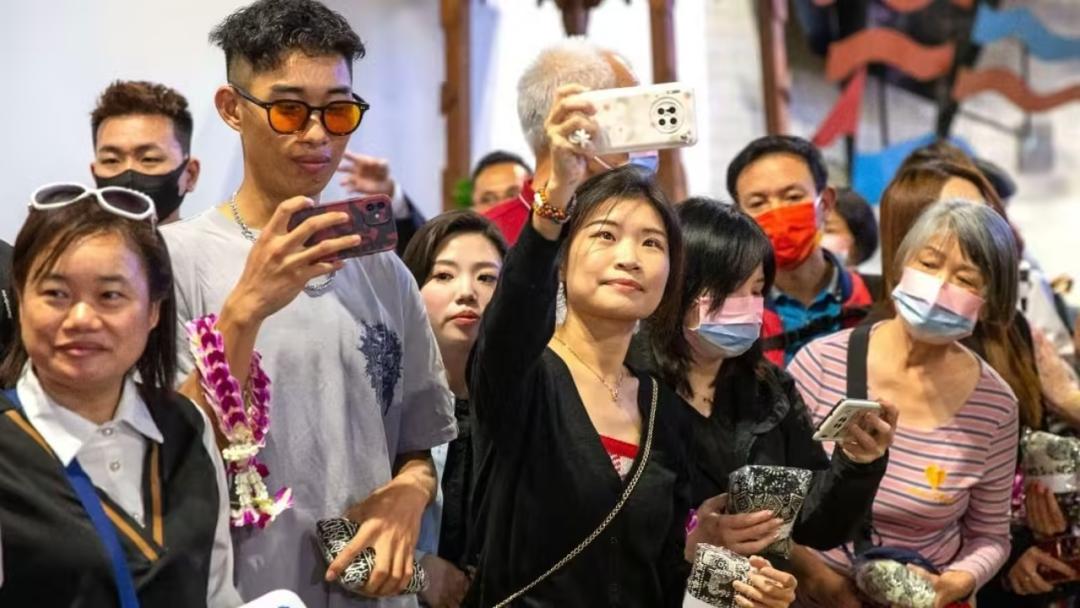
It's not that young people are deliberately avoiding group tours, it's just that the bad reputation of "unscrupulous tour guides" is too widespread.
If you often watch short videos, you must have seen many scenes of "unscrupulous tour guides" forcing tourists to go shopping.
The tour guide stands in front of the tourist bus, holding a loudspeaker and scolding the tourists directly:
"You are the worst group I have ever led! Anyone who doesn't buy anything can get off the bus right now."

"You don't spend a penny, you are disgracing people from your hometown!"
Some tour guides even directly take tourists to shopping malls and shout: "Everyone must buy at least one item! I will stand at the store entrance and check each of you one by one."

Although this is only an individual phenomenon, no one can guarantee that they will not encounter such a situation, so young people can only vote with their feet and stay away from group tours.
With the support of AI, the rise of independent travel has completely taken away the livelihood of tour guides.
In fact, as early as 2014, the number of Chinese mobile travel booking users increased by 194.6% in one year, reaching 134 million. By the end of 2024, this figure has further soared to 548 million, accounting for 49.5% of all internet users.
What does this mean? Air tickets, hotel bookings and scenic spot tickets no longer require the intervention of travel agencies or tour guides, you can place an order easily with a few taps on your phone.

Now on social media, if you search for travel guides casually, you can find well-illustrated plans with clear routes, and even the per capita budget is accurate to the cost of each meal.
According to data from the "2025 China Youth Tourism Observation Report" released by China Youth Daily, only 26.8% of people prefer group tours, and 57.2% of people will use AI to plan their travel routes.
Some people even turn on AI video tour guides to explain the attractions for them when they visit the Forbidden City. The AI tool can explain the origin of the stone lions at the entrance and the historical stories of each palace, with professionalism no less than that of a human tour guide.
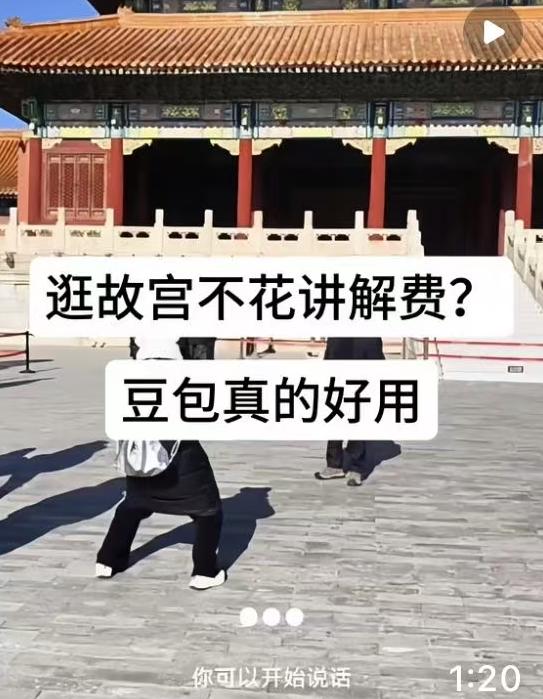
The era when 40 people crowded into a tourist bus and followed a tour guide holding a small flag is long gone.
02
The once highly profitable industry destroyed its three core advantages by itself
Many people think that the decline of the tour guide industry is because it has been eliminated by the times.
But I think it is the industry itself that has driven itself into a dead end.
The three golden signboards that the tour guide industry once relied on for survival — cost-effectiveness, information asymmetry, and professionalism — have all been completely destroyed by itself.
First, low prices have become bait, destroying the cost-effectiveness advantage.
Many people choose group tours for only one reason: it is convenient and hassle-free.
In this regard, group tours have a natural advantage. Some travel agencies even launched "low-cost pure-play tour groups" whose price is so low that it cannot even cover the cost of air tickets and hotels.

It seems that travel agencies are losing money to attract customers, but in fact all the costs will be recovered from the tourists.
After joining the group, those self-paid items and forced shopping become all kinds of harvesting tools waiting to rip off tourists.
Some people argue that: This is not the tour guides' fault, all the rules are set by travel agencies.
That makes sense, but according to industry research from Ctrip, more than 85% of tour guides in China have no labor contracts and no social security, and more than 90% of their income comes from tour group allowances and shopping commissions.
Because of this, tour guides have become a part of the harvesting chain, forcing tourists to consume by all means.
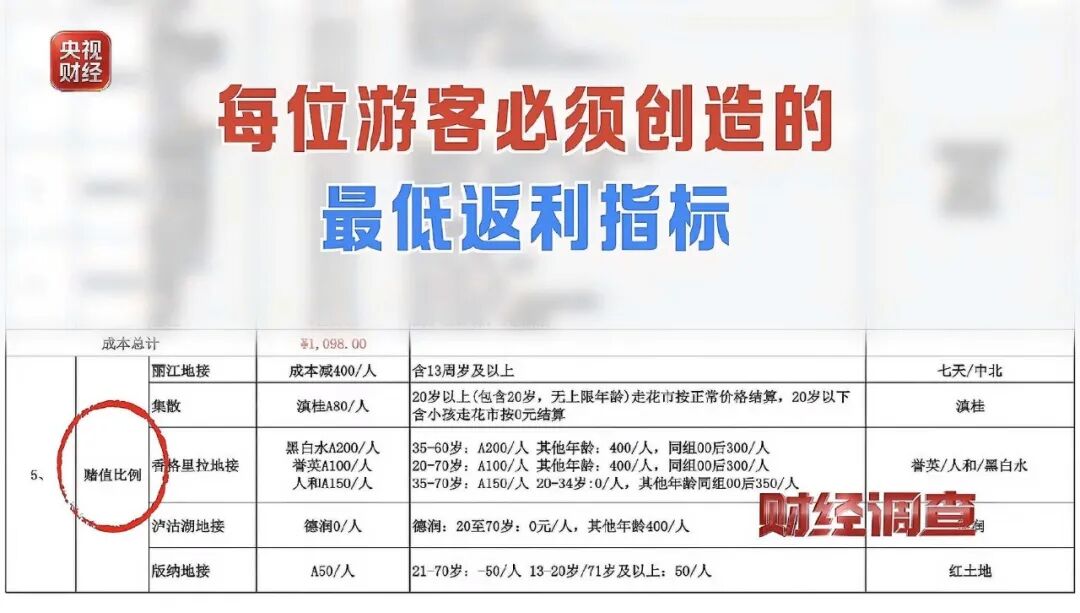
Many scenic spots have even formed a gray industrial chain, where tourist buses directly take tourists to remote shopping malls dozens of kilometers away from the urban area, forcing them to shop.
If you want to refuse? The tour guide will directly threaten to make you get off the bus.
Group tours that originally attracted tourists with low prices finally made consumers form a conditioned reflex: The lower the price, the more hidden traps there are.

Second, taking trust as a harvesting tool, destroying the information asymmetry advantage.
Two or three decades ago, when a person who was not a local went to Yunnan, Beijing or Xi'an for the first time, he knew almost nothing about the place. Where to stay, what to eat, how to take transportation, and which scenic spots are worth visiting, all had to be arranged by the tour guide.
But the harsh reality is that many tour guides not only failed to use the information asymmetry to help tourists, but even cooperated with local businesses to rip off tourists.
On Zhihu, someone shared his travel experience: the tour guide repeatedly told him that he must wear the name tag of the travel agency when buying local specialties, so that he could get a 50