Don't talk about embodied intelligence and AI, Europe does not believe in "black technology" | Live coverage of IFA 2026
Written by Huang Nan
Edited by Yuan Silai
In September 2026, the early autumn of Berlin is soaked by rain. The gray building complex of the exhibition center unfolds quietly in the morning light, like a precision device just started. In this city that upholds "engineer culture", people are used to measuring everything with certainty and a sense of procedural order.
People who come to IFA looking for unusual products will be very disappointed.
You will not see flying sweepers, nor humanoid robots doing housework in the venue. Outside the main entrance, the most eye-catching sign still belongs to TCL, a regular sponsor of the event.
Tech journalists and content creators will most likely feel a bit bored, but if you are a distributor or want to buy new home appliances for your new house, you will definitely find the right solutions here.
At the event site, color backdrops marked with the IFA logo can be seen everywhere. The slogan "The future is now." is hung in many corners of the exhibition hall, with particularly prominent lettering.
But IFA is a pragmatism-focused exhibition. Technical specification cards and applicable scenario descriptions are attached next to every device. French users hold the chassis of the floor sweeper, repeatedly compare the structural differences of the mop, and confirm the actual function of the robotic arm; distributors who flew over especially from the Netherlands and Australia gather around a lawn mower, squat down to examine the blades on the chassis. It is a venue for enterprises to do business and find customers, not a stage to show off technical capabilities.
The only question that onlookers most often ask is: What exact problem can this product solve right now?
Therefore, no enterprise that still wants to develop overseas markets can afford to miss IFA. According to the official statistics of IFA, a total of 928 enterprises from Chinese mainland participated in the exhibition this year. With 84 exhibitors from Hong Kong added, the total number of Chinese exhibitors exceeded 1,000, accounting for nearly half of the more than 1,900 total exhibitors. This figure has increased by nearly 35% year-on-year compared with 2025. The event is still extremely popular: we applied for German visas across different cities one month in advance to attend the exhibition, while in the usual off-season, the application process usually only takes half a month.
Even with huge crowds everywhere, there are fewer eye-catching news stories here. Different from the exciting and dazzling CES in Las Vegas, IFA has a completely different temperament: it is serious, restrained and pragmatic. In this ancient city of Berlin, IFA, which has been held for 102 years, remains calm and stable, with everything proceeding at an unhurried pace.
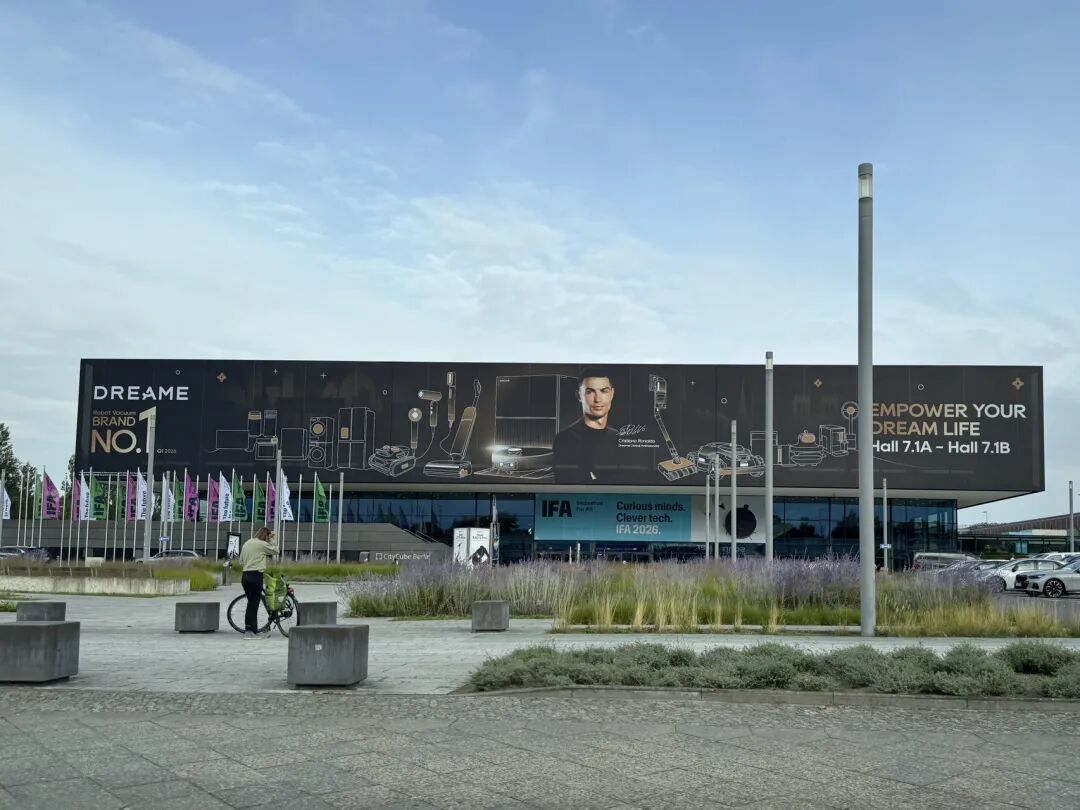
Dreame's large advertising screen outside the IFA venue (Photo source / Shot by Hard Krypton)
Skip the talk of AI and Embodied Intelligence, just tell me how to mow the lawn
For Wang Shiyuan, founder of SuiSheng Technology, IFA is no stranger. Many times in the past, he stood here as a senior executive of Anker, skillfully operating the standard strategy that Chinese hardware brands cannot afford to miss for overseas expansion.
Until Berlin 2026, he took on a completely different identity: as the founder of a startup AI hardware company, he was stationed at a booth that was not as large as the ones he had managed before.
The perspective shift brought a strong impact. He could still see the familiar hustle and bustle of the exhibition, but also read completely different market signals.
Europe seems to be left behind by the AI wave. A very subtle detail kept appearing at his booth: when he talked about concepts like AI Agent and Memory hardware using the discourse system commonly used in China, the on-site audience generally reacted slowly and could hardly understand immediately. He could only rephrase it as: "This can build a full-day knowledge base exclusive to you with AI", and the other party would immediately start to ask follow-up questions about how to use it specifically, how the data is stored, and whether it can adapt to existing workflows.
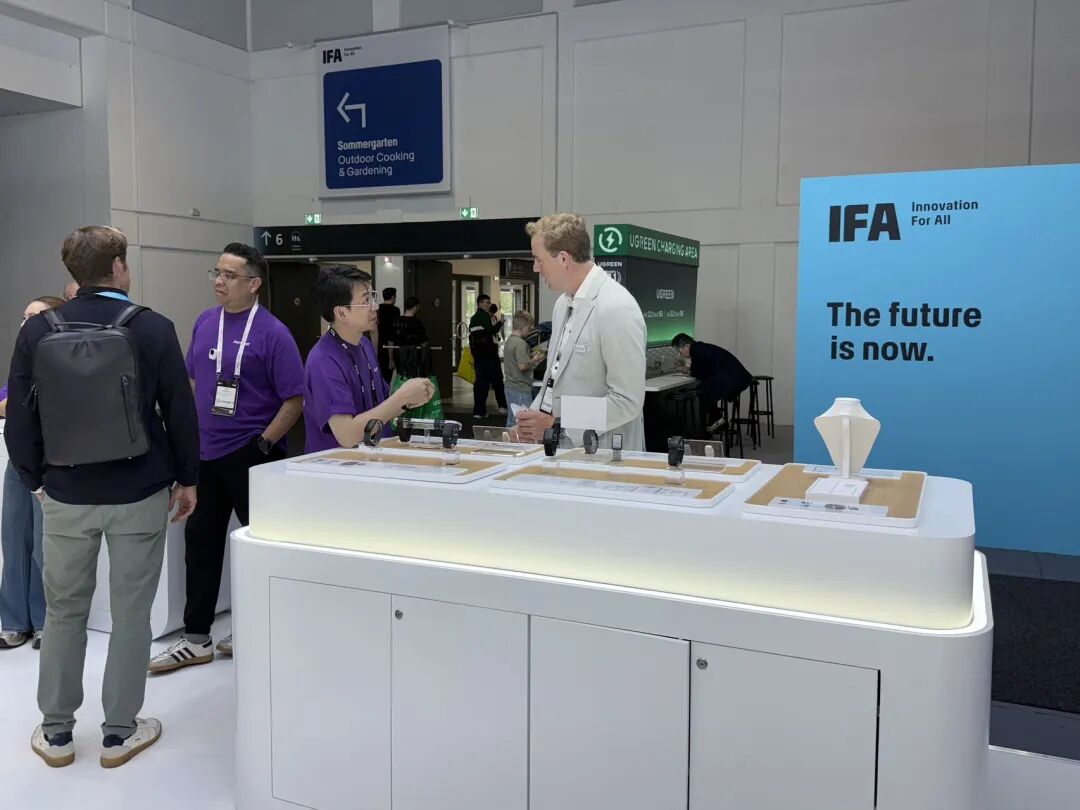
Wang Shiyuan communicates with overseas users at the booth of SuiSheng Technology (Photo source / Shot by Hard Krypton)
However, the "embodied intelligence" boom that has been chased in China for two full years finds almost no echo at the IFA site.
Walk into any booth of robotics brands, and you can barely hear terms like world model or spatial intelligence. What plays on loop on the booth screens is not cool stunts of robots somersaulting, but lawn mowers stopping on the wet slope after rain, the robotic arm of the floor sweeper reaching into the gaps between table and chair legs, and the window cleaning robot gliding close to the edge of curved glass.
One exhibitor half-jokingly summed it up to Hard Krypton: "In Shenzhen, if you don't write two pages of 'embodied intelligence' in your PPT, investors won't even talk to you; but in Berlin, if you can't mow the lawn well, users will leave right away."
Behind this sentence lies a clear regional difference in the entire set of technology narratives.
European users have gone through an identity transition. Ryan Kong, General Manager of European Business at Weilan Continent, told Hard Krypton that the group of local users is shifting from "technology followers" to "experience result pursuers".
"The way users ask questions has completely changed. They no longer ask about technical principles, but go into details about how each part affects the effect of the mowed lawn." Ryan Kong said.
In the past few years, the lawn mower robot track has iterated at an extremely fast speed, and each generation of products brings perceptible experience upgrades. As the penetration rate rises, European users are gradually completing the cognitive evolution from "looking for products" to "looking for experience" and then to "looking for brands". High-penetration markets represented by Germany have taken the lead in entering the third stage.
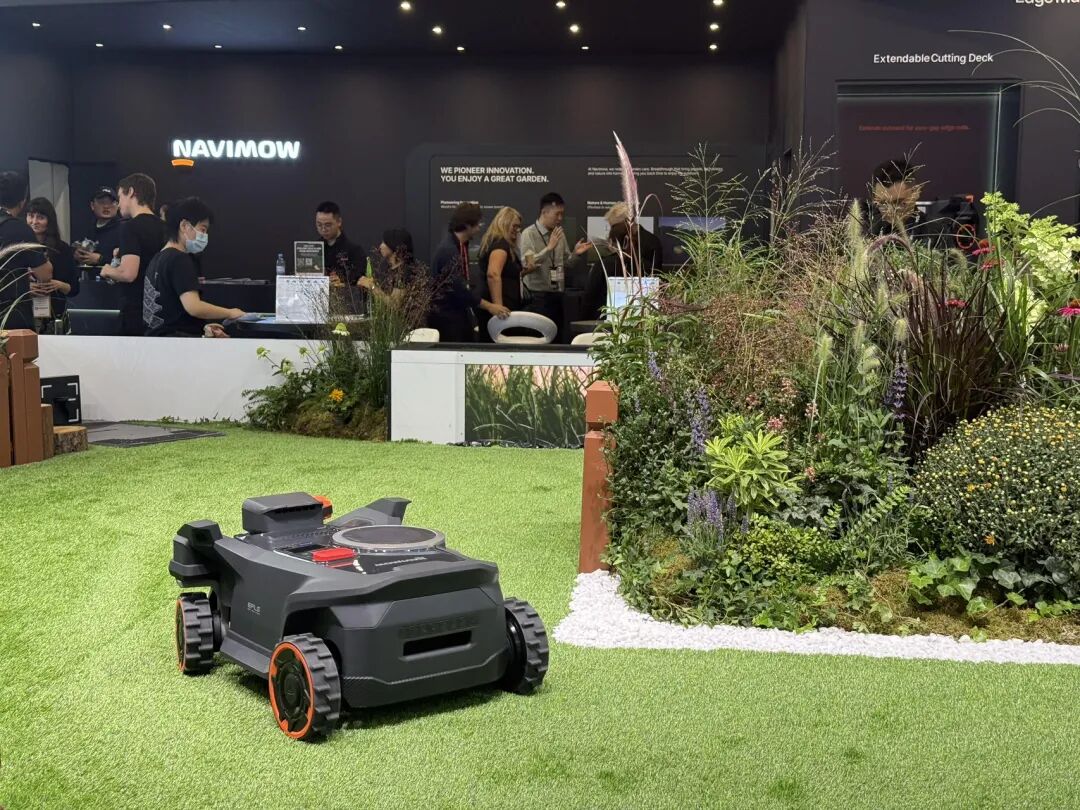
Simulated lawn at the booth of Weilan Continent (Photo source / Shot by Hard Krypton)
This change is directly reflected in the IFA booth design this year. Weilan Continent no longer only talks about concepts such as no boundary and three-in-one navigation, but starts to talk about "hedgehogs". Against the background of prevailing awareness of nature conservation in Europe, incorporating "avoiding hedgehogs" into the product narrative means that the brand has shifted from competing on technical parameters to meeting local value propositions.
Kuuma sorts out the evolution path of four generations of products over ten years in the exhibition area, visually showing the specific problems solved by each generation of products: whether it can climb slopes, whether it will slip down, and whether the corners can be mowed clean. "Users first learn to judge the quality of products by actual use effects, and then gain the ability to distinguish brand differences." Angel, Head of Global Brand of Kuuma, said. The competition of lawn mower robots is shifting from the competition of technical parameters to the delivery of experience commitments.
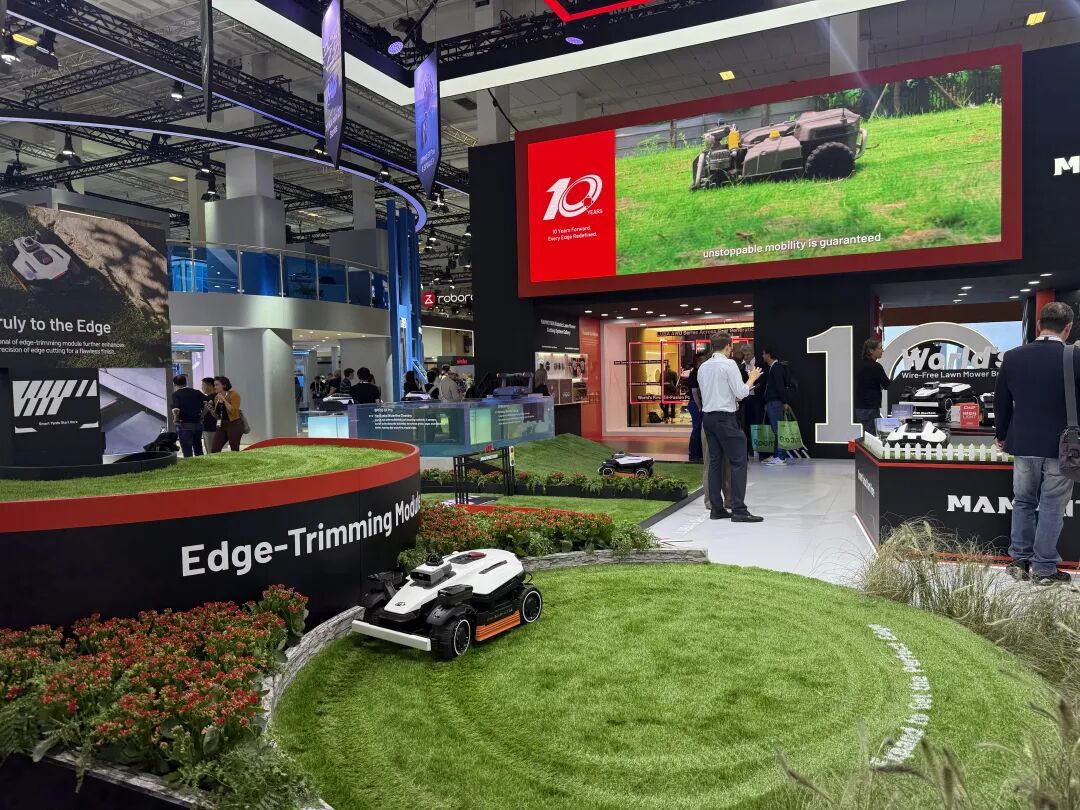
Kuuma exhibits consumer-grade and commercial lawn mower robots, and pool cleaning robots (Photo source / Shot by Hard Krypton)
The booth narrative of Nishiro has also changed significantly this year, with the miniature outdoor courtyard ecosystem as the focus of the display. The lawn mower robot travels through the simulated orchard, showing its stable positioning and autonomous navigation capabilities in complex environments through autonomous path planning; it demonstrates its motion control capability under large slope working conditions through slope climbing demonstration on the on-site lawn scene. In addition to consumer-grade products, Nishiro also exhibited commercial lawn mower robots for the first time this year, extending its product territory from home courtyards to professional lawn scenarios such as golf courses and football fields.
These changes directly reflect the investment logic of enterprises at IFA. With category education becoming mature, the core goal of exhibitors is no longer channel expansion, but to let users intuitively feel that these products are reliable and practical through the exhibition.
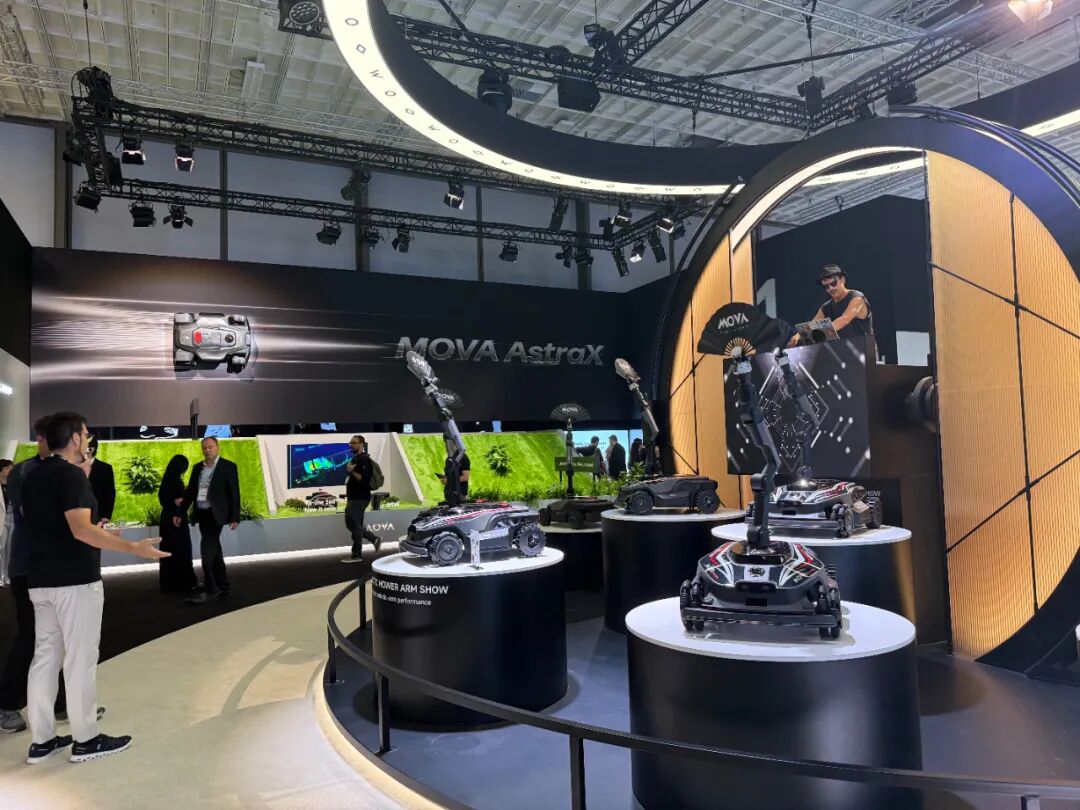
Nishiro's full product matrix of lawn mower robots (Photo source / Shot by Hard Krypton)
"What exact real problems technology can solve in the living room and yard is the only criterion for judging quality in the European market." Meng Jia, President of Dreame's Floor Sweeper Business, told Hard Krypton.
"Almost no one here will ask us which supplier's radar is equipped on the floor sweeper, and almost no one will ask about what AI large model is used behind it." Meng Jia found that questions from European media and distributors are often more direct, such as "how deep can the robotic arm reach under table and chair legs" and "what kind of bacteria can be killed by steam mopping", and users are also more concerned about "whether it can avoid pet vomit".
These trivial questions may seem "not cutting-edge enough" in the Berlin exhibition hall, but they are specific and direct, pointing to a highly pragmatic decision-making habit: users and channels break down products into specific actions in real scenarios, and verify their availability one by one.
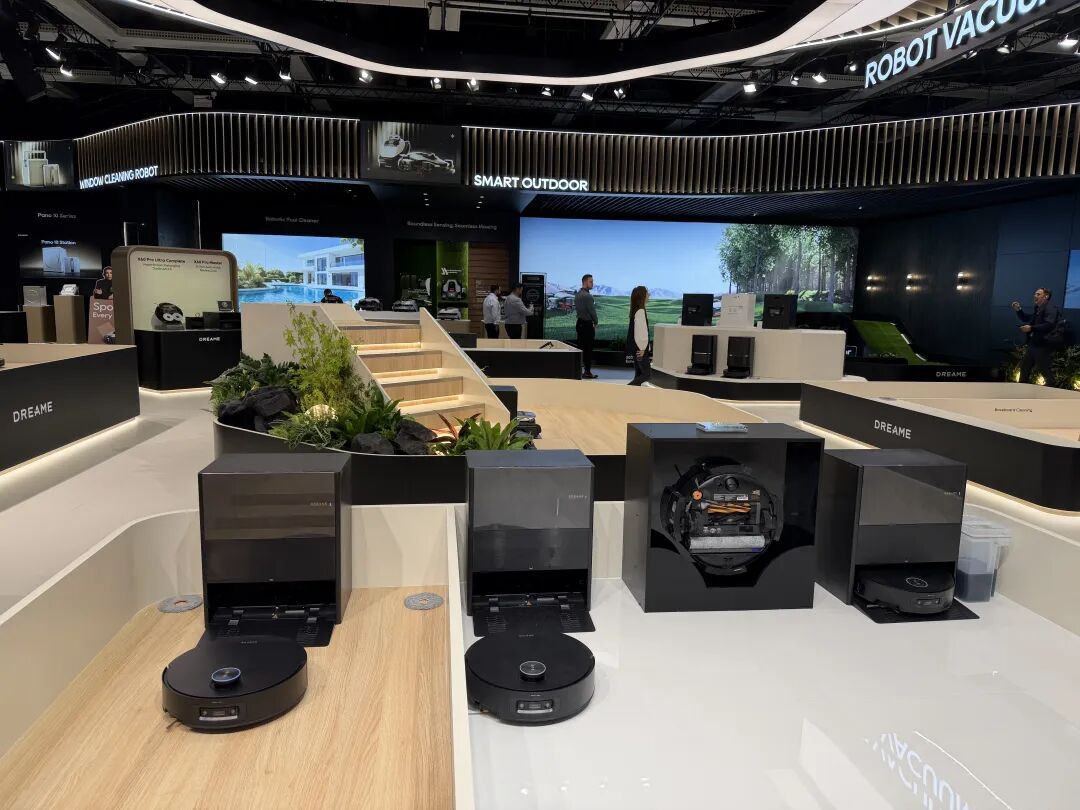
Dreame exhibits a series of floor sweeper products (Photo source / Shot by Hard Krypton)
In the other world separated by the curtain wall, domestic public opinion is enthusiastically discussing the implementation of embodied intelligence, world models and AI large models. In the Berlin exhibition hall, most humanoid robots stand quietly in the corner, as a technical ornament rather than the protagonist of the story.
Walking along the exhibition hall, you will be greeted by a sense of determined pragmatism. Black and white home appliance brands occupy the largest booth areas. The booths of TCL, Midea and Hisense are arranged into complete kitchen or living room scenarios, with refrigerators, ovens, dishwashers and washing machines placed in sequence. Visitors can directly pull open the door, touch the material of the inner wall, and feel the handfeel of closing the door.
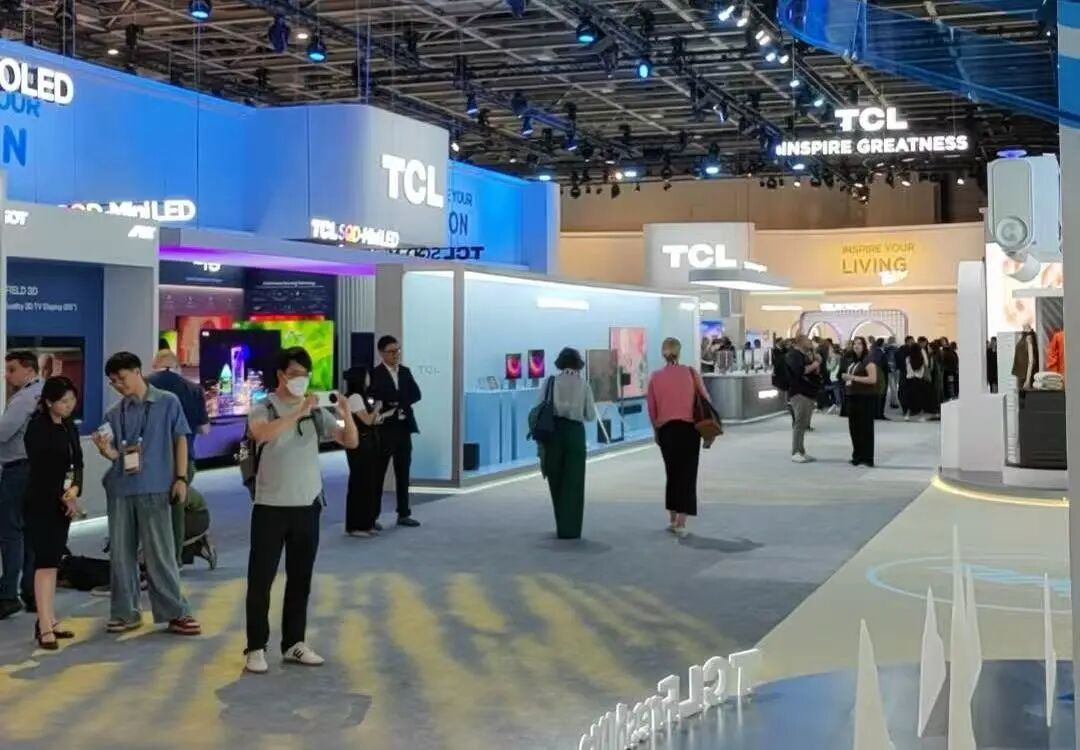
At the TCL booth (Photo source / Shot by Hard Krypton)
Mobile phone accessories, energy storage power supplies, office equipment and other background categories that were previously quickly skipped at domestic exhibitions and CES have little topicality and no sense of novelty. But at IFA, they are distributed in separate venues with clear and distinct category divisions: you can find any type of product you want by following the street signs.
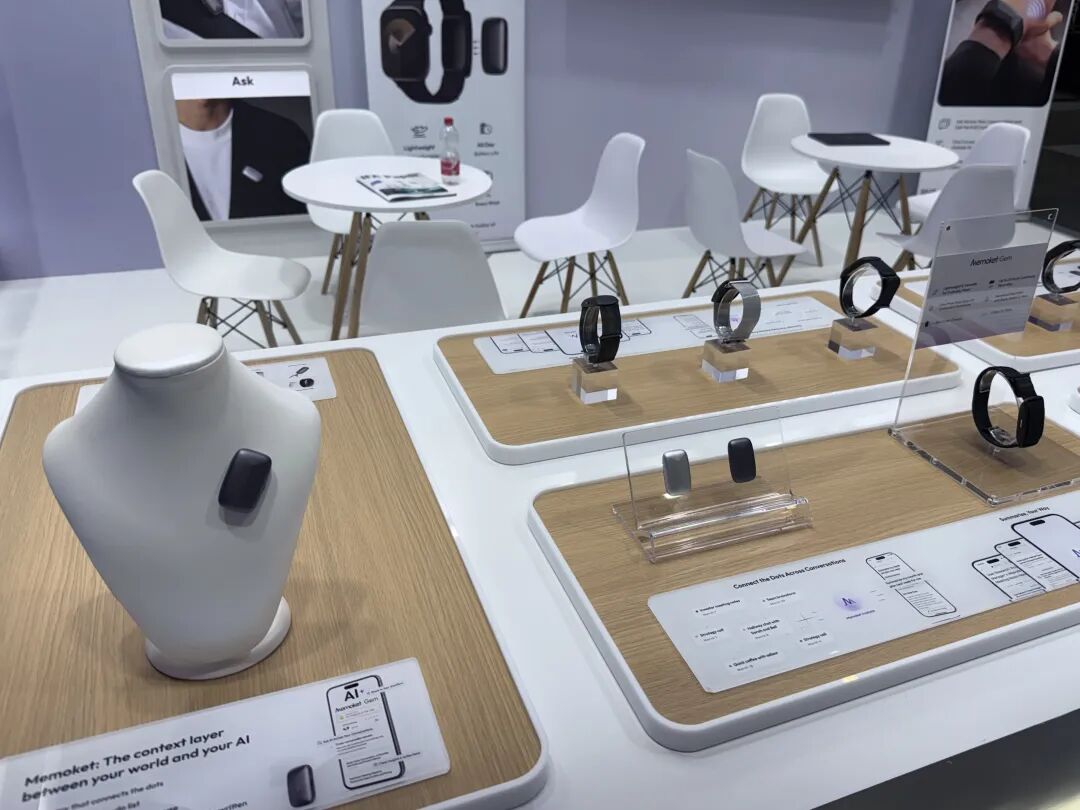
AI Memory hardware Memoket exhibited by SuiSheng Technology (Photo source / Shot by Hard Krypton)
Products are placed on the counter with labels marked with parameters and prices, like a quiet shelf catalog. Concepts and prototypes are not welcomed here, and most booths in the exhibition hall display mature, confirmed and mass-produced products.
Technical terms in the European market mostly act as "explanation tools" to help users understand products, rather than "marketing selling points".
AI hardware companies and embodied intelligence related exhibitors are scattered in various corners. Compared with the hundreds of square meters of exhibition areas occupied by home appliance manufacturers, most of them only have a cubicle, a table and several prototype machines.
CyboPal desktop robot (Photo source / Shot by Hard Krypton)
Several wearable cameras are displayed in staggered arrangement at the Looki booth. The on-site staff did not go into too much detail about AI algorithms or Agent functions, and only used one sentence to stop passing visitors: "This is a travel recording camera. When you wear it for travel, exhibition visits and parties, it will automatically help you complete the recording." On the other side, the curiosity of the audience is exactly the same as before, and they are more concerned about practical issues such as battery life, storage expansion, and reliability in extreme environments.
Dreame built a complete home scenario at the IFA 2026 site, using the ECHO S1 single-arm wheeled robot to demonstrate a complete housework process: from identifying scattered dirty clothes, opening the washing machine door, putting them into the drum in sequence, automatically setting the washing program and starting it. The whole process has no fancy somersaults or dances, only action chains directly related to daily life.
We barely saw humanoid robots performing tasks, even leading company Galaxy General only placed several non-functional prototype machines. The few robots that can still move include a quadruped robot in a panda shell at the Magic Atom booth. It attracted some attention because it is "cute", but the most concerned question of the visitors around it is still: "When will this product be available on the market?"
