Li Bin: AI has brought three critical blows to the automotive industry, and NIO's value is undervalued by the market.
Now there comes another divergence point when people are looking at NIO.
On September 1, NIO released its financial report for the second quarter of 2026, with eye-catching data: 107,658 units delivered, a year-on-year increase of 49.4%; revenue of 32.14 billion yuan, a year-on-year increase of 69.1%; gross margin of complete vehicles reached 18.5%, compared with 10.3% in the same period last year; Non-GAAP operating profit hit 207 million yuan, marking the third consecutive quarter of profitability.
However, NIO did not receive cheers in the capital market. The sustained cost pressure and relatively steady Q3 delivery guidance have also led to different views in the market.
"We insist on doing our own things well, adhering to technological innovation, persisting in brand building, and maintaining strategic focus. The final pricing of the capital market will eventually return to the enterprise's operation and profitability." At the media communication meeting on September 3, Li Bin, Founder, Chairman and CEO of NIO, emphasized that NIO has entered the third stage of high-quality development, and it is no longer sufficient to only pursue superficial growth. In his view, we should not only look at sales volume, but also pay more attention to the sustainable operation capability and operation quality of a company.
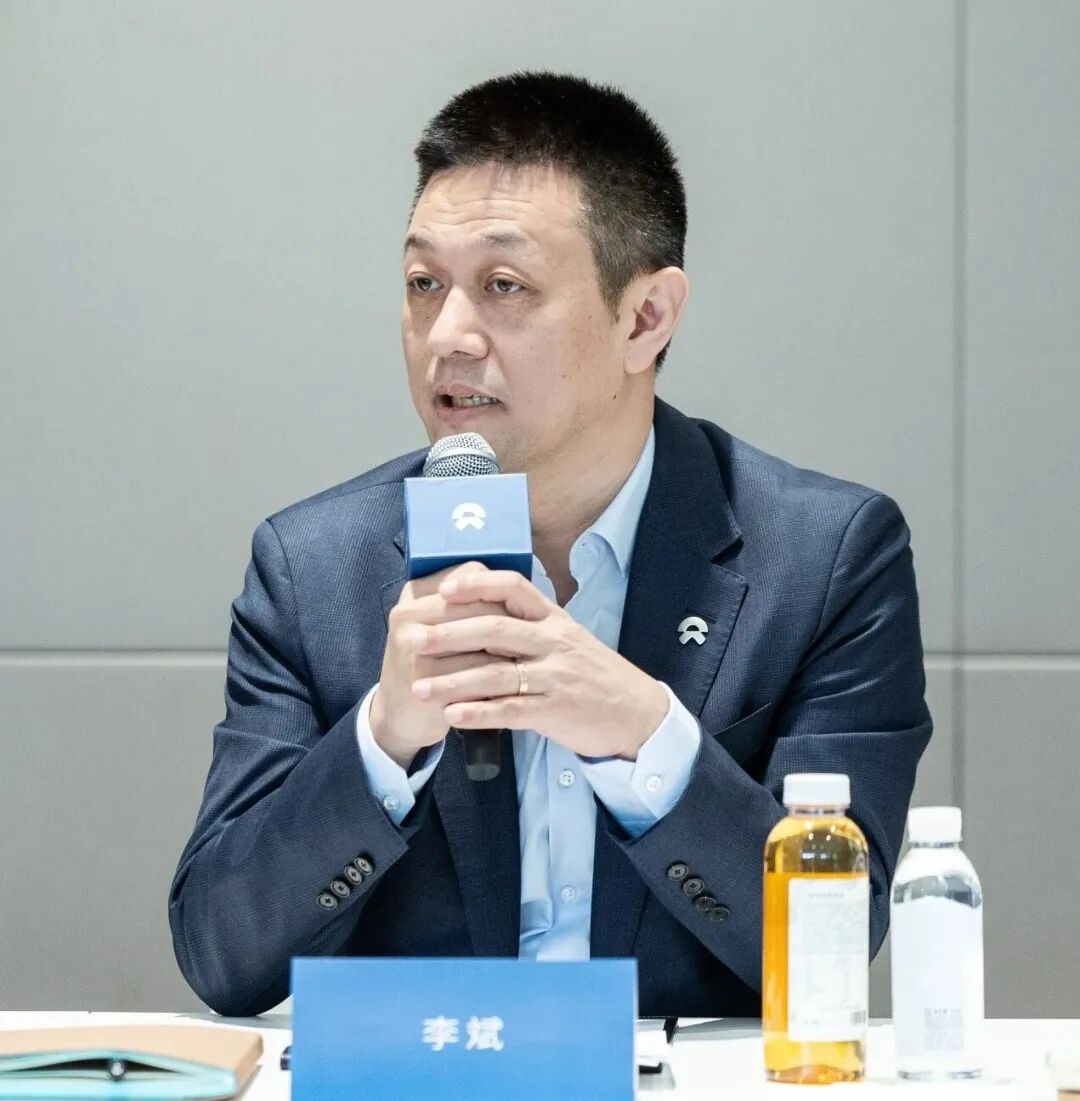
Source: Interviewee
How to evaluate operation quality? Li Bin put forward four dimensions: strategic focus on brand, revenue growth, gross profit growth, and operating profit. From Li Bin's perspective, operating profit can most directly reflect the essence of business, as it proves the continuous capability to transform technological innovation, product R&D and service system into profits.
Li Bin also mentioned NIO's strategic investment in Changxin Technology, "It is not reasonable for a company to rely on investment to make money all the time".
On July 27, Changxin Technology was listed on the Sci-Tech Innovation Board, and NIO subscribed 158 million yuan in its strategic placement, with a lock-up period of 18 months. Calculated based on the closing price of 49 yuan per share on the first trading day of Changxin Technology, NIO's floating profit on the book is about 740 million yuan.
Li Bin judged that NIO is far from the time to relax. "It is getting harder and harder to hold new car launch events. Prices can no longer be pushed down further, and parameters have become less of a selling point. The industry has truly entered the middle and late stage of the marathon, the most brutal stage of the final. Without a complete system capability, it cannot keep running and will be eliminated."
However, for this year's market performance of electric vehicles, both Li Bin and Qin Lihong, Co-founder and President of NIO, gave optimistic judgments, believing that the market penetration rate of pure electric vehicles will exceed 50% by the end of the year. Qin Lihong said at the communication meeting that the previous inertial thinking was that pure electric vehicles were the choice of a small number of cutting-edge users, but today pure electric vehicles have become the choice of most users.

Source: Interviewee
The following is part of the content of Li Bin's interview (abridged):
Talk about the industry: AI brings threefold shocks to the automotive industry
Li Bin: I think the automotive industry is currently undervalued.
The rapid development of AI has brought threefold shocks to the entire automotive industry. The first shock is price hikes. The production capacity of automotive memory is snatched up, and even circuit boards may be out of stock. Some people buy them at 5 times or 8 times the original price on the spot. If you are a circuit board manufacturer, who would you supply to instead of them? Copper, aluminum and batteries are also snatched by AIDC. We ourselves are also part of the AI industry, as every car is an AI embodied agent.
The second shock is talent. People engaged in intelligent driving have all gone to start embodied entrepreneurship, and many companies only have a few people but their valuation has reached 5 billion or 10 billion yuan. Even at the craziest time (in the capital market), our (valuation/market capitalization) was never that crazy.
The third and most important point is that AI has drawn the attention of the capital market away. Actually, it is not that our products and services lack imagination, but that many people lack imagination for our business. We do have huge room for imagination. Let me give you an example. The five-layer cake mentioned by Jensen Huang, the first layer is energy. We consume billions of kilowatt-hours of electricity a year, which is also part of the energy sector. I think we are an AI company, but we still need to follow the basic laws of the automotive industry. How to convince investors? Frankly speaking, it is very difficult, and we can only prove it with better operating results and over time.
But I think there are things about us that are undervalued by the market. The first is the long-term competitiveness of full-stack technology, such as the value of our chips, operating systems, AI capabilities, energy business and so on. These are all basic capabilities in the AI era, with extremely huge room for imagination. The second is the scarcity of our brand in the era of smart electric vehicles. For example, in the global market, besides Tesla and Toyota, who is the most valuable automotive company? It's Ferrari, with a market value of more than 70 billion US dollars, close to 80 billion US dollars. No matter how the times change, brand is related to emotional experience, and to users' deep emotional cognition and mind share. What we can do is to do our own things well and maintain strategic focus.
As for when the collision between AIDC and the automotive industry will ease, it is really difficult to predict. This kind of investment depends on whether there will be late-mover advantage. (The industry) has invested a lot of money when the cost is high. In another two or three years, the price of memory will always come down. The early investment may not have earned back the money, and the subsequent reset cost may be lower than expected. Whether the AIDC bubble will burst and when it will burst is what everyone is worried about now. AI is definitely the future, there is no doubt about that, but such crazy investment expenditure, is it a rational choice or a panic-driven input? I feel that the impact on the automotive industry will last for another two years, and by 2028 we should see sufficient memory supply, and the prices of bulk materials and memory will drop to some extent.
Talk about cost pressure: The phenomenon of "diseconomies of scale" has emerged
Li Bin: We started to say last year that NIO has entered the third stage of high-quality development. Market competition is becoming increasingly fierce. It is no longer sufficient to only pursue superficial growth, and the quality of growth is becoming more and more important.
What is high-quality growth? It is not simply judged by sales volume. When sales volume rises, does revenue rise? Does the average unit price rise? Does gross margin rise? Does the total gross profit rise?
The industry is facing extremely huge challenges this year, with continuous pressure on profits, and sales profit margin and manufacturing profit margin are both at historically low levels. In the past, we said that when the volume goes up, the cost will go down. Now when the volume goes up, the cost may also go up. For example, for memory, if you order a small quantity, you can get a discount from the supplier, but if you order a large quantity, the price will rise, leading to the "diseconomies of scale" phenomenon. In addition, bulk raw materials and batteries are also getting more expensive, as we are competing with AIDC (Artificial Intelligence Data Center) which makes input regardless of cost. In the second quarter, the cost per vehicle of NIO increased by 14,000 yuan compared with the end of last year, which means a total loss of 1.5 billion yuan per quarter on average. We expect the cost per vehicle to rise by another 2,000 to 3,000 yuan in the second half of the year.
Companies like NIO are facing greater pressure, because the smarter the vehicle is and the higher the average unit price is, the more memory it will use.
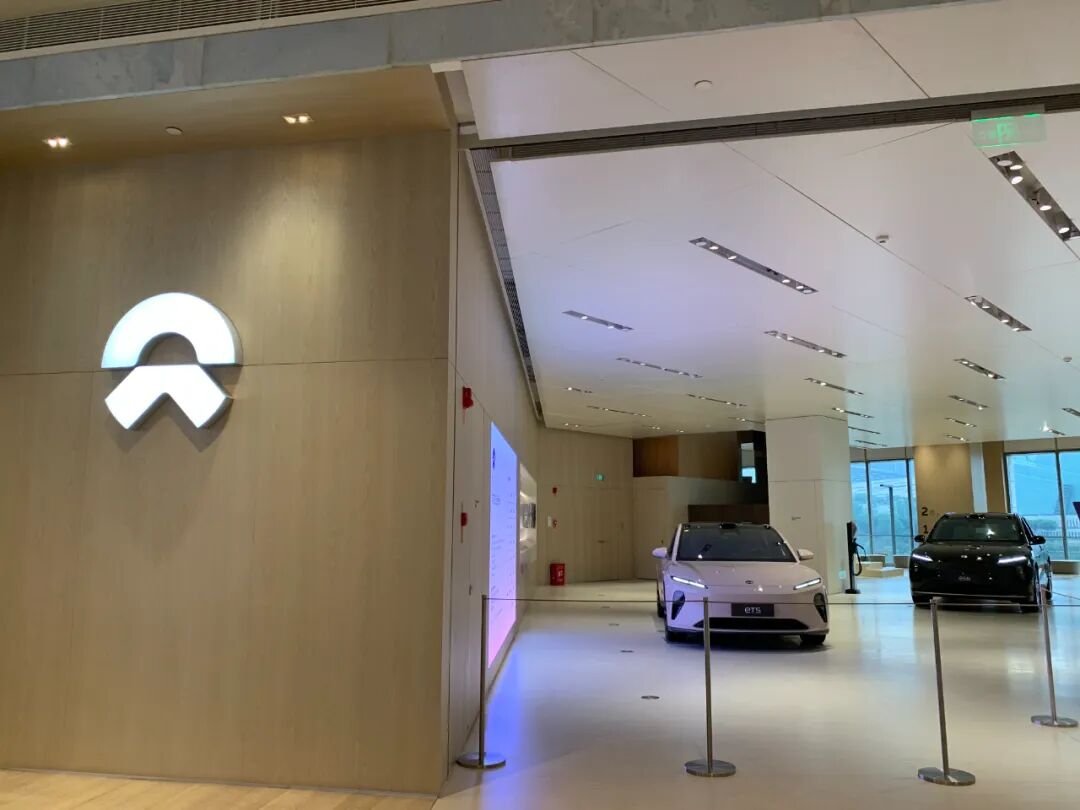
Photography: Zhang Gege
We did not adopt the strategy of trading price for volume this year. Even though the cost rose by 14,000 yuan in the second quarter, the gross margin remained basically stable compared with that of the first quarter and last year. Even if the cost will rise further in the second half of the year, our sales guidance can still basically maintain the stability of the gross margin of complete vehicles.
How to achieve high-quality growth in specific terms?
First, adhere to pure electric technology, which greatly improves our operational efficiency. For example, after we internally switched to the 900V high-voltage battery architecture, the underlying technology can be reused across platforms, vehicle models and brands. On June 18 this year, our two brands and three platforms iterated more than 700,000 vehicles together; the fifth-generation battery swap station can be compatible with full-size models of the three brands.
Second, adhere to high-end brand positioning and high-satisfaction user experience. For example, the average unit price of the NIO brand reached 406,000 yuan in the second quarter, and rose to 434,600 yuan in July, which has comprehensively surpassed Mercedes-Benz. The proportion of brand factor in car purchase decisions has exceeded 30%; the average unit price of the LeDao brand in the first half of the year was 248,000 yuan, which is not much lower than Audi, and higher than Cadillac and Volvo; the Firefly brand has ranked first in the high-end small car market for 15 consecutive months, completely breaking through the "valley of death" after the new car effect fades.
Third, adhere to the construction of system capabilities. Since last year, we have started to implement the company-wide CBU mechanism. Now CBU is combined with AI, to transform the company into an AI-native organization.
Talk about CBU: It can eliminate many pseudo-innovations
Li Bin: When we launched CBU, we did not think from the perspective of AI-native organization, but just wanted to clarify the most basic logic of company operation: what operation objects are we operating around? We use the logic of AI and software engineering to look at this matter, which coincides with the ontology theory widely discussed in AI in recent years, and they are essentially the same thing. After clarifying this point, the organizational construction method, process, assessment and incentive will all be different.
The previous organization was relatively top-down, which is a target-decomposition type, but now we require bottom-up operation. When we talk about AI and Token, we are essentially decomposing knowledge into the smallest units, and decomposing operation into the smallest units, which is actually the same thing. We are working on CBU for single parts, and a car is decomposed into more than 17,000 parts. The capability is still under construction, and we often encounter dead ends and feel that we cannot get over the hurdles, but after discussions, we can move forward again.
Some people worry that CBU will stifle innovation, which is a misunderstanding. I think CBU can eliminate a lot of pseudo-innovations. It is no problem for a R&D project to be carried out for the sake of innovation, and it can be approved in our company. We also have a lot of resources to support long-term investment. But the advantage of this mechanism is that any colleagues, departments and processes that need to make decisions must clarify the priority and carry out mandatory ranking, instead of acting arbitrarily. We need to clearly explain the creation of user value, and avoid pseudo-innovation.
After the R&D projects are broken down into smaller units, we can also brake in a more timely manner. For example, under the original budget system, many projects will move forward once approved, which is easy to get out of control. Now with the rollback mechanism, some projects will be stopped halfway when the team themselves feel that it is not cost-effective, so as to take the initiative to stop losses.
I am extremely happy to do business management now, and I take pleasure in it. Why? Because it is a process of pursuing truth. For example, it is not easy to clarify the "I" in ROI, let alone clarify the "R". But the process of clarifying it is very interesting and satisfying.
In the past, everyone cared about NIO's new cars — we still hope everyone will pay attention to new cars, but this industry can bring fewer and fewer surprises to everyone. Like the Apple launch event, this year they may release a foldable screen, which is not a big surprise. But this does not mean that Apple has not made progress. Many invisible places — such as Apple's chips — have made the greatest progress. Therefore, the entire automotive industry now may need to focus on the quality of growth, and compete on system capabilities and strategic focus.
In the next few quarters or years, market competition will still be very fierce. We will still focus on the long term, and will not compete for the delivery volume of a certain quarter or a certain month. Our company has long had no digital indicator for monthly delivery volume, and we have not looked at this indicator internally for more than a year, but we check our business operation goals every day.
Talk about focus: For some things, we dare to be the latecomer
Li Bin: Smart electric vehicles are completely different product forms from traditional cars, which are the integration of transformation from three industries: information technology, energy and automotive. Today's car is the smart body with the highest value and the largest scale, but sometimes we ignore its essence just because of the word "car".
But a car is still a car. The basic laws of safety, supply chain, R&D and service still need to be followed. Don't forget the basic laws when we talk about transformation. Today's car is at least twice as complex as before: there are 2,000 chips on the car, and the battery is an electrochemical product that needs to be operated throughout its life cycle, accounting for nearly 40% of the car price. I said ten years ago that in the past, car manufacturing was like beating drums in primitive society, which only needed one frequency, but now it is like a symphony, where the iteration rhythm of each part including batteries and chips is different.
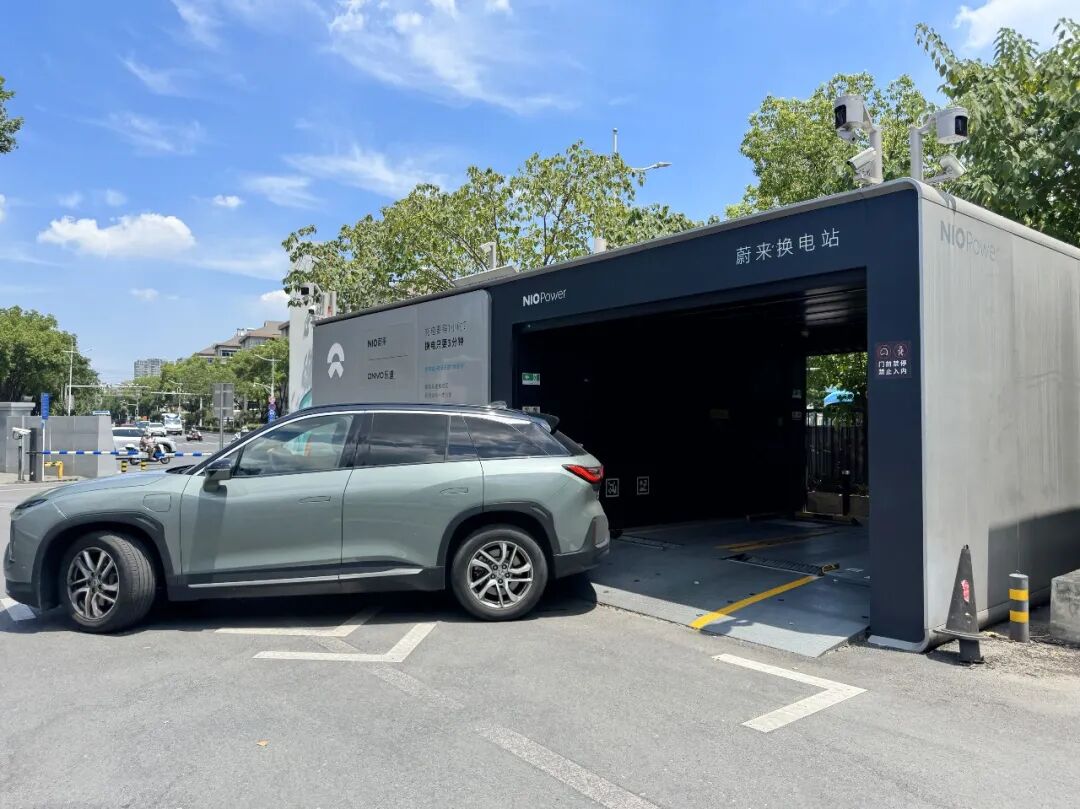
Source: Visual China
Every enterprise has different choices. From the perspective of capability stack, we can do energy storage, smart electric tools and software — the 12 full-stack fields corresponding to NIO cover many areas, and each full-stack capability can cross boundaries. But just like Apple, from the perspective of capability, it can do many things, but will it do all of them? Not necessarily. Why are we focused? Because our share in China's automotive industry is still very low: our market share in Shanghai was 8% in the first half of the year. If the national market share reaches the level of Shanghai, NIO's sales can increase by 3 times; if it reaches the market share level of the Yangtze River Delta, NIO's sales in China alone can increase by 2.5 times. If we haven't achieved these goals, talking about other things is