Ten-thousand-RMB AI research study camps are mass-fleecing parents.
During the just-concluded summer vacation, AI summer camps have become the most popular business in the research study market. According to statistics, the scale of China's domestic research study market is expected to exceed 2400 billion yuan in 2026. Among them, data from Trip.com shows that the number of AI research study orders this summer has increased by 370% year-on-year.
The pricing of AI summer camps and AI science and innovation camps on the market varies greatly. Some cost thousands of yuan for a week, while others are priced at over 10,000 yuan for a duration of less than 5 days. On promotional pages, slogans such as "Start a company in 6 days" and "Become a product manager at the age of 8" can be seen everywhere. But when the summer vacation ends and parents start to calculate their expenses, the answer to what exactly the money they spent has bought is far from unified.
We found five parents, one of whom is also a camp operator. Their bills are all different:
Some spent 12,800 yuan signing their child up for an AI creation camp in Shanghai, and did not see the contract for the first time until the first day of the course when their child had already arrived in Shanghai; some spent more than 10,000 yuan on a research study camp in Hong Kong, only to find that their child's understanding of AI was almost the same as before the trip; some whose husband is a programmer still could not avoid code courses that are just old wine in new bottles; others spent 5,000 yuan taking their child to "enter the Alibaba headquarters", but what they actually got was three days of sales pitches and a "ten-year course" priced at 39,800 yuan.
When "not letting children lose at the AI starting line" becomes a business, are parents paying for real education, or just a placebo for their anxiety? The following are their personal accounts.
01. Spent over 10,000 yuan on the AI camp, my biggest regret is not checking the contract and schedule first
Li Yi'an | 18-year-old child, joined the AI creation camp after the college entrance examination
After my child finished the college entrance examination, I wanted him to learn something new before the university semester starts.
He had sporadic exposure to AI image generation before, and also edited videos with tools, but he never learned systematically. At that time, I scrolled past an AI creation camp held in Shanghai on a social platform. Its promotion was mainly focused on AI visual creation, highlighting "systematic advancement" and "practical implementation", with commercial pictures, character short videos and complete creative solutions displayed on the page. My child was willing to go on his own, so I paid 12,800 yuan and booked round-trip air tickets and hotels.
Before registration, the organizer never sent me the electronic contract. It was not until the first day of the course, when my child had already arrived in Shanghai, that he saw the paper contract on site for the first time and took a photo to send to me. When the child has arrived, and the air tickets and hotels are already booked, it is very difficult to quit even if you find the terms are different from what you understood.
The content of the first two days was relatively basic. On the morning of the first day, everyone did self-introductions, and the teacher briefly walked everyone through the AI tool interface; in the afternoon, the trainees mainly practiced on their own, and the course ended quite early. The second day was dominated by explanations of cases and creative ideas, the teacher did not demonstrate the whole process from start to finish, nor did he break down each key step one by one. My child could understand what the teacher was talking about, but when it was his turn to operate, he still did not know how to complete a full set of solutions.
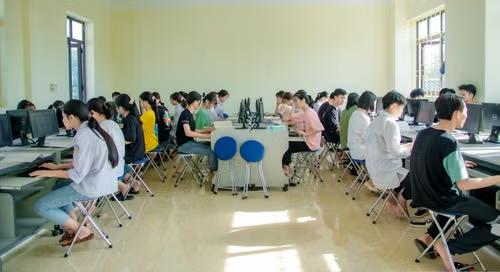
At first I thought the course was probably catering to trainees with zero foundation. By the third day, I began to have doubts. The teacher spent a lot of time taking photos of students communicating, making images and preparing content to post on Moments and social platforms; the students discussed solutions by themselves and tried to generate images. The photos parents received looked very fulfilling, but the actual time the teacher spent guiding hands-on operations was very limited. On the fourth day, models and makeup artists were arranged for an outdoor shooting, everyone took turns to participate, and the waiting time was significantly longer than the actual shooting time. My child found it novel, but could not tell what specific skills he had mastered.
The only part that came close to our expectations for registration was the last two days. The teaching assistants started to explain workflow and practical operation methods, the content was more specific than the previous few days, and closer to what my child originally wanted to learn. But by the time the course entered this part, the six-day camp was almost over. Looking back, what my child came into contact with was mainly AI visual creation: getting familiar with tools and cases, making solutions and generating images, participating in outdoor shooting, and then learning the workflow.
If the child had never been exposed to AI tools at all, the previous content might have played an enlightening role. But he already had a little foundation, and we signed up for the camp aiming for "advancement", expecting to make gradual progress around a project and finally master a set of reusable methods. My child did not get nothing at all, he saw the professional shooting site, and also thought the workflow part was quite practical. But I don't think the six days were worth more than 10,000 yuan.
What makes me a little remorseful is that before signing up, I only read the course introduction and displayed cases, and did not ask clearly what specific arrangements there were for each day. Of course, even if I had asked, it would not guarantee that the actual arrangement would be the same. At that time, when I saw words like "AI", "systematic learning" and "practical operation", I assumed that the higher the price, the deeper the content would be, and the more detailed guidance the teacher would provide. After finishing the course, I found that step-by-step demonstration by the teacher, independent exploration by students, and turn-based experience for everyone can all be called "practical operation".
A few friends knew I signed my child up for the AI camp and asked me if it was worth it. I still think AI is worth learning now, but most camps are just taking advantage of people's perception that "AI is the trend" to make a quick buck, so I always advise them to get the contract and detailed schedule of time allocation before deciding whether to sign up. In addition to asking "what is taught", they should also ask how many days the main lecturer will actually teach, how long the guided operation time is each day, and whether the students can independently complete a full set of works in the end.
02. There are many research study camps that teach AI tools, but few that teach children to think
Zhang Yun | Parent of a fifth-grade child in Shanghai
My child is in the fifth grade now, and has always been very interested in technology.
Usually, he takes the initiative to pay attention to some technology-related content, and also likes to try all kinds of new tools. I thought that instead of letting him take ordinary interest classes, it would be better to expose him to AI earlier, to see what this technology, which may affect many occupations in the future, is really like.
But when choosing courses, I actually had concerns. Many AI research study products have emerged in the past two years, some of which look very high-end, but after learning more about them, I found that some products are just playing online courses and explaining a few concepts, without letting children really practice. In order to choose a reliable course, I compared the products of several mainstream institutions back and forth, and finally signed my child up for two research study camps.
The first one was a one-day AI research study camp for teenagers organized by Fudan University in Shanghai, and I accompanied my child to participate at that time. Before registration, I was originally a little worried that this kind of course would only be simple popular science. But after a whole day, the experience exceeded expectations.
The class did not talk about complicated technical concepts, but started with cases that are easy for children to understand. For example, the teacher used vivid metaphors to explain the basic logic of machine learning, so that children can understand how AI completes recognition through data training. There was also a fun debate session, where children were divided into groups to prepare their views on topics such as "Will AI become an all-round assistant or a potential opponent", and then had a free debate. Many children on site had very good views, and they really increased their interest in AI while having fun.

This experience made me feel that AI research study can indeed bring children gains beyond the classroom. So later when I saw a more systematic and longer course, I did not hesitate to continue trying.
So I spent more than 10,000 yuan to sign my child up for a 5-day AI research study camp in Hong Kong. This time my expectation was higher, hoping that he would be exposed to more systematic courses and participate in AI practice.
My child went there alone this time. He was in a good mood after returning, and shared a lot of what he saw and heard in Hong Kong. But when I asked him what AI content he had learned that week, I found that his understanding of AI was almost the same as before the trip. In the 5-day itinerary, more time was spent on campus visits, activities and lectures, and the time for learning AI was very limited. What my child gained was more about "playing with" several AI tools, such as knowing how to ask questions and how to use AI to generate images, but if you ask him why AI can generate these contents and whether the generated results are reliable, he cannot answer.
This is quite different from my expectation of AI research study when I signed up. I originally thought that my child would focus on a specific project, from putting forward ideas, designing solutions, to completing works with AI, and truly understand how AI solves problems. As a result, he only learned how to use a few tools.
I then realized that many current AI courses are still at the stage of "teaching children to use tools". But only using tools is essentially not much different from playing Lego or playing games. Children feel fresh and have fun, but the actual things they learn are limited. This is actually a misunderstanding that many parents tend to have. Parents naturally hope that their children will be exposed to AI earlier, for fear of missing new competitive opportunities. But if children only learn a few AI tools, there is no essential difference between this and learning computer operations in the past, it is just a more popular concept.
If I choose this kind of course again in the future, I will pay more attention to two points: whether there is real project practice, and whether the teacher has the ability to guide children to think. If the practical session cannot be well supported, it is better to guide the child slowly at home than to spend more than 10,000 yuan on a camp.
03. 6,000 yuan bought me a daycare class with an AI concept
Zhou Lan | Parent of a second-year junior high school student in Hangzhou
My family is not the "AI anxiety" type. My child's father is a programmer working in an Internet company, and I basically know nothing about technology myself.
Last summer vacation, my husband's company co-organized an AI interest camp with a local training institution, which was an employee welfare program for three days, and we only paid a few hundred yuan for material fees. My child had AI enlightenment classes, and also visited a large technology company's park. The teachers who taught the classes were real technical practitioners, and my child came back talking about all kinds of new terms. That experience was quite good, so this summer vacation, we wanted to find a longer camp for him, so that he could learn and have fun properly.
As a result, we stepped into a pit this year.
I saw the forward of this "Little AI CEO" camp in a parent group, its advertising slogan was "Learn to start an AI company in 5 days", and the promotional page was full of photos of children in formal suits doing roadshows and holding company nameplates. I thought that since my child had to learn something during the holiday anyway, I signed up. The camp lasted 6 days, and the total cost for the day-student mode was about 6,000 yuan, which was more expensive than several other camps I had inquired about.
Before registration, the salesperson sent me a course outline that was full of exaggerated descriptions. I could not understand most of it, but it looked quite formal, so I paid the fee. The course stated that the teacher-student ratio was 1 to 3, but in fact it was about 1 to 5 or 1 to 6.

The first two days were "interest cultivation classes", parents could accompany the children to attend classes, and I went there. Most of the time on the first day, the teacher played PPT on the stage. The so-called AI practical operation was just teaching children to chat with AI, ask questions and let it draw pictures. My child can figure out these contents on a tablet at home in ten minutes. The second day started to teach code, teaching children to use AI to generate code, my child's father said it felt no different from those children's Python summer camps many years ago, it just replaced "writing code by yourself" with "letting AI write code", and the content taught was still those basic concepts.
In the middle three days, my child attended the camp alone, divided into several groups, each group set up a "small company", elected a CEO in a proper manner, named the company, and then "made products". In fact, it was just using AI to write simple code, make images, make PPTs, and generate front-end web pages.
The last day was the achievement presentation.
My child had a lot of fun every day, but when I asked him what he had learned, he thought for a long time and could not name any new things. Out of a full score of 10, I can only give 4 points, the main deduction is for poor cost-effectiveness. It costs more than 1,000 yuan a day, which is equivalent to attending a daycare class with an AI concept. Its advantages are safety, convenience and children's happiness, but the disadvantage is that the gap between promotion and actual effect is too large.
Looking back now, whether it is worth it depends on the situation. Camps with endorsements from large companies and universities, or camps with direct enterprise participation like the one we attended last year, are relatively reliable, with reasonable prices, and children can really learn something. But now every summer vacation, all kinds of AI camps pop up, with higher and higher prices, it is really difficult for ordinary parents to distinguish between good and bad.
Some people say that AI summer camps charge parents an "anxiety tax", I think it's half and half. My family has no anxiety at all, we just want our child not to be idle during the summer vacation, so this money is just treated as paying for an interest class. But if you expect a six-day camp to let your child "win at the starting line", then the thousands of yuan you spend is really wasted.