Uber predicts that no one will buy private cars 15 years from now, which makes Elon Musk extremely delighted.
"One day in the future, maybe not in 5 years, but 15 or 20 years from now, no one will buy their own private cars anymore. By then people won't even need driving licenses, because there will be other ways to meet travel demands... Autonomous vehicles will take up a part of the travel scenarios."
Recently, an industry prediction about the survival of private cars is being pushed to the forefront of public opinion by the latest industrial implementation results.
Uber first put forward a disruptive view: Andrew Macdonald, President and Chief Operating Officer of Uber, believes that private cars will gradually withdraw from the mainstream in 15 years, driving licenses will no longer be a daily necessity, and autonomous vehicles will take up a part of travel modes.
At first glance, this claim seems rather radical, because no matter which regional market around the world, there are more or less car sales every year. Take the Chinese market as an example, the total car sales in China exceeded 30 million units in 2025, while the total passenger car sales in the US market, where Uber is headquartered, was around 15 million units in 2025. With such a huge auto market, will no one really buy private cars in 15 years? Will people rely entirely on public transport including autonomous vehicles for travel by then?
But on second thought, there is reasonable logic behind it.
The reason Macdonald gave is very simple. He believes that private cars are left idle for most of the day, yet owners have to continuously bear costs such as depreciation, insurance and maintenance, which is one of the biggest consumption wastes for ordinary families, and it is not cost-effective from an economic perspective.
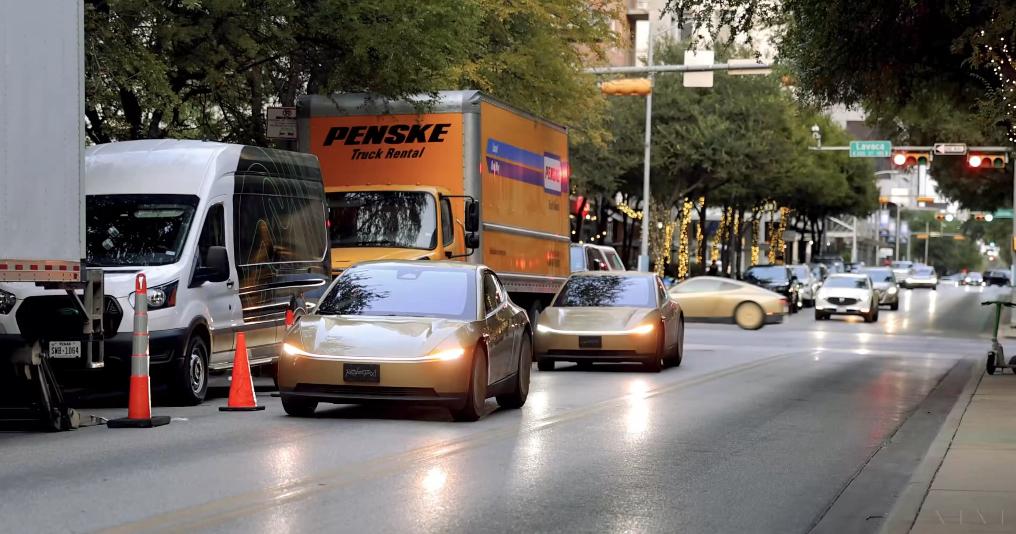
While this statement is highly controversial, a new technology implementation in the industry now provides a new concrete reference. On September 3, 2026, Tesla Cybercab was put into commercial operation in Austin, the United States. This fully driverless ride-hailing vehicle with no steering wheel, no pedals and no rear-view mirrors abandons the traditional driving logic, with an operating cost of only 0.84 yuan per kilometer, demonstrating its commercial advantages.
Furthermore, this iconic driverless model will go on tour in domestic cities including Beijing and Shanghai in mid-September. Although it will not be available for sale or operation for the time being, it officially kicks off the popularization of fully autonomous driverless travel in China.
Thus, at the crossroad of the industry's development, we can see that on one hand, overseas robotaxis are being deployed on a large scale, and on the other hand, the commercialization of domestic Robotaxi is accelerating. Uber's statement that "no one will buy private cars" is no longer a distant sci-fi assumption. A large number of netizens, car owners and industry practitioners have launched fierce debates on this topic.
01
Sufficient reasons for not buying private cars
According to the statistics of remarks from major forums and comment sections, the group that supports Uber's prediction that no one will buy private cars in the future has a core judgment similar to Macdonald's, which is based on the trend of economic cost-effectiveness and technological iteration. It is worth mentioning that this is also the core logic for industry institutions to be optimistic about driverless travel for a long time.
From the current situation, looking at the essence of consumption, the problem of resource waste of private cars does exist.
In our daily car use, most family cars are only used for commuting to work and short-distance trips, with an average daily use time of less than 2 hours, and are left idle for the rest of the time. However, car owners have to continuously bear thousands of yuan of insurance, maintenance, fuel and electricity costs every year, plus the high parking fees in core urban areas. The accumulated cost of car ownership over years far exceeds the value of travel itself.
A large number of car owners admit that parking difficulty and high parking costs have become the norm in big cities. In some scenarios, the monthly parking cost even exceeds the ride-hailing fee, and the practicability of private cars is continuously weakening.
At the same time, from the industrial data, the cost-effective advantage of driverless travel has been gradually realized.
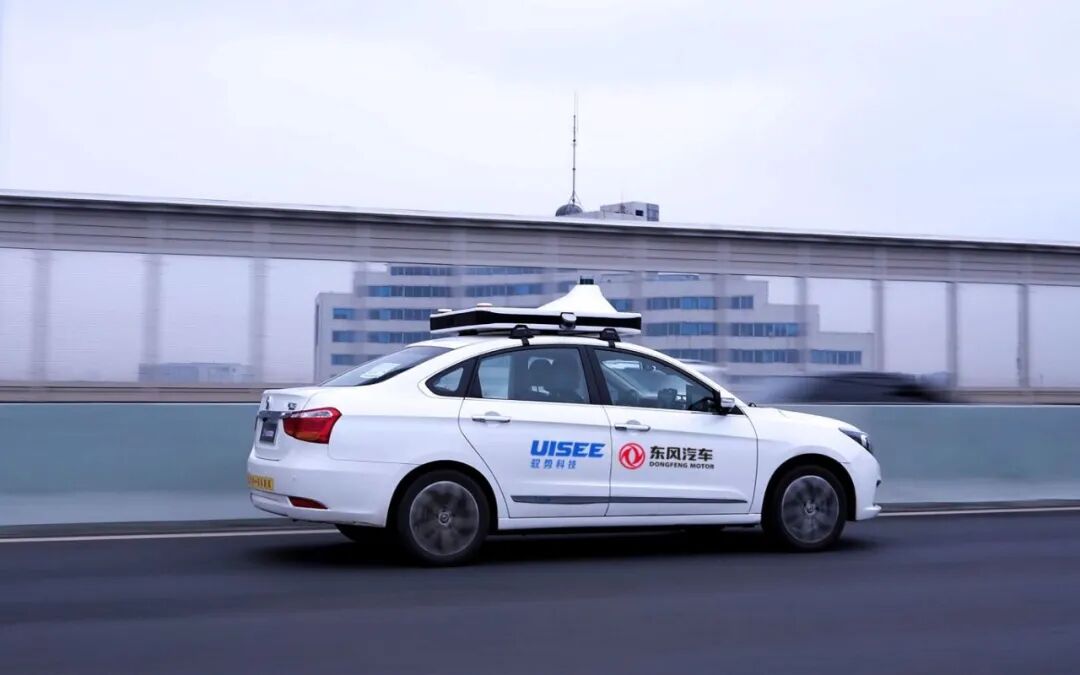
Industry estimates show that the cost per kilometer of a mature robotaxi can be as low as 0.55 yuan, 72% lower than that of traditional ride-hailing vehicles. The operation of Tesla Cybercab is also confirming this trend. The standardized driverless fleet requires no labor cost and operates around the clock, solving the pain point of idle waste of private cars.
It is not only in foreign countries, not only for Tesla, the commercialization of domestic driverless travel has also entered a fast track.
As of 2026, more than 20 cities across China have been approved to carry out commercial operation of L4 level fully driverless taxis, and leading enterprises including Didi, Baidu Apollo Go and Pony.ai have made comprehensive layouts.
Among them, Apollo Go has accumulated more than 23 million orders, with the total autonomous driving mileage exceeding 350 million kilometers, and its commercial operation is becoming increasingly mature; Pony.ai even achieved a 691.2% year-on-year surge in revenue from its Robotaxi business, and its single-car profit model has officially turned positive.
Overall, in the view of the proponents, the core demand for travel is "arriving conveniently" rather than "owning a vehicle". As driverless taxis cover the whole area, are available on call, low-priced and efficient, the rigid demand for private cars as a means of transportation will continue to weaken, and driving licenses will naturally no longer be a necessary skill for all people. Uber's 15-year prediction is feasible to be realized.
02
Can driverless travel really replace private cars?
In the discussions across the internet, skeptical voices occupy the mainstream.
Most car owners and users believe that Uber's statement is too idealistic. It defines the value of private cars purely by economic calculation, completely ignoring core demands such as emotion, scenarios and privacy, and driverless taxis can never completely replace private cars.
First of all, private cars are irreplaceable mobile private spaces, which is the core shortcoming of public travel. Netizens generally feedback that private cars are exclusive private territories for adults, which can accommodate emotional release and rest alone, and carry the exclusive atmosphere of family travel.
At the same time, private cars can store personal items, outdoor equipment and household supplies for a long time, adapting to multiple scenarios such as returning to hometown, self-driving tour and camping. However, driverless taxis are public resources, and you need to clear your belongings after each trip, which cannot meet long-term and personalized travel demands. The problems of public vehicle hygiene and peculiar smell cannot be avoided, and people with mysophobia or high sensitivity have very low acceptance of driverless ride-hailing vehicles.
Secondly, there are inherent shortcomings in scenario coverage, and driverless travel may not be effective in extreme scenarios.
In reality, driverless taxis are highly dependent on urban road networks and capacity scheduling. During peak hours of commuting, severe weather such as heavy rain and snow, and peak periods of returning to hometown on holidays, there will inevitably be a shortage of transport capacity, making it hard to get a car.
In rural areas, mountainous areas and remote suburbs, the deployment cost of driverless fleets is high and the coverage is difficult, so it is impossible to realize on-call service at all.
For users who have demands for long-distance travel, off-road driving and large goods transportation, private cars are still the only reliable choice.
Furthermore, many people believe that driving pleasure and consumption demands cannot be replaced by technology.
For a large number of car owners, driving is not only a means of transportation, but also a leisure hobby and life experience. The control sense of autonomous driving and the freedom of self-driving travel cannot be provided by fully automatic driverless travel.
Many netizens said directly that in the future, private cars will at most get rid of the attribute of "transportation means" and be upgraded to high-end toys and emotional collections. Especially fuel cars will become scarce personalized consumer goods and will not be eliminated by the era immediately.
Of course, there are many sober people. Public opinion generally questions the commercial stance of Uber's statement. As a travel platform enterprise, Uber advocating the "uselessness of private cars" is essentially guiding users to abandon their own vehicles and turn to the platform's travel services, which has an obvious tendency of capital hype, rather than an objective industry research and judgment.
Because if this trend comes true, it will create a commercially favorable situation for Uber. At present, Uber has given up developing its own autonomous driving fleet, and continuously strengthened its positioning as an autonomous driving travel platform, cooperating with companies such as Waymo and Waabi to connect autonomous vehicles to its own network.
03
Perhaps two-way coexistence is the reality
Putting aside extreme opposing views, combining the current situation of the domestic industry and the real experience of netizens, a more realistic conclusion is that driverless taxis will not replace private cars, but will further shape the market positioning and user demands of private cars, and the two will coexist for a long time.
Because from the perspective of applicable scenarios, the two have already had a clear division of labor.
For daily short-distance commuting in cities and short-distance trips around business districts, driverless taxis, with the advantages of low cost, no need for parking and no maintenance, will gradually become the mainstream choice, greatly reducing the car ownership pressure of ordinary people. However, travel scenarios that are personalized, long-distance, highly private and highly free are still dominated by private cars.
Driverless travel meets the basic rigid demand for transportation, while private cars carry the demand for quality life. The two adapt to different groups of people and different scenarios, and there is no absolute substitution relationship.
From the actual conditions of the specific Chinese market, it is completely not feasible to achieve full replacement in 15 years.
The first is the technical and safety bottleneck.
At present, L4 level autonomous driving can only operate stably on closed and optimized urban roads. Risks such as complex road conditions, extreme weather, network failures and hacker intrusions have not been completely solved, and the full-domain safety system for fully autonomous driverless travel still needs long-term improvement.
Secondly, laws, regulations and supporting systems are not yet perfect. There are currently no road traffic regulations, annual inspection standards and accident responsibility division rules for vehicles with no steering wheels at all. Fully driverless models like Cybercab can only be displayed statically in the short term, and cannot be deployed and operated on a large scale.
Furthermore, user concepts are difficult to iterate quickly. At present, a large number of car owners adhere to the car use concept of "drive as much as possible until the car is scrapped". Old cars with a service life of 10 or 15 years are still active on the road. For ordinary people, vehicles are not only tools, but also assets and a sense of security in life. The change of consumption concepts is far slower than the speed of technological iteration.
This article is from WeChat Official Account "Auto Community" (ID: iAUTO2010), written by LI Sijia, edited by WANG Yue, published with authorization from 36Kr.