After selling 5 million stabilizers, Hohem decided to develop a "detachable" camera.
In 2026, the handheld smart imaging track is at its most contradictory moment.
On one hand, market popularity continues to climb. IDC data shows that in the first quarter of 2026 alone, global shipments of handheld smart cameras reached 4.14 million units, up 33% year on year, with sales exceeding 100 billion yuan. It is projected that by 2030, the global market size will exceed 40 million units.
On the other hand, the competitive landscape is rapidly solidifying. DJI firmly ranks first with a 65% shipment share, followed by Insta360 at 22%, and the two together occupy nearly 90% of the total market share. In the broader comprehensive action camera market, DJI and Insta360 hold about 43.8% and 41.2% of the sales share respectively, with a combined total of 85%.
This is a track where leading brands have established absolute advantages.
However, a subtle phenomenon has also emerged. The hotter the market and the more segmented the product categories become, the more hesitant ordinary users are in their choices. Users who buy gimbal pocket cameras for stable shooting and excellent image quality will find that there are limitations in viewing angle flexibility. Thumb cameras are light enough to be mounted on various positions, but they are less practical in high-frequency daily scenarios. Users have to make trade-offs and compromises between stability, portability, viewing angle and usage frequency.
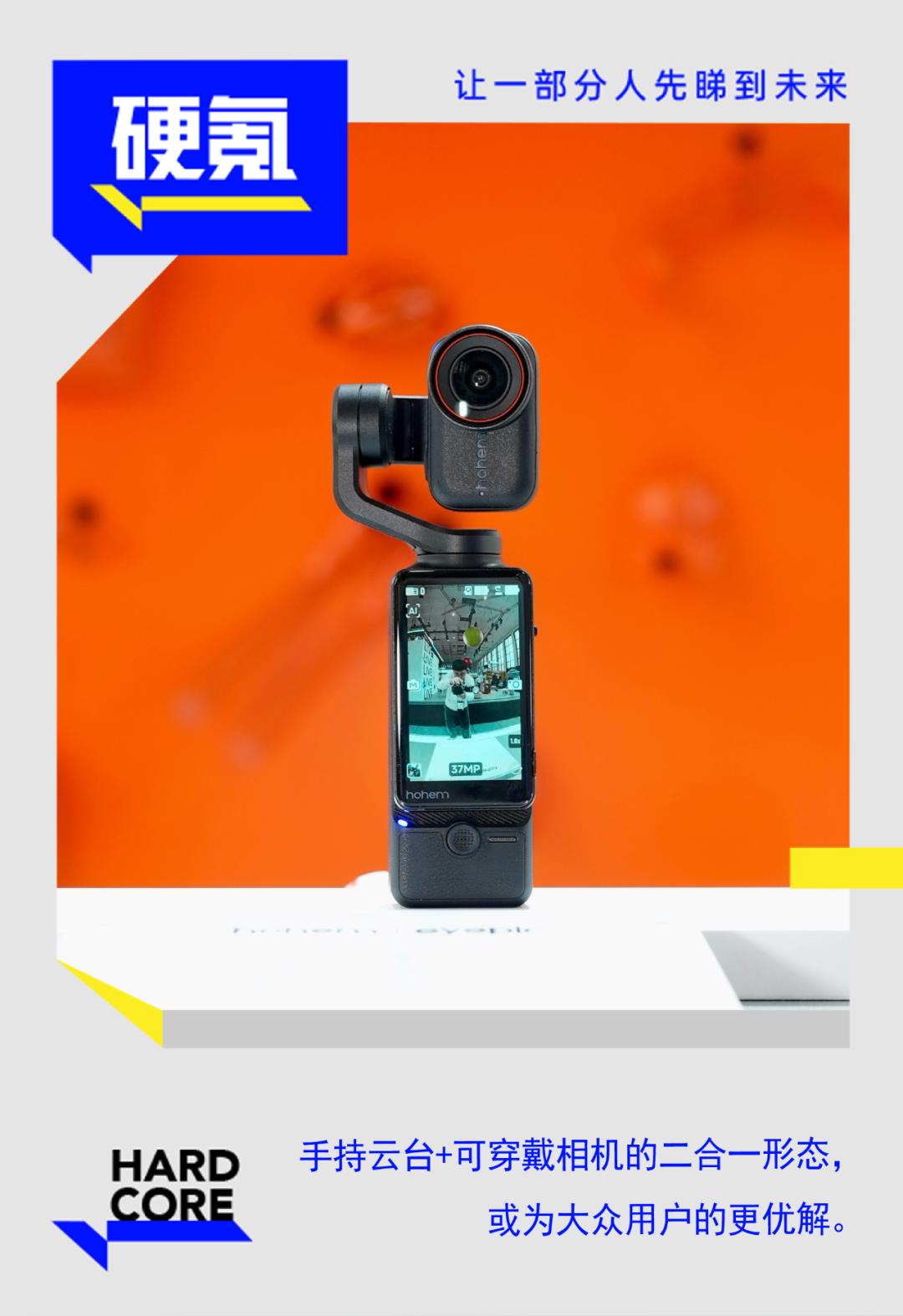
How to eliminate such trade-offs has become the original starting point of Hohem's product development. At IFA 2026, Hohem's first 2-in-1 pocket gimbal camera, Hohem Eyepic, made its official debut. It adopts a split structure, which can not only give full play to the stable shooting capability of a handheld gimbal camera, but also realize the flexible viewing angle of a wearable camera.
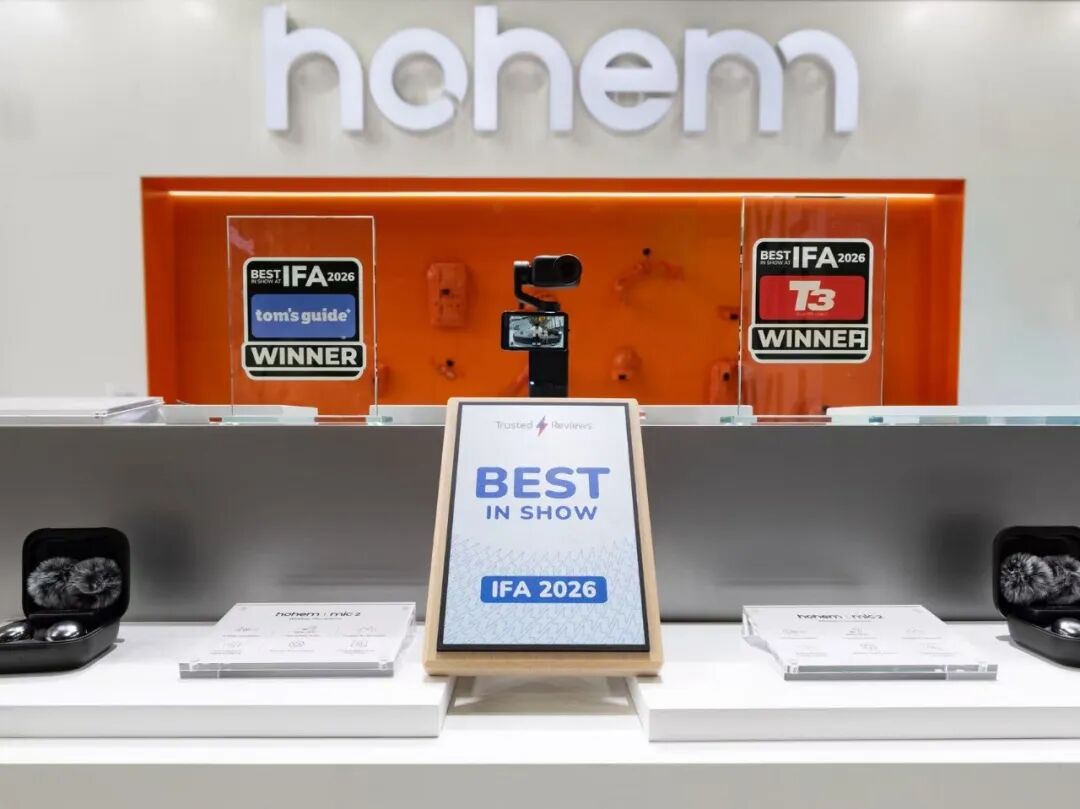
Founded 12 years ago, Hohem has successively launched multiple market hit products including the face-tracking smartphone stabilizer T1, foldable smartphone stabilizer D1, and detachable control smartphone gimbal V3, with its global market share of action camera stabilizers reaching 70%. After selling stabilizers to more than 5 million users around the world, Hohem has completed a strategic leap from an "imaging accessory manufacturer" to a "smart imaging brand".
The launch of Hohem Eyepic also provides a new observation perspective. This is not a simple horizontal expansion of product categories, but a systematic response to a core proposition. When hardware parameters gradually approach the physical upper limit, what kind of product form should an enterprise starting from gimbal technology adopt to meet the real life recording needs of ordinary users.
The more segmented the categories, the harder it is for users to choose
In the past few years, the category differentiation of handheld smart shooting hardware has almost reached the extreme.
Gimbal cameras focus on 3-axis anti-shake and stability, meeting the shooting needs of shooting while walking. DJI's Pocket series is the iconic product of this category, and the cumulative sales of the Pocket 3 alone have exceeded 10 million units. Action cameras firmly capture the group of extreme outdoor enthusiasts, with core advantages of fall resistance, water resistance and high durability. Insta360 X series can capture materials from a 360° full viewing angle, realizing the creative freedom of "shoot first, frame later". For wearable thumb cameras that compete for lighter weight, the Insta360 GO series weighs only 35.5g, supports brim clamping and magnetic fixation, and can almost achieve non-inductive wearing.
Each category has its own strengths, and has sharp advantages in its vertical scenarios.
IDC's *Global Handheld Smart Camera Market Tracking Report* points out that handheld smart cameras are evolving from "niche equipment for extreme sports" to "the second imaging system for mass Vlog creation and daily recording", and the user group has expanded from niche extreme sports enthusiasts to a wide range of sports lovers, Vlog creators and ordinary consumers who record daily moments.
However, the other side of differentiation is the natural fragmentation of user demands. With more and more segmented hardware, the selection threshold and trial-and-error cost for ordinary consumers continue to rise.
Every type of device on the market has a clear capability bias: portability and image quality, anti-shake stability and camera position freedom, smooth main-view recording and creative multi-angle shooting, which often cannot be achieved at the same time. Faced with a complex parameter system and professional technical terms, most ordinary users cannot accurately judge the suitable model. Following the trend of recommended products and changing devices repeatedly has become the norm, and users eventually fall into the usage dilemma of "buying multiple devices and leaving most of them unused".
Behind this, there are actually two sets of conflicting product logics colliding.
The rigid-demand group represented by creators takes professional tools as their core demand, and has strict requirements for high-definition image quality, extreme anti-shake and special scenario performance. They are willing to pay a premium for individual parameters, and will also equip corresponding professional devices for different shooting scenarios. Segmented products perform their respective duties and can accurately solve vertical pain points. Therefore, the mainstream iteration logic of the industry is to continuously divide scenarios, refine categories, and maximize a single performance to the extreme.
The daily recording scenarios of ordinary users are completely different, such as casual shooting during trips, daily parties, and outdoor team building. Users' shooting needs switch in real time with scenarios. Compared with extreme parameters, the public pays more attention to the daily practicality of the device, which is lightweight and portable, can be turned on and recorded at any time, and is easy to get started. What they need is not a professional device with full performance, but a complete "sufficient" and "easy to use" recording solution: no need to switch between multiple devices, no need to make trade-offs for scenarios, making daily recording calm and stress-free.
In other words, leading manufacturers are accelerating penetration into each other, competing on parameters, image quality, anti-shake and lightweight design, but they have never made up for the all-round adaptive experience that the public needs most. This is an experience gap that cannot be filled by hardware stacking, and it is also the most critical and hidden incremental gap in the current handheld imaging track.
What Hohem has captured is the possibility of jumping out of this set of one-dimensional competition logic.
"The opportunity we see is not to add another segmented category. On the contrary, a truly easy-to-use product can reduce the hesitation and trade-offs of users between different forms when purchasing." This is the core judgment of the Hohem team on track opportunities.
In a market fully educated by leading brands, the opportunity for new entrants is not to "make similar products stronger", but to dig out user demands that have not been fully responded to and "make a difference" in the gaps.
This "difference" does not rely on subversive technological breakthroughs, but requires returning to the re-understanding of user demands.
"2-in-1" is subtraction, "detachable" is addition
Hohem did not choose to stack parameters in existing categories, but turned to a more simple proposition: from the moment the user picks up the device to the moment they put it down after shooting, which links in the entire recording process can be simplified.
This proposition, when implemented in specific product definition, points to a completely different direction from the mainstream path. While leading brands continue to increase investment in sensor size, lens specifications and computing power platforms, Hohem has chosen a counter-intuitive path: instead of adding functions, it makes subtraction, using one device to cover two complete shooting forms.
At the hardware structure level, Hohem Eyepic adopts a "magnetic suction + buckle" quick-release split structure. The technical difficulty of this solution is to integrate the stable main view of the handheld gimbal camera and the free creative viewing angle of the wearable thumb camera into one set of hardware, so that Eyepic has two complete sets of shooting capabilities at the same time, and can work independently in both combined and separated states.
In the combined state, the camera is tightly connected with the gimbal base through the buckle and magnetic structure, becoming a pocket gimbal camera with 3-axis mechanical anti-shake capability. The gimbal can offset the picture shake caused by hand shake in real time, and output smooth and stable main-view pictures in common scenarios such as handheld Vlog, travel recording, and parent-child following shooting.
After the camera body is separated, it becomes a wearable thumb camera that can be used as an independent shooting unit, supporting 10-meter waterproof and 10-meter wireless image transmission. With a hat clip for wearing, magnetically fixed on metal objects, or used for underwater shooting, it can easily capture shots that traditional handheld devices are not easy to capture, such as first-person perspective, low-angle shooting for pets, and fixed-point camera positions.
In addition, while the device is separated, the gimbal motor will automatically lock, and the 3-axis structure remains fixed. It not only facilitates users to hold the camera body with one hand and complete real-time framing through the screen, but also prevents unnecessary swing of the motor and reduces power consumption in non-working states.
The combined state solves the problem of "stable shooting in any situation", and the separated state solves the problem of "where to place the camera for shooting". The two forms complement each other. Users do not need to make trade-offs between gimbal cameras and wearable cameras, or purchase multiple devices. They only need to switch the structural form of the same set of hardware to freely switch between stable main view and creative free camera positions.
The core value of this design is that it transforms the original "pre-set shooting scenario before purchase" into a real-time "switch at any time as needed". Users no longer need to predict shooting demands in advance and prepare multiple devices. They only need to flexibly switch the device form according to the current scenario to adapt to diversified daily recording needs.
At the level of product interactive experience, this subtraction thinking is reflected more thoroughly.
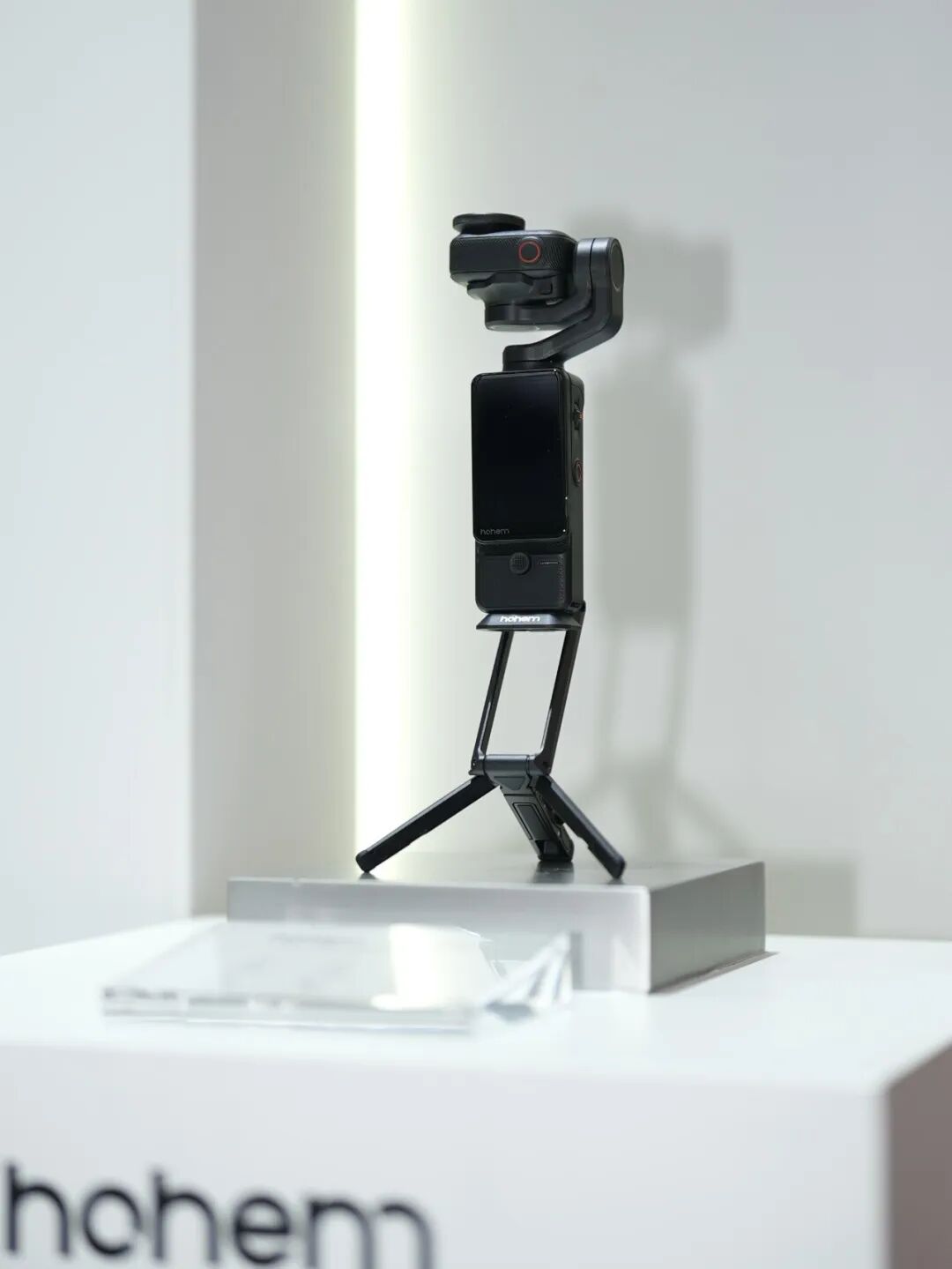
Eyepic is equipped with a 2.51-inch screen. The choice of this size has a practical consideration: the larger the screen, the more intuitive the framing and composition will be, and the easier it is to read the menu information. The icons on the screen are all marked with text, and the menu structure is presented with visual logic.
Hohem's R&D team found in a large number of user surveys that many novice users are prone to recognition obstacles when facing a pure icon operation interface, and it is difficult for them to quickly understand the corresponding functions behind the icons. "Adding text annotations to icons is not technically difficult to implement, but few manufacturers are willing to do it." A relevant person in charge of Hohem told 36Kr that this kind of optimization mainly serves non-professional users. Under the development logic guided by hardware parameters, such experience demands are often easily ignored and placed in a secondary position in the product iteration process.
In terms of imaging specifications, Eyepic supports lossless 4K recording at 2160x3840@60fps in portrait mode. It is also the first gimbal camera in the industry that supports 4K 60fps portrait recording. Based on Hohem's self-developed gimbal structure, the sensor rotates longitudinally when the screen rotates, which can sample the full sensor frame. Unlike secondary cropping of landscape pictures that will lose a lot of pixels, the physical rotation solution retains all pixels of the sensor; at the same time, for social media users who are used to distributing portrait content, the shot materials can be used directly, eliminating the post cropping and adaptation steps.
At the software level, the supporting APP of Eyepic has built-in editing templates customized for different scenarios. After users select the template, the APP automatically completes material matching, rhythm beat alignment and transition generation. Users do not need to understand the operation logic of timeline editing, nor do they need to understand the parameter meanings of color and audio. They can export a finished video that can be directly shared with two steps, further reducing the full-link threshold from shooting to sharing.
From hardware structure to interactive interface and then to software algorithm, these designs do not seem to show off skills, but they point to the same thing: extremely converge complex calculation and structural logic inside the device, and leave simple operations to users.
In an industry where "performance competition" is the mainstream, investing resources and energy in "making products simpler" requires no less judgment than making a technological breakthrough.
This trade-off comes from Hohem's understanding of the underlying demands of different user groups. In the process of developing Eyepic, the team has been asking two core questions: What exactly are users paying for, and how should the priority of product definition be adjusted? In the era of excess parameters, how to make products that are closer to the real needs of mass users?
Eyepic is exactly the answer given by Hohem: let technology hide behind the product, and let recording return to instinct.
From gimbal to camera, Hohem's way of breaking through
After imaging becomes popular for all, the threshold of recording has dropped to a historical low. But a new problem has emerged: what kind of equipment do ordinary people really need to complete daily recording?
In the past ten years, mobile phones have solved the problem of "carrying at any time", but failed to solve the problem of "stable shooting in any situation"; cameras have solved the problem of image quality, but failed to solve the problem of "how to complete shooting alone"; various segmented cameras have met vertical scenarios, but invisibly turned "selecting equipment" into the first threshold for ordinary users.
Hohem launched Hohem Eyepic at this node. It is not so much an extension from gimbal to camera, but rather a systematic answer given by a company that has accumulated 12 years of experience in the mobile shooting field to the above questions.
The starting point of this answer began with an unfinished exploration seven years ago.
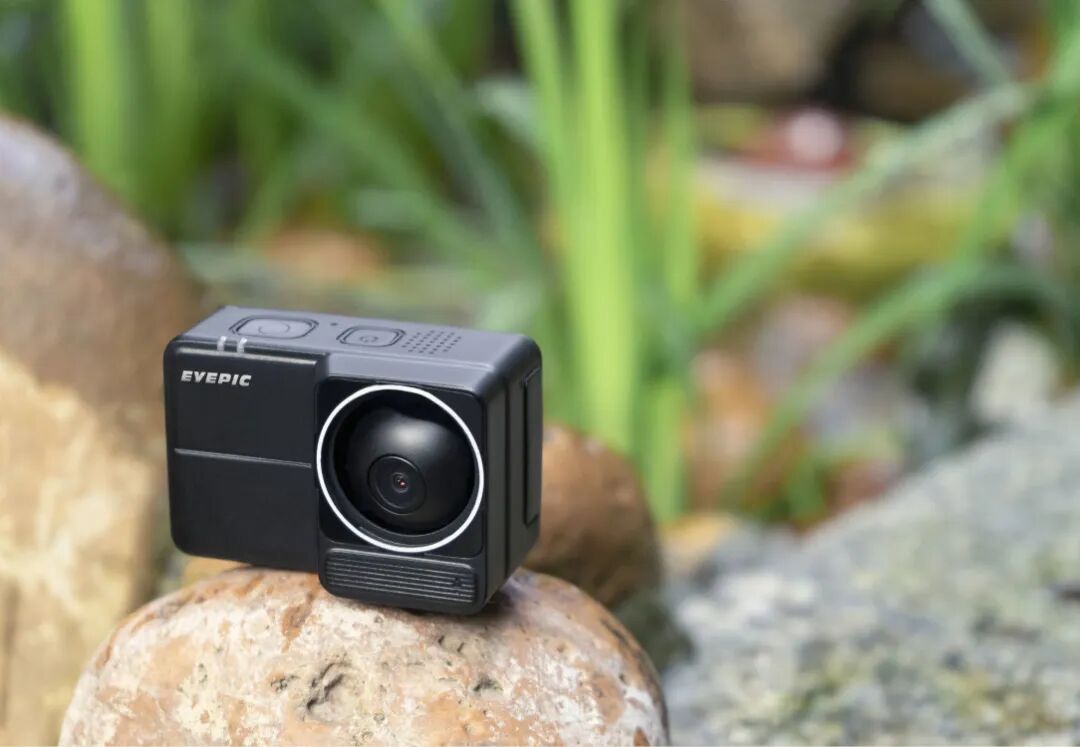
At the 2019 Hong Kong Consumer Electronics Show, Hohem exhibited a motion camera prototype integrated with a 3-axis gimbal. This product was not finally mass-produced. From an objective perspective, at that time, the team still had a lot to precipitate and improve in terms of imaging host R&D and supply chain supporting. As a startup company, limited resources had to be prioritized for the core gimbal business.
However, this early exploration planted a long-term thinking direction within the team: is it possible to use one device that not only has the stable main view of a gimbal camera, but also can reach shooting positions that are difficult for ordinary handheld devices to cover?
This question was put on hold, but it never disappeared.
In the following years, Hohem did not rush to make cameras. It chose a seemingly more circuitous but actually more solid path, repeatedly verifying the idea of "let the lens break away from human hands" in the gimbal category. In 2021, it launched the AI smartphone gimbal V2 to realize local recognition and follow shooting; in 2024, the detachable control smartphone gimbal V3 and the detachable monitoring gimbal M7 verified remote control shooting and real-time preview respectively.
These products have gained good reputation and sales in the market. More importantly, they have jointly completed one thing on the technical path: turning the logic of "separable lens and body, remote controllable, real-time preview" from a concept into a mass-producible engineering capability.
