Is Tesla's FSD launch scheduled for Q3 this year going to fall through again?
Behind this "Rashomon" incident lies a multi-layered game between rules and technologies.
In late August 2026, two consecutive pieces of news overlapped in public discourse, sparking a moderate level of public attention.
The first event took place from August 21 to 22. Tesla updated the list of regions eligible for the supervised FSD subscription on its North American official website, which only covered 12 regions including the United States, Canada, South Korea, Australia, etc., with China not included.
The second event emerged late at night on August 25, when an unsubstantiated anonymous leak spread online claiming that the Shanghai data center Tesla prepared for FSD's entry into China "had been emptied with all liaison teams withdrawn", leading to the subsequent conclusion that FSD would not be approved for launch in China for years to come.
It is worth clarifying that there is no evidence of any causal link between the two incidents. The list update came before the leak, and their adjacent timing made media reports habitually juxtapose the two events, creating a false perception of mutual corroboration.
The list itself also needs to be interpreted carefully. The statistics on that list cover regions where the monthly subscription service is available, while the Chinese market has never opened the subscription model and has always adopted a one-time payment pricing of 64,000 RMB, so it was never supposed to appear on that list. However, China is still included in another list of regions where relevant functions can be used. Of course, given the long-standing inconsistency of Tesla's external publicity system, especially the extensive management of its official websites, no one knows if that subscription-eligible region list is just an old version that was not updated in time.
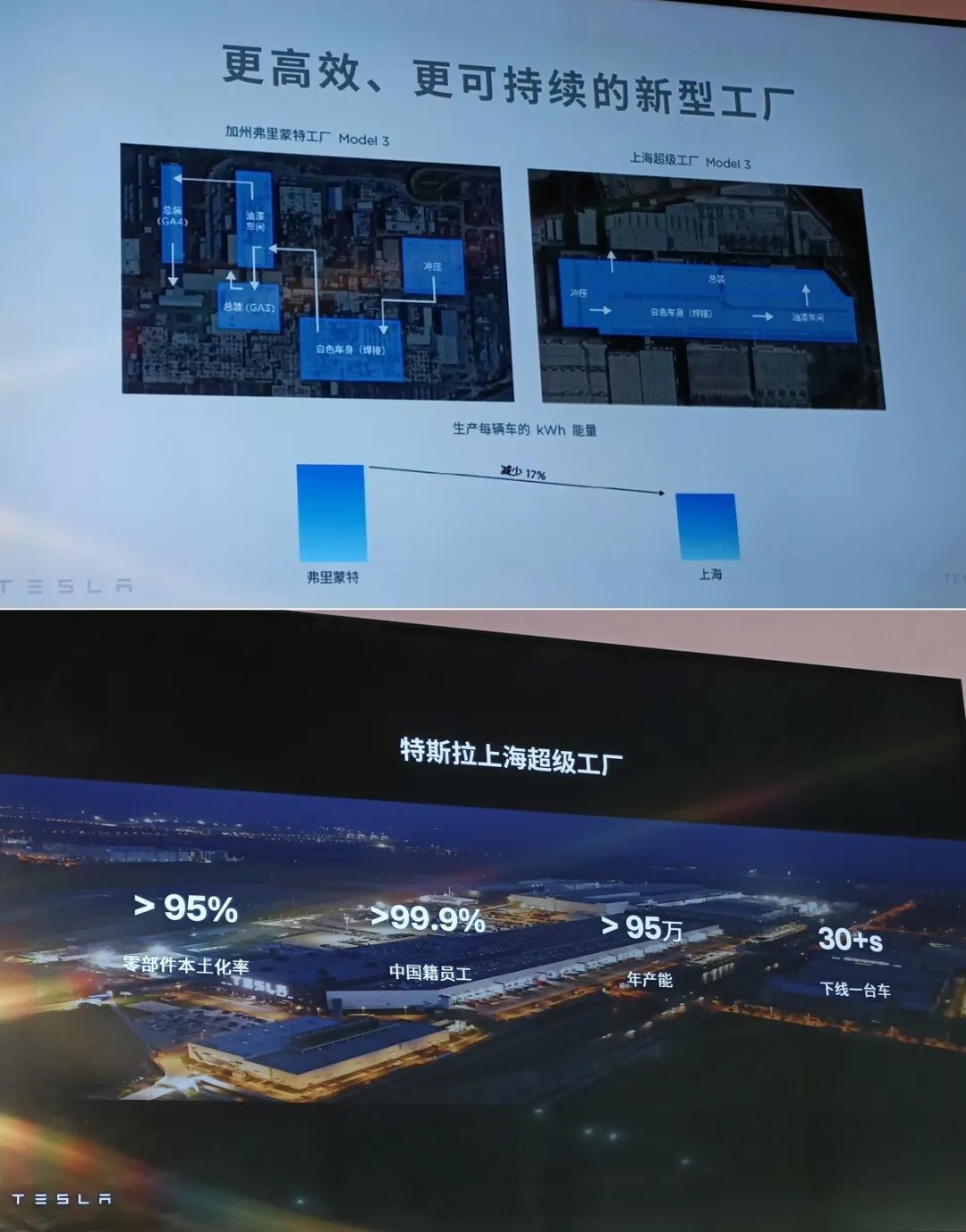
▲ Tesla's Shanghai Data Center is located inside the Lingling Super Factory. Neither its facilities nor equipment are publicly disclosed as they fall under the category of trade secrets. Back in September 2024, Tesla once invited a small group of visitors for a tour, and the photo here shows the large screen of the data center taken by one of the visitors at that time.
As public outcry arose abruptly, Tesla China issued a specific response on August 26, stating that the relevant news was untrue and that the company had filed a report with the public security authority. It particularly emphasized that the Shanghai Data Center is operating normally, and recruitment for autonomous driving related positions is still accelerating.
However, it is widely acknowledged that what actually triggered this Rashomon-style confusion is the unclear approval progress of FSD's entry into China. One claim says that the joint final review by four authorities including the Ministry of Industry and Information Technology, the Ministry of Public Security, the Cyberspace Administration of China, and the State Administration for Market Regulation was completed in late July and has entered the final stage. The other verified statement points out that as of now, full regulatory approval has not been officially granted, and the claim of "final review passed" is inaccurate. Neither statement has any official public approval document to support it.
Elon Musk's long-standing penchant for outspoken remarks has added new layers of ambiguity to this tangled situation.
Last November, he claimed on his personal X account that FSD had obtained partial approval in China and was expected to be fully launched in February or March 2026. At the Davos Forum in January 2026, he changed his words and said it would be launched "next month". At the earnings call in April, Tesla's CFO officially pushed the target to the third quarter of 2026. Now that the third quarter of 2026 only has September left, the only known progress in China is still the small-scale gray test covering about 5,000 HW4.0 vehicles.
The author believes that the truth may not be complicated. The reason for this Rashomon-style confusion is the superposition of multiple news and rumors in a short period of time, and more importantly, the large group of users who paid an extra 64,000 RMB for Autopilot years ago have been eagerly anticipating its arrival for years. Notably, on August 21, South Korea just became the first FSD subscription market in Asia, with a monthly fee equivalent to about 730 RMB.
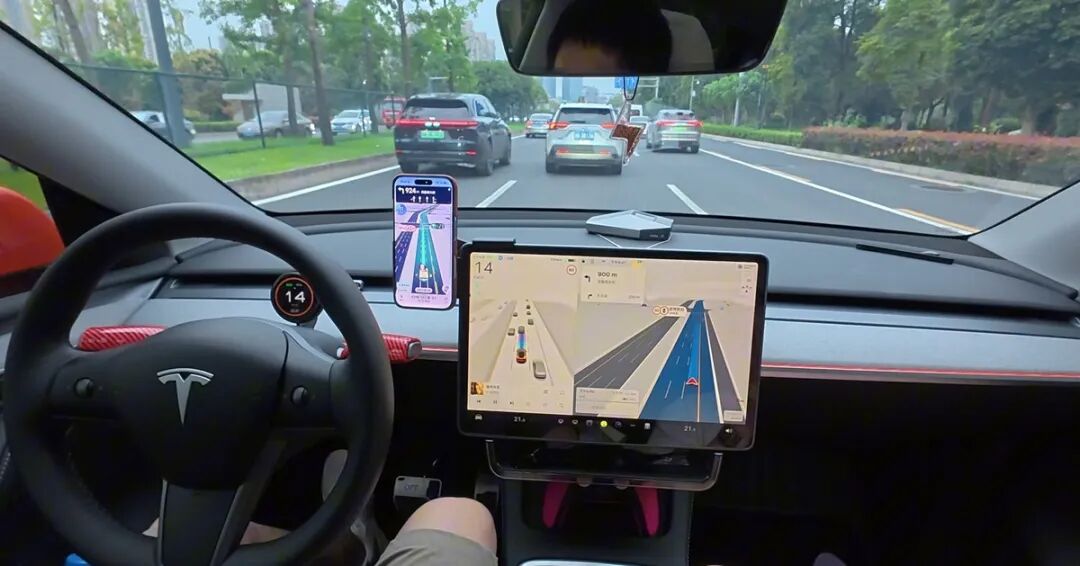
▲ From the end of last year to the release of this article, Tesla's FSD service is still in the small-scale gray test stage.
But one thing is certain: Tesla has not abandoned its efforts to launch FSD in the Chinese market. It is just that the gap between partial approval and full commercial licensing has been blurred by its usual PR rhetoric that does not adapt to the domestic public opinion environment.
01 The difficulty of FSD's implementation lies in the ongoing revision of domestic industry standards
First of all, it needs to be emphasized that since Tesla officially invested in the Lingang Super Factory in 2017, it has made considerable investment in compliance to adapt to the Chinese market.
The Shanghai Data Center was completed in 2021, realizing full local storage of domestic data. In February 2026, the Lingang AI Training Center was put into operation, completing the full local closed loop of data collection, storage, training and deployment, accumulating more than 3 billion kilometers of Chinese road data. By cooperating with Baidu Maps, it obtained compliant high-precision maps, and relevant vehicle models passed four automotive data safety standard certifications. It has carried out gray tests in about 10 cities including Beijing, Shanghai, Hangzhou and Guangzhou, and auxiliary driving test positions in Wuhan, Chongqing and Chengdu have been reopened recently.
The problem is that during the years when it was fully focused on preparation, the access threshold itself has been continuously raised.
The most intuitive change is at the standard level. GB 47955—2026 "Safety Requirements for Combined Driving Assistance Systems of Intelligent and Connected Vehicles" was approved and released in mid-2026, and will be implemented on January 1, 2027. This is China's first mandatory national standard specifically for L2-level combined driving assistance. It divides products into three categories: basic single-lane, basic multi-lane, and pilot driving assistance, mandates the standard configuration of driver status monitoring, sets step-by-step warnings for hands-off and line-of-sight deviation, and will temporarily lock the assistance function if the driver ignores the warning for a long time.
The subsequent GB 44721—2026 will be implemented on July 1, 2027, setting a unified safety threshold for L3 and L4 autonomous driving, requiring takeover capability monitoring and autonomous driving data recording systems. The superposition of the two sets of standards is equivalent to installing a measuring scale for the gap between the claimed capability and the actual capability of the system.
Supporting this safety baseline is the simultaneous tightening of regulations on publicity statements and update methods. China does not recognize the term "fully autonomous driving", and the accident liability falls on the driver. Tesla has long renamed the "FSD Full Self-Driving Capability" on its Chinese pages to "Tesla Assisted Driving (TAD)", and the one-time pricing of 64,000 RMB for Autopilot supported by hardware remains unchanged.
The update rhythm has also been brought under control. Overseas FSD receives high-frequency OTA updates almost every week, while in China, major version updates involving driving assistance functions are required to file in advance and complete full safety assessments, so the overnight push model adopted in North America is not feasible in China.
▲ In the past, many vehicle brands used to publicize how many OTA updates they could release within a year or even a month as positive proof of continuous in-vehicle system upgrades. But under the new national standard system, overly frequent OTA updates will be regarded as "providing untested immature software to drivers", which is essentially treating car owners as guinea pigs.
One set of rules regulates how you make statements, and the other regulates how you push updates, both pointing exactly to the two things Tesla often brags about but that have obvious flaws. The real contradiction that is hard to resolve goes deeper, lying in the system architecture.
Domestic supervision is shifting from clause compliance to safety demonstration, requiring the system to have interpretability and traceability, so that the decision-making logic under specific scenarios can be audited. However, FSD adopts a pure end-to-end large model architecture, where camera images are directly input and steering and braking instructions are directly output, with no modular perception, planning or control processes in the middle. In contrast, the end-to-end plus rule-based hybrid architecture adopted by Huawei and Xpeng retains white-box logic, which is inherently easier to pass compliance reviews.
The existing access samples have clearly demonstrated the rules. In December 2025, Changan Deepal SL03 and BAIC Arcfox Alpha S obtained the first batch of conditional L3-level access qualifications, which are strictly limited to specific cities, road sections and speed ranges, and require the driver to take over within 10 seconds. If FSD wants to move from gray testing to full rollout, it will most likely have to fit into the same framework.
There is another counterexample for reference. As of August 2026, no multinational automaker that adopts the architecture of transmitting Chinese regional data back to its headquarters for unified training has completed compliance implementation in China. Mercedes-Benz, BMW and Audi have all shifted to a fully localized data closed loop.
Therefore, this is not targeting Tesla specifically, but any company that wants to sell high-level intelligent driving systems in China has to be re-evaluated against this new set of standards. There is another layer of embarrassment at the commercial level. The 64,000 RMB one-time payment pricing is completely incompatible with the domestic environment where high-level intelligent driving functions are generally given for free or available for a monthly subscription of a few hundred RMB. Owners of HW3.0 vehicles have been clearly notified that their vehicles are not included in the current implementation promotion queue, and can only wait for the distilled streamlined V14 Lite version.
02 The real trouble is that FSD is facing rigorous regulatory scrutiny in the United States
When discussing the pace of FSD's entry into China, we cannot avoid the current situation of FSD in the United States, which is the underlying reason why its global promotion has been disrupted.
NHTSA's investigation has reached its most severe stage. The agency launched the investigation with an initial assessment in October 2024, covering about 2.41 million vehicles. In March 2026, it was officially upgraded to an engineering analysis under number EA26002, covering about 3.2 million vehicles. Engineering analysis is the last procedure before a mandatory recall. The allegations are very specific: under low-visibility conditions such as glare, dense fog and dust, the pure vision perception fails, while the degradation detection system cannot warn the driver in time, and the alarm often triggers only a fraction of a second before the collision, or even does not trigger at all. 9 related accidents have been identified so far, including 1 fatal one.
The investigation is directly targeting the 2021 decision to remove millimeter-wave radars. On July 2, NHTSA issued 24 information request letters, the fourth item of which requires Tesla to hand over an internal document named "Radar Saves Us" and all the original experimental data supporting this document.
Regulators believe that this document is sufficient to prove that Tesla itself is aware of the shortcomings of the pure vision solution in low-visibility scenarios. The 12th item verifies 15 marketing statements one by one to check whether they exaggerate the actual capabilities of FSD. The 14th item asks why Tesla changed the red warning icon for perception failure to yellow and canceled the prompt tone in 2024. If the complete reply is not submitted before August 12, Tesla will face a maximum fine of 27,874 USD per day, with a total cap of about 139 million USD.
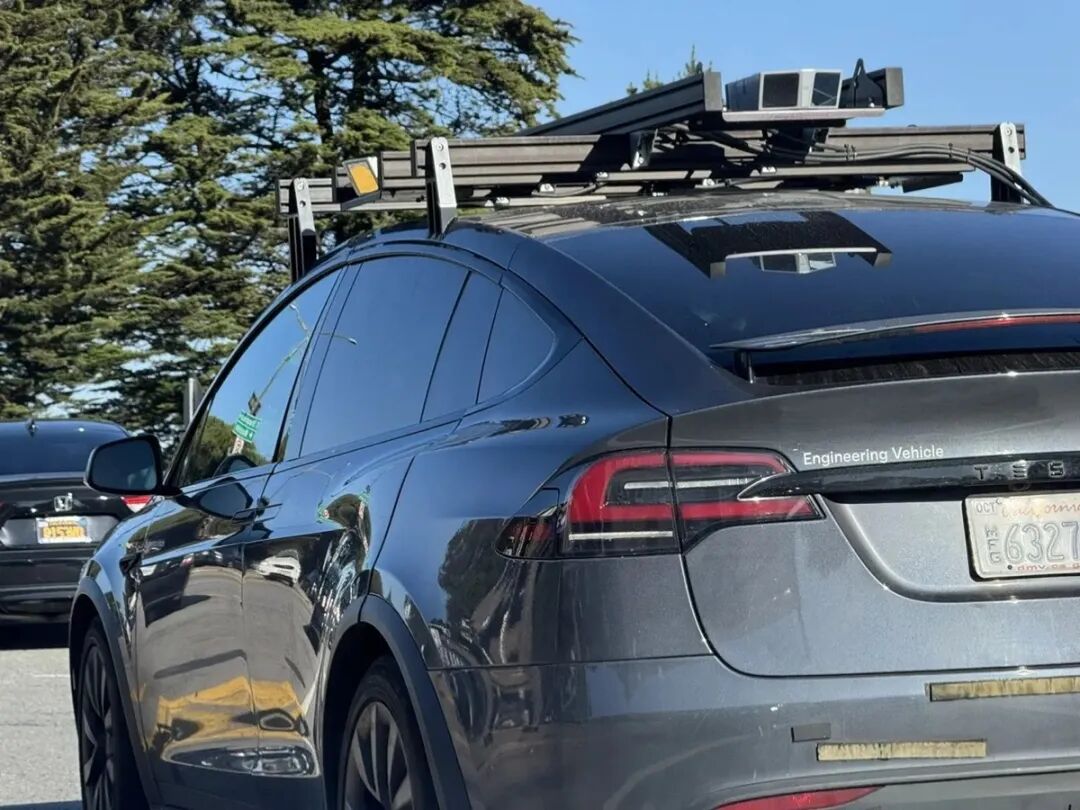
▲ In fact, Tesla also tested a lidar-equipped version of the vehicle years ago, but it finally adhered to the pure vision solution without lidar.
In addition, there is an independent investigation launched in October 2025 targeting about 2.88 million vehicles for red light running and wrong-way driving, as well as more than 40 special accident investigations involving advanced assisted driving.
The naming and data credibility of FSD are also being reviewed. The California Department of Motor Vehicles obtained support from an administrative law judge in December 2025, ruling that the descriptions of Autopilot and FSD constitute false publicity, and suggested suspending Tesla's production and sales license for 30 days. Tesla completed the rectification by renaming the functions and discontinuing the use of the term Autopilot in the US and Canada to avoid the ban, and then sued the DMV to revoke the ruling. In June, two US senators wrote to NHTSA, questioning that the statistical caliber of "one major collision every 5.5 million miles compared with one every 660,000 miles for human drivers" is mismatched, and asking why Tesla uses 5 seconds as the disengagement statistics window instead of the industry-standard 30 seconds.
Things are not going smoothly overseas either. On July 22, France rejected FSD's approval on the grounds that the system allows autonomous speeding on urban roads and the driver monitoring function fails in complex scenarios, becoming the first major European economy to explicitly suspend its approval. Euro NCAP directly pointed out that its naming is misleading, and the unified assessment at the EU level has been postponed to October.
If Tesla wants to make rectifications, the cost of all three paths is very high.
The software-side solution is the most convenient, but it will do the most damage to its brand narrative. Tesla can strengthen degradation detection and warning through OTA, and actively limit the availability of FSD in low-visibility scenarios. But this is equivalent to admitting that FSD is a L2+ system strictly constrained by weather, and the full self-driving brand narrative will collapse accordingly.
The hardware-side solution is the most thorough, but also the slowest. WP.29 only requires heterogeneous redundancy, and on paper, a camera plus millimeter-wave radar already meets the standard, and lidar is not mandatory. However, the entire HW4.0 product line is designed based on pure vision, and adding 4D millimeter-wave radars requires redoing the pre-buried positions of the bumper, power harness, domain control computing power and radar signal processing chips, re-testing all electromagnetic compatibility indicators, and the full vehicle verification cycle will take at least 12 months.
The algorithm-side solution is even more troublesome. FSD adopts an end-to-end BEV plus occupancy network architecture, and all training data is based on camera images. After introducing point cloud data, the modalities will be inconsistent, and retraining the fusion model is estimated to take 2 to 3 years. The S1677 Act in New Jersey has stricter requirements: L3-level autonomous driving requires both cameras and millimeter-wave radars, and L4-level autonomous driving mandates lidar.
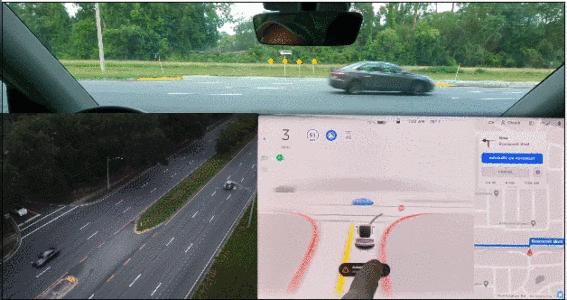
▲ In fact, even for the latest FSD V14 version, various problems keep emerging, and the long-tail problem that plagues autonomous driving technology is still far from being solved.
The interpretability-side solution targets the black-box architecture directly. Using large models to translate