Investigation on the wave of mobile phone price hikes: Storage chips reshape the industry landscape
Recently, Huawei, Xiaomi and Honor have collectively raised the prices of multiple mobile phone models, with some models seeing a single price increase of up to 1,000 yuan, and related topics quickly topped the hot search list.
In recent days, reporters from *Sci-Tech Innovation Board Daily* have conducted on-site visits to offline stores and found that the relevant models have completed price adjustments. Since this round of price hikes came unexpectedly, some offline stores did not have time to replace the price tags and could only inform consumers of the new prices verbally. Online price comparison data also confirms the fact of multiple rounds of price adjustments, and the online discussion is extremely heated, but there is no obvious fluctuation in customer flow in offline stores.
Behind this round of collective mobile phone price hikes, the core driving force is the rising prices of upstream components such as memory chips. The fluctuation of chip market conditions has also spread to the second-hand recycling market, spawning an arbitrage business of "disassembling phones to extract chips", and many practitioners have been trapped amid the ups and downs of the market.
Squeezed by rising costs, the market of mobile phones priced below 1,000 yuan is shrinking rapidly. The industry presents a new pattern of declining shipments and rising average product prices, and the domestic mobile phone industry is ushering in a brand new development cycle.
Visits to mobile phone brand stores: Prices rose by 1,000 yuan overnight, store foot traffic remains unchanged
On September 1, the price tags across the mobile phone industry all jumped upward. The three major domestic mobile phone brands Huawei, Xiaomi and Honor simultaneously raised the prices of multiple on-sale models, covering full price range products from the 1,000-yuan tier to 10,000-yuan flagship models.
Recently, reporters from *Sci-Tech Innovation Board Daily* visited two Huawei Authorized Experience Stores at Wujiaochang Hopson One and Bailian Youyicheng in Shanghai, and found that this round of price hikes came suddenly and fiercely.
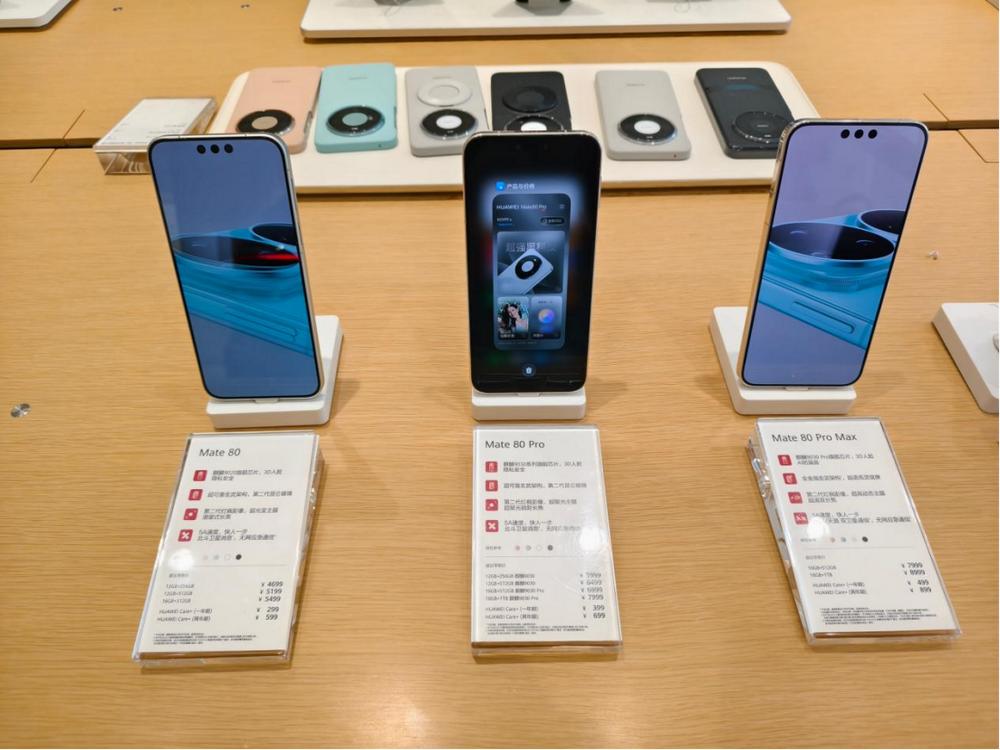
Prices of the full Huawei Mate 80 series displayed on the demo units in Huawei Authorized Experience Store
The store clerk told *Sci-Tech Innovation Board Daily* reporters that the price hike notice was distributed to the experience stores through WeChat groups recently, and both the Huawei Mate 80 series and Huawei Enjoy 90 series have seen price increases. Among them, the price of all configurations of Huawei Mate 80 rose by 800 yuan across the board, and the 12GB+256GB version increased from 4699 yuan to 5499 yuan; the price of Mate 80 Pro and Pro Max versions rose by 1000 yuan, and the top 16GB+1TB version of Pro Max is priced at 9999 yuan after adjustment, officially reaching the threshold of "10,000-yuan phones".
Reporters from *Sci-Tech Innovation Board Daily* noticed that in some experience stores, the new price tags for the price-increased models have not been printed yet, and employees can only verbally inform customers when they inquire about prices that "prices have risen today".
At present, when purchasing electronic digital products offline in Shanghai, consumers can enjoy a subsidy of 15% of the product sales price according to the product category, with a maximum subsidy of 500 yuan. "But now you can't get a 512GB Mate 80 for 5000 yuan anymore," the clerk said with emotion.
When asked about the reason for the price increase, the clerk said that due to the current rising prices of chips such as memory, almost all models of the brand are raising prices, "Occasional customers who come to buy will definitely not know, but we stay here all the time and can feel the price changes."
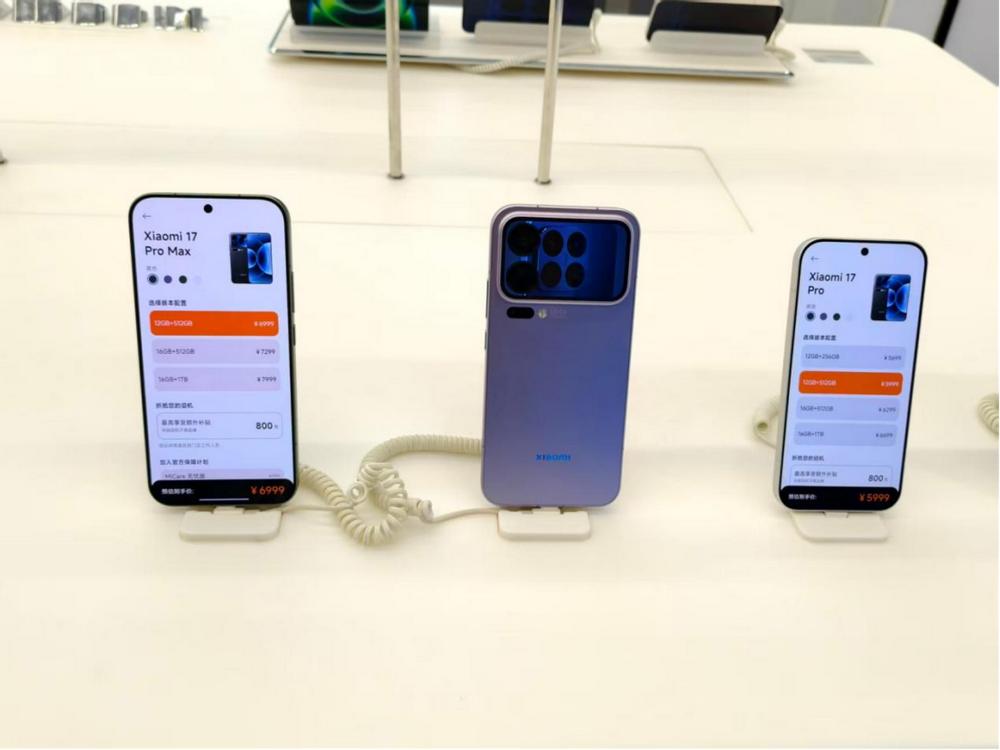
Compared with Huawei, Xiaomi's price tags are updated faster, and the Xiaomi Home in Wujiaochang Mall in Shanghai visited by *Sci-Tech Innovation Board Daily* reporters has completed the price tag update.
Specifically, the starting price of Xiaomi 17 was raised from 4799 yuan to 5099 yuan, with a single model increase of 300 yuan; the starting price of Xiaomi 17 Pro was raised from 5399 yuan to 5699 yuan, with an increase of 300 yuan; the starting price of Xiaomi 17 Pro Max was adjusted from 6499 yuan to 6999 yuan, with an increase of 500 yuan. This is Xiaomi's second price increase for its main models within a month after the price adjustment on August 2.
"Xiaomi 17 was released last September. We thought the price would drop during the 618 shopping festival, but it didn't drop much," the clerk said. "In the past, the price of old models was reduced because of too much inventory. Now the inventory is basically only for one month. The price hike is very sudden, and it is unlikely to drop later."

In some Honor stores, the previous price tags are still retained, but the actual prices have changed.
According to the official notice of Honor, the prices of Honor Power 2 12GB+256GB and 12GB+512GB versions have been increased by 500 yuan and 600 yuan respectively; different versions of Honor Magic 8 have seen price increases ranging from 300 yuan to 500 yuan.
Reporters from *Sci-Tech Innovation Board Daily* noticed that some clerks looked embarrassed when hearing customers wanted to buy the Magic series: "The current price is incorrect. If you want to buy it, I will check it for you."
"This Magic 8 has seen its first price hike since it was released. It never rose when other brands raised prices before," the clerk revealed to *Sci-Tech Innovation Board Daily* reporters. At present, only the Honor Magic 8 Pro Air in the Honor Magic series has not raised its price.
In addition to store visits, reporters from *Sci-Tech Innovation Board Daily* tracked the price trajectory of Tmall official flagship stores through a price comparison mini-program. The data shows that models with comparable prices of Huawei, Xiaomi and Honor rose simultaneously on September 1, while some models of Xiaomi 17 and Honor Magic 8 have gone through two rounds of substantial price increases in August.
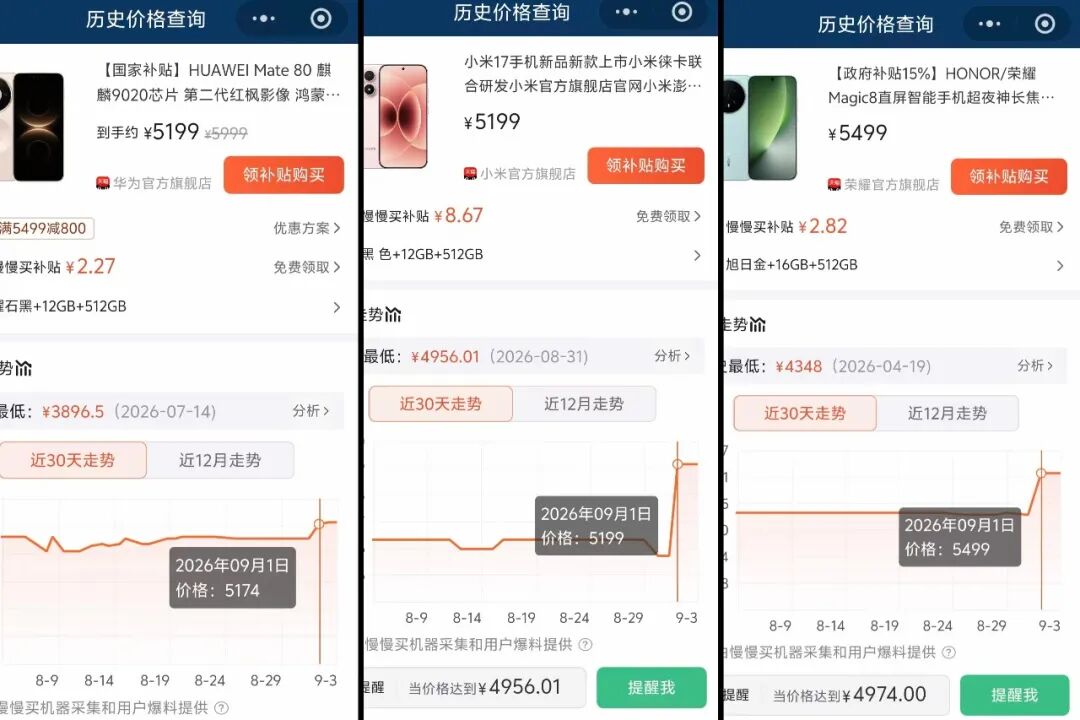
Price trend of the three major brands in the past month
Specifically, the price of the Xiaomi 17 12GB+256GB version basically remained at 4999 yuan after the first price increase on August 2, dropped briefly from August 30 to 31, and then soared to 5199 yuan on September 1; the Huawei Mate 80 12GB+256GB version remained between 4799 yuan and 4999 yuan from July 31 to August 31, and rose to 5174 yuan on September 1; the Honor Magic 8 16GB+512GB version was 4699 yuan on August 1, jumped to 4999 yuan on August 2, then fluctuated slightly around 4999 yuan, and rose sharply again to 5499 yuan on September 1 — a cumulative increase of 800 yuan within a month.
It is worth noting that on September 1, the topic of "multiple mobile phones officially raise prices" also instantly ranked first on Weibo's hot search list.
During the visits, *Sci-Tech Innovation Board Daily* reporters observed that despite the heated online discussions, there was no obvious change in customer flow in offline stores compared with other working days. "If you are hesitating about whether to buy it, it means you don't need it that much," a consumer told the reporter, adding that they can wait for the year-end big promotion.
Visits to Huaqiang North Mobile Phone Market: Chip price hike fuels the "disassemble phones to extract chips" business
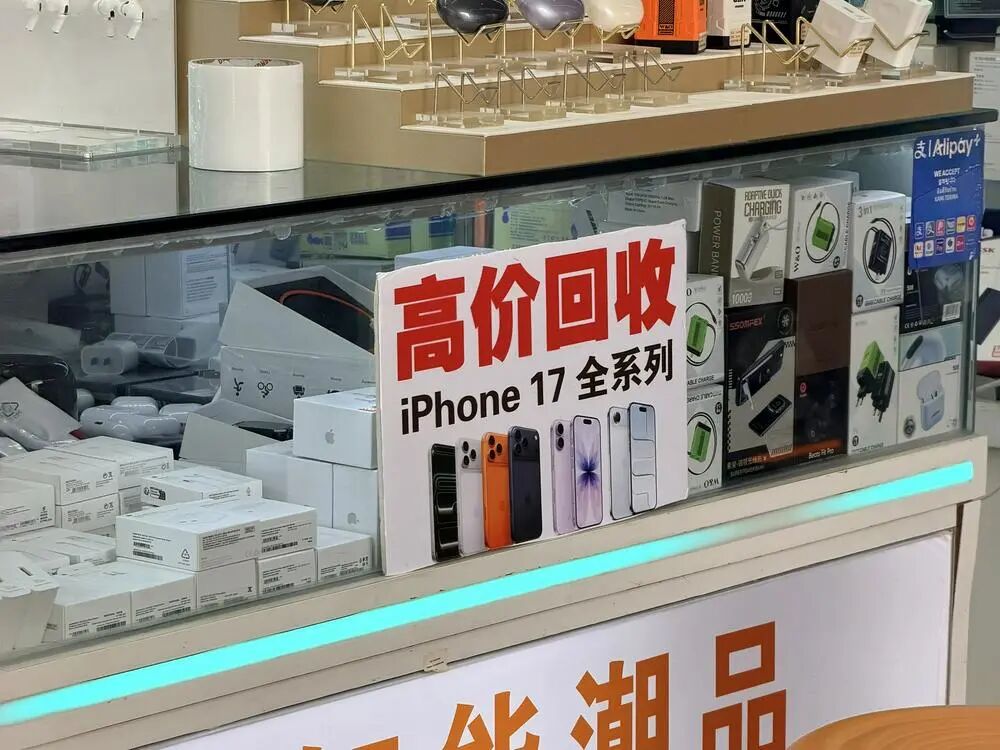
In addition to the price hike of new phones, the undercurrent in the second-hand recycling market is also worthy of attention. Recently, reporters from *Sci-Tech Innovation Board Daily* visited multiple mobile phone recycling stalls in Huaqiang North, Shenzhen, and found that what really drives the recycling market is not the brand's price adjustment on September 1, but the continuous surge in memory chip prices in the past year.
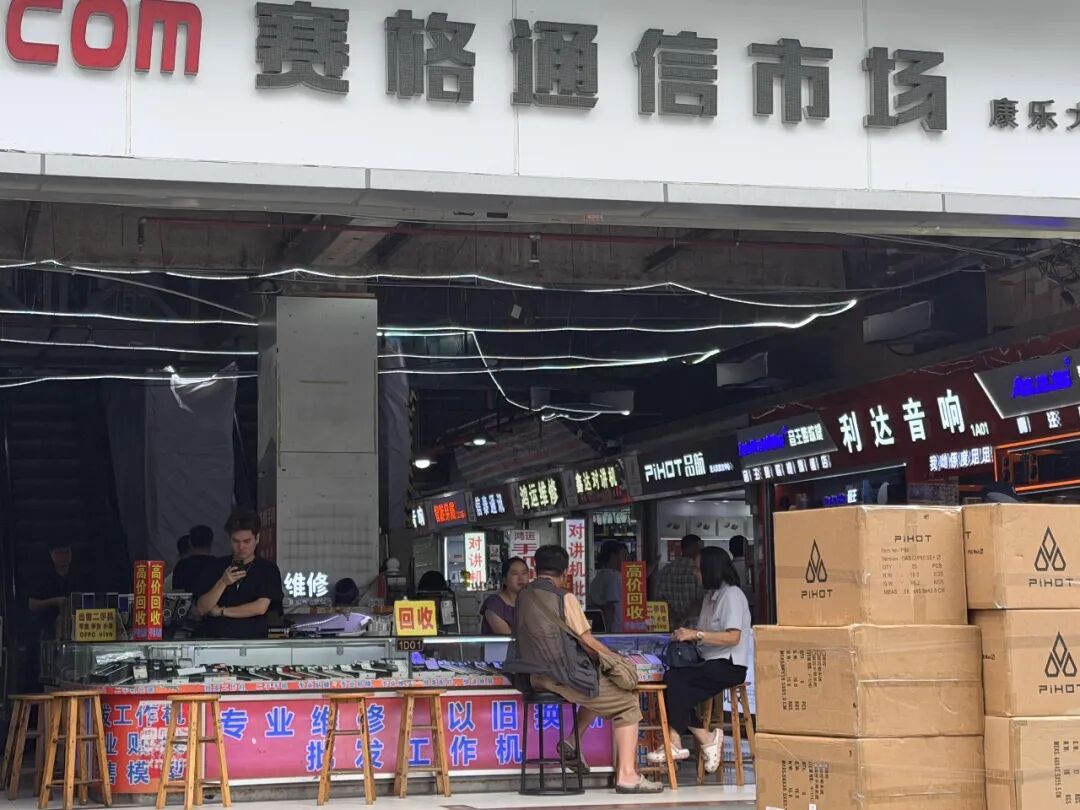
A stall owner told *Sci-Tech Innovation Board Daily* reporters that when the price of brand new phones rises, the recycling price of corresponding models will also increase to some extent, but the overall change is not large. The previous surge in memory chip prices once drove up the recycling price and the selling price of second-hand phones.
A recycler told *Sci-Tech Innovation Board Daily* reporters that although the price hike of brand new phones will drive a small increase in the recycling price of corresponding models, the overall change is limited. "The 'good-condition phones' (second-hand phones in almost new condition) are about 100 to 200 yuan more expensive than before." According to its quotation, the second-hand "good-condition" Huawei Mate 80 256GB version is quoted at about 3300 yuan on the day, and the 512GB version is about 3800 yuan.
When *Sci-Tech Innovation Board Daily* reporters consulted about the recycling price under the pretext of "wanting to sell a Xiaomi 17 that has been used for a year", the stall owner said that the actual product needs to be checked to make an appraisal, "Conditions such as appearance will affect the recycling price. If we take in a Xiaomi 17 now, the maximum price is about 2000 yuan."
Compared with the price hike of brand new phones, what makes Huaqiang North recyclers feel the market change more is the reconstruction of the underlying logic brought about by the chip price hike.
"The AI boom has squeezed the global memory chip production capacity, and the prices of general-purpose mobile memory and advanced process chips have risen sharply, so new phones are forced to raise prices as a result," Chen Shenyu, manager of CIC Consulting, told *Sci-Tech Innovation Board Daily* reporters. "The hot recycling business in Huaqiang North follows the logic of disassembly arbitrage: scrapped and water-damaged mobile phones are recycled, large-capacity memory particles on the motherboard are removed, re-cleaned and re-balled, and then downgraded for supply to automotive accessories, IoT hardware or overseas refurbished phones."
However, this is not a business that guarantees huge profits with little effort.
According to *Sci-Tech Innovation Board Daily* reporters, the scrapped mobile phone recycling market in Huaqiang North has just experienced a drastic "roller coaster" market. At the peak of the price hike, the recycling price of a scrapped mobile phone rose from less than 100 yuan to more than 200 yuan. However, the market trend changed suddenly in late March this year, and the price of mainstream memory fell by more than 40% within a month, and many recycling stores stopped taking in scrapped mobile phones.
Chen Shenyu also pointed out to *Sci-Tech Innovation Board Daily* reporters that this is a short-term speculative arbitrage behavior caused by supply and demand mismatch in the industrial chain. "Disassembled chips have the risk of yield loss and compatibility issues, and the digestion capacity of the downstream low-end market is limited; once the upstream semiconductor manufacturers dynamically adjust their production capacity, this recycling premium will be quickly erased."
"The market will not always be that good. Many people took in a large number of goods before, and now they are all stuck with the inventory," a stall owner also said emotionally to *Sci-Tech Innovation Board Daily* reporters. When the trend comes, it is a business, and when the trend fades, you are only left with inventory.
Memory chips hit the supply chain, the era of 1000-yuan mobile phones is over
On the one hand, the prices of brand new phones are rising but the customer flow remains stable; on the other hand, the mobile phone recycling business is experiencing a "roller coaster" ride, which together form the two sides of this round of mobile phone market price adjustment. Their common driving force points to the same source: memory chips. The price shock of memory chips is also completely rewriting the cost ledger of the mobile phone industry.
Data from Counterpoint Research shows that the month-on-month increase in smartphone memory prices in the second quarter of 2026 exceeded 80%. In addition, the proportion of memory chips in the BOM cost of the entire mobile phone has soared from 10% to 15% in the past to more than 20%, and even close to 30% for mid- and low-end models.
"Among the main components of mobile phones, almost all are raising prices except for the screen, including memory, SoC, PCB, MLCC, etc.," Guo Tianxiang, research manager of IDC China, told *Sci-Tech Innovation Board Daily* reporters. "Qualcomm has previously notified customers to raise prices starting from September. The price increase of memory will slow down compared with the first half of the year, but it will continue to rise."
"Mobile phone prices have gone through multiple rounds of increases since March, and it is expected that the prices of new phones of various brands starting this month will continue to rise," Guo Tianxiang predicted.
Shenghao Bai, senior analyst at Counterpoint Research, also believes that this round of price hikes is mainly driven by rising prices of key upstream components. "At present, memory chip prices are still at a high level, and it is expected to continue to rise in the second half of 2026, but the increase will slow down. The price of SoC chips has also been raised recently. For now, this trend will continue in the short term."
Driven by rising costs, the pricing logic of mobile phone manufacturers is undergoing fundamental changes. Chen Shenyu, manager of CIC Consulting, believes that under the current high cycle of chips and memory, the hardware costs of the four major components: processor, memory, screen and battery are already extremely high. Coupled with mold opening costs and channel sharing, making 1000-yuan mobile phones is very likely to cause losses, so manufacturers are forced to cut off their low-end product lines.
IDC data shows that models priced below 10